


Overview
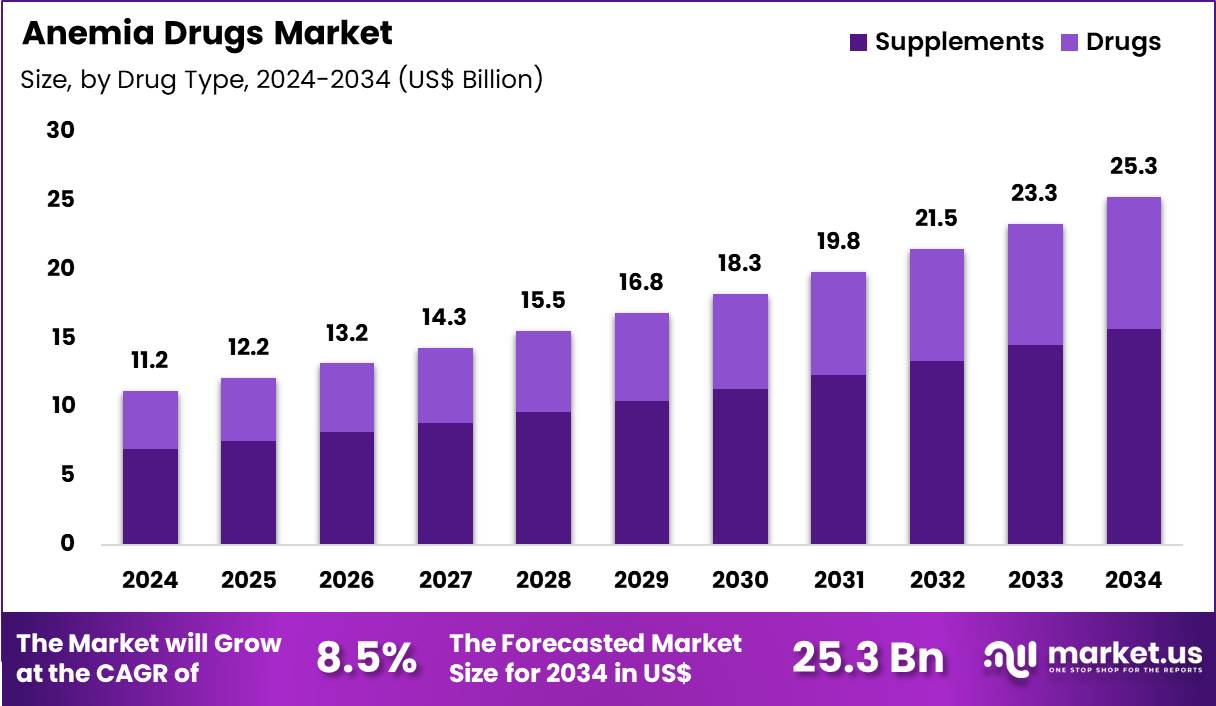
New York, NY – Sep 28, 2026 – The Global Anemia Drugs Market size is expected to be worth around US$ 25.3 Billion by 2034 from US$ 11.2 Billion in 2024, growing at a CAGR of 8.5% during the forecast period 2025 to 2034. In 2024, North America led the market, achieving over 36.6% share with a revenue of US$ 4.1 Billion.
The anemia drugs market covers medicines used to prevent or treat anemia caused by iron deficiency, chronic diseases, kidney disorders, nutritional deficiencies, and other conditions. Common treatment categories include oral and intravenous iron products, erythropoiesis-stimulating agents (ESAs), vitamin supplementation, and newer therapies targeting red-blood-cell production. The market is supported by a large global patient population.
According to the World Health Organization (WHO), 30.7% of women aged 15–49 years had anemia in 2023, while 35.5% of pregnant women were affected. WHO also reports that 39.8% of children aged 6–59 months were affected based on available global estimates.
Iron deficiency remains the most common nutritional cause of anemia. At the same time, anemia associated with chronic kidney disease creates demand for iron therapies and ESAs. The U.S. FDA identifies iron supplementation and ESAs as important treatments for anemia related to chronic kidney disease.
Recent regulatory activity also shows continued development and availability of generic iron therapies. For example, the FDA recorded generic approvals for ferric carboxymaltose in 2026 and iron sucrose in 2025.
Key Takeaways
- In 2024, the market generated US$ 11.2 billion in revenue and is projected to grow at a CAGR of 8.5%, reaching US$ 25.3 billion by 2034.
- By drug type, the market is segmented into supplements and drugs. Supplements dominated the segment in 2024, accounting for a 62.1% market share.
- Based on indication, the market is segmented into iron deficiency, chronic kidney disease, vitamin B12/folic acid deficiency, sickle cell anemia, aplastic anemia, thalassemia, and others. Iron deficiency accounted for a significant 30.7% share in 2024.
- By route of administration, the market is categorized into oral and injectable forms. The oral segment held the dominant position in 2024, accounting for a 59.5% revenue share.
- Based on end users, the market is segmented into hospitals and infusion centers, specialty clinics and nephrology centers, homecare settings, and others. Hospitals and infusion centers led the market with a 48.9% revenue share in 2024.
- Regionally, North America dominated the global market in 2024, accounting for a 36.6% market share.
Key Market Segments
- Drug Type Analysis: Supplements dominated the anemia drugs market with a 62.1% share, supported by widespread use of iron, vitamin B12, and folic acid products. Their easy availability, lower cost, established safety, and suitability for preventive and long-term treatment continue to support segment growth.
- Indication Analysis: Iron deficiency accounted for 30.7% of the anemia drugs market, supported by its high global prevalence. Dietary insufficiency, blood loss, pregnancy, and increased nutritional requirements contribute to demand. Growing screening, awareness, and use of iron replacement therapies further support this segment.
- Route of Administration Analysis: Oral administration held a 59.5% share of the anemia drugs market, mainly due to convenience, affordability, and ease of use. Oral therapies are widely adopted for outpatient and long-term treatment, while improved formulations are supporting better absorption, tolerability, and patient adherence.
- End-User Analysis: Hospitals and infusion centers represented 48.9% of the anemia drugs market, supported by their role in treating severe and complex cases. These facilities provide diagnostic services, specialist supervision, intravenous therapies, and multidisciplinary care for patients with anemia linked to oncology, surgery, and kidney disease.
Regional Analysis
North America Leads the Anemia Drugs Market
North America held a 36.6% share of the global anemia drugs market in 2024. Market growth is supported by rising treatment needs in oncology and nephrology, advanced healthcare infrastructure, and established treatment protocols. Increased use of iron therapies, erythropoiesis-stimulating agents, and newer oral treatments is supporting demand.
The region’s aging population and high prevalence of chronic diseases are also contributing to treatment requirements. In the U.S., the CDC reported an overall anemia prevalence of 9.3% among individuals aged 2 years and older during August 2021–August 2023, highlighting the continuing need for effective treatment.
Asia Pacific Shows Strong Growth Potential
Asia Pacific is expected to record the highest CAGR during the forecast period. Growth is being supported by nutritional deficiencies, increasing chronic kidney disease cases, expanding cancer care, and improving healthcare access.
Government nutrition programs, wider use of affordable therapies, local pharmaceutical production, and greater screening activities are expected to strengthen regional demand. WHO has also identified chronic kidney disease as an important contributor to anemia-related health burden in the region.
Emerging Trends
- Growth in intravenous iron therapies: Intravenous iron is being used when oral iron is not tolerated or does not provide an adequate response. FDA approvals and generic entries indicate continued activity in this treatment segment.
- Expansion of treatments for kidney-related anemia: Chronic kidney disease is an important application area because reduced erythropoietin production and impaired iron utilization can contribute to anemia. Iron therapies and ESAs remain key treatment approaches.
- Development of HIF-based therapies: Hypoxia-inducible factor prolyl hydroxylase inhibitors (HIF-PHIs) represent a newer approach, particularly for anemia associated with chronic kidney disease. Research has examined their effects on hemoglobin and iron metabolism.
- Greater focus on women and maternal health: The high prevalence of anemia among women of reproductive age and pregnant women is increasing attention toward diagnosis, prevention, supplementation, and treatment programs. WHO reported a 30.7% prevalence among women aged 15–49 in 2023.
- Increasing focus on accurate diagnosis and targeted treatment: Anemia can have multiple causes, including nutritional deficiencies, infections, inflammation, chronic disease, and inherited blood disorders. WHO is emphasizing improved measurement, diagnosis, and reporting to support more appropriate interventions.
Use Cases
- Iron deficiency anemia: Oral or intravenous iron medicines are used to restore iron levels and support hemoglobin production.
- Anemia associated with chronic kidney disease: Iron supplementation and ESAs are used to address iron deficiency and reduced erythropoietin production.
- Pregnancy-related anemia: Iron and folate supplementation may be used as part of maternal healthcare programs where nutritional deficiency contributes to anemia.
- Anemia related to cancer treatment: Certain ESAs have approved uses for reducing transfusion requirements in specific patients receiving myelosuppressive chemotherapy.
- Patients unable to tolerate oral iron: Intravenous iron can provide an alternative when oral iron is poorly tolerated or produces an unsatisfactory response; FDA-approved ferric carboxymaltose products include such indications.
Frequently Asked Questions About Anemia Drugs
- What is the most common treatment for iron deficiency anemia?
Iron replacement is the main treatment when anemia is caused by iron deficiency. Oral iron is commonly used, while intravenous iron may be considered when oral treatment is not tolerated or provides an inadequate response, depending on clinical circumstances. - Why is the anemia drugs market growing?
Market demand is supported by the large global anemia burden, increasing attention to women’s health, chronic kidney disease, improved diagnosis, and continuing development of iron-based therapies. WHO reported that 30.7% of women aged 15–49 had anemia in 2023. - What are the major types of anemia drugs?
Major categories include oral iron products, intravenous iron products, erythropoiesis-stimulating agents, and selected therapies targeting red-blood-cell production. Vitamins such as folate or vitamin B12 may also be used when their deficiency is identified as the underlying cause. - How does chronic kidney disease affect the anemia drugs market?
Chronic kidney disease can cause anemia through reduced erythropoietin production, impaired iron utilization, blood loss, and other mechanisms. Consequently, iron supplementation and erythropoiesis-stimulating agents form important parts of treatment for appropriate CKD patients. - What factors influence the anemia drugs market?
The market is influenced by anemia prevalence, chronic kidney disease rates, maternal health needs, healthcare access, diagnosis rates, treatment guidelines, generic competition, pharmaceutical innovation, and availability of oral and intravenous therapies across different healthcare systems. - Is the anemia drugs market focused only on iron medicines?
No. Although iron medicines represent an important treatment category, the market also includes ESAs and newer therapies for specific anemia conditions. Treatment depends on the underlying cause because anemia may result from nutrition, chronic disease, infection, inflammation, or inherited disorders. - What is the outlook for the anemia drugs market?
The market is expected to remain supported by the continuing global burden of anemia and unmet treatment needs. WHO reported that anemia prevalence among women aged 15–49 reached 30.7% in 2023, indicating continued demand for prevention, diagnosis, and treatment.
Conclusion
The anemia drugs market is expected to witness sustained growth, supported by the high global prevalence of anemia, increasing chronic kidney disease and cancer cases, and growing awareness of diagnosis and treatment. Supplements and oral therapies currently represent major market segments due to their accessibility, affordability, and ease of use.
At the same time, intravenous iron, erythropoiesis-stimulating agents, and emerging HIF-based therapies are expanding treatment options for complex conditions. North America remains a leading regional market, while Asia Pacific is expected to experience strong growth during the forecast period.
Continued pharmaceutical innovation, generic drug availability, healthcare investment, and public health initiatives are expected to support market expansion through 2034.
Discuss your needs with our analyst
Please share your requirements with more details so our analyst can check if they can solve your problem(s)




