


Overview
New York, NY – Sep 15, 2026 –The Global Yeast Infection Treatment Market size is expected to reach around US$ 10.5 Billion by 2034, up from US$ 6.4 Billion in 2024, growing at a CAGR of 5.1% during the forecast period 2025 to 2034. In 2024, North America led the market, achieving over 41.4% market share with revenue of US$ 2.6 Billion.
Yeast Infection Treatment is growing steadily due to the increasing prevalence of Candida infections, rising awareness about women’s health, and growing demand for effective antifungal therapies. Vaginal yeast infection is one of the most common fungal infections worldwide, with clinical studies indicating that approximately 75% of women experience at least one episode during their lifetime, while nearly 5–9% develop recurrent infections requiring continuous treatment.
The market is driven by increasing cases of risk factors such as diabetes, antibiotic usage, pregnancy, and weakened immunity. Globally, more than 800 million adults are living with diabetes, which increases susceptibility to fungal infections.
Candida albicans remains the primary cause of vaginal candidiasis, responsible for approximately 80–90% of cases, while non-albicans species contribute nearly 10–20% of infections. In 2024, demand increased for oral antifungal drugs, topical creams, vaginal suppositories, and over-the-counter treatment products.
Azole-based therapies, including fluconazole, clotrimazole, and miconazole, continue to dominate treatment adoption due to their effectiveness and availability. Rising concerns regarding antifungal resistance, with certain Candida strains showing reduced azole sensitivity rates of approximately 10–20%, are encouraging pharmaceutical companies to develop advanced therapies.
North America and Europe hold significant market positions due to advanced healthcare infrastructure, high diagnosis rates, and strong adoption of antifungal medications. Emerging regions are expected to witness growth due to improving healthcare access and rising awareness.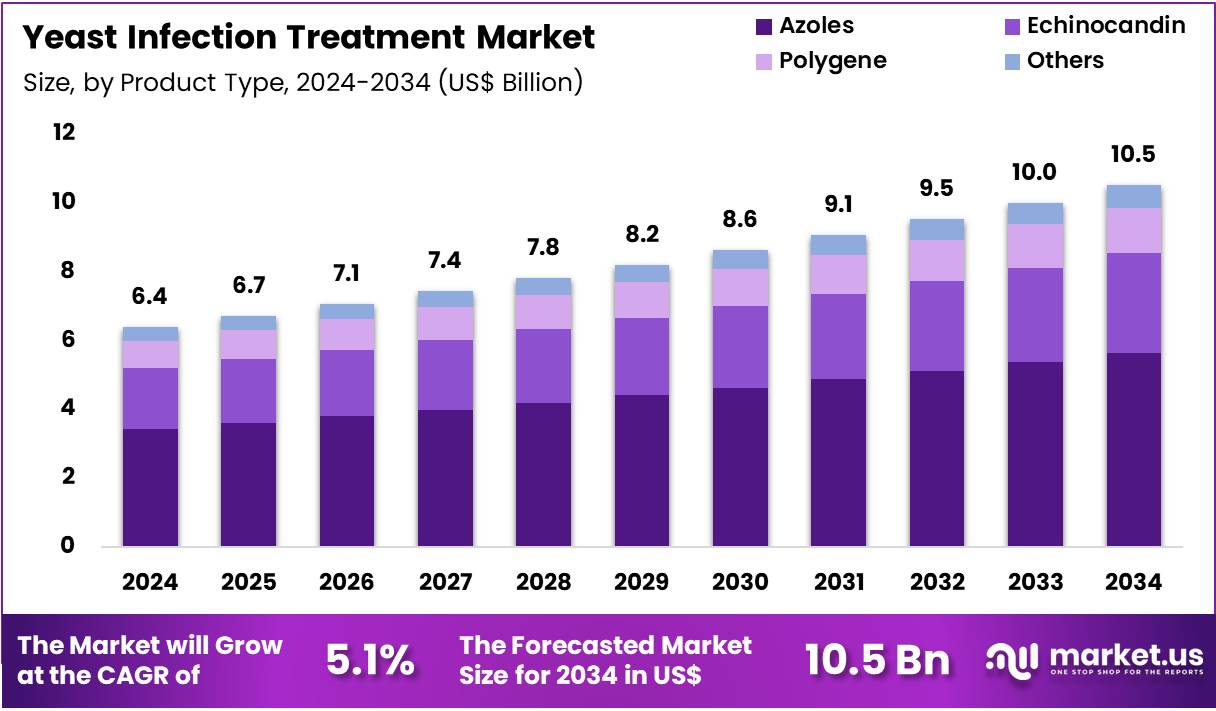
Key Takeaways
- In 2024, the Yeast Infection Treatment Market generated a revenue of US$ 6.4 Billion and is projected to grow at a CAGR of 5.1%, reaching approximately US$ 10.5 Billion by 2034.
- Based on product type, the market is segmented into azoles, echinocandin, polyenes, and others. The azoles segment dominated the market in 2024, accounting for a 53.7% market share.
- By application, the market is categorized into invasive candidiasis, genital candidiasis, oropharyngeal/esophageal candidiasis, and others. The invasive candidiasis segment held a significant position in 2024, capturing a 48.9% market share.
- Based on route of administration, the market is segmented into oral, IV/IM, topical, and others. The oral segment emerged as the leading segment in 2024, contributing the highest revenue share of 51.8%.
- Regionally, North America dominated the Yeast Infection Treatment Market in 2024, accounting for a substantial 41.4% market share due to advanced healthcare infrastructure, high treatment adoption, and increased awareness of antifungal therapies.
Market Segmentation Overview
- Product Type Analysis: Azoles accounted for 53.7% market share in 2024 and are expected to maintain dominance due to their broad-spectrum antifungal activity, strong clinical effectiveness, and availability in prescription and OTC formats. Widely used against Candida infections, azoles offer convenient dosing, improved patient compliance, and continuous demand supported by rising genital candidiasis cases, chronic disease prevalence, and advanced drug formulations.
- Application Analysis: Invasive candidiasis captured 48.9% market share in 2024 and is projected to remain the leading application segment due to increasing hospital-acquired infections, ICU admissions, and immunocompromised patient populations. Growing cases among cancer patients, transplant recipients, and critically ill individuals are driving antifungal treatment demand, while improved diagnostics and early intervention strategies support market expansion.
- Route of Administration Analysis: Oral administration held the largest share of 51.8% in 2024 due to patient preference for convenient, non-invasive treatment options. Oral antifungals provide effective management of multiple yeast infections, including genital and oral candidiasis. Rising telemedicine adoption, pharmacy accessibility, improved formulations, and increasing recurrent infection cases continue to support the growth of oral antifungal therapies.
Statistical Information
- U.S. candidemia incidence and hospital antifungal treatment demand: CDC estimates about 25,000 candidemia cases annually in the United States, around 7–8 infections per 100,000 people. Roughly one‑third of affected hospitalized patients die, highlighting high severity and the need for potent systemic antifungals such as echinocandins and azoles. Incidence is highest in adults over 65 and about twice as high in Black populations.
- United Kingdom rise in serious bloodstream yeast infections: UK Health Security Agency reports yeast bloodstream infections in England rose 4% from 2,170 cases in 2023 to 2,247 in 2024, equal to 3.9 infections per 100,000 population. More deprived areas show higher rates (5.0 vs 3.2 per 100,000). Between 2013 and 2024, 637 Candida auris cases occurred, with 178 cases reported in 2024 alone.
- Lifetime vulvovaginal candidiasis prevalence and recurrent disease: Clinical and CDC‑linked data show about 70–75% of women experience at least one vulvovaginal candidiasis episode in their lifetime, and 5–10% suffer recurrent disease. In the United States, vulvovaginal candidiasis causes roughly 1.4 million outpatient visits annually, making it a major driver of azole cream, suppository, and oral fluconazole prescriptions in gynecologic practice.
- U.S. treatment patterns and self‑care for vaginal infections: A CDC‑associated survey found 5.2% of women reported vulvovaginal candidiasis in the past year and 53% had provider‑diagnosed infection at some point. Among those with recent VVC, 72% used prescription antifungals, 40% used over‑the‑counter products, and 16% used both, showing substantial dual reliance on clinical care and pharmacy self‑treatment in the yeast infection market.
- Age profile, recurrence, and economic burden of VVC: Monistat’s professional education materials report around 75% of women have at least one VVC episode and 40–45% have two or more. Most cases occur in women aged 18–34, with initial episodes usually before 25. Estimated U.S. costs for diagnosis and treatment reach about 3 billion USD annually, indicating significant economic impact and recurrent demand for antifungal products.
- Global severe candidiasis cases and mortality burden estimates: Recent global estimates suggest about 1.565 million people develop Candida bloodstream infection or invasive candidiasis annually, with 995,000 deaths, implying a 63.6% mortality rate. This underscores the serious clinical impact of invasive Candida infections and supports continued demand for potent systemic antifungals in hospital and intensive‑care settings worldwide.
- Economic and clinical impact of mucosal Candida infections: A recent review reports Candida albicans causes more than 150 million mucosal infections per year, leading to healthcare costs of about 2 billion USD in the United States alone. Vulvovaginal candidiasis is described as the second most common vaginal infection, after bacterial vaginosis, emphasizing large recurrent need for topical and oral antifungal treatments.
- CDC guidance on treatment efficacy and recurrence management: CDC sexually transmitted infection treatment guidelines state azole therapy leads to symptom relief and negative cultures in 80–90% of vulvovaginal candidiasis patients completing treatment. They also note 75% of women will have at least one episode and 40–45% will have two or more, shaping recommendations for both standard short‑course and extended maintenance antifungal regimens.
Regional Analysis
North America led the market by securing a market share of 41.4% in 2024.
North America held a significant position in the Yeast Infection Treatment Market due to advanced healthcare infrastructure, high awareness, and increasing diagnosis of Candida infections. In the United States, CDC estimates indicate that approximately 25,000 cases of candidemia occur annually, with Candida bloodstream infections contributing to severe healthcare outcomes. Rising prevalence of diabetes, cancer treatments, and immune-compromising conditions is increasing demand for antifungal therapies, including azoles, echinocandins, and oral fluconazole.
Improved diagnostic testing, pharmacy accessibility, and telehealth adoption are further supporting treatment availability. Asia Pacific is expected to witness significant growth due to increasing healthcare access, rising fungal infection awareness, and a growing burden of diabetes-related complications. The International Diabetes Federation reported that the region has a large diabetic population, increasing susceptibility to Candida infections. Expansion of healthcare facilities, improved diagnostics, and wider availability of antifungal medicines are supporting regional demand.
Business Opportunities
The Yeast Infection Treatment Market offers significant business opportunities due to the rising prevalence of Candida infections, increasing awareness, and growing demand for effective antifungal therapies. Pharmaceutical companies can focus on developing advanced antifungal drugs, including next-generation azoles, combination therapies, and treatments targeting resistant Candida strains. The increasing cases of recurrent infections create opportunities for long-term maintenance therapies and personalized treatment solutions.
Expansion of over-the-counter antifungal products, including topical creams, suppositories, and oral medications, provides growth opportunities through retail pharmacies and digital healthcare platforms. Companies can also invest in rapid diagnostic technologies that enable accurate Candida species identification and improve treatment selection.
Growing healthcare investments in emerging regions, improved access to medical services, and rising diabetes prevalence create opportunities for market expansion. Additionally, partnerships between pharmaceutical firms, research institutions, and healthcare providers can accelerate innovation in safer, faster, and more effective antifungal treatment options.
Emerging Trends
- Growing Focus on Antifungal Resistance Management: Rising resistance among Candida species is increasing the need for advanced antifungal therapies. WHO identified 19 priority fungal pathogens, highlighting the importance of new drug development, improved surveillance, and alternative treatment approaches.
- Expansion of Rapid Candida Diagnostic Technologies: Healthcare providers are adopting faster diagnostic methods to identify Candida species and resistance patterns. CDC reports approximately 25,000 candidemia cases annually in the U.S., increasing demand for accurate diagnosis and targeted antifungal treatment.
- Development of Next-Generation Antifungal Drugs: Pharmaceutical companies are focusing on innovative antifungal molecules and combination therapies due to limited treatment options. WHO highlights that only 4 major classes of antifungal medicines are currently available, creating opportunities for new therapies.
- Increasing Adoption of Personalized Antifungal Treatment: Treatment strategies are shifting toward species-specific therapy based on laboratory identification and susceptibility testing. Improved diagnostics help clinicians select effective medicines and reduce unnecessary antifungal usage.
- Rising Demand for Oral and Convenient Treatment Options: Patients increasingly prefer easy-to-administer therapies. CDC recommends fluconazole 150 mg single-dose oral therapy for appropriate uncomplicated vaginal candidiasis cases, supporting continued demand for convenient antifungal solutions.
Use Cases
- Treatment of Vaginal Candidiasis: Antifungal therapies are widely used for managing vaginal yeast infections, one of the most common Candida-related conditions. CDC reports that approximately 75% of women experience at least one episode of vulvovaginal candidiasis during their lifetime, driving demand for oral and topical antifungal treatments.
- Management of Recurrent Yeast Infections: Long-term antifungal strategies are used for patients experiencing repeated infections. CDC defines recurrent vulvovaginal candidiasis as 3 or more symptomatic episodes within 1 year, requiring extended therapy and regular medical monitoring.
- Treatment of Invasive Candidiasis in Hospitals: Systemic antifungal medicines are used for serious Candida infections affecting the bloodstream and internal organs. CDC estimates around 25,000 candidemia cases occur annually in the United States, requiring rapid diagnosis and antifungal intervention.
- Care for Immunocompromised Patients: Antifungal treatments are essential for patients undergoing chemotherapy, organ transplantation, or immune-suppressing therapies who face higher Candida infection risks. Early treatment helps reduce complications and improves outcomes in vulnerable populations.
- Management of Oral and Esophageal Candidiasis: Antifungal medicines are used to treat Candida infections affecting the mouth and esophagus, especially among individuals with weakened immunity, HIV infection, cancer treatment, or long-term antibiotic exposure.
Recent Development
- In 2025, Pfizer, Inc. continued strengthening its antifungal portfolio through the commercialization of Cresemba (isavuconazonium sulfate), an advanced antifungal therapy approved for serious fungal infections. The company continued focusing on improving treatment options for invasive fungal diseases, particularly among immunocompromised patients.
- In 2025, Novartis AG continued expanding its healthcare innovation activities with a focus on infectious disease research and advanced therapeutic solutions. The company emphasized research-driven approaches to address unmet medical needs, including infections associated with treatment resistance.
- In 2025, Merck & Co., Inc. continued supporting antifungal treatment through its echinocandin therapy Cancidas (caspofungin acetate), which is used for invasive Candida infections. The company maintained focus on infectious disease treatment solutions for hospitalized and high-risk patients.
- In 2025, GlaxoSmithKline plc (GSK) continued advancing its pharmaceutical research programs focused on infectious diseases and innovative medicines. The company’s global research capabilities support the development of therapies addressing complex healthcare challenges, including antimicrobial resistance.
- In 2025, Bayer AG continued expanding its healthcare portfolio with a focus on prescription medicines and women’s health solutions. The company supported innovation in healthcare areas related to reproductive health, infection management, and improving patient access to effective treatments.
- In 2025, Astellas Pharma, Inc. continued strengthening its antifungal presence through Cresemba (isavuconazole), which is used for invasive fungal infections such as invasive aspergillosis and mucormycosis. The company focused on expanding access to advanced antifungal therapies globally.
Frequently Asked Questions on Yeast Infection Treatment
- What are the major factors driving the Yeast Infection Treatment Market growth?
Market growth is driven by increasing Candida infection cases, rising awareness about women’s health, growing diabetes prevalence, antifungal resistance concerns, and improved access to diagnostic and treatment options. Increasing demand for effective oral and topical antifungal therapies further supports market expansion. - Which product segment dominates the Yeast Infection Treatment Market?
The azoles segment dominates the Yeast Infection Treatment Market due to its broad antifungal activity, clinical effectiveness, and availability in prescription and over-the-counter formulations. Common azole therapies include fluconazole, clotrimazole, and miconazole, widely used for Candida infection management. - Why are azole antifungal drugs widely used for yeast infections?
Azole antifungal drugs are widely preferred because they provide effective treatment against Candida species, offer convenient dosing options, and are available in multiple formulations. Oral tablets, vaginal creams, and suppositories improve patient accessibility and support different treatment requirements. - What are the common applications of yeast infection treatments?
Yeast infection treatments are used for managing vaginal candidiasis, invasive candidiasis, oral thrush, esophageal candidiasis, and other Candida-related infections. These therapies help patients control fungal growth, reduce symptoms, and prevent complications, especially among high-risk and immunocompromised populations. - Why is antifungal resistance impacting the Yeast Infection Treatment Market?
Antifungal resistance is creating challenges because some Candida species show reduced sensitivity to commonly used medicines. Organizations such as WHO and CDC are encouraging development of new antifungal drugs, improved diagnostics, and resistance monitoring programs. - How does diabetes influence demand for yeast infection treatments?
Diabetes increases susceptibility to Candida infections because elevated blood glucose levels can support fungal growth. The growing global diabetic population increases the number of individuals requiring antifungal management, especially for recurrent vaginal and opportunistic fungal infections. - What role do diagnostics play in yeast infection treatment?
Advanced diagnostics help identify Candida species and determine antifungal susceptibility, enabling healthcare providers to select appropriate treatments. Improved diagnostic accuracy supports personalized therapy, reduces treatment failures, and helps manage infections caused by resistant fungal strains. - Which region dominates the Yeast Infection Treatment Market?
North America dominates the Yeast Infection Treatment Market due to advanced healthcare infrastructure, high diagnosis rates, strong awareness, and widespread availability of antifungal medications. The region benefits from established healthcare systems and increasing adoption of innovative treatment solutions.
Conclusion
The Yeast Infection Treatment Market is experiencing steady growth due to the increasing prevalence of Candida infections, rising awareness regarding fungal disease management, and growing demand for effective antifungal therapies. Azoles continue to dominate treatment options, while oral administration remains preferred due to convenience and accessibility.
Rising antifungal resistance, increasing cases among immunocompromised patients, and advancements in diagnostic technologies are encouraging innovation in new therapies. North America leads the market with strong healthcare infrastructure, while emerging regions offer future growth opportunities. Continuous research, improved treatment approaches, and development of advanced antifungal solutions will support long-term market expansion during the forecast period.
Discuss your needs with our analyst
Please share your requirements with more details so our analyst can check if they can solve your problem(s)




