


Overview
New York, NY – Aug 06, 2026 – The Global Wart Remover Market size is expected to be worth around US$ 1203.9 Million by 2034 from US$ 853.5 Million in 2024, growing at a CAGR of 3.5% during the forecast period 2025 to 2034. In 2024, North America led the market, achieving over 39.9% share with a revenue of US$ 340.5 Million.
The global wart remover market is experiencing consistent growth driven by rising awareness about skin health, personal hygiene, and increasing adoption of self-care treatments. Warts, mainly caused by human papillomavirus (HPV) infections, are a widespread dermatological concern affecting individuals of different age groups. According to the National Center for Biotechnology Information (NCBI), warts impact approximately 10% of the global population, with prevalence reaching 20% to 30% among school-aged children in some communities.
Increasing consumer preference for at-home treatments is accelerating product innovation, with manufacturers introducing salicylic acid solutions, medicated patches, gels, and cryotherapy-based devices. Salicylic acid, available in concentrations ranging from 10% to 40%, remains one of the most commonly used active ingredients for wart treatment due to its ability to gradually remove affected skin layers. Advanced cryotherapy products provide freezing temperatures as low as approximately −57°C to −70°C, enabling consumers to perform treatments conveniently outside clinical settings.
The growing availability of wart removers through pharmacies, supermarkets, and online platforms is improving accessibility worldwide. The American Podiatric Medical Association (APMA) highlights that approximately 5% of the U.S. population experiences corns or calluses annually, while plantar warts remain a frequent foot-related skin condition requiring home management solutions.
Manufacturers are also strengthening consumer engagement through awareness campaigns and partnerships. For instance, Scholl’s Wellness Co. collaborated with football coach Rex Ryan in September 2022 to promote foot health awareness. With increasing demand for non-invasive treatments, rising e-commerce adoption, and growing interest in natural-based skincare solutions, the wart remover market is expected to expand steadily in the coming years.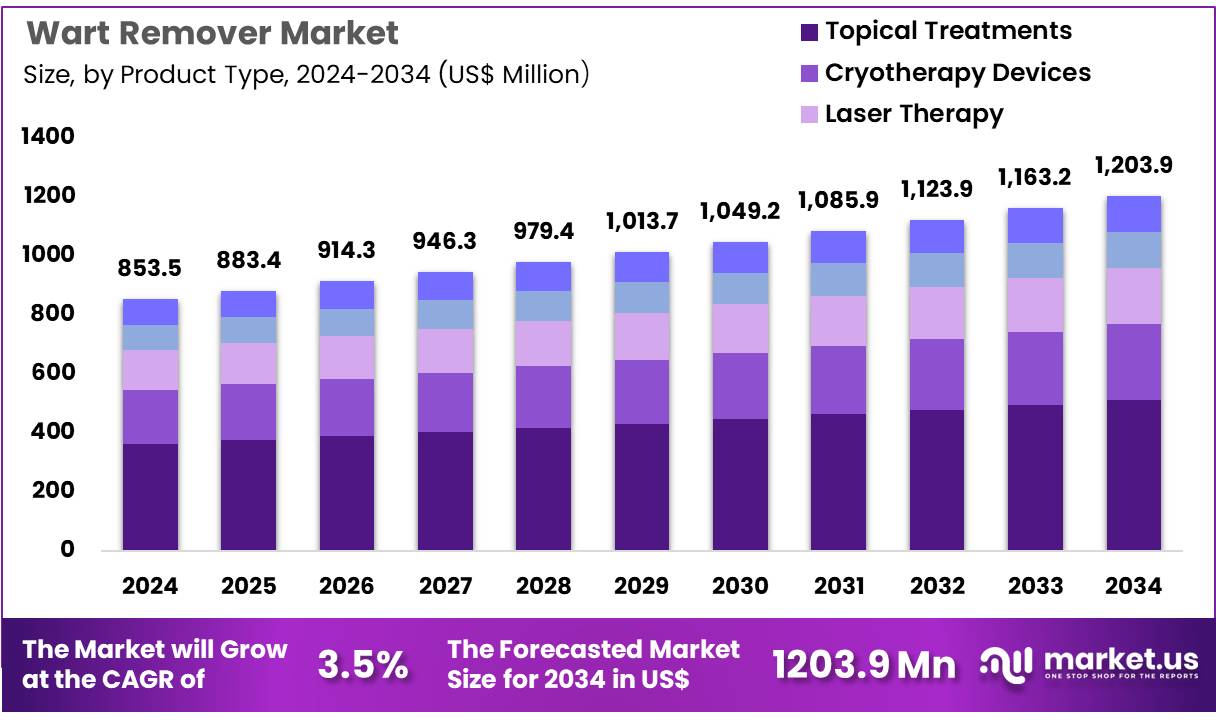
Key Takeaways
- In 2024, the wart remover market generated revenue of US$ 853.5 Million and is projected to grow at a CAGR of 3.5%, reaching approximately US$ 1,203.9 Million by 2034.
- Based on product type, the market is segmented into topical treatments, cryotherapy devices, laser therapy, electrosurgical devices, and other devices. Among these, topical treatments dominated the market in 2023, accounting for a 42.6% market share.
- By treatment type, the market is categorized into salicylic acid-based treatments, cryotherapy, laser therapy, immunotherapy, and others. Salicylic acid-based treatments held a leading position with a significant market share of 37.6%.
- According to distribution channel, the market is segmented into pharmacies/drugstores, supermarkets/hypermarkets, online retail, and specialty stores. The pharmacies/drugstores segment led the market with a revenue share of 45.2%.
- Regionally, North America dominated the global wart remover market in 2023, capturing a market share of 39.9%, supported by high consumer awareness, strong retail penetration, and increasing demand for OTC skincare solutions.
Statistical Information
- High Prevalence of Warts Creates Continuous Demand for Treatment Solutions: Warts are one of the most common viral skin infections, creating a consistent need for effective treatment products such as topical solutions and cryotherapy devices. According to the National Center for Biotechnology Information (NCBI), common warts affect approximately 7%–10% of the general population worldwide, while prevalence can reach 20%–30% among school-aged children. Plantar warts are also frequently reported among adolescents and young adults due to close-contact activities and sports participation.
- OTC Treatment Preference Supports Growth of Topical Wart Removers: Consumers increasingly prefer convenient, non-prescription solutions for managing minor skin conditions at home. The U.S. Food and Drug Administration (FDA) recognizes salicylic acid as an approved OTC active ingredient for treating common and plantar warts. OTC wart removal products commonly contain salicylic acid concentrations ranging from 17% to 40%, depending on product type and application method.
- Salicylic Acid Remains a Widely Used Treatment Option: Salicylic acid-based treatments continue to be preferred because they provide localized treatment without requiring surgical procedures. Clinical evidence reviewed by Cochrane Database of Systematic Reviews indicates that salicylic acid treatment improves wart clearance compared with placebo. Studies have reported clearance rates of approximately 10%–15% higher than placebo treatments in controlled clinical comparisons.
- Growing E-Commerce Adoption Supports Online Sales of Healthcare Products: Digital purchasing behavior is increasing access to OTC healthcare products, including dermatology treatments. According to the U.S. Department of Commerce, U.S. retail e-commerce sales reached approximately US$ 1.19 trillion in 2023, showing continued consumer adoption of online purchasing channels. This shift supports wider availability of personal care and OTC healthcare products through online platforms.
- Rising Healthcare Expenditure Supports Dermatology Product Adoption: Increasing healthcare spending and consumer investment in personal health products support demand for dermatology-related solutions. According to the Centers for Medicare & Medicaid Services (CMS), U.S. healthcare spending reached approximately $4.9 trillion in 2023, representing about 17.6% of GDP. Higher healthcare awareness encourages consumers to seek accessible treatment options.
- Retail Pharmacy Expansion Improves Availability of Wart Removal Products: Retail pharmacies remain a major access point for OTC healthcare products, including skin treatment solutions. According to the National Community Pharmacists Association (NCPA), there are approximately 19,000 independent community pharmacies in the United States, supporting local access to consumer healthcare products.
- Online Health Information Influences Consumer Treatment Decisions: Consumers increasingly search online resources before purchasing healthcare products. According to the Pew Research Center, approximately 72% of U.S. adults use the internet to search for health information, increasing awareness of OTC treatment options and self-care approaches.
- Aging Population Supports Broader Demand for Dermatology Care Products: Although warts are more common among younger populations, aging individuals may experience increased skin-related concerns requiring treatment and monitoring. According to the United Nations Population Division, the global population aged 60 years and older reached more than 1 billion in 2020 and continues to expand, increasing overall demand for skin health products.
Regional Analysis
North America led the market by securing a market share of 39.9% in 2023.
North America held a leading position in the global wart remover market due to high consumer awareness, strong OTC healthcare adoption, and advanced retail accessibility. The United States and Canada experience significant demand for wart treatment products because HPV-related skin conditions are common across different age groups.
According to the Centers for Disease Control and Prevention (CDC), HPV is one of the most common infections in the U.S., with millions of new infections occurring annually. This high prevalence supports demand for topical solutions, medicated patches, and cryotherapy products. Strong pharmacy networks, e-commerce penetration, and consumer preference for convenient self-care treatments further strengthen regional growth. Increased focus on dermatological health and personal appearance is also encouraging consumers to adopt easily available wart removal solutions.
The Asia Pacific wart remover market is expected to witness significant growth due to rising healthcare awareness, urbanization, increasing disposable income, and expanding access to OTC healthcare products. According to the World Health Organization (WHO), Asia carries a substantial burden of HPV-related diseases, reflecting widespread HPV presence in the region. Growing adoption of online pharmacies, improving healthcare infrastructure, and increasing interest in personal care solutions are supporting demand for home-based wart treatment products across emerging economies.
Emerging Trends
- Increasing Adoption of At-Home Wart Treatment Solutions: Consumers are increasingly preferring OTC wart removal products such as salicylic acid gels, medicated pads, and cryotherapy kits due to convenience and affordability. The FDA recognizes salicylic acid as an approved OTC active ingredient for wart treatment, supporting wider consumer adoption of self-care solutions.
- Growing Demand for Salicylic Acid-Based Products: Salicylic acid-based wart removers remain a major trend because they gradually remove infected skin layers and are suitable for common and plantar warts. OTC formulations commonly contain 17% to 40% salicylic acid concentrations, depending on product strength and application type.
- Rising Popularity of Cryotherapy-Based Solutions: Cryotherapy products are gaining demand due to their non-invasive approach and quick application process. Dermatologists use liquid nitrogen freezing methods, while home-use freezing products provide consumers with convenient alternatives. Treatment sessions are often repeated every 2–4 weeks based on response.
- Expansion of Online Healthcare Product Purchasing: Digital platforms are improving access to wart removal products through online pharmacies and e-commerce channels. The U.S. Census Bureau reported that U.S. retail e-commerce sales reached approximately $1.19 trillion in 2023, supporting increased online purchasing of healthcare and personal care products.
- Increasing Awareness About Skin Health and Personal Care: Growing consumer awareness about dermatological conditions is encouraging earlier treatment of warts. The American Academy of Dermatology highlights that warts can spread through contact, increasing demand for effective management options among children, adults, and active populations.
Use Cases
- Treatment of Common Hand Warts: Wart removers are widely used for managing common hand warts caused by HPV infections. Children and young adults experience higher occurrence rates, with studies reporting wart prevalence of approximately 10% among the general population, creating consistent demand for OTC treatment options.
- Management of Plantar Warts for Foot Care: Wart removal products are commonly used for plantar warts that develop on the soles of feet and may cause discomfort during walking. Salicylic acid patches, gels, and freezing products provide localized treatment options for consumers seeking home-based care.
- Applications Among Sports and Active Individuals: Athletes and people using shared sports facilities may have increased exposure to HPV-related skin infections. Wart removers support faster management of visible skin growths and help individuals maintain personal hygiene in environments such as gyms, pools, and sports centers.
- Cosmetic and Appearance-Related Applications: Consumers increasingly use wart removal products to improve skin appearance and confidence. Easy-to-apply OTC solutions allow discreet treatment of visible warts without requiring clinical procedures, supporting demand among individuals focused on personal grooming and skincare.
- Development of User-Friendly Product Designs: Manufacturers are introducing precision applicators, adhesive patches, and targeted treatment formats to improve consumer convenience. FDA-approved wart removers provide specific usage instructions, with some salicylic acid treatments requiring applications for up to 12 weeks for effective wart removal.
Frequently Asked Questions on Wart Remover
- What factors are driving the growth of the wart remover market?
The wart remover market is growing due to increasing awareness about skin health, rising adoption of self-care treatments, higher demand for OTC products, and expanding availability of topical solutions, cryotherapy devices, and advanced treatment options. - Which product type dominates the wart remover market?
Topical treatments dominate the wart remover market due to affordability, easy application, and strong consumer preference for home-based solutions. Salicylic acid gels, liquids, and medicated patches are widely used for treating common and plantar warts. - Who are the major consumers of wart remover products?
Children, adolescents, adults, and active individuals represent major consumer groups for wart remover products. Frequent skin contact, sports participation, and shared facilities increase exposure risks, creating demand for convenient and effective wart management solutions. - Are wart remover products available without a prescription?
Yes, many wart removal products are available as over-the-counter treatments without prescriptions. Regulatory agencies such as the FDA approve specific ingredients, including salicylic acid, for safe consumer use in treating common and plantar warts. - What role do pharmacies play in the wart remover market?
Pharmacies and drugstores provide important distribution channels for wart removal products. Consumers often prefer these channels due to easy accessibility, product availability, pharmacist guidance, and trust in purchasing dermatology-related healthcare solutions. - How is e-commerce influencing the wart remover market?
E-commerce platforms are improving consumer access to wart removal products by offering convenience, privacy, product comparisons, and home delivery options. Online purchasing is supporting wider adoption of OTC dermatology treatments among consumers. - How do companies improve wart remover product adoption?
Companies improve product adoption through consumer education campaigns, improved formulations, easy-to-use applicators, targeted marketing, and awareness programs related to skin and foot health. These strategies help build consumer confidence and encourage product usage.
Conclusion
The wart remover market is witnessing steady growth due to increasing awareness of skin health, rising preference for self-care solutions, and growing demand for convenient OTC treatments. Products such as salicylic acid-based solutions, cryotherapy devices, and advanced topical formulations are gaining popularity among consumers seeking effective home-based treatment options.
Strong pharmacy networks, expanding e-commerce platforms, and continuous product innovation are further supporting market expansion. North America remains a leading region due to high consumer awareness and healthcare accessibility, while emerging regions offer significant growth opportunities. Overall, increasing focus on personal care and non-invasive treatment approaches will continue driving market development.
Discuss your needs with our analyst
Please share your requirements with more details so our analyst can check if they can solve your problem(s)




