
Overview
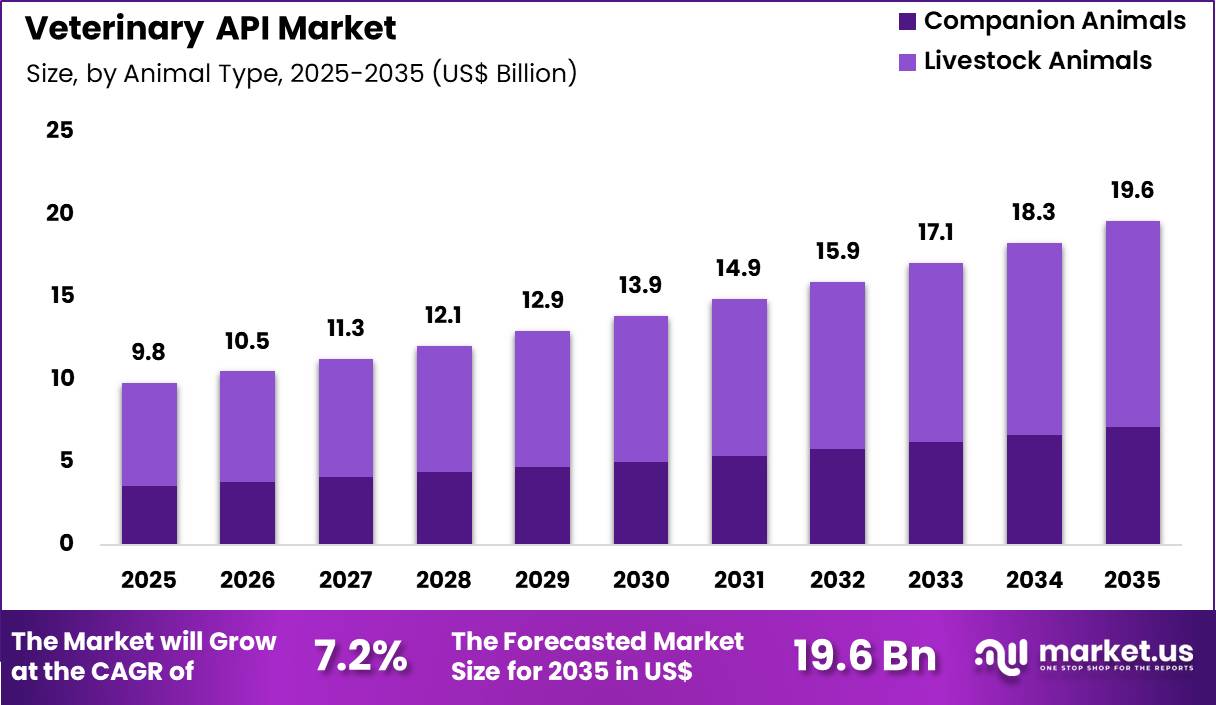
New York, NY – Nov 10 2026 – The Global Veterinary API Market size is expected to be worth around US$ 19.6 Billion by 2035 from US$ 9.8 Billion in 2025, growing at a CAGR of 7.2% during the forecast period 2026-2035. In 2025, North America led the market, achieving over 40.1% share with a revenue of US$ 3.9 Billion.
The Veterinary API (Active Pharmaceutical Ingredient) Market plays an important role in animal healthcare by providing essential raw materials used in the production of veterinary medicines. Veterinary APIs are active chemical or biological substances responsible for the therapeutic effects of medications used to prevent, manage, and treat diseases in animals. These ingredients are widely used in antibiotics, antiparasitic drugs, anti-inflammatory medicines, vaccines, and other veterinary treatments.
Growing awareness of animal health and increasing demand for effective veterinary medicines are supporting market growth. The rising ownership of companion animals, expansion of livestock farming, and increasing focus on food safety are further strengthening demand for veterinary APIs. Farmers and veterinarians are adopting advanced treatments to improve animal productivity, prevent disease outbreaks, and maintain livestock health.
Additionally, the growing prevalence of animal diseases and increasing investments in veterinary healthcare are encouraging pharmaceutical manufacturers to expand API production. Improvements in pharmaceutical manufacturing, quality control, and formulation technologies are also supporting the development of safe and effective veterinary ingredients.
Overall, the Veterinary API Market is gaining importance as demand for animal healthcare solutions continues to increase across companion animal and livestock sectors.
Key Takeaways
- In 2025, the Veterinary API Market generated revenue of US$ 9.8 Billion and is projected to reach US$ 19.6 Billion by 2035, growing at a CAGR of 7.2%.
- Based on animal type, the market is segmented into companion animals and livestock animals. The livestock animals segment dominated the market, accounting for 63.7% of the total share.
- By manufacturing type, the market is categorized into in-house and contract outsourcing. The in-house segment held the leading position, capturing 62.9% of the market share.
- In terms of synthesis, the market is classified into chemical-based API, biological API, and high-potency API. Among these, chemical-based API dominated with the largest revenue share of 48.8%.
- Based on therapeutic class, the market is divided into anti-infectives, antiparasitics, anti-inflammatory and analgesics, vaccines, and others. The anti-infectives segment led the market with a revenue share of 45.2%.
- Regionally, North America dominated the Veterinary API Market, accounting for 40.1% of the global market share.
Key Market Segments
- Animal Type Analysis: The livestock animals segment dominated the Veterinary API Market with a 63.7% share, driven by rising demand for animal protein and increasing focus on livestock health. Growing poultry, cattle, and swine populations, along with concerns about zoonotic diseases, are boosting demand for veterinary APIs and preventive treatments.
- Manufacturing Type Analysis: The in-house manufacturing segment led the Veterinary API Market with a 62.9% share, supported by better quality control, regulatory compliance, and cost efficiency. Manufacturers prefer in-house production to maintain API purity, protect proprietary formulations, improve supply chain reliability, and ensure consistent production capacity.
- Synthesis Analysis: The chemical-based API segment dominated the Veterinary API Market with a 48.8% share, driven by lower production costs, scalability, and established manufacturing processes. Rising demand for affordable veterinary medicines, preventive treatments, and effective infection management continues to support the adoption of chemical-based APIs.
- Therapeutic Class Analysis: The anti-infectives segment dominated the Veterinary API Market with a 45.2% share, driven by the growing need to prevent and treat infections in animals. Increasing livestock populations, disease prevention programs, and rising demand for effective veterinary treatments are supporting the use of anti-infective APIs.
Regional Analysis
North America is Leading the Veterinary API Market
North America dominated the Veterinary API Market with a 40.1% share in 2024, driven by rising demand for animal medicines and growing investment in veterinary healthcare. Increasing pet ownership and livestock health concerns boosted demand for antibiotics, antiparasitics, and anti-inflammatory drugs.
In the U.S., sales and distribution of medically important antimicrobial drugs for food-producing animals increased by 16% between 2023 and 2024. Strong regulatory support, advanced manufacturing facilities, and growing veterinary care expenditure further supported regional growth. Additionally, livestock health programs and rising spending on preventive pet care strengthened demand for quality veterinary APIs.
Asia Pacific is Expected to Register the Highest CAGR
Asia Pacific is expected to record the highest CAGR during the forecast period, supported by expanding livestock populations and rising pet ownership.
China, India, and Southeast Asian countries are investing in animal healthcare infrastructure. Growing meat and dairy consumption, increasing disposable incomes, and greater awareness of animal wellness are boosting demand for veterinary medicines. Expanding veterinary clinics, local API manufacturing, and government disease prevention programs are further supporting regional market growth.
Emerging Trends
- Growing Focus on API Quality and Manufacturing Standards: Veterinary drug manufacturers are placing greater importance on API purity, quality, and safety. Regulatory authorities are strengthening manufacturing guidelines to improve product consistency. In January 2024, the FDA issued draft guidance on Good Manufacturing Practices for APIs used in veterinary medicines, supporting better manufacturing controls.
- Increasing Demand for Antimicrobial APIs: Rising animal infections are supporting demand for antimicrobial APIs used in veterinary medicines. According to the FDA, U.S. sales and distribution of medically important antimicrobial drugs for food-producing animals increased by 16% between 2023 and 2024. This highlights the continued need for effective animal infection treatments.
- Rising Adoption of Customized Veterinary Medicines: Veterinarians are increasingly looking for medicines that meet the specific needs of different animal species. Compounding allows pharmacists and veterinarians to prepare customized treatments when suitable approved medicines are unavailable. This creates opportunities for specialized API applications in companion and minor animal healthcare.
- Greater Attention to Antimicrobial Resistance: Growing concerns about antimicrobial resistance are encouraging responsible antibiotic use in animal healthcare. Regulatory authorities are promoting antimicrobial stewardship and monitoring drug sales and usage. These initiatives are increasing the importance of developing effective APIs that support appropriate veterinary treatments.
- Stronger Focus on Food Safety and Drug Residue Control: Manufacturers are paying greater attention to API safety in medicines used for livestock and poultry. Drug residues in meat, milk, and eggs require careful monitoring. Regulatory standards and withdrawal periods are encouraging the development of veterinary medicines with reliable safety profiles.
Use Cases
- Treatment of Bacterial Infections: Veterinary APIs are used to manufacture antibiotic medicines that treat bacterial infections in animals. These medicines support the treatment of diseases affecting cattle, poultry, pigs, dogs, and cats. They also help veterinarians manage infections and improve animal health when used appropriately.
- Pain and Inflammation Management: APIs are important in producing veterinary pain-relief and anti-inflammatory medicines. These ingredients help manage pain, fever, and inflammation caused by injuries, surgery, and joint disorders. Veterinary NSAIDs are commonly used in dogs, cats, horses, cattle, and pigs.
- Anesthesia and Sedation Applications: Veterinary APIs are used in medicines that support anesthesia and sedation during animal surgeries and medical procedures. These products help veterinarians manage animal movement and discomfort during treatment. Certain bulk drug substances are also considered for specialized veterinary compounding applications.
- Livestock and Poultry Healthcare: Veterinary APIs are used to develop medicines for treating diseases affecting food-producing animals, including cattle, chickens, pigs, and turkeys. These treatments help manage animal health conditions and support responsible livestock healthcare under approved veterinary drug requirements.
- Customized Medicines for Companion and Minor Species: Veterinary APIs support customized medication preparation for animals that may not have suitable commercially available treatments. This application is important for certain pets, ornamental fish, birds, and other minor species requiring specialized veterinary care.
Frequently Asked Questions About Veterinary API
- What are the main types of Veterinary APIs?
Veterinary APIs include antimicrobial, anti-inflammatory, analgesic, anesthetic, antiparasitic, and other therapeutic ingredients. These substances are used to manufacture medicines for companion animals, livestock, poultry, and other species based on their specific healthcare requirements. - Why are Veterinary APIs important in animal healthcare?
Veterinary APIs are important because they provide the active components needed to manufacture effective animal medicines. They help veterinarians treat infections, reduce pain, manage inflammation, and address several health conditions affecting different animal species. - Which animals require medicines containing Veterinary APIs?
Veterinary APIs are used in medicines for dogs, cats, horses, cattle, pigs, poultry, fish, and other animal species. Their applications depend on the animal’s health condition, treatment requirements, and approved veterinary drug indications. - What factors affect the quality of Veterinary APIs?
Veterinary API quality depends on raw material purity, manufacturing processes, chemical stability, storage conditions, and quality testing. Following Good Manufacturing Practices helps manufacturers maintain consistent ingredient quality and meet applicable regulatory requirements. - What are the major factors driving the Veterinary API Market?
Increasing animal disease cases, rising pet healthcare spending, growing livestock production, and demand for effective veterinary medicines are important market drivers. Greater awareness of animal health and improved veterinary services also support market development. - Which application segment uses Veterinary APIs the most?
Veterinary APIs are widely used in medicines for infection management, pain relief, inflammation control, and other animal health conditions. Demand varies across livestock, poultry, and companion animal applications depending on disease patterns and treatment requirements. - What is the future outlook for the Veterinary API Market?
The Veterinary API Market is expected to benefit from increasing investments in animal healthcare, improved pharmaceutical manufacturing, and demand for specialized veterinary medicines. Continued attention to drug quality and responsible antimicrobial use will also influence future developments.
Conclusion
The Veterinary API Market is expected to experience steady growth, driven by increasing demand for animal healthcare products and effective veterinary medicines. Rising livestock production, growing pet ownership, and greater awareness of animal disease prevention are creating new growth opportunities. Anti-infectives, chemical-based APIs, and livestock applications continue to play important roles in market development.
Additionally, improvements in manufacturing technologies, quality standards, and regulatory practices are supporting product safety and supply reliability. North America remains a leading regional market, while Asia Pacific offers strong growth potential. Overall, increasing investments in animal healthcare will support the market’s expansion through 2035.
Discuss your needs with our analyst
Please share your requirements with more details so our analyst can check if they can solve your problem(s)