


Overview
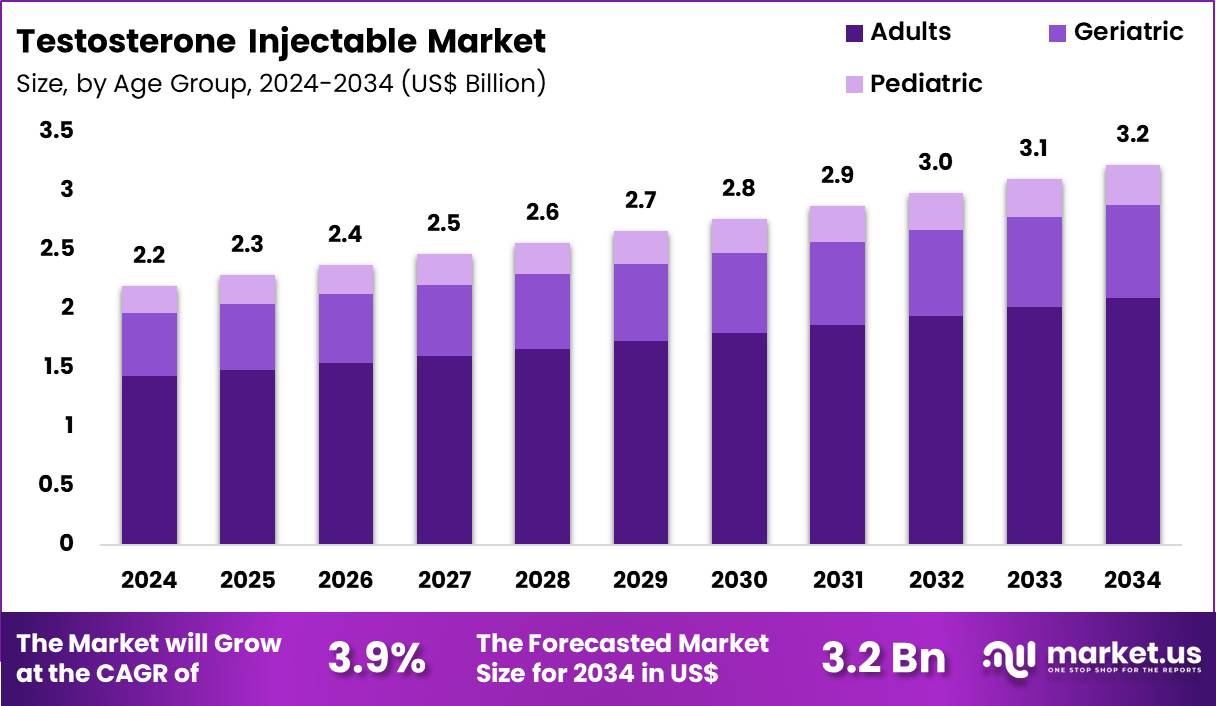
New York, NY – Oct 09, 2026 – The Global Testosterone Injectable Market size is expected to be worth around US$ 3.2 Billion by 2034 from US$ 2.2 Billion in 2024, growing at a CAGR of 3.9% during the forecast period 2025 to 2034. In 2024, North America led the market, achieving over 40.0% share with a revenue of US$ 0.9 Billion.
Testosterone injectables are hormone-based pharmaceutical products used primarily for testosterone replacement therapy in men with clinically confirmed low testosterone levels, a condition known as hypogonadism. These products contain testosterone esters, such as testosterone cypionate, enanthate, or undecanoate, and are administered through intramuscular or other approved injection routes, depending on the formulation.
The global testosterone injectable market is influenced by the increasing awareness of male hormonal health, improved diagnosis of testosterone deficiency, and growing demand for hormone replacement therapies. Market growth is also supported by developments in pharmaceutical formulations, expanding healthcare access, and the availability of different dosage strengths and administration schedules.
Key market participants include pharmaceutical manufacturers involved in the development, production, and distribution of testosterone-based medicines. Competition is shaped by product quality, regulatory compliance, pricing strategies, distribution networks, and formulation innovation.
However, the market faces challenges related to prescription restrictions, potential adverse effects, misuse concerns, and stringent regulatory requirements. Overall, continued clinical research, patient awareness, and product development are expected to influence the market’s future direction.
Key Takeaways
- In 2024, the market was valued at US$ 2.2 Billion and is projected to reach US$ 3.2 Billion by 2034, registering a CAGR of 3.9% during the forecast period.
- By age group, the market is segmented into adults, pediatric, and geriatric populations. The adult segment dominated in 2024, accounting for a market share of 64.9%.
- Based on application, the market is categorized into hypogonadism, autoimmune conditions, genetic disorders, and sex organ surgeries. The hypogonadism segment held the largest share of 52.8%.
- By end user, the market is divided into hospitals, specialty clinics, and homecare settings. The hospital segment dominated in 2024, capturing the largest revenue share of 58.7%.
- Regionally, North America led the market in 2024, accounting for a market share of 40.0%.
Key Market Segments
- Age Group Analysis: The adult segment dominated the Testosterone Injectable market in 2024, accounting for 64.9% of the age group category. Rising diagnosis of testosterone deficiency, increasing awareness of men’s health, and growing demand for hormone replacement therapy are supporting segment growth. Long-term treatment needs further strengthen demand.
- Application Analysis: The hypogonadism segment accounted for 52.8% of the Testosterone Injectable market in 2024, making it the leading application category. Increasing awareness of testosterone deficiency, improved diagnostic capabilities, and growing demand for hormone replacement therapy are supporting segment expansion. Long-term treatment requirements further contribute to sustained market demand.
- End-User Analysis: The hospital segment dominated the Testosterone Injectable market in 2024, accounting for 58.7% of the end-user category. Comprehensive diagnostic services, supervised injection administration, and access to endocrinology and urology specialists support hospital adoption. Patient monitoring and established treatment protocols further strengthen the segment’s leading position.
Regional Analysis
North America Testosterone Injectable Market Analysis
North America accounted for 40.0% of the global Testosterone Injectable market in 2024, supported by increasing awareness of hypogonadism, improved diagnostic practices, and expanding access to hormone replacement therapy.
Growing demand for testosterone cypionate and enanthate, alongside established healthcare infrastructure and specialist services, has supported regional market development. Telemedicine adoption and improved patient monitoring have further enhanced treatment accessibility. Rising obesity and metabolic disorders also contribute to the demand for testosterone deficiency management.
Asia Pacific Testosterone Injectable Market Analysis
The Asia Pacific region is expected to register the highest CAGR during the forecast period, driven by an aging population, increasing healthcare awareness, and improving access to diagnostic services. Growing recognition of hypogonadism and expanding healthcare infrastructure are creating opportunities for market development.
Pharmaceutical companies are strengthening regional distribution and product availability to address increasing demand. Greater physician awareness and improved treatment access are expected to support adoption. A study reported that clinical hypogonadism affected 17.5% of Malaysian men with type 2 diabetes, highlighting the potential need for diagnosis and treatment.
Emerging Trends
- Development of longer-acting formulations: Pharmaceutical companies are exploring formulations with different release characteristics and dosing intervals. Longer-acting products may reduce administration frequency for eligible patients, depending on the specific medicine and its approved prescribing instructions.
- Greater focus on safety monitoring: Blood pressure monitoring and continued assessment of treatment risks are becoming important market considerations. The FDA’s February 2025 labeling changes reinforce the need for safety information to guide prescribing and patient follow-up.
- Expansion of generic product availability: Generic testosterone injections provide additional purchasing options in markets where approved products are available. Competition among manufacturers may influence pricing, supply continuity, and access, subject to national regulatory and reimbursement requirements.
- Improved diagnosis and treatment monitoring: Greater attention to laboratory testing, symptom assessment, and follow-up may support more appropriate treatment decisions. Healthcare providers can use testosterone measurements and clinical reviews to assess whether treatment is suitable and effective.
- Growth in specialized healthcare delivery: Hospitals, specialist clinics, and selected outpatient services are important channels for prescribing, administering, and monitoring injectable treatments. Industry forecasts also identify hospitals, home care, and specialty clinics as potential market opportunity areas.
Use Cases
- Primary hypogonadism: Testosterone injections may be prescribed when the testes produce insufficient testosterone because of congenital conditions, injury, or other medical causes. Treatment is considered after clinical assessment and confirmation of hormone deficiency.
- Secondary hypogonadism: In certain patients, inadequate testosterone production is associated with problems involving the hypothalamus or pituitary gland. Injectable testosterone may be used as replacement therapy when medically indicated and permitted by the applicable product label.
- Hormone replacement in diagnosed deficiency: For eligible patients with confirmed testosterone deficiency, injections can help restore hormone levels and address associated symptoms. The treatment plan depends on the underlying condition, laboratory findings, response, and safety considerations.
- Management through specialist clinics: Endocrinology and urology services may evaluate patients with suspected hormone deficiency, arrange testing, prescribe appropriate therapy, and monitor treatment. These services support coordinated care rather than the use of testosterone without a confirmed medical need.
- Ongoing maintenance therapy: Patients who require long-term replacement may receive scheduled injections with periodic clinical reviews and laboratory monitoring. Treatment frequency depends on the formulation and individual response, while continued use should be reviewed for benefits and possible adverse effects.
Frequently Asked Questions About Testosterone Injectable
- What are the common types of testosterone injections?
Common formulations include testosterone cypionate, testosterone enanthate, and testosterone undecanoate. Their duration of action, approved indications, and administration schedules differ. The appropriate formulation depends on clinical needs and local regulatory approval. - Who may need testosterone injections?
Testosterone injections may be prescribed to men with confirmed testosterone deficiency caused by certain testicular or hypothalamic-pituitary conditions. Diagnosis generally requires appropriate hormone testing, symptom assessment, and medical evaluation before treatment begins. - What are the potential risks of testosterone injections?
Potential risks include increased blood pressure, changes in red blood cell levels, acne, and other adverse effects. Regular medical monitoring is important, and treatment should be used only under qualified healthcare supervision. - What factors are driving the testosterone injectable market?
Market growth is supported by awareness of testosterone deficiency, diagnostic developments, demand for replacement therapy, and product innovation. Access to healthcare, treatment affordability, regulatory requirements, and the availability of alternative formulations also influence market performance. - Which distribution channels are important in the testosterone injectable market?
Hospitals, specialty clinics, retail pharmacies, and other authorized pharmaceutical channels support the supply of testosterone injections. Their relative importance depends on local prescribing practices, administration requirements, reimbursement arrangements, and healthcare infrastructure. - Which regions offer opportunities in the testosterone injectable market?
North America, Europe, and Asia-Pacific are relevant regions for market assessment. Growth opportunities depend on healthcare access, diagnosis rates, pharmaceutical manufacturing capacity, pricing policies, and regulatory approval. Regional performance should be evaluated using country-specific data. - What is the future outlook for the testosterone injectable market?
The market outlook will depend on improved formulations, reliable product supply, clinical evidence, and access to appropriate treatment. Long-term growth estimates remain subject to regulatory changes, competitive pressures, healthcare spending, and evolving prescribing practices.
Conclusion
The global testosterone injectable market is expected to experience steady growth, supported by increasing awareness of male hormonal health, improved diagnosis of hypogonadism, and rising demand for testosterone replacement therapy.
Valued at US$ 2.2 billion in 2024, the market is projected to reach US$ 3.2 billion by 2034, reflecting a CAGR of 3.9%. North America remains the leading regional market, while Asia Pacific is expected to offer significant growth opportunities.
Product innovation, improved healthcare access, and expanding treatment options may support market development. However, regulatory requirements, safety concerns, and pricing pressures will continue to influence future market performance.
Discuss your needs with our analyst
Please share your requirements with more details so our analyst can check if they can solve your problem(s)




