
Overview
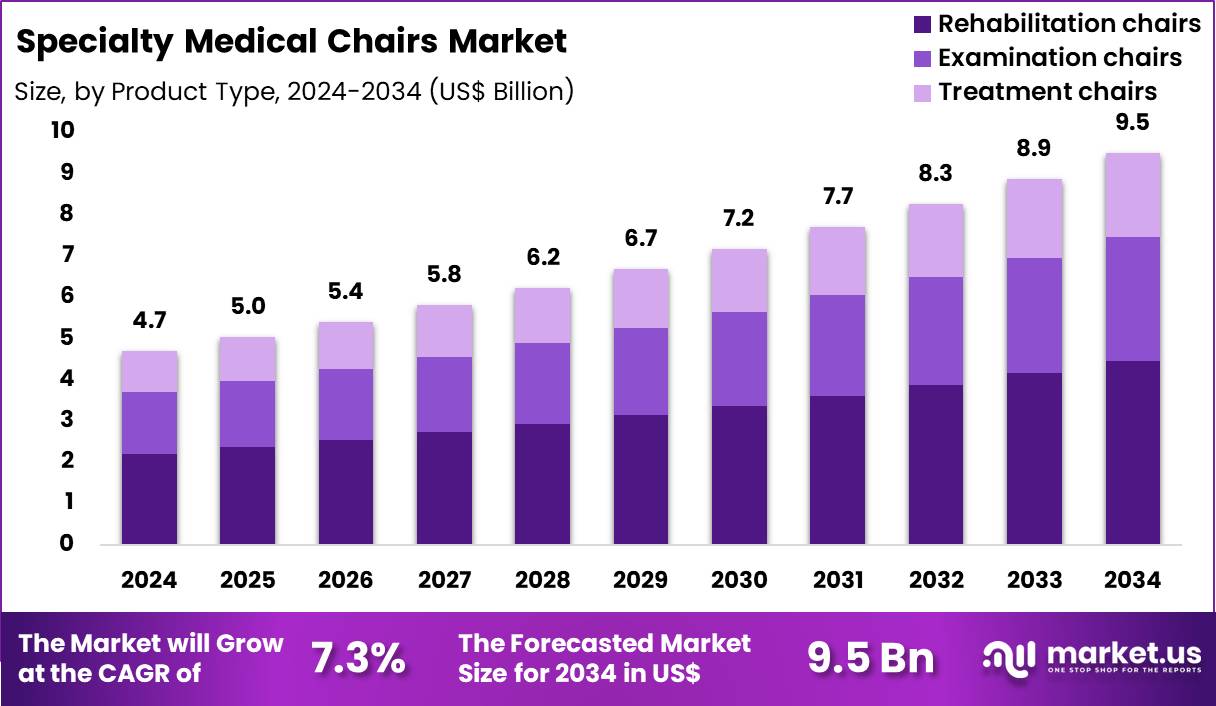
New York, NY – Oct 16, 2026 –The Global Specialty Medical Chairs Market size is expected to be worth around US$ 9.5 Billion by 2034 from US$ 4.7 Billion in 2024, growing at a CAGR of 7.3% during the forecast period 2025 to 2034. In 2024, North America led the market, achieving over 45.1% share with a revenue of US$ 2.1 Billion.
Specialty medical chairs are essential healthcare equipment designed to support patient comfort, safety, and efficient clinical procedures across hospitals, clinics, diagnostic centers, and specialized care facilities. These chairs are developed for specific medical applications, including dialysis, blood collection, chemotherapy, dental treatments, ophthalmology, rehabilitation, and outpatient examinations.
The growing focus on patient-centered healthcare, increasing demand for specialized medical services, and expansion of healthcare infrastructure are supporting the adoption of specialty medical chairs. Modern products incorporate features such as adjustable positioning, ergonomic designs, reclining mechanisms, durable upholstery, and easy-to-clean surfaces to meet the requirements of healthcare professionals and patients.
Technological advancements are also encouraging the development of electrically operated chairs with programmable positions, enhanced mobility, and improved positioning controls. These features can help healthcare providers streamline routine procedures, improve workflow efficiency, and support patients with varying mobility requirements.
Manufacturers are increasingly emphasizing product durability, infection control, user-friendly operation, and compliance with applicable medical device standards. As healthcare facilities continue to prioritize operational efficiency and patient experience, specialty medical chairs are expected to remain an important component of modern medical infrastructure.
Ongoing investments in healthcare facilities, rising demand for outpatient services, and growing awareness of specialized patient care are creating opportunities for product innovation and market development. The sector is positioned to benefit from continued modernization of healthcare delivery systems and increasing emphasis on safe, comfortable, and efficient clinical environments.
Key Takeaways
- In 2024, the market recorded revenue of US$ 4.7 billion and is projected to grow at a CAGR of 7.3%, reaching US$ 9.5 billion by 2034.
- By product type, the market is segmented into rehabilitation chairs, examination chairs, and treatment chairs. Rehabilitation chairs dominated the market, accounting for 46.9% of the total share.
- By end user, the market is categorized into hospitals, clinics, and other facilities. Hospitals accounted for the largest share at 58.6%.
- Regionally, North America dominated the market, capturing a share of 45.1%.
Key Market Segments
- Product Type Analysis: Rehabilitation chairs dominated the Specialty Medical Chairs market, accounting for 46.9% of the product type segment. Rising rehabilitation demand, aging populations, increasing mobility impairments, and expanding post-surgical recovery programs are supporting adoption across hospitals and specialized therapy centers.
- End-User Analysis: Hospitals dominated the Specialty Medical Chairs market, accounting for 58.6% of the end-user segment. High patient volumes, expanding clinical departments, increasing rehabilitation needs, and investments in advanced healthcare infrastructure are driving demand for specialized chairs across inpatient, outpatient, and treatment facilities.
Regional Analysis
North America Leads the Specialty Medical Chairs Market
In 2024, North America accounted for 45.1% of the global specialty medical chairs market, supported by expanding outpatient clinics, ambulatory surgery centers, and advanced healthcare infrastructure. Rising elective procedures and demand for improved patient comfort are encouraging the adoption of ergonomic, powered, and adjustable chairs.
Increasing emphasis on infection control, bariatric care, and age-related medical needs is further supporting product demand. The Centers for Disease Control and Prevention reported that 65.5% of U.S. adults aged 18 years and older received a dental examination or cleaning in 2023, highlighting the importance of dental care infrastructure.
Asia Pacific Expected to Record the Highest CAGR
Asia Pacific is expected to register the highest CAGR during the forecast period, driven by healthcare infrastructure expansion, urbanization, and rising demand for specialized medical services.
Investments in dental, ophthalmology, and orthopedic facilities are supporting chair adoption. Government initiatives, affordable product innovations, and expanding rural healthcare access are expected to create additional growth opportunities across the region.
Emerging Trends
- Growing adoption of powered and automated chairs: Hospitals and specialty clinics are increasingly interested in electrically operated chairs that allow easy adjustment of height, reclining angle, and patient position. These features can improve workflow efficiency and reduce the physical effort required from healthcare professionals.
- Increasing demand for chairs designed for specific treatments: The need for dialysis, chemotherapy, dental, ophthalmic, and ear, nose, and throat (ENT) procedures is supporting demand for purpose-built chairs. Designs tailored to individual procedures can provide better positioning, patient access, and comfort during treatment.
- Greater focus on ergonomic and accessible design: Manufacturers are placing greater emphasis on adjustable armrests, supportive seating, easy entry and exit, and designs that accommodate patients with limited mobility. The objective is to improve accessibility for older adults and people who need assistance during examinations or treatment.
- Increased attention to hygiene and safe operation: Healthcare facilities require equipment that can be cleaned effectively and used safely in busy clinical environments. Manufacturers have an opportunity to improve upholstery, accessible surfaces, control layouts, and maintenance features. The U.S. Food and Drug Administration (FDA) emphasizes usability and risk reduction in medical device design.
- Expansion of rehabilitation and outpatient care equipment: Healthcare delivery is creating opportunities for specialty chairs in rehabilitation centres, ambulatory facilities, and specialized clinics. Demand is supported by the need for suitable positioning during repeated treatments and recovery sessions, although purchasing decisions remain dependent on budgets and clinical requirements.
Use Cases
- Dialysis treatment centres: Dialysis chairs support patients during hemodialysis sessions, which commonly last three to four hours. Reclining positions, arm support, and adjustable seating can help patients remain comfortable while healthcare staff monitor treatment.
- Oncology and chemotherapy departments: Infusion chairs are used when patients receive chemotherapy and other prescribed intravenous treatments. Adjustable backrests, arm supports, and easy access for clinical staff are important features in outpatient cancer treatment rooms.
- Dental clinics and oral care facilities: Dental chairs position patients at suitable angles for examinations, cleaning, fillings, and other dental procedures. Adjustable headrests, backrests, and chair height allow dentists to access the treatment area and maintain a suitable working position.
- Ophthalmology and eye examination centres: Ophthalmic chairs are used during vision assessments, eye examinations, and selected eye treatments. Stable positioning and adjustable height help patients sit correctly while specialists use diagnostic equipment to examine vision and identify eye conditions.
- Rehabilitation and physiotherapy centres: Rehabilitation chairs support supervised exercises, patient transfers, mobility assessments, and selected recovery activities. Adjustable seating and supportive structures can help therapists position patients according to their movement abilities and treatment plans.
Frequently Asked Questions About Specialty Medical Chairs
- What are the main types of specialty medical chairs?
The main types include examination chairs, treatment chairs, rehabilitation chairs, dialysis chairs, dental chairs, ophthalmic chairs, ENT chairs, blood collection chairs, and infusion chairs. Each type is designed to meet specific clinical requirements and patient positioning needs. - How do specialty medical chairs improve patient care?
Specialty medical chairs support appropriate patient positioning and provide easier access during clinical procedures. Features such as adjustable height, reclining backrests, and supportive armrests can improve comfort and help healthcare professionals perform examinations and treatments more efficiently. - Which healthcare facilities commonly use specialty medical chairs?
Specialty medical chairs are commonly used in hospitals, dental practices, dialysis centres, oncology departments, ophthalmology clinics, ENT facilities, diagnostic centres, and rehabilitation units. Their selection depends on the procedures performed, patient needs, and facility operating requirements. - What factors are driving the specialty medical chairs market?
Market growth is supported by expanding specialized healthcare services, rising demand for outpatient treatments, an ageing population, and improvements in medical equipment design. Greater emphasis on patient accessibility and clinical workflow efficiency is also supporting purchasing demand - Which product segments are important in the specialty medical chairs market?
Examination chairs, treatment chairs, and rehabilitation chairs represent major product categories. Demand varies according to clinical applications, including dentistry, dialysis, chemotherapy, ophthalmology, and physical rehabilitation, with purchasing decisions influenced by treatment volume and equipment requirements. - How is technology influencing the specialty medical chairs market?
Technology is supporting the development of powered positioning, programmable controls, improved ergonomics, and potentially connected features. Manufacturers must balance these developments with usability, reliability, maintenance requirements, and safety considerations to meet the practical needs of healthcare providers. - What is the future outlook for the specialty medical chairs market?
The market outlook remains positive as specialized treatments, rehabilitation services, and outpatient healthcare facilities continue to develop. Future demand will depend on healthcare investment, replacement cycles, product innovation, and the ability of manufacturers to offer safe, affordable equipment.
Conclusion
The specialty medical chairs market is expected to experience steady growth, supported by expanding healthcare infrastructure, rising demand for specialized treatments, and increasing focus on patient comfort and safety. Rehabilitation chairs and hospital-based applications remain important market segments, while North America continues to lead due to its advanced healthcare infrastructure.
Meanwhile, Asia Pacific is expected to offer significant growth opportunities through healthcare investments and expanding access to specialized services. Technological advancements, ergonomic designs, and improved infection control are likely to support product innovation. Overall, manufacturers focusing on affordability, durability, and clinical efficiency are well positioned to address evolving healthcare needs.
Discuss your needs with our analyst
Please share your requirements with more details so our analyst can check if they can solve your problem(s)