


Overview
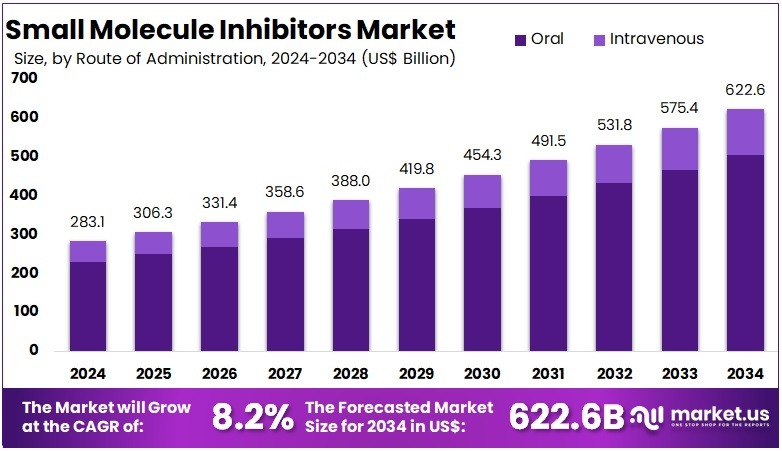
New York, NY – Sep 03, 2026 – The Global Small Molecule Inhibitors Market size is expected to be worth around US$ 622.6 Billion by 2034, from US$ 283.1 Billion in 2024, growing at a CAGR of 8.2% during the forecast period from 2025 to 2034. North America held a dominant market position, capturing more than a 45.3% share and holds US$ 128.2 Billion market value for the year.
The global Small Molecule Inhibitors market is gaining strong momentum as pharmaceutical companies continue to develop targeted therapies for cancer, autoimmune disorders, infectious diseases, and rare genetic conditions.
These medicines are chemically synthesized compounds with a molecular weight typically below 900 Daltons, allowing them to enter cells easily and block disease-related proteins or enzymes. Their oral availability, lower manufacturing costs, and well-established regulatory pathways make them a preferred treatment option across multiple therapeutic areas.
According to the U.S. Food and Drug Administration (FDA), small molecules account for nearly 90% of all approved medicines, highlighting their continued importance in modern drug development. The growing burden of chronic diseases is also supporting demand.
The World Health Organization (WHO) estimates that noncommunicable diseases cause approximately 43 million deaths annually, representing nearly 75% of all global deaths. In oncology, targeted small-molecule inhibitors are becoming standard treatment options, with many therapies demonstrating improved survival outcomes for patients with specific genetic mutations.
Technological advances in artificial intelligence, computational drug discovery, and structure-based drug design are accelerating the identification of new inhibitor candidates while reducing research timelines. Increasing investment in precision medicine, expanding clinical trial activity, and rising approvals of kinase and enzyme inhibitors are further strengthening market growth.
North America currently leads the market due to its robust pharmaceutical research ecosystem, while Asia-Pacific is emerging as the fastest-growing region, supported by expanding biotechnology investments, growing healthcare expenditure, and increasing access to innovative targeted therapies.
Key Takeaways
- The global Small Molecule Inhibitors Market is expected to grow from US$ 283.1 billion in 2024 to approximately US$ 622.6 billion by 2034, registering a CAGR of 8.2% during the forecast period.
- Kinase inhibitors emerged as the leading drug class in 2024, accounting for over 36.8% of the global market, driven by their widespread use in targeted therapeutic applications.
- Oncology remained the largest therapeutic area in 2024, capturing more than 48.1% of the market due to the increasing adoption of targeted small-molecule treatments for cancer.
- The oral route of administration dominated the market in 2024, holding over 81.2% share, supported by improved patient compliance, convenience, and broad clinical acceptance.
- Hospital pharmacies led the distribution channel segment in 2024 with more than 81.2% market share, reflecting strong institutional purchasing and specialist-led medication dispensing.
- North America held the largest regional share in 2024, accounting for over 45.3% of the global market and generating approximately US$ 128.2 billion in revenue.
Market Segmentation
- Drug Class Analysis: In 2024, Kinase Inhibitors dominated the Small Molecule Inhibitors Market with over 36.8% share, driven by extensive use in oncology and immune disorders. Precision medicine, biomarker-guided therapies, expanding kinase inhibitor pipelines, and continuous innovation in targeted drug development supported sustained market leadership.
- Therapeutic Area Analysis: In 2024, Oncology accounted for more than 48.1% of the market, supported by rising cancer incidence and increasing adoption of targeted therapies. Growing precision medicine initiatives, expanding clinical trials, and approvals of mutation-specific inhibitors strengthened oncology’s leading position across global healthcare systems.
- Route of Administration Analysis: In 2024, the Oral route captured over 81.2% market share due to convenient dosing, improved patient adherence, and widespread use in chronic diseases. Advances in formulation technologies, enhanced drug absorption, and strong acceptance in targeted cancer therapies reinforced its dominant position.
- Distribution Channel Analysis: In 2024, Hospital Pharmacies held more than 81.2% of the market, supported by specialist supervision, high patient volumes, and complex treatment protocols. Their central role in dispensing targeted oncology therapies, managing advanced care, and ensuring safe administration maintained segment leadership.
Statistical Information
- In 2025, the FDA-approved small molecule kinase inhibitor zongertinib achieved an objective response rate (ORR) of 75% in 71 previously treated HER2-mutant NSCLC patients who had not received prior HER2-targeted therapy.
- In the same 2025 FDA review, 58% of responders treated with zongertinib maintained a duration of response of at least 6 months.
- Among 34 patients previously treated with a HER2-targeted antibody-drug conjugate, zongertinib produced an ORR of 44%, with 27% maintaining responses for 6 months or longer in 2025.
- A 2025 clinical update for the PI3Kα inhibitor zovegalisib reported a clinical benefit rate of 67% among 52 evaluable patients receiving combination therapy.
- The same 2025 study reported a confirmed objective response rate of 39% in 31 patients with measurable disease receiving zovegalisib plus fulvestrant.
- In 2025, 81% (25 of 31) measurable-disease patients treated with zovegalisib experienced measurable tumor reduction, demonstrating strong biological activity.
- Patients receiving the recommended 600 mg twice-daily dose of zovegalisib maintained a median dose intensity of 92%, indicating high treatment adherence and limited dose interruptions during 2025.
- Only 2 patients discontinued zovegalisib treatment because of treatment-related adverse events among 64 patients receiving the recommended dose in the 2025 analysis.
- In 2026, the HIF-2α small molecule inhibitor casdatifan demonstrated a confirmed overall response rate of 45% and a median progression-free survival of 15.1 months in late-line kidney cancer.
Regional Analysis
In 2024, North America led the Small Molecule Inhibitors Market, accounting for more than 45.3% of global revenue and reaching US$ 128.2 billion. The region benefits from a strong pharmaceutical innovation ecosystem, extensive clinical research infrastructure, and rapid regulatory approvals for targeted therapies. The U.S. FDA approved 46 novel drugs in 2025, including 31 small-molecule drugs, highlighting continued leadership in drug development and commercialization.
Europe remained the second-largest regional market, supported by advanced healthcare systems, precision medicine initiatives, and collaborative research programs across academia and industry. Continued investment in oncology and rare disease research has strengthened the adoption of innovative small-molecule therapies.
Asia-Pacific emerged as the fastest-growing region due to expanding pharmaceutical manufacturing, increasing clinical trial activity, improved healthcare access, and rising demand for targeted therapies. Meanwhile, Latin America and the Middle East & Africa continued to witness gradual growth, supported by improving healthcare infrastructure, greater access to innovative medicines, and increasing partnerships with global pharmaceutical companies, although affordability and regulatory challenges continue to influence adoption.
Business opportunities
The Small Molecule Inhibitors Market offers significant business opportunities as precision medicine becomes more widely adopted across oncology, autoimmune, neurological, and rare disease treatments. Pharmaceutical companies are investing in next-generation kinase, KRAS, PARP, and protein-degradation inhibitors to address unmet clinical needs and improve treatment outcomes.
Advances in artificial intelligence, computational chemistry, and structure-based drug discovery are reducing development timelines and improving candidate selection, creating opportunities for biotechnology firms, contract research organizations (CROs), and technology providers.
Expanding biomarker testing and companion diagnostics are increasing demand for mutation-specific small molecule inhibitors, particularly in cancer care. Emerging markets across Asia-Pacific, Latin America, and the Middle East are also presenting attractive growth opportunities due to rising healthcare investments, expanding pharmaceutical manufacturing, and greater access to innovative therapies.
Strategic partnerships, licensing agreements, and acquisitions between biotech startups and large pharmaceutical companies continue to accelerate pipeline expansion. In addition, opportunities are growing in oral targeted therapies, combination treatment regimens, and rare disease drug development supported by regulatory incentives such as orphan drug designation and accelerated approval pathways, enabling faster commercialization of innovative small molecule inhibitors.
Emerging Trends
- Small molecules continue to dominate new drug approvals: In 2025, the U.S. FDA approved 46 novel drugs, of which 31 were small-molecule drugs, highlighting their continued importance despite growth in biologics and gene therapies.
- Computer-aided drug discovery is accelerating inhibitor development: Reviews published in 2025–2026 report that AI, structure-based design, and scaffold optimization are shortening lead identification and improving molecular design for new kinase and enzyme inhibitors.
- Fluorine chemistry is becoming a key design strategy: In 2025, 14 of 29 (48%) newly approved FDA small-molecule drugs contained at least one fluorine atom, improving metabolic stability, selectivity, and pharmacokinetic performance across multiple therapeutic classes.
- Nitrogen-containing heterocyclic molecules remain highly preferred: In 2025, 26 of 46 FDA-approved drugs (56.5%) contained nitrogen heterocycles, demonstrating their growing role in improving potency, target binding, and oral bioavailability of small-molecule inhibitors.
- Precision medicine is expanding targeted inhibitor development: The NIH reports that precision medicine now benefits millions of patients, with biomarker-guided treatment increasingly supporting personalized use of small-molecule inhibitors in oncology and rare diseases.
Use Cases
- Targeted lung cancer treatment is improving outcomes: In 2025, the FDA reported that the small-molecule inhibitor zongertinib achieved a 75% objective response rate in 71 patients with HER2-mutant non-small cell lung cancer, supporting precision oncology.
- Treatment durability continues to improve: In the same 2025 FDA evaluation, 58% of patients responding to zongertinib maintained their response for 6 months or longer, demonstrating sustained clinical benefit from targeted inhibitor therapy.
- Combination inhibitor therapy is expanding in breast cancer: A 2025 clinical study showed the PI3Kα inhibitor zovegalisib achieved a 67% clinical benefit rate among 52 evaluable patients receiving combination treatment for advanced breast cancer.
- Kidney cancer therapies are showing longer disease control: In 2026, the HIF-2α inhibitor casdatifan demonstrated a 45% confirmed response rate and 15.1 months median progression-free survival in advanced renal cell carcinoma patients.
- Chronic myeloid leukemia treatment continues to improve: A 2025 follow-up study found the small-molecule inhibitor olverembatinib achieved a median event-free survival of 21.2 months, compared with 2.9 months in the control group, supporting long-term disease management.
Recent Development
- In March 2025, AstraZeneca plc announced the acquisition of EsoBiotec for up to US$1 billion, expanding its oncology portfolio with in vivo cell therapy technologies that complement its targeted cancer medicines pipeline.
- In June 2025, Eli Lilly and Company announced the acquisition of Verve Therapeutics, expanding its cardiovascular disease portfolio and strengthening precision medicine capabilities alongside its growing small-molecule research programs.
- In July 2025, Merck & Co., Inc. completed the acquisition of Verona Pharma, strengthening its cardiopulmonary portfolio with Ohtuvayre (ensifentrine), a first-in-class selective dual PDE3/PDE4 small-molecule inhibitor for respiratory disease
- In 2025, Bristol-Myers Squibb Company received U.S. FDA approval for Cobenfy (xanomeline and trospium chloride) for an additional indication in schizophrenia development activities, while continuing to expand its small-molecule neuroscience portfolio through late-stage clinical programs.
Frequently Asked Questions on Small Molecule Inhibitors
- What is driving the growth of the Small Molecule Inhibitors Market?
The market is expanding due to the increasing prevalence of chronic diseases, growing adoption of precision medicine, rising approvals of targeted therapies, and continuous investments in drug discovery technologies. Advances in artificial intelligence and biomarker-based treatment strategies also support market growth. - Which therapeutic area dominates the Small Molecule Inhibitors Market?
Oncology is the leading therapeutic area because small molecule inhibitors effectively target cancer-driving proteins and genetic mutations. Their widespread use in precision oncology, combined with increasing cancer incidence and ongoing clinical research, continues to strengthen demand across global healthcare systems. - Why are kinase inhibitors important in this market?
Kinase inhibitors are among the most widely used small-molecule drugs because they selectively block signaling pathways involved in cancer and immune disorders. Their proven clinical effectiveness and continuous development of next-generation therapies make them a major segment of the market. - Why is oral administration preferred for small-molecule inhibitors?
Oral formulations improve patient convenience, treatment adherence, and long-term disease management. They reduce the need for hospital visits and support outpatient care, making them the preferred route for many targeted therapies used in oncology and chronic disease treatment. - Which region leads the Small Molecule Inhibitors Market?
North America leads the market due to its advanced pharmaceutical research infrastructure, high healthcare spending, strong clinical trial activity, and favorable regulatory environment. The presence of major pharmaceutical companies also accelerates innovation and commercialization of targeted therapies. - What opportunities are emerging in the Small Molecule Inhibitors Market?
Growing opportunities include targeted therapies for rare diseases, AI-assisted drug discovery, protein degradation technologies, combination treatments, and expansion into emerging healthcare markets. Increasing investments in precision medicine are also creating new commercial and research opportunities. - Who are the major companies operating in the Small Molecule Inhibitors Market?
Major companies include Pfizer Inc., Novartis AG, AstraZeneca plc, Bristol-Myers Squibb Company, Merck & Co., Eli Lilly and Company, GlaxoSmithKline plc, Johnson & Johnson, Takeda Pharmaceutical Company Limited, Amgen Inc., Sanofi S.A., and Bayer AG.
Conclusion
The Small Molecule Inhibitors Market is witnessing steady growth, driven by increasing demand for targeted therapies across oncology, autoimmune, infectious, and rare diseases. Advances in precision medicine, biomarker-guided treatment, and AI-enabled drug discovery are accelerating the development of innovative inhibitors with improved efficacy and safety.
Strong clinical research, expanding regulatory approvals, and strategic collaborations among pharmaceutical companies continue to strengthen the competitive landscape. While challenges such as drug resistance, development costs, and regulatory complexity remain, continuous innovation and growing healthcare investments are expected to support long-term market expansion, making small molecule inhibitors a cornerstone of future targeted therapeutic strategies.
Discuss your needs with our analyst
Please share your requirements with more details so our analyst can check if they can solve your problem(s)




