
Overview
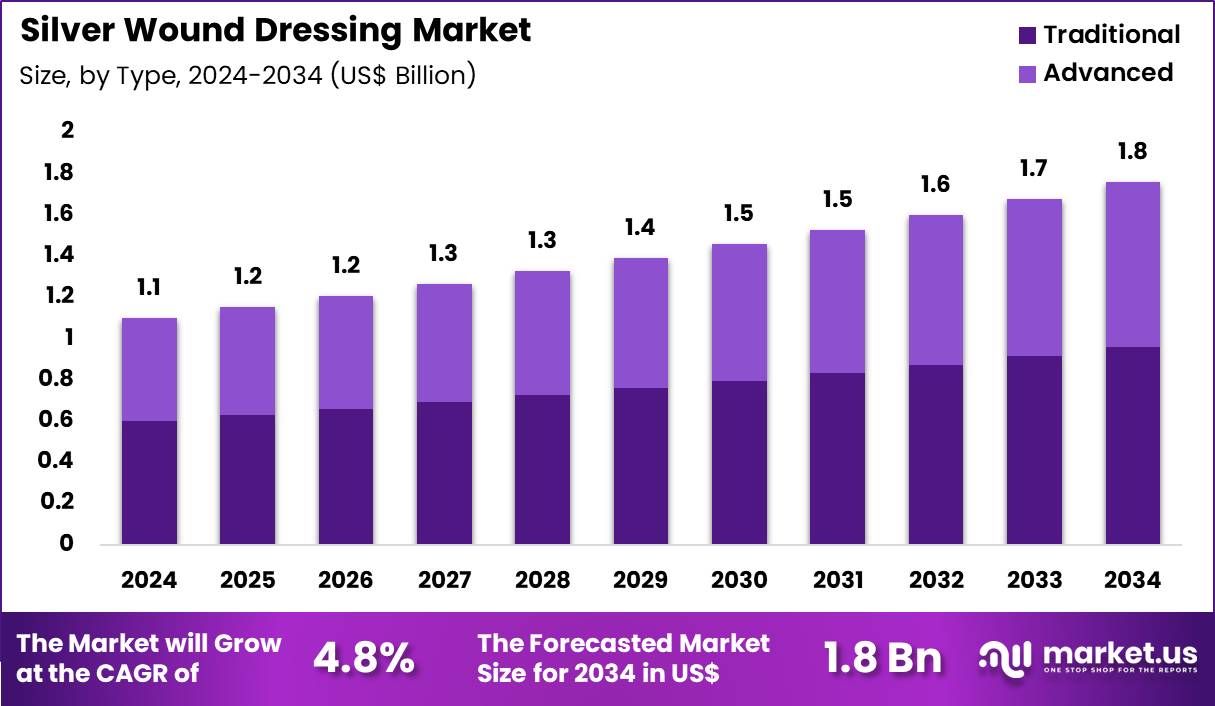
New York, NY – Oct 15, 2026 – The Global Silver Wound Dressing Market size is expected to be worth around US$ 1.8 Billion by 2034 from US$ 1.1 Billion in 2024, growing at a CAGR of 4.8% during the forecast period 2025 to 2034. In 2024, North America led the market, achieving over 47.2% share with a revenue of US$ 0.5 Billion.
Silver wound dressings are advanced wound care products designed to support the management of wounds that are at risk of infection or have a high microbial burden. These dressings incorporate silver, which is known for its broad-spectrum antimicrobial properties against various bacteria and other microorganisms.
Silver wound dressings are commonly used in the treatment of chronic and acute wounds, including diabetic foot ulcers, pressure ulcers, venous leg ulcers, surgical wounds, and burns, depending on the product’s intended use. They are available in different forms, such as foams, alginates, hydrofibers, and antimicrobial contact layers, allowing healthcare professionals to select suitable options based on wound characteristics and patient needs.
The growing focus on infection prevention, effective wound management, and improved patient outcomes is supporting interest in advanced wound care technologies. Silver dressings can help manage microbial burden in appropriately selected wounds, while certain dressing types also assist in absorbing wound exudate and maintaining a suitable wound environment.
However, silver wound dressings are not necessary for every wound, and their use should be guided by clinical assessment and product instructions. Appropriate wound cleansing, regular monitoring, and professional medical care remain essential components of effective treatment.
With continued innovation in wound care materials and technologies, silver wound dressings are expected to remain an important option within the advanced wound care sector, supporting healthcare providers in addressing complex wound management needs.
Key Takeaways
- In 2024, the silver wound dressing market generated revenue of US$ 1.1 billion and is projected to reach US$ 1.8 billion by 2034, growing at a CAGR of 4.8%.
- By product type, the market is segmented into silver bandages, silver foam dressings, silver-plated nylon fiber dressings, silver hydrogel and hydrofiber dressings, and silver alginate dressings. Silver bandages dominated the market with a 36.8% share.
- By type, the market is categorized into traditional and advanced dressings, with traditional dressings accounting for 54.6% of the market.
- By application, the market is divided into acute and chronic wounds, with acute wounds holding the largest revenue share of 58.3%.
- By age group, the market is segmented into pediatric, adult, and geriatric populations. The adult segment led the market with a 49.8% revenue share.
- By end user, the market is classified into hospitals, clinics and wound care centers, home healthcare, and others. Hospitals dominated the market with a 44.9% share.
- Regionally, North America led the silver wound dressing market, accounting for a 47.2% market share.
Key Market Segments
- Product Type Analysis: Silver bandages dominated the product type segment with a 36.8% market share, supported by their ease of application, affordability, and antimicrobial properties. Their widespread use in hospitals, emergency care, and postoperative wound management is expected to sustain demand during the forecast period.
- Type Analysis: Traditional dressings accounted for 54.6% of the market, driven by their cost-effectiveness, ease of use, and established clinical acceptance. Their compatibility with existing wound care practices and availability across healthcare facilities continue to support adoption, particularly in cost-sensitive healthcare settings.
- Application Analysis: Acute wounds held the largest application share at 58.3%, driven by surgical procedures, traumatic injuries, burns, and emergency care requirements. The growing emphasis on infection prevention and effective postoperative wound management is expected to support demand for silver wound dressings.
- Age Group Analysis: The adult segment dominated the age group category with a 49.8% market share, supported by higher surgical volumes, occupational injuries, and sports-related wounds. Greater healthcare utilization and increasing awareness of wound infection prevention continue to contribute to demand among adult patients.
- End-User Analysis: Hospitals accounted for 44.9% of the market, supported by high patient volumes, surgical procedures, and stringent infection control requirements. Established wound care protocols, centralized procurement, and the management of complex injuries are expected to reinforce hospital demand for silver wound dressings.
Regional Analysis
North America Leads the Silver Wound Dressing Market
North America accounted for 47.2% of the silver wound dressing market in 2024, driven by increasing demand for effective wound management across hospitals and outpatient clinics. The rising incidence of surgical wounds, pressure ulcers, burns, and traumatic injuries has supported the adoption of antimicrobial dressings.
Established healthcare infrastructure, favorable reimbursement coverage, and growing home healthcare services further contribute to regional market growth. Technological advancements improving moisture management and patient comfort have also supported product adoption.
Asia Pacific Expected to Register the Highest CAGR
Asia Pacific is projected to record the highest CAGR during the forecast period, supported by expanding healthcare infrastructure, increasing surgical procedures, and a growing burden of chronic wounds and traumatic injuries. Rising awareness of infection prevention and greater access to advanced wound care products are expected to accelerate adoption.
Government healthcare investments, an aging population, and expanding home healthcare services further support demand. Additionally, local manufacturers are improving the availability of cost-effective silver wound dressings, strengthening the region’s growth prospects.
Emerging Trends
- Development of advanced silver dressing materials: Manufacturers are developing silver-containing foam, alginate, and gelling-fibre dressings that combine antimicrobial action with moisture control and fluid absorption. This supports product differentiation based on wound type, fluid levels, dressing flexibility, and patient comfort.
- Greater focus on evidence-based product selection: Healthcare providers are placing greater importance on clinical evidence, appropriate patient selection, and treatment outcomes. NICE highlights limitations in the evidence supporting several advanced dressings, creating a need for stronger clinical studies and clearer product-specific performance data.
- Expansion of specialised chronic wound management: Diabetic foot ulcers, pressure ulcers, and venous leg ulcers remain important application areas for advanced wound care. The need to manage complex wounds is encouraging suppliers to develop products for specific clinical requirements, although silver use should depend on wound assessment and applicable clinical guidance.
- Increasing attention to cost-effectiveness and resource use: Hospitals and healthcare systems are evaluating dressing costs alongside clinical suitability, dressing-change frequency, fluid management, and overall treatment requirements. NICE has highlighted the financial impact of advanced dressings, supporting procurement decisions that consider total care costs rather than purchase price alone.
- Stronger focus on product safety and antimicrobial stewardship: Regulatory and clinical discussions increasingly emphasise the safe, appropriate use of antimicrobial wound products. Manufacturers must consider product-specific safety, intended use, and the potential effects of antimicrobial exposure. This creates opportunities for better labelling, clinical education, and evidence-supported treatment protocols.
Use Cases
- Burn wound management: Silver-containing dressings may be used for selected partial-thickness burns to help manage microbial contamination while maintaining a suitable wound environment. Product choice depends on burn depth, wound condition, exudate, and clinical assessment.
- Diabetic foot ulcer care: Silver dressings may be considered for selected diabetic foot wounds when clinically appropriate. However, they do not replace infection assessment, pressure relief, blood sugar management, or treatment of deeper infections. Routine silver use is not universally recommended.
- Pressure ulcer management: Silver-containing dressings can be considered for selected pressure injuries where antimicrobial treatment is clinically justified. Their use should be combined with pressure relief, skin protection, suitable nutrition, and regular wound assessment to support overall care.
- Venous leg ulcer treatment: In selected leg ulcers with suspected or confirmed local infection, clinicians may assess whether an antimicrobial dressing is suitable. Compression, when appropriate, and management of the underlying venous condition remain important parts of treatment.
- Surgical and traumatic wounds: Certain silver dressings are designed for selected surgical wounds, cuts, and traumatic injuries where the product’s approved use and clinical condition support their application. Routine use on clean, uncomplicated surgical incisions is not generally justified.
Frequently Asked Questions About Silver Wound Dressing
- What is a silver wound dressing?
A silver wound dressing is a medical dressing containing silver in a suitable form to provide antimicrobial activity. Depending on its design, it may also absorb wound fluid, maintain moisture balance, and protect the wound during healing. - How do silver wound dressings work?
Silver-containing dressings can release silver ions that interfere with the normal functions of susceptible microorganisms. The level and duration of antimicrobial activity depend on the product formulation, wound fluid, and dressing design. They do not replace necessary infection treatment. - Which wounds can be treated with silver dressings?
Silver dressings may be used for selected burns, pressure ulcers, diabetic foot ulcers, leg ulcers, and surgical wounds, depending on product indications and clinical assessment. They are not suitable for every wound, and treatment should follow professional guidance. - Are silver wound dressings suitable for every infected wound?
No. Suitability depends on the infection’s severity, wound characteristics, and product indications. Silver dressings may help manage local microbial burden, but spreading infections may require systemic treatment, and professional assessment is necessary to determine appropriate care. - What are the key benefits of silver wound dressings?
Silver wound dressings provide antimicrobial activity and can be combined with materials that absorb excess fluid or maintain a moist wound environment. Their clinical value depends on the wound type, product characteristics, and appropriate use. - What factors should be considered when selecting a silver dressing?
Selection should consider infection signs, wound size, fluid levels, tissue condition, dressing-change requirements, patient comfort, product indications, and cost. Regular assessment is important because the most appropriate dressing may change as the wound progresses. - What challenges affect the silver wound dressing market?
Key challenges include relatively high product costs, inconsistent clinical evidence across wound types, reimbursement limitations, and the need for appropriate antimicrobial use. These factors can influence procurement decisions, product adoption, clinical recommendations, and manufacturers’ market expansion strategies. - What is the role of clinical evidence in market development?
Clinical evidence influences product selection, healthcare purchasing, treatment protocols, and reimbursement decisions. NICE has highlighted limitations in evidence for several advanced dressings, indicating that well-designed studies and transparent reporting can strengthen confidence in product performance.
Conclusion
The silver wound dressing market is expected to witness steady growth, increasing from US$ 1.1 billion in 2024 to US$ 1.8 billion by 2034, at a CAGR of 4.8%. Rising demand for effective wound management, infection prevention, and advanced dressing materials is supporting market expansion.
North America currently leads the market, while Asia Pacific is anticipated to record the highest growth rate. Product innovation, expanding healthcare infrastructure, and increasing awareness of wound care are expected to create new opportunities. However, clinical evidence, cost-effectiveness, and appropriate antimicrobial use will remain critical factors shaping future market development.
Discuss your needs with our analyst
Please share your requirements with more details so our analyst can check if they can solve your problem(s)