


Overview
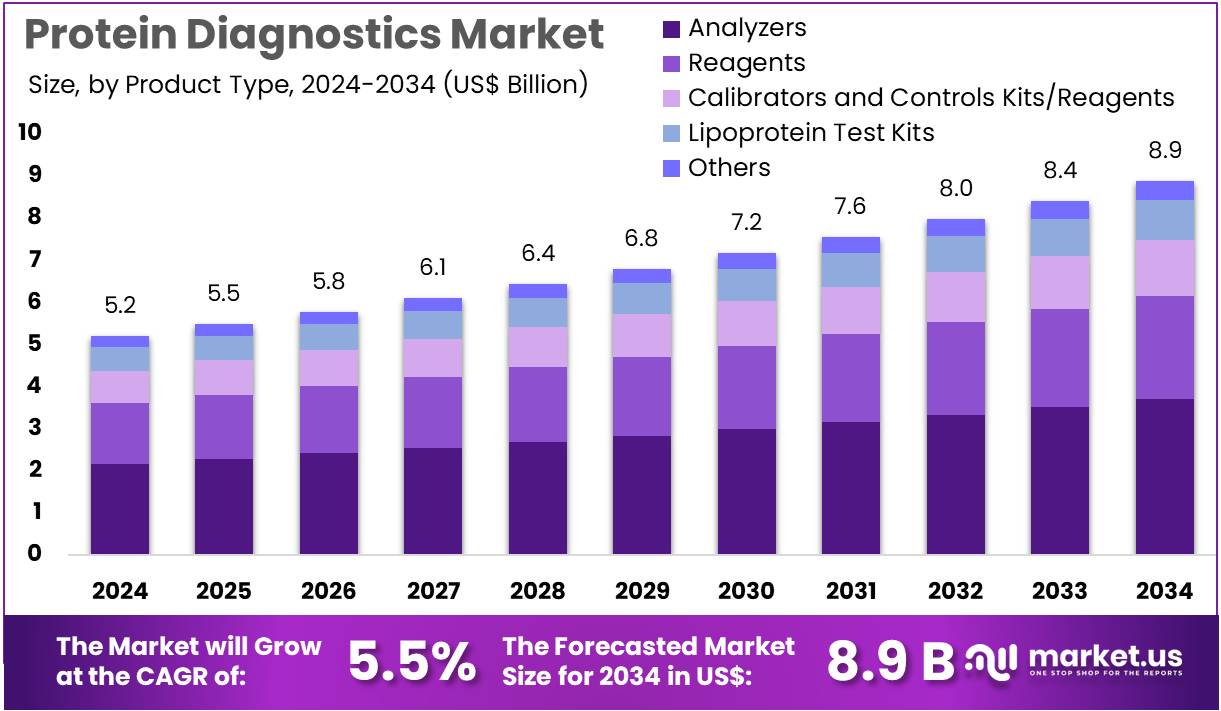
New York, NY – Sep 03, 2026 – The Protein Diagnostics Market Size is expected to be worth around US$ 8.9 Billion by 2034 from US$ 5.2 Billion in 2024, growing at a CAGR of 5.5% during the forecast period 2025 to 2034. North America held a dominant market position, capturing more than a 37.4% share and holds US$ 1.9 Billion market value for the year.
Protein Diagnostics refers to diagnostic technologies used for detecting, measuring, and analyzing proteins, antibodies, enzymes, biomarkers, and other protein-based molecules to support disease diagnosis, monitoring, and treatment decisions.
These diagnostic methods are widely applied in areas such as oncology, infectious diseases, autoimmune disorders, cardiovascular diseases, and neurological conditions. Common technologies include immunoassays, enzyme-linked immunosorbent assays (ELISA), mass spectrometry, protein electrophoresis, and advanced multiplex testing platforms.
The growing prevalence of chronic diseases and increasing demand for personalized medicine are driving the adoption of protein-based diagnostic solutions. According to global health organizations, noncommunicable diseases account for approximately 74% of deaths worldwide, creating a strong need for accurate biomarker-based testing and early disease detection. Protein diagnostics also plays a major role in cancer biomarker identification, with thousands of proteins being studied for their potential use in precision medicine and targeted therapies.
The market is supported by advancements in proteomics, automation, and high-throughput diagnostic platforms that improve testing accuracy and efficiency. Modern immunoassay systems can analyze multiple biomarkers simultaneously, enabling faster clinical decision-making. Rising investments in biomarker research, companion diagnostics, and personalized healthcare are further expanding opportunities for protein diagnostic technologies.
With increasing applications across hospitals, diagnostic laboratories, and research institutions, the Protein Diagnostics market continues to evolve as an essential component of modern healthcare, supporting improved disease management and patient outcomes.
Key Takeaways
- In 2024, the Protein Diagnostics market generated revenue of US$ 5.2 billion and is projected to grow at a CAGR of 5.5%, reaching approximately US$ 8.9 billion by 2034.
- Based on Product Type, the market is segmented into analyzers, reagents, calibrators & controls kits/reagents, lipoprotein test kits, and others. Among these, analyzers dominated the market in 2024, accounting for a 41.8% share, driven by increasing demand for automated diagnostic systems.
- Based on the application, the market is categorized into drug discovery & development, protein measurement, immunocomplex reaction, cancer, antigen-antibody reaction, and others. The drug discovery & development segment held a significant position in 2024 with a 43.5% market share, supported by rising biomarker research and precision medicine initiatives.
- Based on End User, the market is divided into hospitals, speciality clinics/standalone facilities, reference laboratories, diagnostic laboratories, and others. The hospital segment accounted for the largest share in 2024, representing 48.7% of the market, due to increasing adoption of protein-based diagnostic testing in clinical settings.
- Regionally, North America led the Protein Diagnostics market in 2024 with a 37.4% share, supported by advanced healthcare infrastructure, strong research activities, increasing diagnostic adoption, and growing investments in biomarker-based testing technologies.
Market segmentation
- Product Type Analysis: Analyzers dominate the Protein Diagnostics market with a 41.8% share due to increasing demand for automated, high-throughput platforms. These systems support accurate protein quantification, biomarker evaluation, immunoassay processing, and improved laboratory workflows through advanced sensitivity, multiplexing capabilities, and digital connectivity.
- Application Analysis: Drug discovery and development leads the application segment with a 43.5% share due to rising demand for protein biomarkers, therapeutic target identification, and biological pathway analysis. Biopharmaceutical companies increasingly use protein diagnostics for evaluating drug efficacy, safety, and disease mechanisms.
- End-User Analysis: Hospitals dominate the end-user segment with a 48.7% share as they handle high patient volumes requiring protein-based diagnostic testing. Increasing chronic disease prevalence, demand for biomarker assessment, automated immunoassay adoption, and expanded diagnostic capabilities drive hospital investments in protein diagnostic technologies.
Statistical Information
- In 2025, the U.S. Food and Drug Administration (FDA) reported that more than 2,000 biomarkers have been investigated in clinical research, highlighting the scale of protein biomarker development supporting diagnostic applications.
- In 2025, high-throughput proteomics platforms were reported to analyze thousands of proteins per sample, with some next-generation platforms capable of measuring more than 7,000 human proteins simultaneously for biomarker discovery and clinical research applications.
- In 2025, automated immunoassay analyzers used in clinical laboratories demonstrated testing capacities ranging from approximately 100 to more than 400 tests per hour depending on the platform configuration and assay type.
- In 2025, digital immunoassay technologies improved protein detection sensitivity to the femtomolar range, enabling measurement of protein biomarkers at concentrations approximately 1,000 times lower than conventional immunoassay methods.
- In 2025, the National Institutes of Health (NIH) supported more than 20,000 active research projects involving biomedical research areas, including biomarker discovery and protein-based disease investigation.
- In 2025, clinical laboratories using automated laboratory information systems reported that digital integration could reduce manual data handling steps by approximately 30%–50% in diagnostic workflows.
- In 2025, the Centers for Disease Control and Prevention (CDC) reported that approximately 6 in 10 adults in the United States live with at least one chronic disease, supporting continued demand for protein biomarker testing in disease monitoring.
Regional Analysis
North America holds a leading position in the Protein Diagnostics market due to advanced healthcare infrastructure, strong research capabilities, and increasing adoption of biomarker-based testing. Hospitals, diagnostic laboratories, and research institutions are expanding the use of immunoassays, proteomics platforms, and mass spectrometry technologies for oncology, cardiovascular, autoimmune, and chronic disease applications.
Growth is supported by rising precision medicine initiatives, pharmaceutical research activities, and demand for early disease detection solutions. The region benefits from strong investments in biotechnology innovation and advanced diagnostic technologies.
Asia Pacific is experiencing significant growth due to expanding healthcare systems, increasing chronic disease burden, and rising adoption of molecular and protein-based diagnostic tools. Countries such as Japan, China, and India are strengthening laboratory infrastructure and research programs focused on proteomics and personalized medicine. Government initiatives, clinical research expansion, and improved access to advanced diagnostic platforms are supporting regional development.
Business opportunities
The Protein Diagnostics market offers significant business opportunities due to increasing demand for biomarker-based disease detection, personalized medicine, and advanced diagnostic technologies. Companies can focus on developing high-sensitivity immunoassays, multiplex protein analysis platforms, and automated diagnostic analyzers that improve accuracy, testing efficiency, and clinical decision-making. The growing use of protein biomarkers in oncology, cardiovascular disease, autoimmune disorders, and neurological conditions creates opportunities for diagnostic companies to expand their product portfolios.
Biotechnology and pharmaceutical collaborations represent another major opportunity, as drug developers increasingly require protein analysis tools for biomarker validation, therapeutic monitoring, and clinical trial support. Advancements in proteomics, mass spectrometry, and artificial intelligence-based data analysis are creating opportunities for innovative solutions that enable faster and more precise protein profiling.
Emerging markets provide additional growth potential as healthcare systems invest in laboratory modernization, automation, and precision medicine programs. Companies can also explore partnerships with hospitals, research institutions, and academic organizations to develop next-generation diagnostic workflows. Expansion of point-of-care protein testing, companion diagnostics, and digital laboratory integration will further create opportunities for businesses aiming to strengthen their presence in the evolving Protein Diagnostics market.
Emerging Trends
- Growth of Multiplex Protein Testing Technologies: Protein diagnostics is moving toward multiplex platforms that measure multiple biomarkers from a single sample. In 2025, advanced proteomics technologies enabled researchers to analyze more than 7,000 proteins simultaneously, improving biomarker discovery and personalized healthcare applications.
- Increasing Adoption of Digital Immunoassay Platforms: Digital immunoassays are gaining attention due to their ability to detect very low protein concentrations. Modern platforms can measure biomarkers at femtomolar levels, offering approximately 1,000 times higher sensitivity than conventional immunoassay approaches for research and clinical applications.
- Expansion of Proteomics in Precision Medicine: Precision medicine programs increasingly use protein biomarkers to support diagnosis and treatment selection. In 2025, NIH-funded biomedical research continued supporting thousands of studies involving biomarker discovery, disease mechanisms, and personalized healthcare approaches using advanced protein analysis methods.
- Automation and Laboratory Workflow Integration: Clinical laboratories are adopting automated protein diagnostic analyzers to improve productivity and reduce manual processes. Advanced immunoassay systems can process approximately 100 to more than 400 tests per hour, depending on instrument design and assay configuration.
- Rising Focus on Protein Biomarkers for Chronic Diseases: Protein diagnostics is expanding due to increasing global chronic disease burden and demand for early detection. WHO reported that noncommunicable diseases caused approximately 74% of global deaths, increasing the importance of biomarker-based diagnostic approaches.
Use Cases
- Cancer Diagnosis and Treatment Monitoring: Protein diagnostics is widely used in oncology for identifying tumor biomarkers and monitoring therapy response. The CDC recorded approximately 1,958,310 new cancer cases in the United States in 2022, highlighting the need for advanced protein-based detection and monitoring solutions.
- Cardiovascular Disease Risk Assessment: Protein-based tests support cardiovascular diagnosis by measuring biomarkers linked with heart injury and inflammation. Clinical laboratories use protein markers such as troponin and inflammatory proteins to improve risk assessment, emergency decision-making, and long-term disease monitoring.
- Drug Discovery and Pharmaceutical Research: Pharmaceutical companies use protein diagnostics during drug development to evaluate biological pathways, therapeutic responses, and safety profiles. Protein analysis platforms can identify and quantify thousands of proteins in research samples, supporting biomarker validation and clinical studies.
- Autoimmune Disease Detection: Protein diagnostics support autoimmune disorder identification through antibody and protein marker analysis. Tests measuring immune-related proteins help clinicians evaluate conditions such as rheumatoid arthritis and lupus, enabling earlier diagnosis and improved disease management strategies.
- Infectious Disease and Immune Response Monitoring: Protein diagnostic technologies are used to detect antibodies, antigens, and immune response markers during infections. ELISA and immunoassay platforms remain important tools, with automated systems improving laboratory efficiency by enabling high-volume protein testing workflows.
Recent development
- In April 2025, Siemens AG announced the acquisition of Dotmatics for approximately US$5.1 billion to strengthen its life sciences software capabilities. The acquisition supports digital research workflows, including data management and analysis applications relevant to biomarker and protein research.
- In May 2025, Roche received FDA approval for the VENTANA MET (SP44) RxDx Assay, a companion diagnostic designed to detect MET protein expression in non-small cell lung cancer patients for treatment selection.
- In 2025, Agilent continued expanding its proteomics and analytical technology portfolio through mass spectrometry and laboratory workflow innovations supporting protein characterization, biomarker discovery, and life science research applications. No major protein diagnostic-specific acquisition or clinical test launch was publicly announced during 2025–2026.
Frequently Asked Questions on Protein Diagnostics
- Why are protein diagnostics important in healthcare?
Protein diagnostics are important because proteins provide valuable information about disease processes, immune responses, and treatment effectiveness. These diagnostic methods help clinicians detect conditions earlier, monitor disease progression, and select appropriate therapies through biomarker-based healthcare approaches. - What are the major technologies used in protein diagnostics?
Major protein diagnostic technologies include immunoassays, enzyme-linked immunosorbent assays (ELISA), mass spectrometry, protein electrophoresis, and multiplex testing platforms. These technologies enable accurate protein measurement, biomarker detection, and advanced disease analysis in clinical and research environments. - What factors are driving the Protein Diagnostics Market?
The Protein Diagnostics Market is driven by increasing chronic disease prevalence, growing demand for personalized medicine, advancements in proteomics research, rising biomarker discovery activities, and adoption of automated diagnostic systems that improve testing accuracy, efficiency, and clinical decision-making capabilities. - How are protein diagnostics used in cancer detection?
Protein diagnostics support cancer detection by identifying tumor-related biomarkers and monitoring treatment responses. Protein-based tests help clinicians evaluate disease characteristics, understand tumor biology, and develop personalized treatment strategies, improving diagnostic precision and supporting targeted therapy approaches. - Which product types are commonly used in protein diagnostics?
Common protein diagnostic products include automated analyzers, reagents, calibrators, control kits, immunoassay systems, and specialized protein testing kits. These products are used in hospitals, laboratories, research institutions, and pharmaceutical organizations for clinical and scientific applications. - What opportunities exist in the Protein Diagnostics Market?
Opportunities in the Protein Diagnostics Market include the development of next-generation biomarker tests, the expansion of companion diagnostics, the growth of proteomics research, increasing demand for point-of-care testing, and collaborations between diagnostic companies, pharmaceutical firms, and healthcare institutions.
Conclusion
The Protein Diagnostics market is witnessing steady growth due to increasing demand for biomarker-based testing, personalized medicine, and advanced diagnostic technologies. Rising applications in oncology, cardiovascular diseases, autoimmune disorders, and drug development are encouraging healthcare providers and researchers to adopt protein analysis solutions.
Automated analyzers, immunoassays, and proteomics platforms are improving diagnostic accuracy and laboratory efficiency. North America maintains a strong position due to advanced healthcare infrastructure and research capabilities, while Asia Pacific is expanding through healthcare modernization and increasing diagnostic adoption.
Continuous innovation in protein biomarker discovery, companion diagnostics, and high-throughput testing platforms is expected to strengthen the role of protein diagnostics in precision healthcare and disease management.
Discuss your needs with our analyst
Please share your requirements with more details so our analyst can check if they can solve your problem(s)




