


Overview
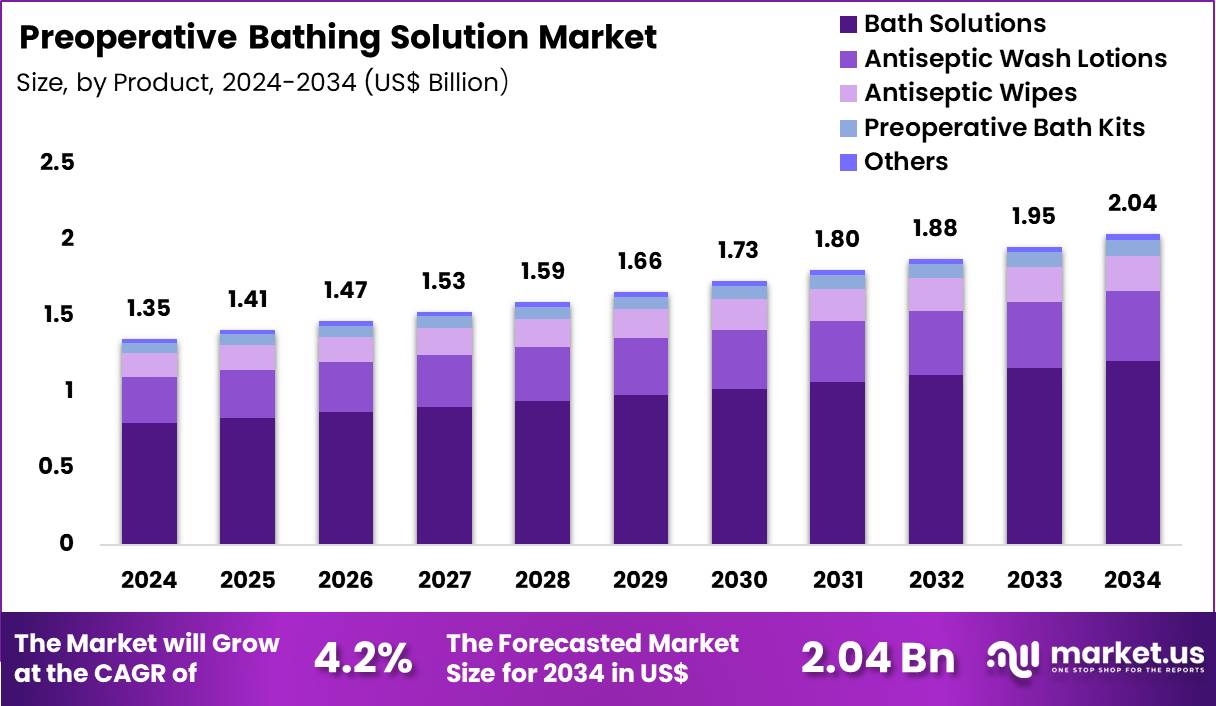
New York, NY – Sep 17, 2026 –The Global Preoperative Bathing Solution Market size is expected to be worth around US$ 2.04 Billion by 2034 from US$ 1.35 Billion in 2024, growing at a CAGR of 4.2% during the forecast period 2025 to 2034. In 2024, North America led the market, achieving over 40.0% share with a revenue of US$ 1.0 Billion.
Preoperative Bathing Solution is expanding due to increasing emphasis on surgical infection prevention, hospital hygiene standards, and patient safety initiatives. Preoperative bathing solutions, including chlorhexidine gluconate (CHG), povidone-iodine, and antimicrobial cleansing products, are used before surgery to reduce skin microorganisms and lower the risk of surgical site infections (SSIs).
The demand for these solutions is supported by the increasing global surgical burden. Approximately 310 million major surgical procedures are performed worldwide every year, with around 40–50 million procedures conducted annually in the United States alone. Surgical site infections affect nearly 2%–5% of hospitalized surgical patients, resulting in longer hospital stays, additional treatment costs, and increased healthcare resource utilization.
Chlorhexidine-based preoperative bathing products are gaining strong adoption, particularly 2% chlorhexidine gluconate (CHG) formulations, due to their persistent antimicrobial activity against a broad range of bacteria. Studies indicate that CHG-based skin cleansing can reduce bacterial colonization by more than 80%–90% compared with standard soap-based cleansing methods, supporting its use in surgical preparation protocols.
Healthcare facilities are increasing investments in infection prevention programs as healthcare-associated infections impact millions of patients globally. The World Health Organization estimates that approximately 7 out of every 100 hospitalized patients in developed countries and 15 out of every 100 patients in developing countries acquire at least one healthcare-associated infection.
Key Takeaways
- In 2024, the Preoperative Bathing Solution Market generated a revenue of US$ 1.35 Billion and is projected to grow at a CAGR of 4.2%, reaching approximately US$ 2.04 Billion by 2034.
- Based on Product, the market is segmented into Bath Solutions, Antiseptic Wash Lotions, Antiseptic Wipes, Preoperative Bath Kits, and Others. Among these, Bath Solutions dominated the market in 2024, accounting for a 59.3% market share.
- Based on End-User, the market is segmented into Surgical Wards, Intensive Care Units (ICU), General Medical Wards, and Outpatient. The Surgical Wards segment held the leading position in 2024, capturing a 62.1% market share.
- North America emerged as the leading regional market in 2024, accounting for a 40.0% share of the global Preoperative Bathing Solution Market due to advanced healthcare infrastructure, high surgical volumes, and strong infection prevention practices.
Market Segmentation Overview
- Product Analysis: The Product segment of the Preoperative Bathing Solution Market includes Bath Solutions, Antiseptic Wash Lotions, Antiseptic Wipes, Preoperative Bath Kits, and Others. Bath Solutions accounted for the largest market share of 59.3% in 2024, supported by their routine use before surgeries, cost advantages, easy availability, and effectiveness in reducing skin microbial load. Hospitals widely prefer bath solutions due to their compatibility with standardized infection prevention protocols and surgical preparation procedures.
- End-User Analysis: The End-User segment consists of Surgical Wards, Intensive Care Units (ICU), General Medical Wards, and Outpatient facilities. Surgical Wards dominated the segment with a 62.1% market share in 2024, driven by the high number of surgical procedures performed globally and the increasing adoption of preoperative bathing practices. Hospitals use these solutions to improve patient safety, reduce surgical site infection risks, and maintain consistent hygiene standards across surgical departments.
Statistical Information
- CHG bathing impact on healthcare-associated infections (HAIs): A bathing program using 4% chlorhexidine gluconate (CHG) in a medical‑surgical unit was associated with a 52% reduction in healthcare‑associated infections (HAIs) compared with baseline soap/water bathing. ICU guidance from several hospitals recommends daily CHG baths for all ICU patients, citing reductions in infection rates versus plain soap and water.
- Chlorhexidine Bathing Reduced Bloodstream Infections by 28%: A multicenter clinical study evaluated 7,727 patients across 9 intensive care and bone marrow transplant units in 6 hospitals. Daily bathing with 2% chlorhexidine-impregnated washcloths reduced hospital-acquired bloodstream infections by 28% compared with non-antimicrobial bathing methods.
- Preoperative infection prevention and wound cleansing devices: The preoperative infection prevention and wound cleansing devices market is estimated at US$ 1.99 billion in 2021, projected to US$ 3.11 billion by 2028 at 6.6% CAGR (2022–2028), and US$ 4.60 billion by 2034. These devices complement preoperative bathing solutions and CHG cloths in reducing microbial burden before surgery.
- Surgical Site Infections Add Significant Healthcare Burden in the United States: Surgical site infections contribute substantially to healthcare costs and hospital utilization. In the United States, SSIs are associated with more than 400,000 additional hospital days annually and approximately US$900 million in extra healthcare costs each year, increasing demand for preventive solutions such as preoperative antiseptic bathing.
- SSI Burden Is Higher in Low- and Middle-Income Healthcare Settings: WHO reports that approximately 11% of patients undergoing surgery in low- and middle-income countries develop surgical site infections. In some African regions, up to 20% of women undergoing cesarean sections experience wound infections, highlighting the importance of effective surgical preparation practices.
Regional Analysis
North America led the market by securing a market share of 40.0% in 2024.
North America holds a leading position in the Preoperative Bathing Solution Market due to advanced healthcare infrastructure, high surgical volumes, and strong adoption of infection prevention protocols.
The United States performs more than 40 million surgical procedures annually, creating significant demand for antiseptic bathing solutions, CHG-based products, and preoperative skin preparation kits. Hospitals across the region follow CDC and healthcare safety guidelines to reduce surgical site infections (SSIs), which account for approximately 20% of healthcare-associated infections.
Increasing adoption of CHG bathing protocols in hospitals, ICUs, and ambulatory surgical centers continues to support market growth. Asia Pacific is projected to witness rapid growth due to expanding healthcare facilities, rising surgical procedures, and improving infection-control awareness.
Increasing investments in hospitals, outpatient surgery centers, and patient safety programs are driving adoption of antiseptic bathing solutions. Countries including China, Japan, South Korea, and Southeast Asian nations are strengthening SSI prevention practices, creating new opportunities for preoperative hygiene products.
Business Opportunities
The Preoperative Bathing Solution Market offers significant business opportunities due to increasing focus on surgical infection prevention, rising healthcare expenditure, and growing adoption of standardized preoperative hygiene protocols.
Manufacturers can expand opportunities by developing advanced chlorhexidine gluconate (CHG)-based solutions, antimicrobial wipes, and ready-to-use bathing kits that improve patient convenience and compliance. Growing demand from hospitals, intensive care units, and ambulatory surgical centers creates opportunities for partnerships with healthcare providers and surgical networks.
The increasing number of outpatient and minimally invasive procedures is driving demand for portable, single-use antiseptic products suitable for home-based preoperative preparation. Companies can also explore emerging markets by offering affordable infection-control solutions for expanding healthcare facilities.
Product innovations such as skin-friendly formulations, alcohol-free solutions, and environmentally sustainable packaging may further improve market adoption. Strategic collaborations with hospitals, infection-control organizations, and healthcare distributors can support broader market penetration and long-term growth.
Emerging Trends
- Growing Adoption of Chlorhexidine Gluconate (CHG)-Based Solutions: Hospitals are increasingly using CHG-based bathing products for surgical preparation due to proven infection-control benefits. A clinical study involving 7,727 patients across 6 hospitals showed reduced bloodstream infections with CHG bathing protocols.
- Increasing Use of Antiseptic Wipes in ICUs: CHG-impregnated wipes are becoming more common in intensive care settings where patients cannot perform traditional bathing. Studies across 9 ICU and transplant units demonstrated improved infection prevention outcomes among high-risk patients.
- Integration of Preoperative Bathing into Surgical Safety Guidelines: Healthcare organizations are standardizing preoperative bathing procedures as part of SSI prevention programs. WHO provides 29 recommendations across 23 topics to improve surgical infection prevention practices globally.
- Rising Demand for Home-Based Preoperative Cleansing Products: Ambulatory surgical centers are increasingly providing patients with CHG solutions, wipes, and bathing kits for use before surgery. This improves patient compliance and supports preparation outside hospital environments.
- Focus on Surgical Site Infection (SSI) Reduction: Hospitals are strengthening infection-control programs as SSIs affect approximately 2%–5% of inpatient surgical patients. Increased focus on reducing postoperative complications is driving adoption of antiseptic bathing solutions.
Use Cases
- Surgical Skin Preparation Before Operations: Preoperative bathing solutions are widely used before surgeries to reduce skin microbial load and lower surgical site infection (SSI) risks. Hospitals use CHG-based solutions before orthopedic, cardiovascular, neurological, and general surgeries as part of standardized infection prevention protocols.
- Orthopedic and Joint Replacement Procedures: Hospitals use antiseptic bathing solutions before hip and knee replacement surgeries because implant-related infections can lead to serious complications. CHG-based cleansing is commonly included in orthopedic surgical pathways to improve patient preparation and reduce bacterial contamination.
- Cardiovascular Surgery Preparation: Preoperative bathing products are used before cardiac procedures, including bypass surgeries and valve replacements, where infection prevention is critical. Hospitals integrate antiseptic showers and wipes into cardiac surgery protocols to reduce postoperative infection risks.
- Intensive Care Unit (ICU) Patient Cleansing: ICU departments use CHG wipes and bathing solutions for critically ill patients who may not be able to perform traditional bathing. Clinical studies involving 7,727 patients demonstrated reduced bloodstream infection risks with CHG bathing.
- Ambulatory and Outpatient Surgery Centers: Preoperative bathing solutions are increasingly used in outpatient facilities where patients receive take-home antiseptic products before scheduled procedures. These solutions support faster workflows and improve patient compliance before same-day surgeries.
Discuss your needs with our analyst
Please share your requirements with more details so our analyst can check if they can solve your problem(s)




