


Overview
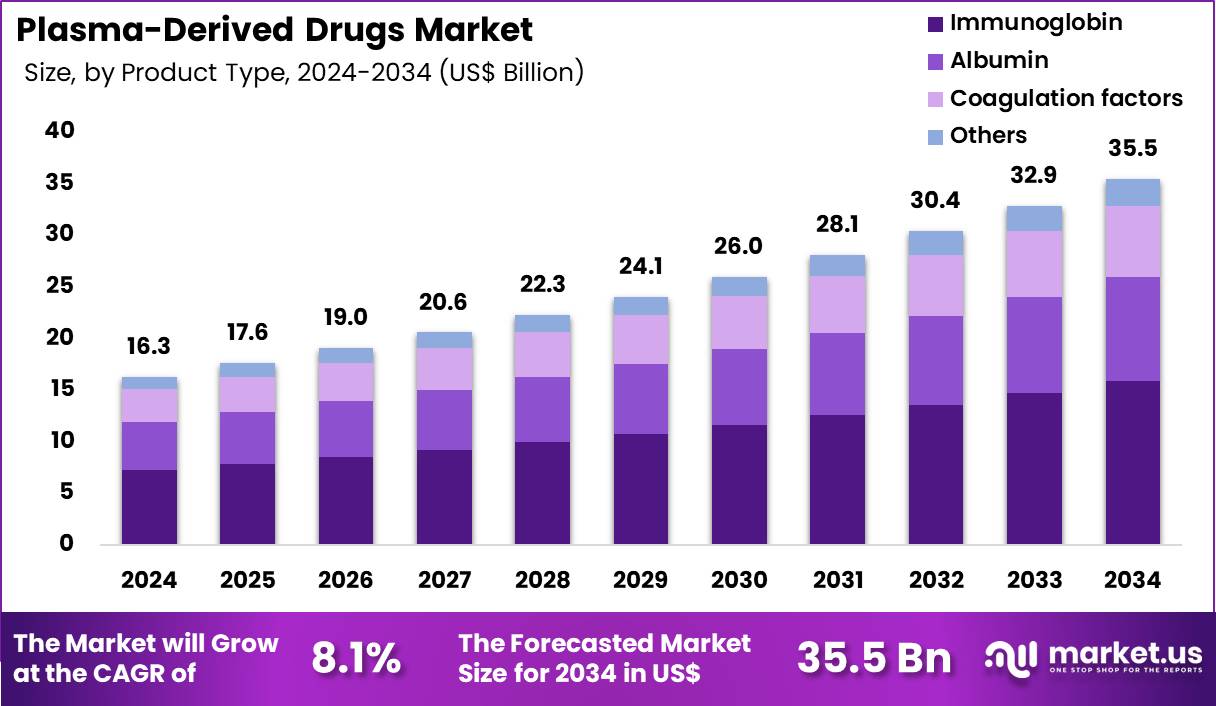
New York, NY – Oct 08, 2026 – The Global Plasma-Derived Drugs Market size is expected to be worth around US$ 35.5 Billion by 2034 from US$ 16.3 Billion in 2024, growing at a CAGR of 8.1% during the forecast period 2025 to 2034. In 2024, North America led the market, achieving over 38.9% share with a revenue of US$ 6.3 Billion.
Plasma-derived drugs are essential biological medicines manufactured from human blood plasma, the liquid component of blood that contains vital proteins, antibodies, and clotting factors. These medicines play a critical role in treating rare, chronic, and life-threatening conditions, including immune deficiencies, bleeding disorders, neurological diseases, and certain inflammatory conditions.
Key plasma-derived products include immunoglobulins, albumin, and coagulation factors. Immunoglobulins are used to treat immune system disorders and selected autoimmune and neurological conditions. Albumin is administered in specific clinical situations requiring plasma volume expansion or protein replacement, while coagulation factors are used to manage bleeding disorders such as hemophilia.
The production of plasma-derived drugs involves plasma collection, rigorous screening, protein separation, purification, and multiple pathogen-reduction or removal steps to support product safety and quality. As these medicines rely on human plasma as their primary raw material, a reliable supply of donated plasma and advanced manufacturing capabilities remain important industry priorities.
Growing demand for immunoglobulins, improved diagnosis of rare diseases, and advances in plasma fractionation technologies are supporting the development of the global plasma-derived drugs market. However, supply constraints, complex manufacturing processes, high treatment costs, and strict regulatory requirements continue to influence market development.
Ongoing investments in plasma collection infrastructure, production capacity, and manufacturing technologies are expected to strengthen the industry’s ability to meet evolving healthcare needs and improve access to these essential medicines.
Key Takeaways
- In 2024, the plasma-derived drugs market generated revenue of US$ 16.3 billion and is projected to reach US$ 35.5 billion by 2034, growing at a CAGR of 8.1% during the forecast period.
- By product type, the market is segmented into immunoglobulins, albumin, coagulation factors, and others. Immunoglobulins dominated the market in 2024, accounting for a 44.7% share.
- By application, the market is categorized into bleeding disorders, alpha-1 antitrypsin deficiency (AATD), pelvic inflammatory disease (PID), liver disease, infections, and others. Bleeding disorders held a significant market share of 41.8%.
- By distribution channel, the market is divided into hospital pharmacies, online pharmacies, retail pharmacies, and others. Hospital pharmacies dominated the segment, accounting for 62.5% of the market revenue.
- Regionally, North America led the global plasma-derived drugs market in 2024, accounting for a market share of 38.9%.
Key Market Segments
- Product Type Analysis: Immunoglobulins dominated the plasma-derived drugs market in 2024, accounting for 44.7% of the product type segment. Rising immunodeficiency cases, expanding therapeutic applications, improved diagnosis, and growing demand for long-term treatment continue to support segment growth across healthcare systems.
- Application Analysis: Bleeding disorders accounted for 41.8% of the plasma-derived drugs market by application in 2024. Increasing diagnosis of hemophilia, lifelong treatment requirements, prophylactic therapy adoption, and the continued use of plasma-derived coagulation factors support demand across specialized healthcare facilities.
- Distribution Channel Analysis: Hospital pharmacies dominated the plasma-derived drugs market distribution channel in 2024, accounting for 62.5% of revenue. Specialized storage requirements, controlled drug administration, patient monitoring, emergency treatment needs, and centralized procurement contribute to the strong role of hospital-based distribution networks.
Regional Analysis
North America Leads the Plasma-Derived Drugs Market
In 2024, North America accounted for 38.9% of the global plasma-derived drugs market, supported by strong demand for immunoglobulins, albumin, and coagulation factors. The increasing prevalence of immunodeficiency disorders, hemophilia, and autoimmune diseases continues to drive treatment demand.
Advanced healthcare infrastructure, established plasma collection networks, and ongoing improvements in fractionation and pathogen-reduction technologies further support regional market development. Growing clinical applications and continued investments in plasma collection and manufacturing capacity are expected to strengthen market growth.
Asia Pacific Expected to Record the Highest CAGR
The Asia Pacific plasma-derived drugs market is expected to register the highest CAGR during the forecast period, driven by improving healthcare infrastructure, rising disease awareness, and expanding access to specialized treatments.
Increasing diagnosis of bleeding disorders and immune deficiencies is supporting demand for immunoglobulins, albumin, and coagulation factors. Government initiatives, investments in domestic plasma fractionation facilities, and donor recruitment programs are expected to improve regional supply capabilities.
Furthermore, technology transfers and manufacturing expansion may enhance product availability and affordability, supporting long-term market growth across emerging economies.
Emerging Trends
- Rising demand for immunoglobulin therapies: Immunoglobulins are important plasma-derived medicines used to treat certain immune deficiencies and autoimmune or neurological conditions. Growing diagnosis of these disorders and the need for long-term treatment are supporting demand. Immunoglobulin supply remains a concern because production depends on donated human plasma and complex manufacturing processes.
- Greater investment in domestic plasma collection: Governments and healthcare systems are increasingly focusing on reliable domestic plasma supplies to reduce dependence on imported medicines. The WHO recommends stronger national plasma programmes and has published guidance on processing domestic plasma across borders. This creates opportunities for investment in collection centres, plasma testing, and processing infrastructure.
- Improvements in manufacturing and product safety: Manufacturers are focusing on improved plasma testing, quality control, and processes designed to reduce the risk of infectious-agent transmission. The EMA provides guidance covering plasma collection, manufacturing, product quality, and virus safety. Continued investment in these areas is important for regulatory compliance and consistent product quality.
- Expansion of plasma fractionation capacity: Plasma fractionation allows manufacturers to separate donated plasma into different protein-based medicines, including immunoglobulins, albumin, and coagulation factors. Increasing processing capacity can improve the use of collected plasma and support medicine availability. However, long production cycles, donor availability, and strict quality requirements continue to limit rapid supply expansion.
- Focus on supply security and international cooperation: Plasma-derived medicines remain vulnerable to shortages because they depend on human donations and specialised manufacturing facilities. WHO guidance published in 2025 addresses cross-border plasma transfers and contract fractionation. These arrangements can help countries use their domestic plasma resources while improving access to essential medicines.
Use Cases
- Treatment of immune deficiencies: Immunoglobulin products provide antibodies to patients who cannot produce enough antibodies naturally. They are used for certain primary and secondary immune deficiencies and selected immune-related diseases, helping reduce the risk of serious infections and support immune function.
- Management of bleeding disorders: Plasma-derived coagulation factors, including Factor VIII and Factor IX, replace missing clotting proteins in people with haemophilia A and B. These medicines help control bleeding episodes and, when prescribed for prevention, reduce the risk of bleeding-related complications.
- Restoration of blood volume and protein levels: Human albumin is used in selected clinical situations requiring support of circulating blood volume or protein replacement. Its applications may include certain liver conditions and therapeutic plasma exchange. Treatment decisions depend on the patient’s condition and established clinical guidance.
- Prevention of selected infections: Specific immunoglobulins contain antibodies that can provide immediate, temporary protection against particular infections or exposure risks. Depending on the product, they may be used for rabies, hepatitis B, tetanus, and other approved indications, often alongside other recommended preventive measures.
- Treatment of rare protein deficiencies: Certain plasma-derived medicines replace specific proteins missing or functioning poorly in the body. Examples include C1-inhibitor products for hereditary angioedema and alpha-1 proteinase inhibitor for selected patients with alpha-1 antitrypsin deficiency. These specialised uses support demand in rare-disease treatment.
Frequently Asked Questions About Plasma-Derived Drugs
- What are the major types of plasma-derived drugs?
The main product categories include immunoglobulins, albumin, coagulation factors, and specific protein inhibitors. Each category has different medical uses, such as supporting immune function, restoring blood volume, replacing missing clotting proteins, or treating certain rare protein deficiencies. - How are plasma-derived medicines manufactured?
Plasma-derived medicines are produced by collecting donated plasma, testing it, and separating useful proteins through a process called fractionation. The proteins undergo purification, safety treatments, quality testing, and regulatory checks before the finished medicines are released for patient use. - What factors are driving the plasma-derived drugs market?
Market demand is supported by the need for immune deficiency treatments, bleeding disorder therapies, and medicines for selected rare diseases. Greater attention to domestic plasma supplies, improved healthcare access, and investment in manufacturing facilities also create opportunities for industry growth. - Which product segment is important in the plasma-derived drugs market?
Immunoglobulins are an important product segment because they are used to treat several immune deficiencies and other selected medical conditions. Albumin and coagulation factors also serve essential clinical needs. Segment performance varies by treatment demand, supply availability, pricing, and regional healthcare access. - What are the major factors influencing market growth?
Market growth is influenced by rising treatment needs, greater diagnosis of immune disorders, improvements in plasma collection, and investment in processing facilities. However, plasma availability, production costs, medicine prices, reimbursement policies, and regulatory requirements can affect the pace of expansion. - Which regions offer opportunities for market expansion?
North America and Europe have established plasma collection and manufacturing systems, while emerging markets may offer opportunities to improve local supply and patient access. Regional potential depends on healthcare spending, treatment availability, regulatory capacity, plasma collection networks, and manufacturing investment. - What is the future outlook for the plasma-derived drugs market?
The market outlook is supported by continued medical demand and efforts to strengthen plasma collection and processing capacity. Future performance will depend on supply reliability, manufacturing efficiency, regulatory compliance, affordability, and the development of effective distribution systems across countries.
Conclusion
The global plasma-derived drugs market is expected to witness strong growth, supported by rising demand for immunoglobulins, coagulation factors, albumin, and specialized protein therapies. Increasing diagnosis of immune deficiencies, bleeding disorders, and rare diseases is expected to sustain treatment demand.
North America currently leads the market, while Asia Pacific is anticipated to record the highest growth rate due to improving healthcare infrastructure and expanding treatment access. However, plasma supply constraints, complex manufacturing processes, high production costs, and stringent regulatory requirements remain key challenges.
Continued investment in plasma collection, fractionation capacity, manufacturing technologies, and supply security is expected to strengthen market development and improve global patient access.
Discuss your needs with our analyst
Please share your requirements with more details so our analyst can check if they can solve your problem(s)




