


Overview
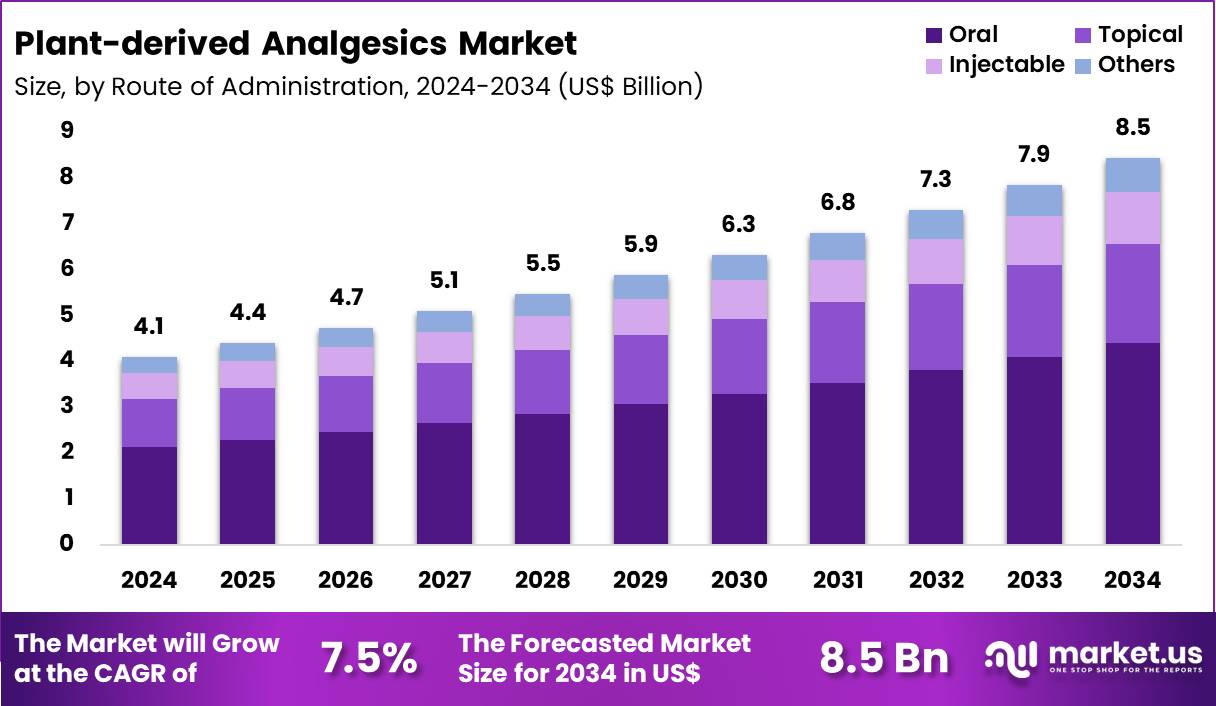
New York, NY – Oct 06, 2026 – The Global Plant-Derived Analgesics Market size is expected to be worth around US$ 8.5 Billion by 2034 from US$ 4.1 Billion in 2024, growing at a CAGR of 7.5% during the forecast period 2025 to 2034. In 2024, North America led the market, achieving over 38.7% share with a revenue of US$ 1.6 Billion.
The global plant-derived analgesics market is gaining attention as demand for natural, plant-based, and alternative pain-management solutions continues to increase. Plant-derived analgesics are pain-relieving products developed from botanical sources and may include active compounds obtained from plants such as willow, turmeric, cannabis, devil’s claw, and other medicinal herbs. These products are being studied and utilized for managing conditions associated with inflammation, muscle discomfort, arthritis, and other forms of pain.
Market growth is being supported by increasing consumer interest in natural healthcare products, growing awareness of traditional medicine, and rising demand for complementary approaches to pain management. The expanding use of botanical ingredients in pharmaceutical, nutraceutical, and personal-care formulations is also creating new opportunities for manufacturers.
Technological advancements in botanical extraction, purification, formulation, and standardization are further supporting the development of plant-derived analgesic products with improved consistency and efficacy. At the same time, regulatory requirements, variations in the concentration of active botanical compounds, clinical evidence limitations, and concerns regarding product safety and quality remain important challenges.
North America and Europe represent significant markets due to established healthcare infrastructure and increasing consumer preference for natural products, while Asia-Pacific is expected to offer substantial growth opportunities owing to its long-standing use of herbal medicine and expanding healthcare expenditure. The market outlook remains positive as research and product innovation continue to advance.
Key Takeaways
- In 2024, the market generated revenue of US$ 4.1 billion, registering a CAGR of 7.5%, and is projected to reach US$ 8.5 billion by 2034.
- Based on source, the market is segmented into plant-derived opioid alkaloids, salicylate-type analgesics, cannabinoids and hemp-derived analgesics, polyphenolic/phenolic extracts, and other phytochemical analgesics. Among these, plant-derived opioid alkaloids dominated in 2023, accounting for a 32.3% market share.
- By route of administration, the market is segmented into oral, topical, injectable, and others. The oral segment held the largest share, accounting for 52.0% of the market.
- Based on application, the market is categorized into musculoskeletal pain; arthritis and chronic inflammatory disorders; neuropathic and nerve-related pain; post-surgical and acute pain management; headache and migraine relief; cancer-related and palliative pain; and others. The arthritis and chronic inflammatory disorders segment dominated the market, representing 38.5% of total revenue.
- By distribution channel, the market is segmented into retail pharmacies, e-commerce platforms, and hospital pharmacies. The retail pharmacies segment led the market with a 42.7% revenue share.
- North America dominated the global market in 2024, accounting for a 38.7% market share.
Key Market Segments
- Source Analysis: Plant-derived opioid alkaloids held 32.3% of the market, supported by their established effectiveness in moderate to severe pain management. Growing demand for natural pain-relief solutions, expanding palliative and cancer care, improved extraction and standardization, and investments in safer formulations are expected to sustain segment growth.
- Route of Administration Analysis: Oral administration accounted for 52.0% of the market, primarily due to convenience, patient compliance, and non-invasive dosing. The availability of tablets, capsules, and liquid formulations, combined with cost advantages and improving bioavailability technologies, supports widespread adoption across chronic and acute pain management.
- Application Analysis: Arthritis and chronic inflammatory disorders represented 38.5% of the market, driven by the increasing prevalence of long-term inflammatory conditions and aging populations. Growing interest in plant-based therapies, recognized anti-inflammatory properties, complementary medicine adoption, and improved clinical validation are supporting demand in this application.
- Distribution Channel Analysis: Retail pharmacies accounted for 42.7% of the market, supported by accessibility, consumer trust, and professional pharmacist guidance. Expanding pharmacy networks, strong product availability, regulatory oversight, and over-the-counter purchasing convenience enhance adoption. Retail pharmacies are expected to maintain their leading position due to broad consumer reach.
Regional Analysis
North America Leading the Plant-Derived Analgesics Market
In 2024, North America accounted for 38.7% of the global plant-derived analgesics market, supported by rising demand for natural pain-management solutions and concerns regarding synthetic opioid dependence and side effects. Increasing adoption of botanical ingredients, including willow bark and capsaicin, in over-the-counter and prescription products has strengthened regional demand.
Aging populations, growing prevalence of arthritis and musculoskeletal disorders, and consumer preference for clean-label healthcare products are further supporting market expansion. Advances in botanical extraction, standardization, and formulation technologies have improved product consistency and quality. Expanding pharmacy networks and online distribution channels have also improved accessibility to plant-based analgesics.
Asia Pacific Expected to Register the Highest CAGR
Asia Pacific is expected to record the highest CAGR during the forecast period, driven by strong traditional medicine practices, increasing healthcare awareness, urbanization, and rising demand for natural pain-management solutions.
Government support for botanical cultivation, pharmaceutical investments, biotechnology advancements, and improved standardization are strengthening regional production capabilities. Growing applications of herbal ingredients for arthritis, inflammatory disorders, and menstrual pain are expected to further accelerate market growth.
Emerging Trends
- Greater Focus on Evidence-Based Botanical Medicines: Research and product development are increasingly moving from traditional use toward scientifically evaluated plant-based pain solutions. WHO’s 2025–2034 strategy emphasizes stronger evidence, safety, regulation, and integration of traditional medicines into healthcare systems.
- Rising Interest in Non-Opioid Pain Management: The search for additional non-opioid pain-management options is supporting research into natural products. NIH/NCCIH identifies natural products as an important area for discovering new analgesic mechanisms and potentially reducing dependence on opioid-based approaches.
- Development of Standardized Botanical Formulations: Greater attention is being given to consistent plant material, extraction methods, chemical testing, and manufacturing controls. FDA highlights batch-to-batch consistency as a major issue because botanical products can contain complex mixtures of active and inactive compounds.
- Expansion of Research into Plant-Based Active Compounds: Specific plant compounds are receiving increased scientific attention because they may provide useful pain-relieving mechanisms. Examples include salicin from willow bark and capsaicin-related compounds, supporting continued research into plant-derived molecules and their therapeutic applications.
- Stronger Regulatory Interest in Botanical Drugs: Regulatory agencies are placing greater emphasis on botanical drug development. In 2026, FDA sought public input on ways to advance botanical drug development, reflecting increasing industry and scientific interest while maintaining requirements for safety, quality, and effectiveness.
Use Cases
- Musculoskeletal Pain Management: Plant-derived products are being studied and used for certain musculoskeletal pain conditions, including low-back pain and joint-related discomfort. NCCIH reports evidence for selected products such as topical cayenne and oral preparations containing willow bark or devil’s claw.
- Osteoarthritis-Related Pain: Selected botanical ingredients are being investigated for osteoarthritis symptom management. NCCIH reports that some natural products may provide modest benefits, although evidence differs considerably between ingredients and is not sufficient for many botanical products.
- Topical Pain-Relief Products: Plant-derived ingredients can be incorporated into creams, gels, plasters, and other topical formulations. Capsaicin-containing products are an important example, with evidence indicating potential pain relief for selected conditions and body areas.
- Traditional and Complementary Pain Care: Herbal medicines form part of traditional and complementary healthcare systems in many countries. WHO reports that traditional, complementary, and integrative medicine is used globally, with herbal medicines increasingly being considered alongside conventional healthcare.
- Drug Discovery and New Analgesic Development: Plants serve as sources for identifying new molecules and biological mechanisms relevant to pain treatment. Historical examples, including willow-derived salicin and its relationship to aspirin development, demonstrate the role of natural products in modern analgesic discovery.
Frequently Asked Questions About Plant-Derived Analgesics
- Which plants are commonly associated with pain relief?
Plants associated with pain management include white willow, cayenne pepper, devil’s claw, comfrey, and certain other botanical ingredients. However, evidence varies significantly, and traditional use does not necessarily establish clinical effectiveness or safety for every application. - How does willow bark help with pain?
White willow bark contains salicin, a compound historically associated with the development of aspirin. Some clinical evidence suggests willow bark may provide short-term improvement in low-back pain, although safety concerns and medicine interactions must be considered. - Can plant-derived analgesics be used for chronic pain?
Some plant-based products are investigated for chronic pain, including musculoskeletal and low-back pain. However, their effectiveness depends on the specific ingredient, formulation, dose, and condition, and they should not automatically replace established medical treatment. - Are botanical analgesics regulated like conventional medicines?
Botanical products can fall under different regulatory categories depending on their intended use and formulation. For botanical drugs, FDA requires appropriate evidence for safety and effectiveness, while quality standards may differ from those used for purified chemical drugs. - Why is research into plant-derived analgesics increasing?
Research is increasing because natural products provide diverse chemical structures and potential biological mechanisms for pain management. WHO is also emphasizing stronger evidence and research for traditional medicine, creating greater interest in scientifically validated botanical therapies. - Which application areas offer opportunities in this market?
Important application areas include musculoskeletal pain, low-back pain, osteoarthritis-related symptoms, topical pain management, and research-based drug discovery. Opportunity levels vary because scientific evidence and regulatory acceptance differ among individual botanical ingredients. - How does regulation affect the plant-derived analgesics market?
Regulation strongly influences market development because botanical products can have complex and variable compositions. Manufacturers must address raw-material quality, manufacturing consistency, safety, and clinical effectiveness, while regulatory pathways depend on the product’s intended use. - What is the importance of standardization in plant-derived analgesics?
Standardization helps improve consistency in plant-derived products by controlling raw materials, extraction processes, chemical composition, and manufacturing conditions. FDA considers therapeutic consistency particularly important because botanical products can naturally vary between batches.
Conclusion
The global plant-derived analgesics market is expected to maintain steady growth as consumer interest in natural pain-management solutions, traditional medicine, and non-opioid alternatives continues to increase. Advancements in botanical extraction, purification, formulation, and standardization are improving product quality and supporting wider applications across pain-management categories.
North America currently leads the market, while Asia Pacific is expected to demonstrate strong growth due to established herbal medicine practices and expanding healthcare investment. However, regulatory complexity, product consistency, safety concerns, and limited clinical evidence remain key challenges.
Continued research, clinical validation, technological innovation, and stronger regulatory frameworks will be important for supporting sustainable market expansion through 2034.
Discuss your needs with our analyst
Please share your requirements with more details so our analyst can check if they can solve your problem(s)




