
Overview
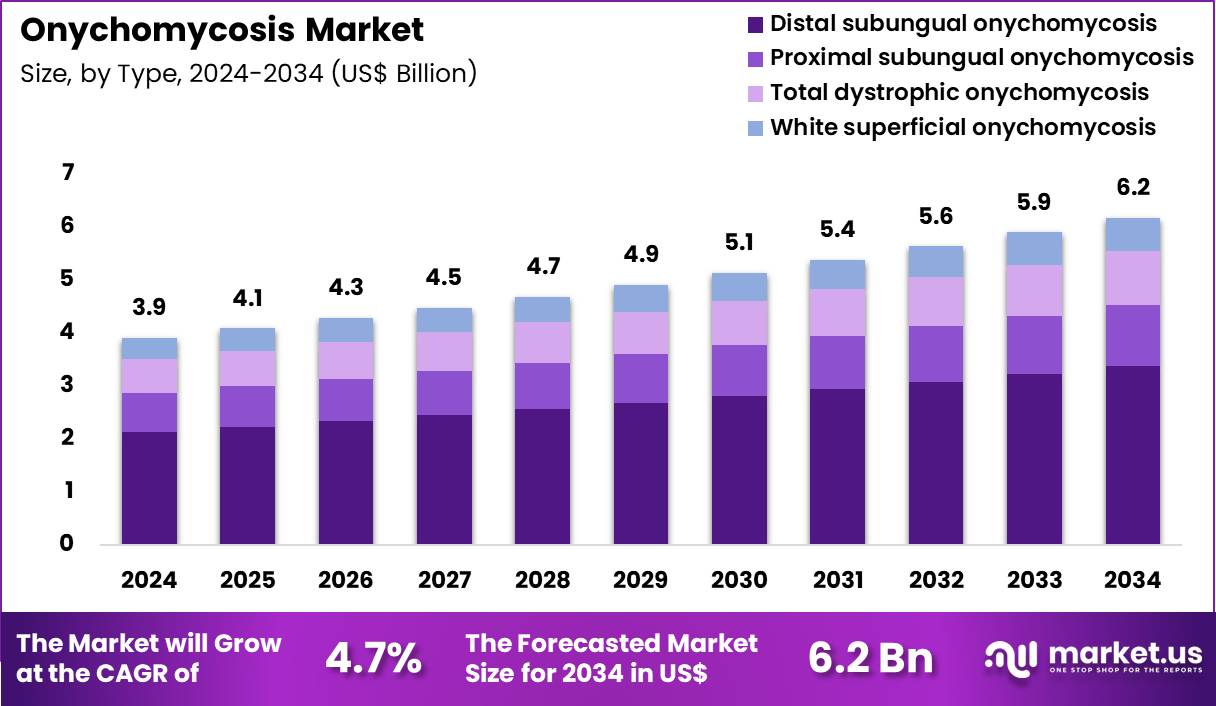
New York, NY – Oct 15, 2026 – The Global Onychomycosis Market size is expected to be worth around US$ 6.2 Billion by 2034 from US$ 3.9 Billion in 2024, growing at a CAGR of 4.7% during the forecast period 2025 to 2034. In 2024, North America led the market, achieving over 41.5% share with a revenue of US$ 1.6 Billion.
Onychomycosis, commonly known as a fungal nail infection, is a condition caused by fungi that affect the fingernails or toenails. It is one of the most common nail disorders and can affect individuals across different age groups. The infection typically develops when fungi enter the nail through small cracks in the nail plate or surrounding skin.
Common symptoms include nail discoloration, thickening, brittleness, crumbling edges, and separation of the nail from the nail bed. In some cases, the affected nail may become distorted or cause discomfort while walking or wearing shoes. Toenails are more frequently affected than fingernails, partly due to prolonged exposure to warm, moist environments.
Several factors can increase the risk of developing onychomycosis, including older age, diabetes, poor circulation, excessive sweating, and frequent use of communal showers or swimming facilities. The condition may also spread through direct contact or contaminated nail-care equipment.
Diagnosis generally involves a clinical examination and, when necessary, laboratory testing to confirm the presence of fungal infection. Treatment options include topical antifungal medications and oral antifungal drugs, depending on the severity and extent of the infection. Treatment can require several months because healthy nails grow slowly.
Preventive measures include maintaining proper nail hygiene, keeping feet dry, wearing breathable footwear, and avoiding the sharing of nail clippers. Early diagnosis and appropriate treatment can help manage the infection and reduce the risk of recurrence.
Key Takeaways
- In 2024, the onychomycosis market generated revenue of US$ 3.9 billion and is projected to grow at a CAGR of 4.7%, reaching US$ 6.2 billion by 2034.
- By type, the market is segmented into distal subungual, proximal subungual, total dystrophic, and white superficial onychomycosis. Distal subungual onychomycosis dominated the segment, accounting for a market share of 54.6%.
- By treatment, the market is categorized into topical, oral, and other treatments. Topical treatments held the largest market share of 58.9%.
- North America dominated the global onychomycosis market, accounting for a market share of 41.5%.
Key Market Segments
- Type Analysis: Distal subungual onychomycosis dominated the type segment, accounting for 54.6% of the market. Its high prevalence is associated with exposure to moist environments, aging populations, and lifestyle factors. Rising awareness, early diagnosis, and treatment adoption continue to support segment growth.
- Treatment Analysis: Topical treatments dominated the treatment segment, accounting for 58.9% of the market. Their favorable safety profiles, ease of application, and lower risk of systemic side effects support adoption. Improved formulations, wider availability, and growing patient preference are expected to sustain segment dominance.
Regional Analysis
North America Leads the Onychomycosis Market
In 2024, North America accounted for 41.5% of the global onychomycosis market, supported by rising fungal nail infections, greater disease awareness, and improved access to dermatological care.
The increasing prevalence of diabetes and other risk factors has strengthened demand for topical and oral antifungal treatments. Advances in nail lacquer formulations, improved diagnostic methods, and early treatment practices further support regional market growth. Growing healthcare access and awareness initiatives are also encouraging timely diagnosis and treatment.
Asia Pacific Expected to Register the Highest CAGR
The Asia Pacific onychomycosis market is expected to record the highest CAGR during the forecast period, driven by humid climatic conditions, large populations, and increasing healthcare awareness. Rising access to dermatology services and growing demand for affordable antifungal medications are supporting regional expansion.
Pharmaceutical manufacturers are focusing on localized production and cost-effective treatments to improve availability. Additionally, public health initiatives promoting nail hygiene, early diagnosis, and treatment awareness are expected to strengthen market growth across emerging economies.
Emerging Trends
- Growing preference for topical antifungal treatments: Topical antifungal products, including nail solutions and medicated lacquers, are important options for patients with mild to moderate nail infections. These products may reduce concerns about whole-body side effects and drug interactions. However, long treatment periods and limited penetration through thick nails remain challenges.
- Increasing focus on accurate diagnosis before treatment: Healthcare professionals are placing greater emphasis on confirming fungal infection before prescribing oral antifungal medicines. Nail injuries and psoriasis can produce similar symptoms, making visual examination alone unreliable. This creates a continuing need for microscopy, fungal culture, and other laboratory-based diagnostic methods.
- Development of improved antifungal formulations: Research is exploring treatments that can reach fungi beneath the nail more effectively. Improved topical formulations may help address the limitations of existing products, particularly their ability to pass through the hard nail plate. The development of new formulations remains important because treatment can require many months.
- Greater attention to recurrence prevention: Nail fungal infections can return even after successful treatment. Healthcare providers are therefore emphasizing follow-up care, nail hygiene, management of associated foot infections, and preventive treatment for selected patients. This creates demand for ongoing care alongside medicines used to treat the initial infection.
- Exploration of device-based and combination treatments: Laser-based approaches and combinations of medicines with nail debridement are being considered as alternatives or additions to conventional antifungal treatment. However, evidence varies by method, and laser treatment has limitations. Continued clinical research is needed to establish which approaches provide reliable, lasting benefits.
Use Cases
- Treatment of mild nail fungal infections: Topical antifungal solutions and nail lacquers are used to treat selected patients with mild or moderate infections. They provide a treatment option for patients who may not require oral medicines. Product selection depends on infection severity, patient suitability, and the medicine’s approved indication.
- Treatment of severe or extensive infections: Oral antifungal medicines, such as terbinafine, are used when the infection is more extensive or when topical treatment may not be sufficient. These medicines support treatment across the body but require assessment of medical history, potential drug interactions, and liver-related risks.
- Laboratory testing and identification of fungal organisms: Diagnostic laboratories examine nail clippings or scrapings to confirm infection and, where needed, identify the causative organism. Microscopy, fungal culture, and molecular tests such as polymerase chain reaction (PCR) can support treatment decisions and help reduce incorrect diagnoses.
- Nail care for patients with diabetes and other risk factors: People with diabetes and certain other health conditions may require closer monitoring of nail infections. Healthcare providers can assess nail damage, possible complications, and recurrence risk, then select appropriate treatment and follow-up. This supports demand for coordinated dermatology, primary care, and foot-care services.
- Clinical research and evaluation of new treatments: Clinical trials are used to assess the safety and effectiveness of new antifungal medicines, improved nail formulations, and device-based treatments. Researchers measure outcomes such as fungal clearance, visible nail improvement, adverse effects, and recurrence to determine whether an approach offers meaningful benefits.
Frequently Asked Questions About Onychomycosis
- What are the main causes of onychomycosis?
Onychomycosis is primarily caused by dermatophytes, a group of fungi that infect keratin-rich tissues. Yeasts and non-dermatophyte moulds can also cause infections. The responsible organism may vary depending on the affected nail and individual risk factors. - What are the common symptoms of onychomycosis?
Common symptoms include yellow, white, or brown nail discoloration, thickened nails, brittle edges, distorted nail shape, and debris beneath the nail. In advanced cases, the nail may separate from its underlying bed, sometimes causing discomfort. - What treatment options are available for onychomycosis?
Treatment options include topical antifungal medicines, such as medicated nail solutions, and oral antifungal drugs, including terbinafine or itraconazole. Selection depends on infection severity, the causative fungus, medical history, possible drug interactions, and professional clinical assessment. - What are the key factors driving the onychomycosis market?
Market growth is supported by an aging population, increasing awareness of fungal nail infections, and greater diagnosis among people with diabetes or weakened immunity. Demand for effective antifungal treatments and improved patient access also contributes to market development. - Which treatment segment is important in the onychomycosis market?
Oral and topical antifungal medicines represent important treatment segments in the onychomycosis market. Oral therapies are commonly considered for suitable patients with more extensive infections, whereas topical products offer alternatives for selected mild-to-moderate cases, depending on clinical assessment. - How does disease prevalence influence the onychomycosis market?
Disease prevalence influences the potential patient population requiring diagnosis and treatment. Higher infection rates among older adults and certain medically vulnerable groups can increase demand for antifungal medicines, diagnostic services, and long-term infection management, although actual demand varies geographically. - What opportunities exist in the onychomycosis market?
Potential opportunities include developing more convenient topical treatments, improving diagnostic accuracy, expanding patient education, and addressing recurrence. Better treatment adherence and access to suitable antifungal therapies may also create opportunities for manufacturers, healthcare providers, and diagnostic solution developers. - What is the future outlook for the onychomycosis market?
The outlook depends on disease awareness, diagnostic rates, treatment innovation, healthcare access, and patient adherence. Continued clinical research may improve available treatment options, although future market expansion will depend on demonstrated clinical benefits, affordability, regulatory approval, and actual adoption.
Conclusion
The global onychomycosis market is expected to experience steady growth, increasing from US$ 3.9 billion in 2024 to US$ 6.2 billion by 2034, at a CAGR of 4.7%. Rising disease prevalence, an aging population, and greater awareness of fungal nail infections are supporting market expansion.
Distal subungual onychomycosis and topical treatments remain dominant market segments due to their prevalence and favorable treatment characteristics. North America leads the market, while Asia Pacific is expected to record the fastest growth. Continued advancements in antifungal formulations, diagnostic technologies, and preventive care are likely to create further opportunities for market participants.
Discuss your needs with our analyst
Please share your requirements with more details so our analyst can check if they can solve your problem(s)