


Overview
New York, NY – Aug 18, 2026 – The Global Migraine Market size is expected to be worth around US$ 18.86 Billion by 2034 from US$ 6.95 Billion in 2024, growing at a CAGR of 10.5% during the forecast period from 2025 to 2034. In 2024, North America led the market, achieving over 42.5% share with a revenue of US$ 2.95 Billion.
The global migraine burden continues to rise, creating significant demand for advanced therapies, preventive treatments, and digital healthcare solutions. Migraine is a neurological disorder characterized by recurring moderate-to-severe headaches that typically last 4 to 72 hours and may involve nausea, vomiting, and sensitivity to light or sound. According to the World Health Organization, migraine affects approximately 1 billion people worldwide, representing nearly 15% of the global population.
Migraine is among the leading causes of disability globally, particularly affecting individuals during their most productive years. The condition is more common in women, with females experiencing migraine about 2–3 times more frequently than men. Epidemiological studies show that migraine prevalence is highest among adults aged 20–50 years, creating a major impact on workforce productivity and healthcare utilization.
Approximately one-third of migraine patients experience aura symptoms, including temporary visual disturbances, numbness, or speech difficulties before headache attacks. Chronic migraine affects around 1–2% of the global population, with patients experiencing headaches on 15 or more days per month for over 3 months, highlighting the need for effective preventive solutions.
The migraine treatment landscape is advancing with the adoption of calcitonin gene-related peptide (CGRP) inhibitors, gepants, ditans, injectable preventive therapies, and neuromodulation devices. The U.S. Food and Drug Administration has approved several migraine-specific therapies since 2018, expanding options for patients.
Growing awareness, improved diagnosis rates, increasing healthcare expenditure, and adoption of digital health monitoring tools are expected to accelerate innovation in migraine management. Emerging personalized treatment approaches are helping reduce migraine frequency, improve patient outcomes, and address unmet clinical needs worldwide.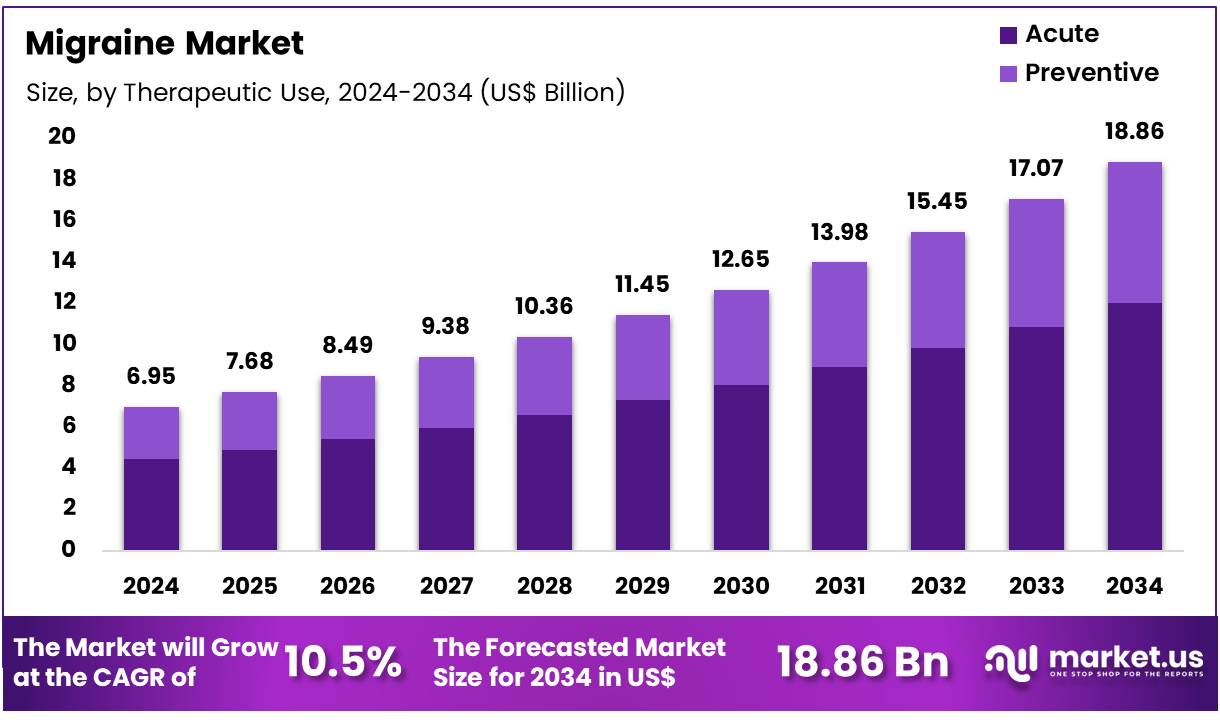
Key Takeaways
- Market Size: The global migraine market is projected to reach approximately US$ 18.86 billion by 2034, increasing from US$ 6.95 billion in 2024.
- Market Growth: The migraine market is expected to expand at a compound annual growth rate (CAGR) of 10.5% during the forecast period from 2025 to 2034.
- Therapeutic Use Analysis: The acute treatment segment is anticipated to hold the leading position in the migraine market, accounting for around 63.7% market share in 2024.
- Therapeutic Class Analysis: CGRP monoclonal antibodies are expected to dominate the therapeutic class segment, capturing approximately 42.7% market share in 2024.
- Route of Administration Analysis: The oral administration segment is estimated to lead the route of administration category, representing about 49.8% market share in 2024.
- Age Group Analysis: The adult patient segment is projected to remain the largest age group category, holding nearly 69.7% market share in 2024.
- Distribution Channel Analysis: The retail pharmacy segment is expected to dominate the distribution channel segment, accounting for approximately 51.2% market share in 2024.
- Regional Analysis: North America is projected to maintain its leading position in the global migraine market, capturing more than 42.5% market share in 2024, with revenue of approximately US$ 2.95 billion.
Statistical Information
- Global migraine burden and growth trends: Global migraine prevalence rose 58.15% from 1990 to 2021, increasing from 732.56 million to 1.16 billion people, indicating a large and expanding patient pool. This long‑term growth is driven by population increase, better diagnosis, and lifestyle factors, structurally enlarging demand for preventive and acute migraine therapies worldwide.
- United Kingdom fiscal burden per patient: A UK fiscal modeling study found that a 44‑year‑old individual with migraine generates about 19,823 pounds in excess lifetime fiscal costs to the government. This equates to roughly 1,379 pounds per year of working life, combining higher benefit payments, lower tax contributions, and increased health and social care spending compared with non‑migraine individuals.
- Argentina public sector migraine burden estimates: An economic analysis in Argentina estimated a cumulative fiscal burden of 6,505 US dollars per person with migraine over a modeled horizon, or 476 dollars per life‑year. For individuals with chronic migraine, the cost rose to 21,670 dollars per person, driven by higher healthcare use and more pronounced productivity and tax‑revenue losses.
- Triptan treatment patterns in Switzerland: A Swiss insurance‑database cohort showed that 1.3% of enrollees (10,090 patients) used triptans in 2015. Among these, 82.6% used only triptans, 12.9% alternated between triptans and prophylactic drugs, and 4.5% combined both within a year, indicating limited prophylactic uptake despite triptan use.
- Prophylactic regimens among triptan users: Within the same Swiss cohort, among triptan users who received prophylaxis in the first quarter, 48.6% used beta‑blockers, 40.7% used other prophylactics, and 10.7% used both. Many patients maintained combined beta‑blocker and other prophylactic therapy across all four quarters, suggesting a stable subset on multi‑drug preventive regimens.
- Anti‑CGRP biologic uptake among eligibles: A recent claims‑based analysis reported that anti‑CGRP pathway monoclonal antibodies were dispensed to 28.9% of chronic migraine patients. Among non‑chronic migraineurs, uptake was lower, at 6.9%, 4.1%, and 2.9% across high, middle, and low headache‑frequency tertiles, indicating early but uneven penetration of this newer preventive class.
- Concomitant acute medications among chronic patients: In the same anti‑CGRP eligibility study, 87.1% of chronic migraine patients had at least one triptan claim, while about 40% had claims for opioids and 40% for NSAIDs. Overall, 64.7% used non‑triptan acute migraine‑specific medications, showing layered acute therapy alongside preventive strategies in high‑burden patients.
- Work productivity loss patterns in employers: Models of U.S. employer data estimated 60,000 to 686,000 annual workdays affected by migraine‑related lost productive time in studied employee cohorts. Indirect costs were 6.2 to 8.5 times higher than direct medical costs, with total indirect U.S. migraine costs estimated at 19.3 billion dollars (2019 US$), mostly from absenteeism.
Regional Analysis
North America led the market, achieving over 42.5% share.
North America remains a major region for migraine management due to the high disease burden, advanced healthcare systems, and rapid adoption of innovative therapies. According to the Centers for Disease Control and Prevention, migraine and severe headache affect millions of adults in the United States, with women reporting a higher prevalence compared with men. This significant patient population creates continuous demand for acute and preventive migraine treatments.
The region benefits from strong neurological care infrastructure, widespread availability of diagnostic services, and early adoption of advanced therapies such as calcitonin gene-related peptide (CGRP) inhibitors. The U.S. Food and Drug Administration approval of multiple migraine-specific therapies has expanded treatment options for patients requiring preventive and acute care.
Additionally, ongoing clinical research, improved patient awareness, and increasing use of digital health tools are supporting better migraine diagnosis and disease management across the United States and Canada.
Emerging Trends
- Expansion of CGRP-Targeted Therapies: FDA approvals of CGRP monoclonal antibodies and oral CGRP medicines are transforming migraine prevention and acute treatment. The first CGRP preventive therapy was approved in 2018, creating new options for patients with frequent migraine attacks.
- Growth of Personalized Migraine Management: Healthcare providers are increasingly adopting personalized treatment approaches based on migraine frequency, symptoms, triggers, and patient response. CDC data highlights differences in migraine burden by age and gender, supporting individualized care strategies.
- Increasing Adoption of Digital Migraine Tracking Tools: Smartphone applications and digital headache diaries are gaining importance for monitoring migraine frequency, triggers, and treatment outcomes. These tools improve patient–doctor communication and support data-driven treatment decisions.
- Rising Use of Non-Invasive Neuromodulation Devices: FDA-cleared neuromodulation technologies are emerging as alternatives for patients seeking non-drug migraine management. These devices use electrical or magnetic stimulation methods to target nerve pathways involved in migraine symptoms.
- Development of Faster-Acting Acute Migraine Therapies: New acute treatments, including CGRP receptor antagonists, are expanding options for rapid symptom relief. These therapies address the need for effective treatment during migraine attacks that can last 4–72 hours.
- Growing Focus on Women-Centric Migraine Care: Women experience migraine at significantly higher rates than men. CDC data reported that 6.2% of women compared with 2.2% of men experienced severe migraine-related impact, increasing demand for targeted treatment strategies.
Use Cases
- Acute Migraine Attack Management: Migraine therapies are widely used to provide rapid relief during active headache episodes. FDA-approved acute treatments, including triptans and CGRP receptor antagonists, help reduce migraine pain and associated symptoms such as nausea and sensitivity to light. Migraine attacks generally last between 4 and 72 hours.
- Preventive Migraine Treatment: Preventive therapies are used for patients experiencing frequent or severe migraine attacks. CGRP monoclonal antibodies, Botox therapy, and other preventive medicines help reduce migraine frequency and improve daily functioning, particularly among patients with chronic migraine.
- Chronic Migraine Management: Patients experiencing headaches on 15 or more days per month for over 3 months may require long-term treatment strategies. Preventive medicines, lifestyle modifications, and regular monitoring are used to reduce attack frequency and improve quality of life.
- Women-Specific Migraine Care: Migraine management programs increasingly focus on women due to higher prevalence rates. CDC data reported that 6.2% of women compared with 2.2% of men experienced significant headache or migraine-related impact, supporting demand for targeted care approaches.
- Digital Migraine Monitoring and Tracking: Mobile applications and digital headache diaries are used to record migraine frequency, symptoms, triggers, and medication response. These tools help healthcare providers develop personalized treatment plans and improve patient-doctor communication.
- Neuromodulation-Based Treatment: Non-invasive neuromodulation devices are used by patients seeking drug-free or complementary migraine treatment options. FDA-regulated devices use electrical or magnetic stimulation technologies to target nerve pathways associated with migraine symptoms.
Frequently Asked Questions on Migraine
- What factors are driving the growth of the migraine market?
The migraine market is growing due to increasing disease awareness, rising diagnosis rates, advanced preventive therapies, and adoption of CGRP-targeted medicines. Growing demand for personalized treatments, digital health tools, and non-invasive devices is also supporting market development. - How large is the global migraine patient population?
According to healthcare organizations, migraine affects approximately 1 billion people worldwide, representing nearly 15% of the global population. The high disease burden creates significant demand for effective acute treatments, preventive therapies, and improved migraine management solutions. - Why are CGRP inhibitors important in the migraine market?
CGRP inhibitors represent a major advancement in migraine prevention by targeting pathways involved in migraine development. Since the FDA approved the first CGRP preventive therapy in 2018, these medicines have expanded treatment options for patients. - Why is the adult segment important in the migraine market?
Adults represent a major migraine patient group because the condition commonly affects individuals aged 15–49 years. Migraine during productive years impacts employment, daily activities, and quality of life, increasing demand for effective treatment options. - How are digital health technologies being used in migraine management?
Digital health tools help patients track headache frequency, symptoms, triggers, and treatment responses. Migraine diary applications improve communication between patients and healthcare providers, supporting personalized treatment decisions and better long-term disease management. - What are the major treatment options available for migraine patients?
Migraine treatment includes acute medicines, preventive therapies, CGRP monoclonal antibodies, oral CGRP antagonists, Botox injections, lifestyle management, and neuromodulation devices. Treatment selection depends on migraine frequency, severity, symptoms, and individual patient response. - Why is North America a leading region in the migraine market?
North America benefits from high migraine awareness, advanced healthcare infrastructure, strong research capabilities, and early adoption of innovative therapies. FDA approvals of new migraine medicines and widespread access to healthcare services support regional market growth. - What is the future outlook for the migraine market?
The migraine market is expected to advance with continued innovation in CGRP therapies, digital monitoring solutions, personalized medicine, and non-invasive devices. Increasing research into migraine biology will support development of improved treatments and better patient outcomes.
Conclusion
The migraine market is experiencing significant growth due to the rising global disease burden, increasing awareness, and continuous advancements in treatment options. The availability of CGRP-targeted therapies, oral migraine medicines, digital health tools, and non-invasive neuromodulation devices is improving patient care and addressing unmet medical needs.
Growing diagnosis rates, personalized treatment approaches, and strong healthcare infrastructure are further supporting market expansion. With migraine affecting approximately 1 billion people worldwide, the demand for effective preventive and acute therapies is expected to increase. Ongoing research and technological innovation will continue shaping the future of migraine management and improving patient quality of life.
Discuss your needs with our analyst
Please share your requirements with more details so our analyst can check if they can solve your problem(s)




