
Overview
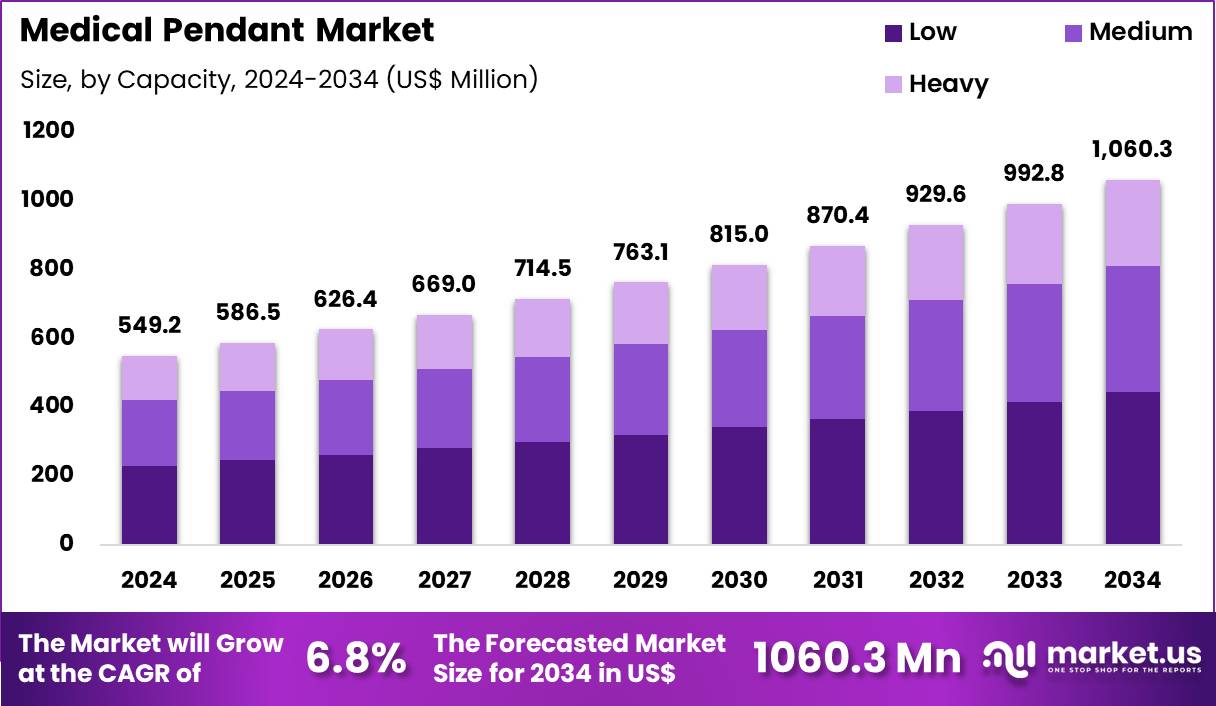
New York, NY – Oct 15, 2026 – The Global Medical Pendant Market size is expected to be worth around US$ 1060.3 Million by 2034 from US$ 549.2 Million in 2024, growing at a CAGR of 6.8% during the forecast period 2025 to 2034. In 2024, North America led the market, achieving over 36.6% share with a revenue of US$ 201.0 Million.
A medical pendant is a personal emergency alert device designed to provide quick access to assistance for individuals who may require immediate medical support. It is commonly used by senior citizens, people with disabilities, patients with chronic health conditions, and individuals living alone. The device supports independent living by enabling users to request help during medical emergencies, falls, or other unexpected situations.
Medical pendants are generally available in wearable formats, including necklaces, wristbands, and compact portable devices. Depending on the model, they may feature an emergency call button, fall detection technology, two-way voice communication, GPS tracking, and connectivity with monitoring centers or designated caregivers. When activated, the device can send an alert to a predefined contact or emergency response service, helping reduce delays in accessing assistance.
The growing focus on elderly care, home healthcare services, and patient safety is supporting interest in medical pendant solutions. These devices are increasingly being considered for residential care, assisted living facilities, hospitals, and other healthcare environments where timely communication is essential.
Technological advancements, including wireless connectivity, improved battery performance, and smart monitoring capabilities, are further expanding the functionality of medical pendants. As healthcare providers and families continue to prioritize safety, accessibility, and independent living, medical pendants are expected to remain an important component of personal emergency response systems.
Key Takeaways
- In 2024, the market generated revenue of US$ 549.2 million and is projected to reach US$ 1,060.3 million by 2034, growing at a CAGR of 6.8% during the forecast period.
- By product type, the market is segmented into fixed, single-arm movable, fixed retractable, double- and multi-arm movable, and accessories. The fixed segment dominated the market, accounting for a share of 44.8%.
- Based on capacity, the market is categorized into low, heavy, and medium. The low-capacity segment held a significant market share of 41.9%.
- By application, the market is divided into surgery, anesthesia, endoscopy, intensive care units (ICUs), and others. The surgery segment dominated the market, accounting for the largest revenue share of 46.3%.
- By end user, the market is segmented into hospitals, clinics, and others. The hospital segment led the market, capturing a revenue share of 57.6%.
- Regionally, North America dominated the market, accounting for the largest market share of 36.6%.
Key Market Segments
- Product Type Analysis: The fixed segment dominated the Medical Pendant market, accounting for 44.8% of the product type category. Its structural stability, cost efficiency, low maintenance requirements, and compatibility with standardized operating rooms support adoption across hospitals and surgical facilities.
- Capacity Analysis: The low-capacity segment accounted for 41.9% of the capacity category. Its affordability, simpler installation, space efficiency, and suitability for routine surgical and anesthesia procedures support demand among hospitals, clinics, and healthcare facilities seeking cost-effective equipment solutions.
- Application Analysis: The surgery segment dominated the Medical Pendant market, accounting for 46.3% of the application category. Rising surgical volumes, operating room modernization, improved equipment accessibility, efficient cable management, and increasing demand for organized surgical environments support segment growth.
- End-User Analysis: The hospital segment led the Medical Pendant market, accounting for 57.6% of the end-user category. High surgical volumes, expanding healthcare infrastructure, operating room modernization, centralized procurement, and increasing emphasis on patient safety and staff ergonomics drive adoption across hospitals.
Regional Analysis
In 2024, North America accounted for 36.6% of the global medical pendant market, driven by hospital expansions, operating room modernization, and increasing demand for critical care infrastructure. The adoption of ceiling-mounted pendants has improved access to medical gases, power supplies, and equipment.
Technological advancements, including modular designs, multi-arm systems, and integrated monitoring solutions, have further supported adoption. Aging populations and rising chronic disease prevalence have increased demand for advanced healthcare facilities. According to the American Hospital Association, the United States had 5,112 community hospitals in 2023.
Asia Pacific is expected to register the highest CAGR during the forecast period, supported by rapid hospital construction, expanding surgical capacity, and rising healthcare investments. Growing demand for intensive care facilities and minimally invasive procedures is encouraging the adoption of multifunctional medical pendants.
Manufacturers are developing cost-effective, compact, and durable systems tailored to regional requirements. Government infrastructure initiatives, local manufacturing capabilities, and standardized procurement practices are expected to create further growth opportunities across the region.
Emerging Trends
- Growing adoption of movable and motorized pendants: Hospitals are increasingly considering movable, multi-arm, and motorized systems that allow medical teams to reposition equipment according to procedural needs. These designs can improve access to instruments, reduce floor clutter, and support more efficient use of operating room space.
- Integration with digital hospital systems: Medical pendants are increasingly being designed to accommodate patient monitors, data connections, and connected clinical equipment. This supports the development of digitally enabled hospitals and helps healthcare teams organize essential devices in one accessible location.
- Demand for modular and customized designs: Healthcare facilities require different equipment arrangements for surgery, anesthesia, endoscopy, and intensive care. Modular pendants allow buyers to select suitable arms, shelves, gas outlets, and electrical connections according to room design and clinical requirements.
- Greater focus on infection prevention and safety: Hospitals are giving greater attention to surfaces that are easy to clean, organized cables, safe equipment placement, and reliable utility connections. Pendant manufacturers can respond through cleanable designs, better cable management, and equipment configurations suited to infection-control procedures.
- Increasing demand from advanced surgical facilities: Hybrid operating rooms and advanced procedure suites require space for multiple devices, including imaging equipment, monitors, and anesthesia systems. This creates opportunities for high-capacity pendants that support complex equipment arrangements and changing clinical workflows.
Use Cases
- Operating rooms and surgical theatres: Pendants provide organized access to medical gases, electrical outlets, anesthesia equipment, monitors, and other surgical devices. They help maintain clear floor space and allow staff to position equipment around the operating table.
- Intensive care units (ICUs): ICU pendants support ventilators, infusion pumps, patient monitors, suction equipment, and medical gas connections. They help organize multiple devices near critically ill patients and improve access for nurses and other clinical staff.
- Anesthesia departments: Anesthesia pendants arrange gas outlets, power supplies, monitoring devices, and anesthesia workstations close to the patient. This setup supports anesthesia professionals during the delivery of anesthesia and the continuous monitoring of patients during procedures.
- Endoscopy and diagnostic procedure rooms: Pendants can support endoscopy monitors, electrical connections, medical gases, and related equipment. Adjustable configurations help clinical teams arrange devices according to the procedure and maintain an organized workspace for examinations and minimally invasive treatments.
- Emergency and trauma care units: Medical pendants provide accessible utility connections and equipment support in resuscitation areas. They help organize monitors, oxygen delivery connections, suction, and other essential equipment used by clinical teams when assessing and treating seriously ill or injured patients.
Frequently Asked Questions About Medical Pendant
- What is a medical pendant?
A medical pendant is a suspended or ceiling-mounted system used in hospitals to support medical equipment and provide access to medical gases, electrical power, and data connections. It helps organize clinical workspaces and keep essential devices accessible to healthcare professionals. - What are the main components of a medical pendant?
A medical pendant typically includes a supporting arm, equipment shelves, medical gas outlets, electrical sockets, data connections, and cable management features. Depending on its design, it may also include motorized movement, adjustable controls, and supports for monitoring devices. - What are the different types of medical pendants?
Medical pendants are available in fixed, retractable, single-arm movable, double-arm, and multi-arm designs. Fixed systems provide stable equipment placement, while movable versions offer greater flexibility. The appropriate type depends on clinical requirements, available space, and equipment load. - How do medical pendants improve hospital safety?
Medical pendants help organize cables, medical equipment, and utility connections away from busy floor areas. This can reduce workspace obstructions and improve equipment access. Safe installation, correct loading, maintenance, and compliance with applicable standards remain essential. - How are medical pendants cleaned and maintained?
Medical pendants should be cleaned and disinfected according to the manufacturer’s instructions and hospital infection-control procedures. Routine inspections should also cover mechanical movement, electrical connections, load limits, and medical gas outlets to support reliable and safe operation. - What factors are driving the medical pendant market?
Market growth is supported by hospital construction, operating room modernization, rising demand for intensive care, and wider use of advanced medical equipment. The need for better space management, accessible utilities, and efficient clinical workflows also supports adoption. - What challenges affect the medical pendant market?
Market challenges include high installation costs, complex hospital infrastructure requirements, maintenance needs, and strict safety considerations. Compatibility with existing medical gas and electrical systems can also influence purchasing decisions, particularly when hospitals upgrade older operating rooms.
Conclusion
The global medical pendant market is expected to witness steady growth, supported by increasing hospital construction, operating room modernization, and rising demand for advanced healthcare infrastructure. The market is projected to grow from US$ 549.2 million in 2024 to US$ 1,060.3 million by 2034, at a CAGR of 6.8%.
North America currently leads the market, while Asia Pacific is anticipated to register the fastest growth. Technological advancements, modular designs, improved equipment accessibility, and increasing focus on patient safety are expected to create new opportunities. However, high installation costs and maintenance requirements may influence adoption across healthcare facilities.
Discuss your needs with our analyst
Please share your requirements with more details so our analyst can check if they can solve your problem(s)