


Overview
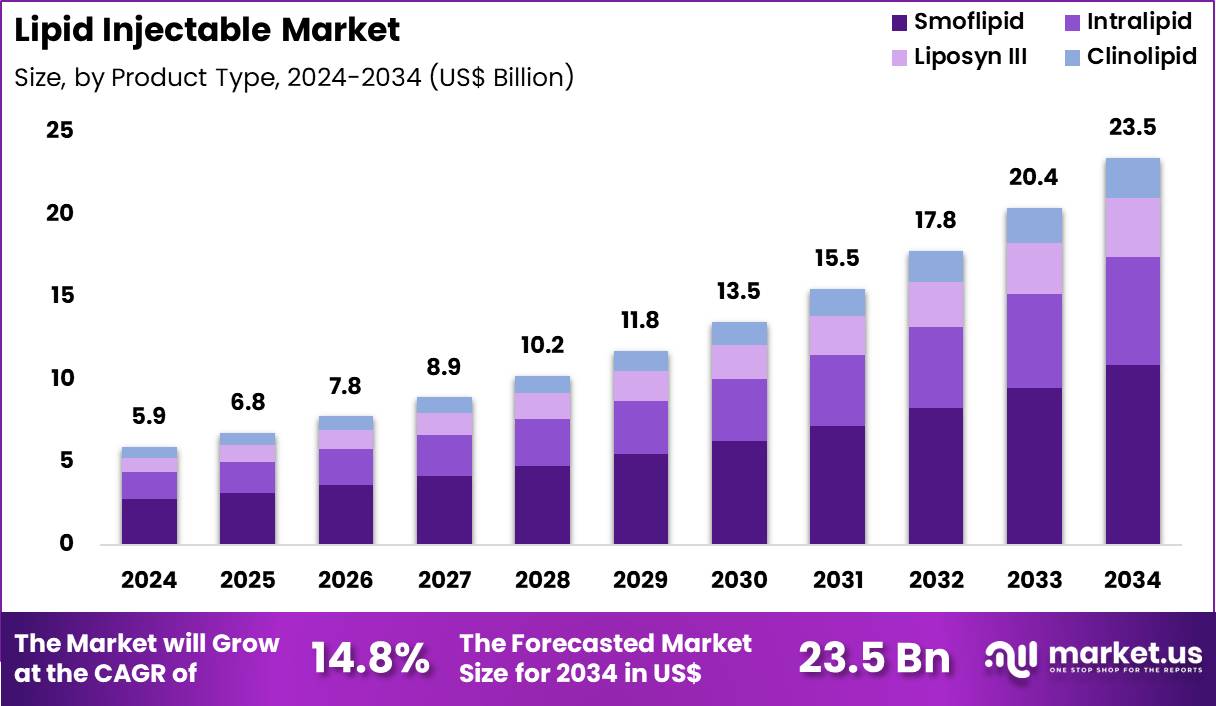
New York, NY – Oct 09, 2026 – The Global Lipid Injectable Market size is expected to be worth around US$ 23.5 Billion by 2034 from US$ 5.9 Billion in 2024, growing at a CAGR of 14.8% during the forecast period 2025 to 2034. In 2024, North America led the market, achieving over 42.7% share with a revenue of US$ 2.5 Billion.
The lipid injectable market comprises lipid-based injectable formulations used in pharmaceutical and healthcare applications for drug delivery, nutritional support, and therapeutic treatment. These formulations include lipid emulsions, lipid-based drug carriers, and intravenous lipid preparations designed to improve drug solubility, stability, and bioavailability.
Market growth is supported by the increasing demand for advanced drug delivery systems, the rising prevalence of chronic diseases, and the growing use of intravenous nutritional therapies in hospitals and critical care settings. Lipid-based injectable formulations are also gaining attention for their potential to enhance the delivery of poorly water-soluble drugs and support targeted therapeutic applications.
Key market participants include pharmaceutical manufacturers, biotechnology companies, and specialized formulation developers. Research and development activities are focused on improving formulation stability, patient safety, manufacturing efficiency, and therapeutic performance. Technological advancements in lipid nanoparticles and other lipid-based delivery platforms are creating additional opportunities for pharmaceutical innovation.
North America and Europe represent established markets, supported by advanced healthcare infrastructure and pharmaceutical research capabilities, while Asia-Pacific offers growth opportunities through expanding healthcare access, increasing pharmaceutical manufacturing capacity, and rising healthcare expenditure.
However, stringent regulatory requirements, complex manufacturing processes, and the need for rigorous quality control may present challenges to market expansion.
Overall, the lipid injectable market is expected to benefit from continued pharmaceutical innovation, increasing clinical demand, and the development of advanced injectable drug delivery technologies.
Key Takeaways
- In 2024, the lipid injectable market generated US$ 5.9 billion in revenue and is projected to reach US$ 23.5 billion by 2034, growing at a CAGR of 14.8% during the forecast period.
- By product type, the market is segmented into Smoflipid, Intralipid, Liposyn III, and Clinolipid. Smoflipid dominated the market in 2023, accounting for a market share of 46.5%.
- Based on application, the market is categorized into targeted drug delivery, pain reduction, and toxicity reduction. Targeted drug delivery held a significant market share of 58.9%.
- North America dominated the global lipid injectable market in 2024, accounting for a market share of 42.7%.
Key Market Segments
- Product Type Analysis: Smoflipid held a leading position in the lipid injectable market, accounting for 46.5% of the product type segment in 2023. Its combination of soybean oil, medium-chain triglycerides (MCTs), olive oil, and fish oil supports balanced fatty acid delivery and improved metabolic tolerance in parenteral nutrition.
- Application Analysis: Targeted drug delivery dominated the application segment, accounting for 58.9% of the market. Lipid-based injectable formulations improve the solubility and bioavailability of certain drugs, while supporting targeted delivery, reducing off-target exposure, and enhancing therapeutic effectiveness across oncology and other specialized treatment applications.
Regional Analysis
North America dominated the lipid injectable market in 2024, accounting for a 42.7% share. Regional growth is supported by rising demand for parenteral nutrition among critically ill patients, premature infants, and individuals with gastrointestinal disorders.
Growing adoption of advanced lipid emulsions, improvements in infusion technologies, and increased focus on patient safety further support market development. In May 2024, the FDA approved an expanded label for Clinolipid lipid injectable emulsion for pediatric patients, including preterm neonates.
Asia-Pacific is expected to register the highest CAGR during the forecast period, driven by expanding healthcare infrastructure, increasing awareness of nutritional deficiencies, and growing demand for intravenous nutritional support.
Government initiatives to improve healthcare access and investments in pharmaceutical manufacturing are creating new growth opportunities. The rising burden of childhood malnutrition, particularly in South Asia, is also increasing the need for effective nutritional interventions. Additionally, local production, technology advancements, and improved clinical training are expected to strengthen regional market growth over the coming years.
Emerging Trends
- Growing focus on advanced lipid formulations: Manufacturers are developing and supplying formulations that use different combinations of soybean, olive, coconut-derived medium-chain triglyceride, and fish oils. These products support ongoing efforts to improve nutritional flexibility and meet different patient requirements.
- Increased attention to product safety and quality: Emulsion stability, correct dosing, infusion compatibility, and prevention of medication errors are important priorities. Healthcare providers are emphasizing standardized preparation, administration, and monitoring practices to reduce risks associated with injectable lipid products.
- Expanding research into emergency toxicology: Intravenous lipid emulsions are receiving continued research attention for severe drug toxicity, particularly local anesthetic systemic toxicity. Research into other drug poisonings is increasing, although evidence for many additional uses remains limited.
- Greater focus on neonatal and pediatric nutrition: Specialized nutritional needs among premature infants, newborns, and children are encouraging attention to patient-specific lipid administration. Product selection, dosing, and monitoring must be adjusted to age, clinical condition, and nutritional requirements.
- Supply reliability and manufacturing resilience: Historical shortages of injectable lipid products have highlighted the importance of reliable manufacturing, inventory management, and alternative product availability. Hospitals and suppliers have incentives to strengthen procurement planning and reduce interruptions in essential nutritional treatment.
Use Cases
- Parenteral nutrition: Lipid emulsions supply concentrated calories and essential fatty acids to patients who cannot receive sufficient nutrition through the digestive system. They form part of intravenous nutrition plans, alongside other nutrients, according to clinical requirements.
- Local anesthetic systemic toxicity: Intravenous lipid emulsion is an established rescue treatment for severe systemic toxicity caused by local anesthetics, including bupivacaine. Its use in these emergencies is guided by clinical protocols and specialist medical judgment.
- Selected drug poisoning cases: Lipid emulsions may be considered in certain life-threatening poisonings involving lipid-soluble drugs when standard treatment is insufficient. Evidence varies by substance, and this application requires specialist assessment rather than routine use.
- Neonatal and pediatric nutritional support: Injectable lipid emulsions can provide energy and essential fatty acids to newborns and children who require intravenous nutrition. Formulation selection and administration are carefully adjusted to age, weight, metabolic tolerance, and clinical condition.
- Pharmaceutical drug delivery: Certain lipid emulsions are used as vehicles for delivering poorly water-soluble medicines through intravenous administration. Their suitability depends on the drug, formulation compatibility, product approval, and the required safety and stability standards.
Frequently Asked Questions About Lipid Injectable
- What are the main ingredients in lipid injectable products?
Lipid injectable emulsions commonly contain vegetable oils or other approved lipid sources, emulsifiers such as egg phospholipids, and glycerol. Exact ingredients vary by product, and the formulation determines its nutritional properties and clinical suitability. - Who needs injectable lipid emulsions?
Patients who cannot obtain adequate nutrition through their digestive systems may receive lipid emulsions as part of parenteral nutrition. Newborns, children, and adults may require them, depending on their nutritional status and clinical condition. - Are injectable lipid emulsions used to treat drug poisoning?
Yes. Intravenous lipid emulsion is an established rescue treatment for severe local anesthetic systemic toxicity. Its use for other drug poisonings remains dependent on the substance, severity, clinical evidence, and specialist recommendations. - What are the possible risks associated with lipid injectables?
Potential risks include elevated blood triglycerides, pancreatitis, allergic reactions, fat overload, and interference with laboratory tests. The likelihood of complications depends on the formulation, dosage, infusion rate, patient condition, and monitoring practices. - What are the key factors driving the lipid injectable market?
Key market drivers include the need for intravenous nutritional support, increasing attention to specialized patient care, demand for reliable hospital supplies, and continued research into emergency toxicology applications. Their individual impact varies across healthcare systems and regions. - What are the major product segments in the lipid injectable market?
Products can be segmented by lipid source, formulation, concentration, patient group, and clinical application. Common categories include soybean-oil-based emulsions, mixed-oil formulations, and products containing medium-chain triglycerides or fish oil, depending on regional availability. - Which factors should investors and manufacturers monitor?
Investors and manufacturers should monitor hospital demand, product approvals, procurement contracts, manufacturing capacity, supply shortages, formulation developments, and clinical guidelines. Regulatory requirements and reimbursement arrangements should also be assessed before making regional market-entry or investment decisions.
Conclusion
The lipid injectable market is poised for substantial growth, driven by increasing demand for parenteral nutrition, advanced drug delivery systems, and specialized therapeutic applications. Valued at US$ 5.9 billion in 2024, the market is projected to reach US$ 23.5 billion by 2034, supported by continuous formulation advancements and expanding clinical requirements.
North America is expected to maintain a strong market position, while Asia-Pacific offers significant growth opportunities through healthcare infrastructure development and rising expenditure. However, regulatory complexities, manufacturing challenges, and quality requirements remain key concerns.
Continued innovation, reliable supply chains, and strategic investments will support long-term market expansion.
Discuss your needs with our analyst
Please share your requirements with more details so our analyst can check if they can solve your problem(s)




