


Overview
New York, NY – Nov 10 2026 – The Global Laser Therapy Devices Market size is expected to be worth around US$ 8.4 Billion by 2035 from US$ 3.6 Billion in 2025, growing at a CAGR of 8.9% during the forecast period 2026-2035. In 2025, North America led the market, achieving over 39.9% share with a revenue of US$ 1.4 Billion.
The Laser Therapy Devices Market plays an important role in modern healthcare by providing non-invasive and minimally invasive treatment solutions for various medical conditions. Laser therapy devices use focused light energy to treat tissues, reduce pain, support healing, and manage different health conditions. These devices are widely used in hospitals, specialty clinics, dermatology centers, rehabilitation facilities, and physiotherapy centers.
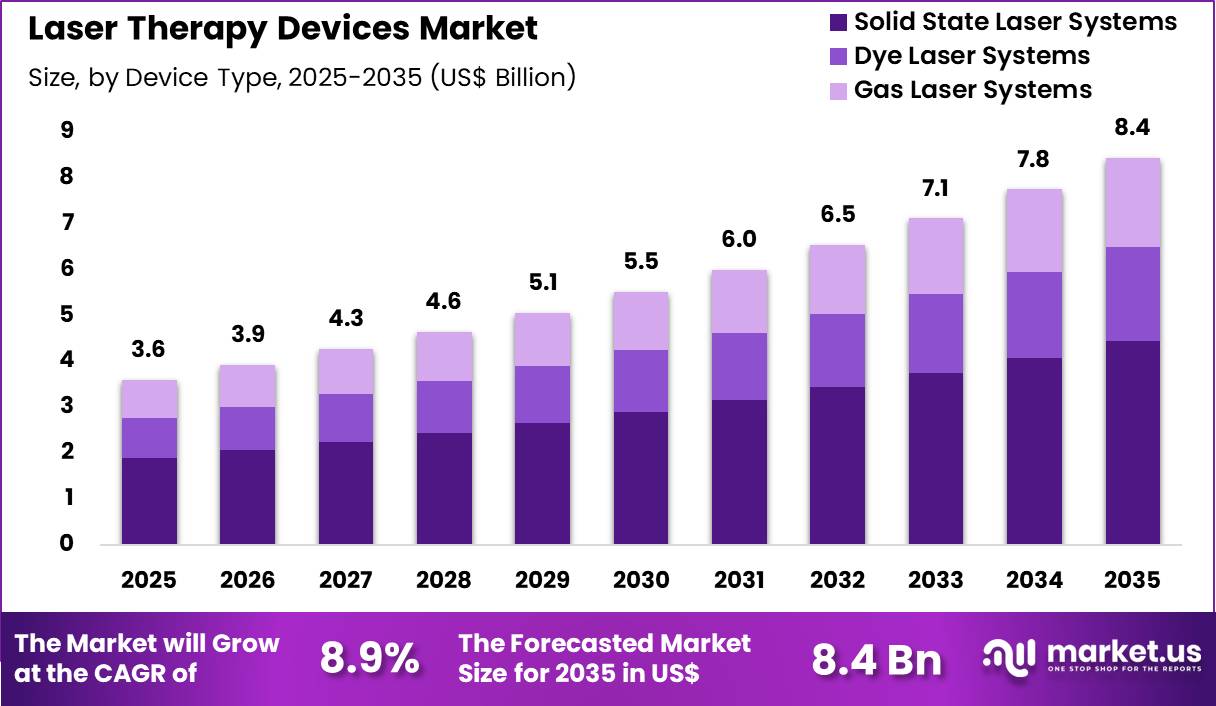
Growing demand for non-surgical treatment options, increasing cases of chronic pain, and rising adoption of advanced medical technologies are supporting market growth. Laser therapy is increasingly used in pain management, wound healing, sports injuries, dermatological treatments, and musculoskeletal conditions. Technological advancements in diode lasers, low-level laser therapy, and high-intensity laser systems are improving treatment accuracy and patient comfort.
Furthermore, the growing ageing population and increasing awareness of drug-free pain management solutions are encouraging the adoption of laser therapy devices. Healthcare providers are also investing in portable and user-friendly systems to expand treatment accessibility.
Rising healthcare expenditure, expanding rehabilitation services, and continuous innovation in laser-based medical technologies are expected to create new opportunities and support the long-term growth of the global Laser Therapy Devices Market.
Key Takeaways
- In 2025, the Laser Therapy Devices Market generated revenue of US$ 3.6 Billion and is projected to reach US$ 8.4 Billion by 2035, growing at a CAGR of 8.9% during the forecast period.
- Based on device type, the market is segmented into solid state laser systems, dye laser systems, and gas laser systems. The solid state laser systems segment dominated the market with a 52.6% share.
- By application, the market is categorized into ophthalmology, cardiovascular, dentistry, dermatology, gynecology, urology, and others. Ophthalmology held the largest share at 41.7%.
- Based on end users, the market is divided into hospitals, ambulatory surgical centers, specialized clinics, and others. Hospitals dominated the segment, accounting for 49.5% of the market.
- North America dominated the global Laser Therapy Devices Market, securing a leading market share of 39.9%.
Key Market Segments
- Device Type Analysis: The solid state laser systems segment dominated the device type category, accounting for 52.6% of the market. Growth is driven by high precision, reliable energy output, and wide medical applications. Increasing adoption in ophthalmology, dermatology, and urology, along with improved portability and safety features, further supports segment expansion.
- Application Analysis: Ophthalmology held the leading position in the application segment, accounting for 41.7% of the market. Growth is supported by rising cases of glaucoma, cataracts, and retinal disorders. Increasing demand for minimally invasive eye treatments, improved laser technologies, and expanding eye care facilities further encourages the adoption of laser therapy devices.
- End-User Analysis: Hospitals dominated the end-user segment, accounting for 49.5% of the market. Their leading position is supported by advanced surgical infrastructure, skilled medical professionals, and the ability to manage complex procedures. Increasing investments in ophthalmology and dermatology departments and the adoption of modern laser systems further drive hospital demand.
Regional Analysis
North America is leading the Laser Therapy Devices Market
North America dominated the laser therapy devices market in 2024, accounting for 39.9% of the global market share. Growth is driven by increasing demand for minimally invasive treatments, advanced healthcare infrastructure, and wider adoption of laser technologies.
Hospitals, dermatology centers, and specialty clinics are investing in modern laser systems for pain management, skin treatments, and surgical procedures. Rising cosmetic treatment demand, supportive healthcare policies, and clinician training programs further strengthen regional growth.
Asia Pacific is expected to register the highest CAGR during the forecast period
Asia Pacific is projected to record the fastest growth due to expanding healthcare infrastructure, rising medical spending, and increasing demand for advanced treatments.
Countries such as China, Japan, South Korea, and India are witnessing greater adoption of laser-based procedures. Growing awareness of minimally invasive treatments, improving patient access, and investments in specialty clinics are expected to create significant regional growth opportunities.
Emerging Trends
- Growing Demand for Non-Invasive Treatments: Laser therapy devices are gaining popularity because they offer treatment options without major surgical procedures. Healthcare professionals use these devices to manage pain, reduce inflammation, and support tissue healing with less recovery time.
- Increasing Adoption of Photobiomodulation Therapy: Photobiomodulation uses low-level red and near-infrared light to influence cellular activity. It is receiving greater attention in healthcare research for its potential role in pain relief, tissue repair, and reducing inflammation.
- Development of Advanced Laser Technologies: Manufacturers are developing devices with improved energy control, treatment settings, and delivery systems. These improvements help healthcare professionals adjust laser intensity and treatment duration according to different medical conditions.
- Expansion of Dermatology and Aesthetic Applications: Laser therapy is increasingly used in dermatology for skin resurfacing, hair removal, pigmentation correction, and scar treatment. Growing interest in minimally invasive cosmetic procedures is supporting demand for specialized laser equipment.
- Growing Clinical Research and Treatment Applications: Hospitals and research institutions are studying laser-based treatments for different medical conditions. Research into wound healing, musculoskeletal pain, and tissue recovery is expanding interest in therapeutic laser technologies.
Use Cases
- Pain Management: Physical therapy clinics use low-level laser therapy to help manage muscle pain, joint discomfort, and certain musculoskeletal conditions. The treatment may support pain reduction and improve patient comfort when used as part of an appropriate care plan.
- Wound Healing: Healthcare professionals use selected laser and light-based therapies to support tissue repair and wound management. These approaches are being studied for their potential to improve healing responses in patients with chronic wounds and other tissue injuries.
- Skin Treatment and Rejuvenation: Dermatologists use laser devices to treat acne scars, wrinkles, pigmentation, and uneven skin texture. Different laser wavelengths target specific skin layers, allowing practitioners to select treatments based on individual skin concerns.
- Hair Removal: Laser hair removal devices target pigment in hair follicles to reduce unwanted hair growth. Dermatology clinics and aesthetic centers use these systems for longer-term hair reduction across different body areas.
- Dental and Oral Treatments: Dentists use specialized laser devices for selected soft-tissue procedures, periodontal treatment, and other dental applications. Laser technology can provide precise tissue treatment and may reduce bleeding or discomfort in certain procedures.
Frequently Asked Questions About Laser Therapy Devices
- How do laser therapy devices work?
These devices produce concentrated light at specific wavelengths. Depending on the treatment, laser energy can heat, cut, remove, or affect targeted tissues to support medical procedures and therapeutic applications. - What are the different types of laser therapy devices?
Common types include carbon dioxide lasers, Nd:YAG lasers, diode lasers, argon lasers, and low-level laser devices. Each type has different wavelengths and functions for specific medical and therapeutic applications. - Are laser therapy devices safe to use?
Laser therapy devices can be safe when operated by trained professionals using suitable equipment and safety procedures. However, improper use may cause burns, eye injuries, skin damage, or other complications. - Which medical conditions can laser therapy devices treat?
Laser devices are used for selected skin conditions, certain eye disorders, dental problems, abnormal tissue removal, and some cancer treatments. Their suitability depends on the device type and patient’s medical condition. - What are the major factors driving the laser therapy devices market?
Growing demand for minimally invasive procedures, increasing use of advanced medical technologies, rising interest in aesthetic treatments, and expanding applications in healthcare are important factors supporting market growth. - Which are the major application areas of the laser therapy devices market?
Major application areas include dermatology, pain management, ophthalmology, dentistry, surgery, and cancer treatment. Healthcare professionals use different laser technologies depending on the medical procedure and treatment requirements. - What are the major challenges in the laser therapy devices market?
High equipment costs, the need for trained professionals, patient safety concerns, and strict regulatory requirements can limit adoption. Healthcare facilities must also maintain equipment and follow appropriate operating procedures. - What is the future outlook for the laser therapy devices market?
The market is expected to benefit from technological improvements, growing clinical research, and wider medical applications. Continued development of photobiomodulation devices and advanced laser systems may create new opportunities for healthcare providers.
Conclusion
The global Laser Therapy Devices Market is expected to experience strong growth, increasing from US$ 3.6 Billion in 2025 to US$ 8.4 Billion by 2035, at a CAGR of 8.9%. Rising demand for minimally invasive treatments, growing healthcare expenditure, and advancements in laser technologies are driving market expansion. Solid state laser systems, ophthalmology applications, and hospitals continue to hold leading positions.
North America remains the dominant regional market, while Asia Pacific offers promising growth opportunities. Increasing clinical applications, expanding rehabilitation services, and growing patient awareness are expected to support long-term market development.
Discuss your needs with our analyst
Please share your requirements with more details so our analyst can check if they can solve your problem(s)



