


Overview
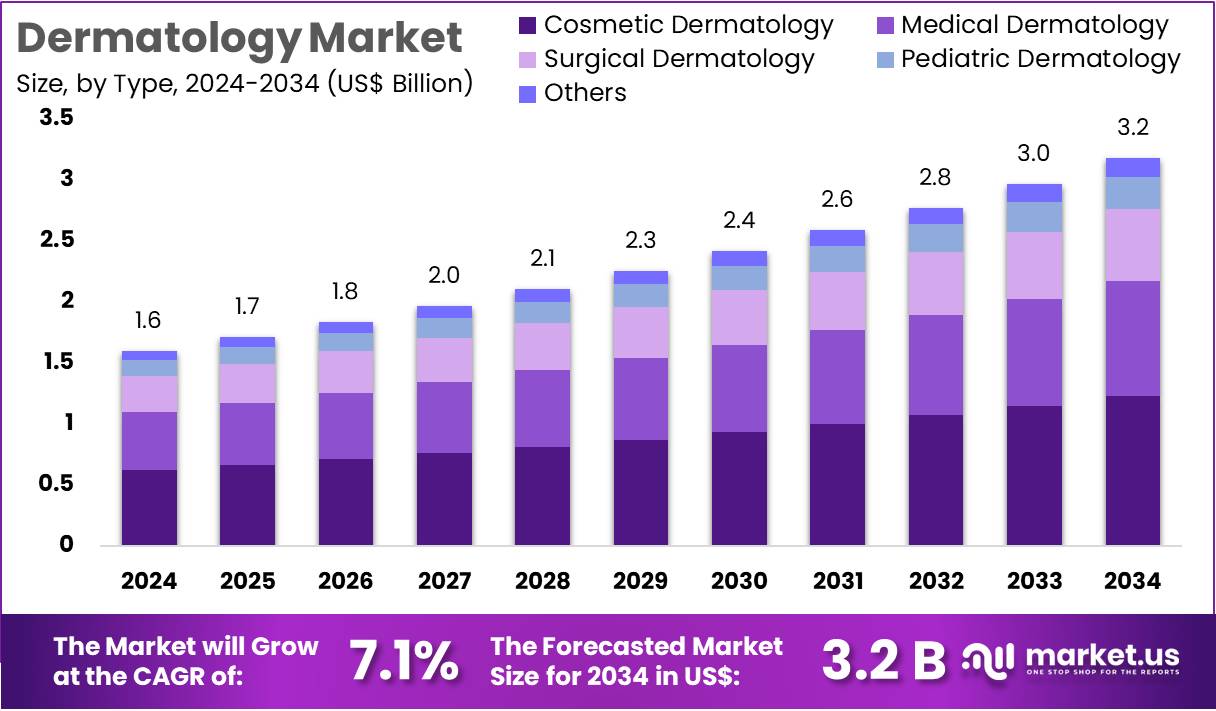
New York, NY – May 06, 2026 – The Global Dermatology Market size is expected to be worth around US$ 3.2 Billion by 2034 from US$ 1.6 Billion in 2024, growing at a CAGR of 7.1% during the forecast period 2025 to 2034.
Dermatology is a specialized branch of medicine focused on the diagnosis, treatment, and prevention of conditions affecting the skin, hair, and nails. As the skin is the largest organ of the human body, its health is critical to overall well-being. Dermatological care addresses a wide range of concerns, including common conditions such as acne, eczema, psoriasis, and fungal infections, as well as more complex disorders like skin cancers and autoimmune diseases.
Recent advancements in dermatology have been driven by technological innovation and increased awareness of skin health. Non-invasive diagnostic tools, laser therapies, and targeted biologic treatments have improved patient outcomes significantly. Early detection and timely intervention remain essential, particularly in the management of melanoma and other skin malignancies, where survival rates are closely linked to the stage at diagnosis.
Preventive dermatology has also gained prominence, with emphasis placed on sun protection, proper skincare routines, and lifestyle modifications. Public health initiatives continue to promote awareness regarding ultraviolet radiation exposure and its long-term effects.
The global dermatology market is experiencing steady growth, supported by rising incidences of skin disorders, increasing demand for cosmetic procedures, and expanding access to healthcare services. This trend reflects a broader shift toward proactive health management and aesthetic wellness. Dermatology remains a vital and evolving field, contributing significantly to both medical treatment and quality of life improvement.
Key Takeaways
- In 2024, the dermatology market generated revenue of US$ 1.6 billion and is projected to reach US$ 3.2 billion by 2034, expanding at a CAGR of 7.1%.
- Based on type, the market is segmented into medical dermatology, surgical dermatology, pediatric dermatology, cosmetic dermatology, and others. Cosmetic dermatology emerged as the leading segment, accounting for 38.6% of the market share in 2024.
- By application, the market is categorized into acne, dermatitis, psoriasis, skin cancer, and others. Acne dominated this segment, holding a significant share of 42.8%.
- In terms of end use, the market is divided into hospitals, skin clinics, and others. Skin clinics led the segment, capturing the highest revenue share of 48.7%.
- Regionally, North America held the largest market share, accounting for 40.7% in 2024.
Regional Analysis
North America accounted for the largest share of the dermatology market in 2024, contributing 40.7% of total revenue. This dominance has been supported by heightened awareness of skin health, increasing incidence of dermatological conditions, and continuous advancements in treatment technologies.
The rising burden of chronic conditions such as acne, eczema, and psoriasis, along with a growing aging population seeking anti-aging solutions, has significantly driven demand. Regulatory approvals have further strengthened the market landscape.
For instance, in June 2023, Zydus Lifesciences received final approval from the US Food and Drug Administration for its extended-release Minocycline Hydrochloride tablets, expanding treatment options for moderate to severe acne.
Additionally, the widespread availability of prescription and over-the-counter products, including biologics and advanced skincare formulations, has supported market expansion. The integration of telemedicine and digital health platforms has also improved accessibility to dermatological care.
Asia Pacific is projected to register the fastest growth during the forecast period. This growth is attributed to increasing healthcare awareness, rising disposable incomes, and ongoing improvements in healthcare infrastructure.
Markets such as China and India are witnessing higher incidence of skin disorders due to urbanization, environmental factors, and lifestyle changes. Strategic developments, including Eris Lifesciences’ acquisition of a dermatology portfolio from Glenmark Pharmaceuticals in 2023, are expected to further accelerate regional market growth.
Emerging Trends
- AI-Driven Diagnosis: Artificial intelligence is enabling faster and more accurate dermatology diagnosis by analyzing skin images and detecting early signs of conditions like cancer, supporting clinicians, improving decision-making, and continuously learning from expanding medical datasets.
- Teledermatology: Teledermatology allows remote consultation through digital platforms, enabling patients to share images and receive expert advice, reducing travel needs, lowering costs, improving access in rural areas, and enhancing overall efficiency in dermatological care delivery.
- Advanced Drug Delivery Systems: Innovative delivery systems such as microneedles, nano-gels, and smart topical formulations enhance targeted treatment, improve drug absorption, minimize side effects, reduce dosage requirements, and increase patient compliance in managing various dermatological conditions.
- Digital Engagement and Social Awareness: Digital platforms and social media are increasing awareness of skin health, encouraging early consultations, reducing stigma, improving patient education, and driving higher engagement between dermatologists and patients across diverse demographic groups.
Use Cases
- AI for Skin Cancer Detection: Artificial intelligence systems are being used to detect skin cancer by analyzing medical images, improving diagnostic accuracy, reducing unnecessary biopsies, prioritizing critical cases, and enabling timely intervention, ultimately enhancing patient outcomes and healthcare efficiency.
- Virtual Skin Clinics: Virtual dermatology clinics provide remote consultations, prescriptions, and follow-ups, improving accessibility for patients in remote areas, reducing hospital congestion, saving time and travel costs, and enabling efficient case management through digital healthcare platforms.
- Customized Treatment Plans: Personalized dermatology treatments are developed based on patient-specific factors such as genetics and medical history, utilizing targeted therapies including biologics, improving effectiveness, minimizing adverse effects, and offering optimized care for chronic skin conditions.
- Use of Wearable Devices: Wearable dermatology devices monitor skin conditions in real time by tracking parameters like moisture and temperature, enabling continuous assessment, supporting early detection, improving treatment adjustments, and reducing dependence on frequent clinical visits.
Frequently Asked Questions on Dermatology
- What are the most common dermatological conditions?
Common dermatological conditions include acne, dermatitis, psoriasis, fungal infections, and skin cancer. These conditions are influenced by genetic, environmental, and lifestyle factors, and their prevalence continues to increase due to pollution, stress, and changing climatic conditions. - How is dermatology evolving with technology?
The dermatology field is being transformed through advanced technologies such as teledermatology, artificial intelligence-based diagnostics, and laser treatments. These innovations have improved early detection, treatment precision, and patient accessibility, particularly in remote and underserved regions. - What factors are driving growth in the dermatology market?
Market growth is being driven by rising incidences of skin disorders, increasing aging population, growing aesthetic consciousness, and technological advancements. Additionally, higher disposable incomes and expanding healthcare infrastructure are contributing significantly to market expansion globally. - What are the major segments in the dermatology market?
The dermatology market is segmented into medical dermatology, cosmetic dermatology, and surgical dermatology. Product-wise, it includes topical drugs, biologics, and devices, while service segments include clinical treatments, aesthetic procedures, and diagnostic services across healthcare settings. - Which regions dominate the dermatology market?
North America and Europe dominate the dermatology market due to advanced healthcare systems, high awareness, and strong presence of key players. However, Asia-Pacific is witnessing rapid growth due to increasing population, rising income levels, and expanding dermatology services. - What role do biologics play in dermatology?
Biologics have revolutionized dermatology by offering targeted therapies for chronic conditions such as psoriasis and eczema. These advanced drugs provide improved efficacy and reduced side effects, thereby increasing adoption rates and contributing to the overall growth of the dermatology market. - How is teledermatology shaping the future of skincare?
Teledermatology is improving access to dermatological care by enabling remote consultations and diagnosis through digital platforms. It reduces patient waiting times and enhances efficiency, particularly in rural areas, thereby supporting the expansion of dermatology services worldwide.
Conclusion
The dermatology sector is demonstrating steady and sustained growth, supported by rising disease prevalence, increasing aesthetic awareness, and continuous technological advancements. Innovations such as artificial intelligence, teledermatology, and advanced drug delivery systems are enhancing diagnostic accuracy and treatment outcomes.
Market expansion is further driven by growing healthcare access, particularly in emerging economies. The shift toward personalized treatments, digital engagement, and preventive care is strengthening patient outcomes and service efficiency.
Additionally, strong regional performance, especially in North America and rapid growth in Asia Pacific, highlights significant future opportunities, positioning dermatology as a critical and evolving component of global healthcare systems.
Discuss your needs with our analyst
Please share your requirements with more details so our analyst can check if they can solve your problem(s)




