


Overview
New York, NY – July 29, 2026 – The Global Hangover Rehydration Supplements Market size is expected to be worth around US$ 9.1 Billion by 2034 from US$ 2.9 Billion in 2024, growing at a CAGR of 12.1% during the forecast period 2025 to 2034. In 2024, North America led the market, achieving over 38.5% share with a revenue of US$ 1.1 Billion.
The global hangover rehydration supplements market is witnessing steady growth as consumers increasingly seek effective solutions to reduce the effects of alcohol-related dehydration, headaches, fatigue, and electrolyte loss. Rising participation in social events, especially among younger adults, combined with growing awareness of personal wellness, is driving demand for convenient recovery products. According to the World Health Organization (WHO), approximately 2.6 million deaths annually are linked to alcohol consumption, highlighting the broad health impact of excessive drinking and the growing focus on preventive wellness measures.
Manufacturers are responding by introducing scientifically formulated supplements containing electrolytes, vitamins, antioxidants, amino acids, and herbal extracts to support hydration and faster recovery. Innovation in delivery formats is also accelerating market growth. In May 2025, C.L. Pharm expanded its presence in Singapore and Malaysia by launching hangover relief products using Dr.FiLL Bio SorbFilm orally dissolving film technology, designed to improve absorption and provide quicker relief compared to conventional tablets.
The market is also benefiting from increasing investments in clinical research and product validation. In April 2025, Dongsung Bio Pharm secured KRW 570 million (approximately US$ 420,000) in government funding to develop hangover relief products using traditional ingredients, including Hwangchil and Dangyuja, with planned human clinical trials.
Such initiatives are expected to strengthen scientific credibility, improve consumer confidence, and support broader adoption. Growing innovation, evidence-based formulations, and expanding consumer interest in functional wellness products are expected to create sustained opportunities for the hangover rehydration supplements market over the coming years.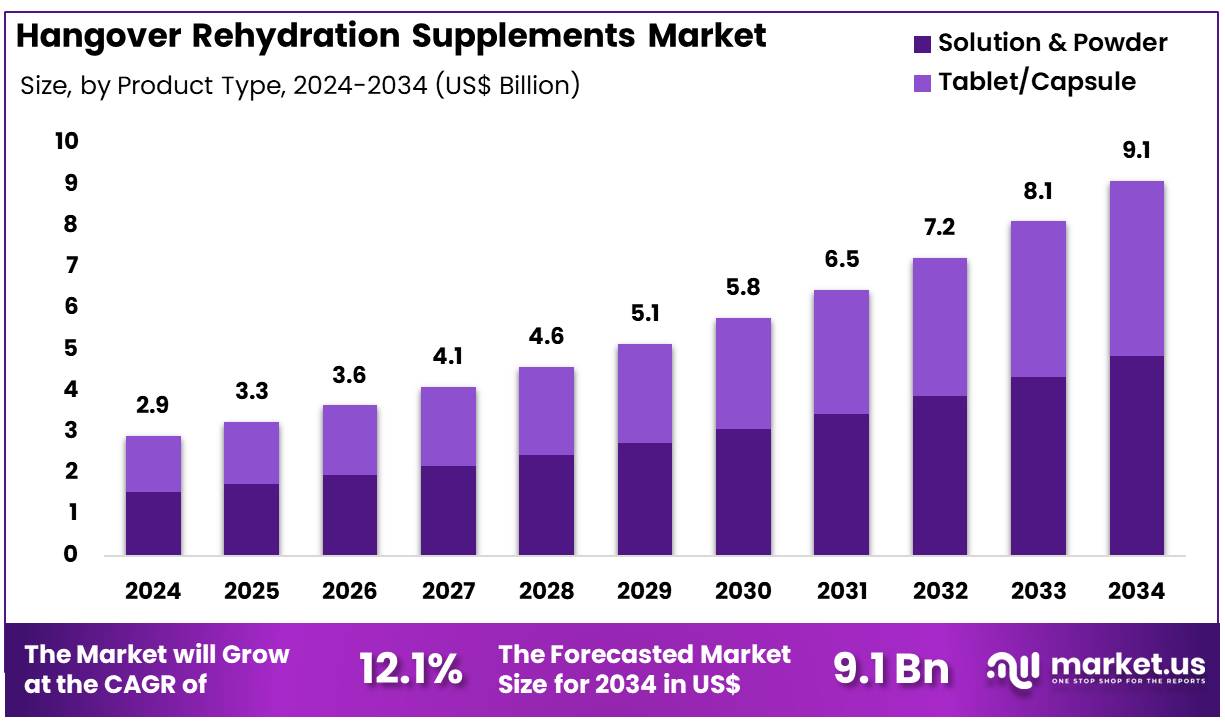
Key Takeaways
- In 2024, the global hangover rehydration supplements market was valued at US$ 2.9 billion and is projected to grow at a CAGR of 12.1%, reaching US$ 9.1 billion by 2034.
- By product type, the solution & powder segment dominated the market, accounting for 53.4% of the total market share in 2024.
- Based on application, the residential segment held the largest share, contributing 60.1% of the global market in 2024.
- By distribution channel, the offline segment emerged as the leading category, capturing 70.3% of the hangover rehydration supplements market revenue in 2024.
- North America accounted for the largest regional share of the global hangover rehydration supplements market, representing 38.5% of the market in 2024.
Statistical Information
- Alcohol Consumption And Wellness Orientation: In the US, the total volume of alcohol consumed fell by about 8% from 31.0 billion liters in 2021 to 28.4 billion liters in 2025, indicating a measurable shift in drinking patterns.
- Shift Toward At‑Home And Flexible Social Drinking: In a US longitudinal survey series (2015 vs. 2025), the share of people who reported drinking at home rose from 54% to 63%, while the share drinking in bars or restaurants fell from 27% to 16%.
- Younger Generations’ Alcohol Participation: An IWSR‑based analysis reported that in the US, around 70% of Gen Z respondents said they had consumed alcohol recently in 2025, up from under 50% in 2023, indicating rising participation among younger drinkers even as overall volumes soften.
- Scientific Evaluation of Hangover Products: The same analysis concluded that the efficacy of marketed hangover products in preventing or reducing alcohol hangover has not been demonstrated for any product in the US market, and that 41.3% of products made illegal disease claims.
- Rising Alcohol Consumption is Increasing Demand for Recovery Products: The growing number of people consuming alcohol socially is creating a larger consumer base for hydration and recovery supplements. The World Health Organization (WHO) estimates that 2.6 million deaths each year are associated with alcohol consumption worldwide. Additionally, alcohol is the leading risk factor for premature death among people aged 20–39 years, emphasizing the need for preventive wellness products that support hydration and recovery after drinking.
- Young Adults Face the Highest Alcohol-Related Health Risks: WHO reports that alcohol accounts for 13% of all deaths among people aged 20–39 years globally, making it the leading risk factor for premature mortality and disability in this age group. This demographic is also highly engaged in nightlife, festivals, and social events, supporting demand for convenient pre- and post-drinking recovery products.
- Alcohol-Related Deaths Continue to Increase: CDC data show that alcohol-attributable deaths in the United States increased by 29.3%, rising from 137,927 annual deaths (2016–2017) to 178,307 annual deaths (2020–2021). The increase highlights growing public awareness of alcohol-related health consequences and supports demand for wellness products aimed at reducing dehydration and supporting recovery.
- Alcohol Contributes to Millions of Emergency Department Visits: The U.S. National Institute on Alcohol Abuse and Alcoholism (NIAAA) reported that alcohol contributed to more than 4.2 million emergency department visits in 2022. Of these, 3.0 million involved males and 1.3 million involved females. These statistics reinforce the importance of hydration and wellness products that help consumers recover after alcohol consumption.
- Clinical Research is Improving Consumer Confidence in Hangover Products: In April 2025, Dongsung Bio Pharm received KRW 570 million in South Korean government funding to develop hangover relief products using Hwangchil and Dangyuja. The funding supports human clinical trials, reflecting growing government involvement in validating the effectiveness and safety of hangover recovery products.
Regional Analysis
North America led the market by securing a market share of 38.5% in 2023.
North America remains a key region for hangover rehydration supplements due to high alcohol consumption patterns, strong health awareness, and widespread access to wellness products through retail and online channels. According to the CDC, binge drinking remains common among U.S. adults, increasing consumer interest in hydration and recovery solutions.
Growing demand for convenient formats such as electrolyte powders, tablets, and ready-to-drink beverages is further supporting market growth. Companies are also expanding production capabilities and launching innovative formulations with vitamins, minerals, and functional ingredients to meet consumer needs. Asia Pacific is expected to witness strong growth due to urbanization, rising disposable incomes, changing social habits, and expanding e-commerce adoption.
WHO reports highlight increasing alcohol consumption trends in parts of Southeast Asia, creating demand for accessible recovery products. Younger consumers are increasingly seeking convenient wellness solutions, supporting the adoption of hangover rehydration supplements across the region.
Emerging Trends
- Rising Demand for Electrolyte-Based Hydration Products: Consumers are increasingly choosing hangover supplements containing electrolytes such as sodium, potassium, and magnesium to support hydration recovery. Growing awareness of alcohol-related health risks is encouraging demand for wellness solutions. WHO reported that alcohol consumption was responsible for approximately 2.6 million deaths globally in 2019, increasing focus on reducing alcohol-related health impacts.
- Growth of Convenient Supplement Formats: Ready-to-drink beverages, effervescent tablets, powders, and single-use sachets are gaining popularity due to consumer demand for quick and portable recovery options. Manufacturers are focusing on easy-to-consume products that combine electrolytes, vitamins, and functional ingredients for busy lifestyles.
- Increasing Focus on Preventive Health and Wellness: Consumers are shifting toward preventive wellness products that help manage lifestyle-related concerns. CDC data shows that approximately 1 in 6 U.S. adults reported binge drinking in 2022, creating demand for products aimed at hydration support and recovery after alcohol consumption.
- Expansion of Online Sales and Digital Distribution Channels: E-commerce platforms are becoming important channels for hangover rehydration supplements as consumers increasingly purchase health and wellness products online. WHO reported that around 400 million people aged 15 years and older worldwide live with alcohol use disorders, supporting continued interest in alcohol-related health management solutions.
- Innovation in Functional Ingredients and Clean Label Products: Companies are developing advanced formulations using electrolytes, vitamins, antioxidants, amino acids, and plant-based ingredients. Consumers are increasingly preferring transparent and natural formulations, supporting the growth of clean-label supplements designed for personalized hydration and wellness needs.
Use Cases
- Post-Alcohol Hydration Recovery: Hangover rehydration supplements are primarily used after alcohol consumption to help restore fluid and electrolyte balance. These products are commonly consumed after social drinking occasions, as alcohol can contribute to dehydration. The CDC highlights that excessive alcohol consumption can lead to short-term health effects, including dehydration and impaired body functions.
- Support for Social Drinking Occasions and Events: Consumers use hydration supplements after parties, festivals, celebrations, and nightlife activities where alcohol intake may be higher. These products provide a convenient recovery option through portable sachets, tablets, and ready-to-drink formats, supporting demand among younger adult consumers seeking quick wellness solutions.
- Sports, Fitness, and Active Lifestyle Recovery: Fitness-focused consumers are increasingly using hydration supplements after events where alcohol consumption affects hydration levels. Products containing electrolytes and minerals are positioned as wellness solutions for maintaining hydration, especially among individuals balancing social activities with active lifestyles.
- Travel and Hospitality Applications: Travelers, hotel guests, and airline passengers use hangover rehydration products as convenient recovery aids after vacations, business trips, and social events. The growth of global tourism and hospitality services is creating opportunities for portable hydration products that can be easily carried and consumed.
- Workplace Wellness and Next-Day Recovery Support: Some consumers use hangover rehydration supplements to support daily functioning after occasional alcohol consumption. Growing awareness of productivity, wellness, and healthy lifestyle choices is encouraging demand for products that provide convenient hydration support. WHO reported that alcohol-related health risks affect millions globally, increasing focus on responsible consumption and recovery approaches.
Frequently Asked Questions on Hangover Rehydration Supplements
- What factors are driving the growth of the hangover rehydration supplements market?
The market is driven by increasing health awareness, changing social drinking habits, demand for convenient wellness products, and rising availability through online and retail channels. Consumers are seeking quick hydration solutions that support active and preventive lifestyles. - How do hangover rehydration supplements work?
These supplements support hydration by providing essential electrolytes and nutrients that help maintain fluid balance. Ingredients such as sodium, potassium, magnesium, and vitamins are commonly included to support recovery routines after alcohol consumption and dehydration. - What are the major product formats available in the hangover rehydration supplements market?
Available formats include electrolyte powders, effervescent tablets, capsules, gummies, and ready-to-drink beverages. Portable and easy-to-use formats are becoming popular because consumers prefer convenient solutions for travel, social gatherings, and busy daily schedules. - Who are the major consumers of hangover rehydration supplements?
Major consumers include adults participating in social drinking activities, travelers, fitness enthusiasts, and wellness-focused individuals. Younger consumers are increasingly adopting these products due to demand for convenient health solutions that match active lifestyles. - Are hangover rehydration supplements effective for recovery?
Hangover rehydration supplements mainly provide hydration support by replacing fluids and electrolytes. They may help manage dehydration-related discomfort, but they are not considered a cure for hangovers or a replacement for responsible alcohol consumption. - How is e-commerce influencing the hangover rehydration supplements market?
E-commerce platforms are improving product accessibility by allowing consumers to purchase supplements conveniently online. Digital channels support wider brand reach, customer reviews, subscription services, and direct-to-consumer sales models for hydration and wellness products. - What are the emerging trends in the hangover rehydration supplements market?
Key trends include clean-label products, natural ingredients, personalized nutrition, functional beverages, and advanced formulations containing electrolytes, vitamins, and antioxidants. Companies are focusing on innovative products that meet growing consumer interest in wellness and convenience.
Conclusion
The hangover rehydration supplements market is experiencing steady growth due to rising health awareness, changing consumer lifestyles, and increasing demand for convenient hydration solutions. North America currently leads the market with strong product adoption, while Asia Pacific is expected to witness significant growth due to urbanization, expanding e-commerce platforms, and increasing wellness trends.
Emerging innovations, including electrolyte-based formulations, clean-label ingredients, and ready-to-consume formats, are shaping future opportunities. Although regulatory challenges and limited clinical validation remain concerns, growing consumer interest in preventive health and functional nutrition is expected to support continued market expansion in the coming years.
Discuss your needs with our analyst
Please share your requirements with more details so our analyst can check if they can solve your problem(s)




