


Overview
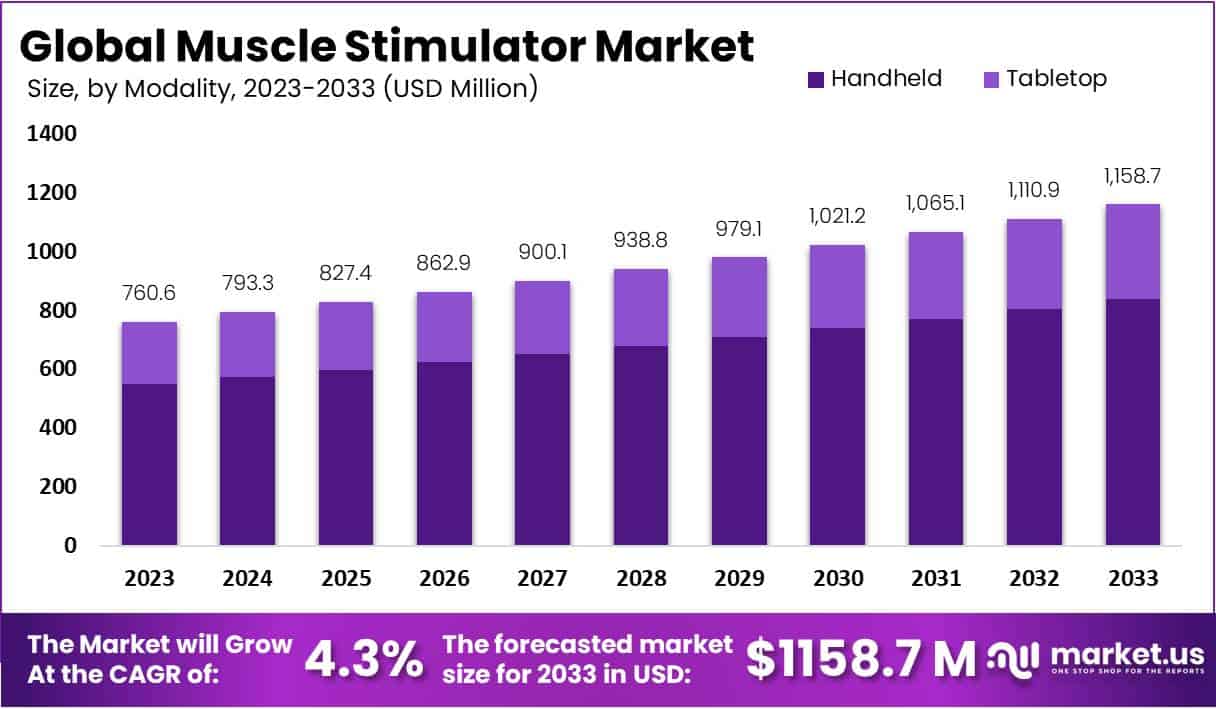
New York, NY – July 21, 2026 – The Muscle Stimulators Market Size is anticipated to reach approximately USD 1,158.7 Million by the year 2033, showing significant growth compared to the USD 760.6 Million recorded in 2023. This upward trajectory is expected to be sustained with a CAGR of 4.3% during the forecast period spanning from 2024 to 2033.
Muscle stimulators are medical and wellness devices that use electrical impulses to stimulate muscle contractions. These devices are designed to support muscle rehabilitation, pain management, muscle strengthening, and recovery after physical activity or injury. The electrical signals generated by muscle stimulators imitate the natural impulses sent by the nervous system, causing targeted muscles to contract and relax.
Muscle stimulators are widely used in hospitals, rehabilitation centers, physiotherapy clinics, sports medicine, and home care settings. They are commonly recommended for patients recovering from surgery, individuals with limited mobility, athletes seeking faster muscle recovery, and people managing chronic pain or muscle weakness. Depending on the intended application, these devices may be classified as neuromuscular electrical stimulation (NMES), transcutaneous electrical nerve stimulation (TENS), or functional electrical stimulation (FES).
The growing prevalence of musculoskeletal disorders, sports-related injuries, neurological conditions, and age-related mobility issues has contributed to the increasing adoption of muscle stimulators worldwide. Continuous technological advancements, including portable, wireless, and app-connected devices, have further enhanced user convenience and treatment effectiveness.
Rising awareness regarding non-invasive rehabilitation methods and expanding healthcare infrastructure are also supporting market growth. As demand for effective rehabilitation and pain management solutions continues to increase, muscle stimulators are expected to remain an important component of modern physical therapy and patient recovery programs.
Key Takeaways
- The global Muscle Stimulators market is projected to grow from USD 760.6 million in 2023 to USD 1,158.7 million by 2033, registering a CAGR of 4.3% during the forecast period.
- Neuromuscular Electrical Stimulation (NMES) emerged as the leading product segment in 2023, accounting for more than 34.6% of the global market share.
- Handheld and portable muscle stimulators held the largest share by device type in 2023, representing over 72.3% of the market.
- The pain management application segment maintained its leading position in 2023, contributing more than 42.6% of the total market revenue.
- North America dominated the global Muscle Stimulators market in 2023, capturing over 39.4% of the market and generating USD 299.6 million in revenue.
Regional Analysis
In 2023, North America held the leading position in the global Muscle Stimulators market, accounting for more than 39.4% of the total market share and generating approximately USD 299.6 million in revenue.
The region’s dominance is supported by its advanced healthcare infrastructure, widespread adoption of innovative medical technologies, and strong presence of leading medical device manufacturers. High healthcare spending and favorable reimbursement policies have further encouraged the use of muscle stimulators in rehabilitation, pain management, and sports medicine applications.
The growing prevalence of musculoskeletal disorders, chronic pain conditions, and sports-related injuries has significantly increased demand for muscle stimulation devices across the region. In addition, the expanding aging population and rising awareness of non-invasive treatment options continue to support market growth.
Ongoing investments in research and development have led to the introduction of portable, wireless, and technologically advanced muscle stimulators, strengthening North America’s market position. Meanwhile, Europe and Asia-Pacific are also experiencing steady growth, driven by expanding healthcare infrastructure and increasing adoption of rehabilitation technologies.
Emerging Trends
- Integration with Fitness Regimens: Neuromuscular electrical stimulation (NMES) is increasingly integrated with strength training to improve muscle activation, strength, and endurance. Athletes and fitness enthusiasts use NMES during workouts to target deeper muscle fibers, enhance performance, accelerate gains, and create more efficient, technology-supported fitness routines.
- Advancements in Medical Rehabilitation: Muscle stimulators are transforming rehabilitation through advanced spinal-cord stimulation therapies. Clinical studies have demonstrated improved muscle strength, reduced fatigue, and enhanced mobility in patients with neuromuscular disorders. Continued research is expected to expand rehabilitation applications and improve long-term functional recovery outcomes.
- Consumer-Oriented Recovery Devices: Portable muscle stimulation devices combining NMES and TENS technologies are becoming popular for home recovery and pain management. App-connected features provide personalized treatment sessions, making recovery more convenient. Growing consumer demand encourages manufacturers to develop smarter, customizable, and user-friendly wellness solutions.
Use Cases
- Enhanced Athletic Performance: Athletes use NMES alongside resistance training to improve muscle strength, endurance, and recovery. Electrical stimulation activates additional muscle fibers, increasing workout efficiency and delaying fatigue. Regular use supports improved athletic performance, although results depend on training intensity, consistency, and individual fitness levels.
- Medical Rehabilitation: Muscle stimulators support rehabilitation by restoring muscle activity after injuries, surgeries, or neurological conditions. Electrical stimulation strengthens weakened muscles, improves mobility, and reduces muscle loss. Physical therapists commonly integrate these devices into rehabilitation programs to enhance recovery under appropriate clinical supervision.
- Post-Exercise Recovery: Muscle stimulators are widely used after exercise to reduce soreness, improve blood circulation, and accelerate muscle recovery. Portable recovery devices help relieve stiffness and discomfort, allowing faster return to training. Despite occasional connectivity issues, demand continues growing among active consumers and athletes.
- Cosmetic Muscle Toning: Muscle stimulation devices are increasingly used for cosmetic body toning by creating repeated muscle contractions that improve definition and firmness. Regular use may enhance muscle appearance in areas such as the abdomen and legs, especially when combined with exercise and healthy lifestyle habits.
- Neurological Disorder Management: Advanced muscle stimulation systems assist patients with neurological disorders by delivering targeted electrical impulses that regulate abnormal nerve activity. These devices improve mobility, reduce muscle stiffness, and enhance daily functioning. Adaptive stimulation technologies continue expanding treatment options for chronic movement-related conditions.
Frequently Asked Questions on Muscle Stimulators
- What are muscle stimulators?
Muscle stimulators are electronic devices that deliver controlled electrical impulses to muscles through electrodes placed on the skin. These impulses stimulate muscle contractions, supporting rehabilitation, pain management, muscle strengthening, athletic recovery, and physical therapy applications. They are widely used in healthcare facilities, sports medicine centers, and increasingly in home care settings due to technological advancements and ease of use. - How do muscle stimulators work?
Muscle stimulators function by transmitting low-voltage electrical signals through surface electrodes to targeted muscles or nerves. These electrical impulses mimic the body’s natural nerve signals, causing muscles to contract and relax. This process helps improve muscle performance, reduce pain, prevent muscle atrophy, enhance blood circulation, and accelerate recovery after injuries or surgical procedures under appropriate clinical guidance. - What factors are driving the growth of the muscle stimulators market?
The muscle stimulators market is experiencing growth due to the increasing prevalence of musculoskeletal disorders, rising sports injuries, expanding rehabilitation programs, and growing demand for non-invasive pain management solutions. Additionally, technological innovations, increasing healthcare expenditure, aging populations, and greater adoption of home-based physiotherapy devices continue to support sustained market expansion across developed and emerging economies. - What are the major applications of muscle stimulators?
Muscle stimulators are extensively used for pain management, neuromuscular rehabilitation, muscle strengthening, post-operative recovery, sports medicine, physical therapy, and fitness training. Their applications extend across hospitals, rehabilitation centers, physiotherapy clinics, sports performance facilities, and home healthcare environments, offering effective support for both medical treatment and wellness-focused muscle conditioning programs. - Which end users contribute significantly to the muscle stimulators market?
The primary end users of muscle stimulators include hospitals, rehabilitation centers, physiotherapy clinics, sports medicine facilities, fitness centers, and home healthcare users. Healthcare professionals utilize these devices for patient rehabilitation, while athletes, fitness enthusiasts, and elderly individuals increasingly adopt portable muscle stimulators for recovery, performance enhancement, and maintaining muscle function outside clinical settings. - Which regions dominate the muscle stimulators market?
North America holds a significant share of the muscle stimulators market due to advanced healthcare infrastructure, high healthcare spending, and widespread adoption of rehabilitation technologies. Europe also represents a substantial market, while Asia-Pacific is witnessing rapid growth driven by expanding healthcare access, increasing sports participation, rising elderly populations, and growing awareness of physiotherapy and rehabilitation solutions.
Conclusion
The global muscle stimulators market is expected to witness steady growth over the coming years, supported by the increasing prevalence of musculoskeletal disorders, rising demand for non-invasive rehabilitation solutions, and continuous technological advancements. The adoption of portable, wireless, and app-connected devices is expanding the use of muscle stimulators across hospitals, rehabilitation centers, sports medicine, and home care settings.
North America remains the leading regional market, while Asia-Pacific presents strong growth potential due to improving healthcare infrastructure. As awareness of effective pain management and rehabilitation continues to increase, muscle stimulators are expected to play a vital role in modern healthcare and physical recovery.
Discuss your needs with our analyst
Please share your requirements with more details so our analyst can check if they can solve your problem(s)




