


Overview
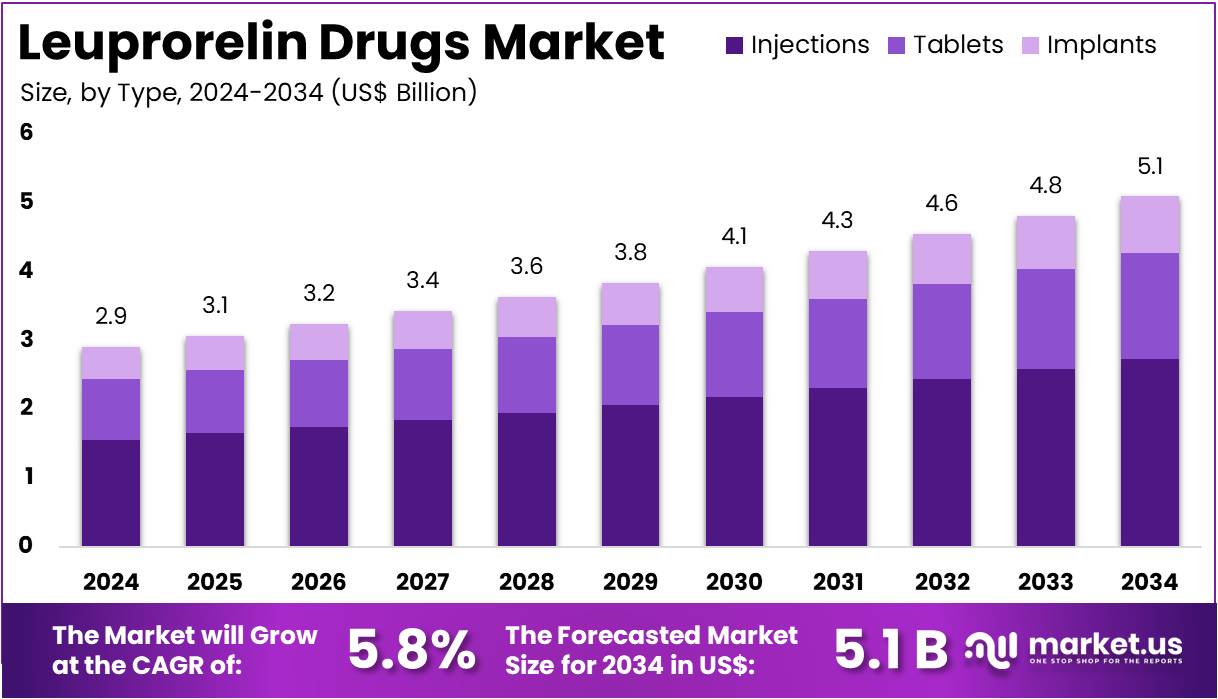
New York, NY – June 11, 2026 – The Leuprorelin Drugs Market Size is expected to be worth around US$ 5.1 billion by 2034 from US$ 2.9 billion in 2024, growing at a CAGR of 5.8% during the forecast period 2025 to 2034.
Leuprorelin is a synthetic gonadotropin-releasing hormone (GnRH) agonist widely used in the treatment of hormone-sensitive medical conditions. The drug works by initially stimulating and subsequently suppressing the production of sex hormones, including testosterone in men and estrogen in women. This mechanism makes leuprorelin an important therapeutic option across multiple clinical applications.
Leuprorelin is commonly prescribed for the management of advanced prostate cancer, endometriosis, uterine fibroids, central precocious puberty, and certain fertility treatment protocols. By reducing hormone levels, the drug helps control disease progression, alleviate symptoms, and improve patient outcomes in hormone-dependent conditions.
The medication is available in various formulations, including monthly, three-month, and six-month depot injections, offering flexibility and convenience for patients and healthcare providers. Long-acting formulations have contributed to improved treatment adherence and reduced dosing frequency.
The growing prevalence of prostate cancer and gynecological disorders, coupled with increasing awareness regarding hormonal therapies, continues to support demand for leuprorelin-based treatments globally. Ongoing research and development activities are focused on enhancing drug delivery systems and expanding therapeutic applications.
Leuprorelin has established a strong position within the hormonal therapy landscape due to its proven efficacy, well-documented safety profile, and broad range of approved indications. The drug remains a critical component of modern treatment strategies for several endocrine and hormone-related disorders worldwide.
Key Takeaways
- The global Leuprorelin Drugs market was valued at US$ 2.9 billion in 2024 and is projected to reach US$ 5.1 billion by 2034, expanding at a CAGR of 5.8% during the forecast period.
- Based on product type, the market is segmented into injections, tablets, and implants. The injections segment dominated the market, accounting for a 53.7% share in 2023.
- By application, the market is categorized into advanced prostate cancer, central precocious puberty, and others. The advanced prostate cancer segment emerged as the leading application area, holding a 46.5% market share in 2023.
- North America represented the largest regional market, capturing 40.2% of the global market share in 2023.
Regional Analysis
North America accounted for the largest share of the Leuprorelin Drugs Market, representing 40.2% of total revenue. This dominance is primarily attributed to the high prevalence of hormone-dependent disorders such as prostate cancer and endometriosis, which require long-term hormonal suppression therapy. According to the American Cancer Society, approximately 313,780 new prostate cancer cases are expected to be diagnosed in the United States in 2025, reflecting a substantial patient population that relies on treatments such as leuprorelin.
In addition, endometriosis continues to affect a large number of women of reproductive age across the region, further supporting market demand. The availability of advanced healthcare infrastructure, favorable reimbursement systems, and continuous product innovation has also contributed to market growth. The development of extended-release formulations that reduce dosing frequency has improved patient compliance and treatment convenience, strengthening the adoption of leuprorelin-based therapies.
Meanwhile, the Asia Pacific region is projected to register the fastest growth during the forecast period. Rising incidences of hormone-sensitive cancers and gynecological disorders, coupled with expanding healthcare access and improved diagnostic capabilities, are key growth drivers. Countries such as Japan, South Korea, and Singapore are witnessing increasing prostate cancer cases.
Notably, prostate cancer emerged as the most common cancer among men in Japan by 2023, creating significant demand for effective hormonal therapies. Furthermore, ongoing healthcare investments, awareness initiatives, and enhanced disease screening programs are expected to accelerate diagnosis rates and support sustained market expansion across the region.
Emerging Trends
- Rising Use in Women’s Health: Leuprorelin is increasingly being used in women’s health for conditions such as endometriosis, uterine fibroids, and precocious puberty. Growing awareness of hormone-related disorders and wider acceptance among gynecologists are expanding its applications, contributing to stronger demand and broader market growth worldwide.
- Growing Popularity of Long-Acting Formulations: Long-acting leuprorelin formulations, administered every one to three months, are gaining popularity due to their convenience and effectiveness. These formulations reduce the need for frequent healthcare visits, improve treatment adherence, enhance patient satisfaction, and support more efficient disease management across multiple indications.
- Increasing Government Support for Cancer Care: Governments and healthcare organizations are investing more resources in cancer awareness, screening, and treatment programs. As leuprorelin plays an important role in managing hormone-sensitive cancers, improved healthcare access and reimbursement policies are supporting increased adoption and market expansion globally.
- Ongoing Research into New Therapeutic Applications: Researchers are actively exploring additional uses for leuprorelin beyond its established indications. Studies involving infertility treatment, transgender healthcare, and neurological conditions could expand its clinical value. Continued investment in research and development may create new opportunities and drive future market growth.
- Greater Awareness and Earlier Disease Diagnosis: Improved public awareness of diseases such as prostate cancer and endometriosis is encouraging earlier medical consultations and diagnosis. Earlier detection enables timely treatment initiation with therapies like leuprorelin, improving patient outcomes while increasing demand for hormone-based treatment solutions worldwide.
- Rising Preference for Non-Surgical Treatment Options: Patients and healthcare providers are increasingly favoring non-surgical treatment approaches that minimize risks and recovery periods. Leuprorelin offers an effective hormone therapy alternative for conditions such as prostate cancer and uterine fibroids, making it a preferred option in conservative treatment strategies.
- Patent Expirations Driving Generic Drug Availability: The expiration of patents for branded leuprorelin products has encouraged the introduction of generic alternatives. Lower-cost generics improve treatment accessibility, particularly in cost-sensitive markets, while increasing competition among manufacturers and supporting broader adoption across healthcare systems and patient populations.
Use Cases
- Treatment of Prostate Cancer: Leuprorelin is widely used in prostate cancer treatment by reducing testosterone production, which helps slow tumor growth and disease progression. Long-acting injectable formulations provide sustained hormone suppression, making the therapy particularly valuable for patients requiring long-term disease management and symptom control.
- Management of Endometriosis: Leuprorelin is an effective treatment for endometriosis, helping reduce estrogen levels that stimulate abnormal tissue growth. The therapy alleviates pelvic pain, decreases menstrual symptoms, and offers a non-surgical treatment option for women seeking symptom relief while preserving future fertility potential.
- Treatment of Precocious Puberty: Leuprorelin is used to manage central precocious puberty by suppressing hormones responsible for early sexual development. This treatment helps children achieve age-appropriate growth and development, while reducing the physical and psychological challenges associated with the premature onset of puberty.
- Use in Assisted Reproductive Technology (ART): In assisted reproductive technology procedures such as IVF, leuprorelin helps regulate hormone production and control ovulation timing. This enables better synchronization of treatment cycles, improves egg retrieval outcomes, and increases the likelihood of successful fertilization and pregnancy achievement.
Frequently Asked Questions on Leuprorelin Drugs
- How do Leuprorelin drugs work?
Leuprorelin drugs initially stimulate the release of luteinizing hormone and follicle-stimulating hormone, followed by suppression of their production. This mechanism significantly lowers testosterone and estrogen levels, helping control hormone-dependent diseases and reducing disease progression. - What are the major therapeutic applications of Leuprorelin?
Leuprorelin is primarily used in the treatment of prostate cancer, endometriosis, uterine fibroids, central precocious puberty, and certain fertility treatments. Its ability to regulate hormone production makes it an important therapy across multiple endocrine and oncology indications. - What dosage forms are available for Leuprorelin drugs?
Leuprorelin is available in injectable formulations, including monthly, three-month, four-month, and six-month depot injections. These long-acting formulations improve patient compliance by reducing dosing frequency while maintaining consistent therapeutic hormone suppression. - Why is Leuprorelin widely used in prostate cancer treatment?
Leuprorelin effectively lowers testosterone levels, which are known to stimulate prostate cancer growth. By suppressing androgen production, the drug helps slow disease progression, manage symptoms, and improve treatment outcomes in advanced prostate cancer patients. - Is Leuprorelin used in pediatric patients?
Yes, Leuprorelin is approved for treating central precocious puberty in children. It delays premature sexual development by suppressing hormone production, allowing children to achieve more normal growth patterns and developmental milestones. - Which regions are leading the Leuprorelin Drugs Market?
North America currently holds a significant market share owing to advanced healthcare infrastructure and high diagnosis rates. Europe follows closely, while Asia-Pacific is experiencing rapid growth due to expanding healthcare investments and patient populations. - How do long-acting formulations influence the market?
Long-acting depot formulations enhance patient convenience and treatment adherence by reducing injection frequency. Their growing adoption among healthcare providers has strengthened market demand and encouraged continuous product innovation by pharmaceutical manufacturers.
Conclusion
The global leuprorelin drugs market is positioned for steady growth, supported by the increasing prevalence of prostate cancer, endometriosis, uterine fibroids, and other hormone-dependent disorders. Expanding applications in women’s health, growing adoption of long-acting formulations, and rising government support for cancer care are strengthening market demand.
North America remains the leading regional market, while Asia Pacific is expected to witness the fastest growth due to improving healthcare infrastructure and disease awareness. Furthermore, ongoing research, broader generic availability, and increasing preference for non-surgical therapies are expected to create new opportunities, supporting sustained market expansion throughout the forecast period.
Discuss your needs with our analyst
Please share your requirements with more details so our analyst can check if they can solve your problem(s)




