


Overview
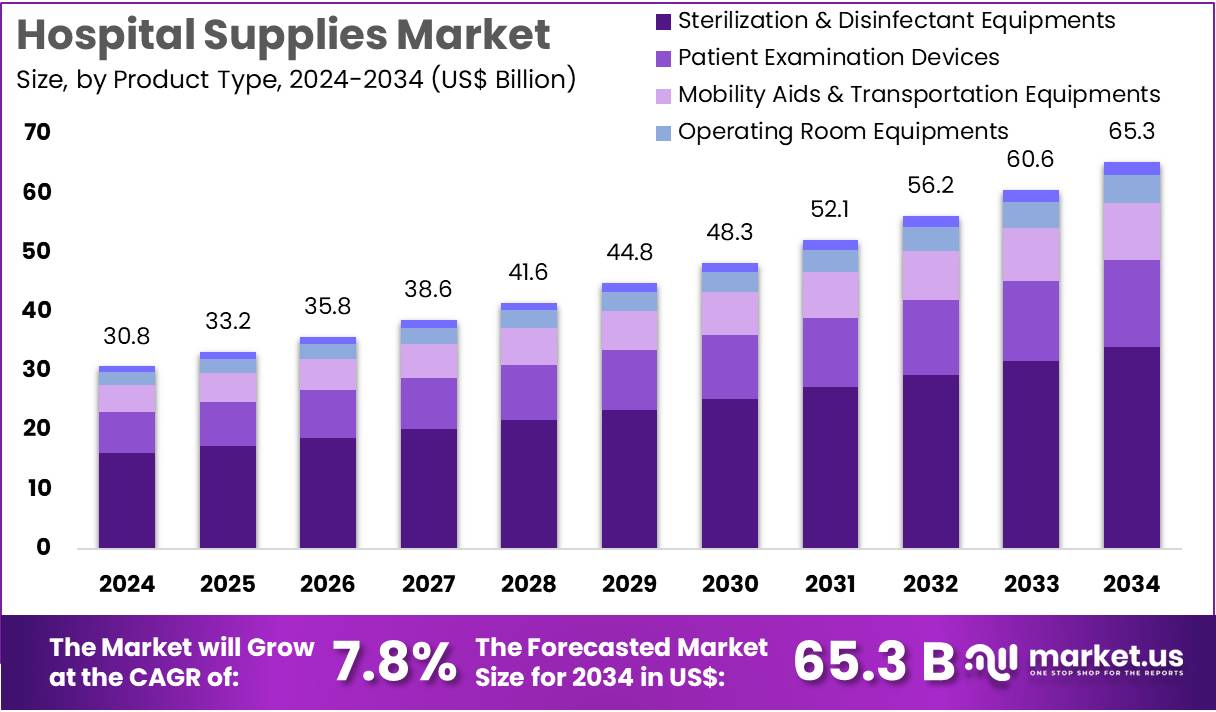
New York, NY – May 15, 2026 – The Hospital Supplies Market Size is expected to be worth around US$ 65.3 Billion by 2034 from US$ 30.8 Billion in 2024, growing at a CAGR of 7.8% during the forecast period 2025 to 2034. North America held a dominant market position, capturing more than a 42.3% share and holds US$ 13 Billion market value for the year.
The global hospital supplies market is witnessing steady growth, driven by the increasing demand for quality healthcare services, rising hospital admissions, and continuous expansion of healthcare infrastructure across developed and emerging economies. Hospital supplies include a broad range of medical products such as surgical instruments, disposable gloves, syringes, catheters, sterilization equipment, patient monitoring devices, and wound care products that support daily clinical and surgical operations.
The growth of the market can be attributed to the rising prevalence of chronic diseases, growing aging population, and increasing number of surgical procedures worldwide. In addition, higher healthcare expenditure and government investments in public health systems are supporting the adoption of advanced hospital supplies and infection prevention products. The increasing focus on patient safety and hospital hygiene has also accelerated demand for disposable and single-use medical supplies.
Technological advancements in medical devices, automation in healthcare facilities, and the integration of smart monitoring systems are further contributing to market expansion. North America currently holds a significant share of the market due to advanced healthcare infrastructure and strong presence of leading medical supply manufacturers, while Asia-Pacific is expected to witness rapid growth owing to improving healthcare access and rising investments in hospitals and diagnostic centers.
Key industry participants continue to focus on product innovation, strategic partnerships, and global distribution expansion to strengthen their market presence.
Key Takeaways
- In 2024, the global hospital supplies market was valued at US$ 30.8 billion and is projected to reach US$ 65.3 billion by 2034, expanding at a CAGR of 7.8% during the forecast period.
- Based on product type, the market is segmented into sterilization & disinfectant equipment, patient examination devices, mobility aids & transportation equipment, operating room equipment, and others. Among these, sterilization & disinfectant equipment dominated the market in 2024, accounting for a 52.3% share.
- By end user, the market is categorized into hospitals & clinics, diagnostic centers, ambulatory surgical centers, long-term care centers, and nursing facilities. Hospitals & clinics emerged as the leading segment, holding a market share of 56.3% in 2024.
- North America accounted for the largest regional share in the global hospital supplies market, representing 42.3% of the total market revenue in 2024.
Regional Analysis
North America accounted for the largest share of the Hospital Supplies Market, contributing 42.3% of total revenue. The region’s dominance is primarily driven by the increasing prevalence of chronic diseases, including diabetes and cardiovascular disorders, which continue to raise the demand for medical equipment and hospital consumables. According to the CDC, chronic diseases represent nearly 90% of annual healthcare spending in the United States.
The COVID-19 pandemic further accelerated market expansion, leading to higher procurement of PPE, ventilators, and diagnostic products. Federal spending on hospital supplies in the US increased significantly between 2022 and 2024 to address supply shortages. In addition, technological advancements such as smart medical devices and automated healthcare systems, coupled with a growing elderly population and rising surgical procedures, have strengthened regional demand.
Meanwhile, the Asia Pacific region is projected to register the fastest CAGR during the forecast period. Rapid healthcare infrastructure development, rising healthcare expenditure, and growing disease burden are major growth drivers. China and India are investing heavily in hospital modernization and medical equipment procurement, while aging populations in countries such as Japan are increasing demand for advanced healthcare solutions. Government initiatives and expanding healthcare access are expected to further support market growth across the region.
Emerging Trends
- Focus on Infection Control: Hospitals are strengthening infection control measures to improve patient safety and reduce healthcare-associated infections. Demand for disinfectants, sterilization equipment, gloves, masks, and protective gowns has increased significantly after the pandemic, encouraging healthcare facilities to maintain strict hygiene standards and safer treatment environments.
- Adoption of Eco-Friendly Products: Healthcare facilities are increasingly adopting eco-friendly hospital supplies to minimize medical waste and support sustainability initiatives. Products such as reusable gowns, recyclable packaging, and biodegradable disposables help reduce environmental impact while enabling hospitals to comply with growing environmental and waste management regulations.
- Technological Upgrades in Supplies: Technological advancements are transforming hospital supplies through smart and connected medical devices. Products such as wireless monitors, digital thermometers, and automated infusion pumps improve treatment accuracy, reduce manual errors, and enhance operational efficiency, supporting the growing adoption of technology-driven healthcare systems globally.
- Increased Demand for Home-Based Medical Supplies: The growing preference for home healthcare services is increasing demand for hospital-grade medical supplies designed for home use. Products including mobility aids, wound care kits, and portable monitoring devices help patients recover comfortably while reducing hospital overcrowding and healthcare operational costs effectively.
- Customization of Medical Kits: Hospitals are increasingly adopting customized medical kits tailored for surgeries, emergency treatments, and routine procedures. These pre-packed kits improve workflow efficiency, reduce preparation time, minimize product wastage, and ensure healthcare professionals have immediate access to essential tools required for patient treatment.
- Expansion in Emerging Markets: Emerging economies across Asia, Africa, and South America are witnessing rapid healthcare infrastructure development, increasing demand for hospital supplies. Investments in hospitals, clinics, and rural healthcare centers are creating strong opportunities for manufacturers offering affordable and technologically advanced medical products and equipment.
Use Cases
- Emergency Rooms (ERs): Emergency rooms require immediate access to critical hospital supplies such as surgical gloves, wound dressings, diagnostic tools, and defibrillators. Fast availability of sterile and reliable products is essential for handling trauma cases, cardiac emergencies, and other life-threatening conditions in high-pressure healthcare environments.
- Operating Theatres: Operating theatres depend heavily on sterile medical supplies including gowns, masks, gloves, surgical drapes, and instruments. These products help maintain infection-free surgical environments, support patient safety, and ensure smooth execution of complex medical procedures without delays caused by supply shortages.
- Intensive Care Units (ICUs): Intensive care units use specialized hospital supplies such as oxygen masks, catheters, IV fluids, and suction devices for critically ill patients. Continuous monitoring and strict hygiene requirements make ICUs highly dependent on reliable, sterile, and high-quality consumables to support uninterrupted patient care.
- Maternity and Neonatal Wards: Maternity and neonatal wards require specialized supplies including baby incubators, maternity pads, umbilical cord clamps, and newborn care products. These supplies support safe childbirth, infection prevention, and proper infant care while ensuring comfort, hygiene, and medical safety for both mothers and babies.
- Elderly and Long-Term Care: Long-term care facilities and elderly care centers rely on supplies such as adult diapers, mobility aids, monitoring devices, and pressure-relief mattresses. These products help improve patient comfort, support chronic disease management, and maintain hygiene standards for aging populations requiring continuous medical assistance.
Outpatient Clinics and Day Surgeries: Outpatient clinics and day surgery centers require reliable supplies including syringes, examination gloves, blood pressure monitors, and minor surgical instruments. Efficient access to disposable and reusable medical products helps healthcare professionals deliver safe, quick, and cost-effective treatments without overnight patient admissions.
Frequently Asked Questions on Hospital Supplies
- What factors are driving the growth of the hospital supplies market?
The growth of the hospital supplies market is being driven by increasing hospital admissions, rising prevalence of chronic diseases, expanding healthcare infrastructure, and growing surgical procedures worldwide. Demand for infection prevention products and advanced disposable medical supplies is also supporting market expansion significantly. - Which products are included in the hospital supplies market?
The hospital supplies market includes disposable gloves, masks, catheters, syringes, surgical drapes, wound care materials, sterilization products, diagnostic supplies, and patient monitoring accessories. These products are essential for maintaining safety, operational efficiency, and quality healthcare services in hospitals and clinics. - Why are disposable hospital supplies widely used?
Disposable hospital supplies are widely used because they reduce the risk of cross-contamination and healthcare-associated infections. Single-use medical products also improve hygiene standards, minimize sterilization requirements, and support regulatory compliance, making them highly preferred across hospitals and healthcare facilities globally. - Which regions dominate the hospital supplies market?
North America dominates the hospital supplies market due to advanced healthcare infrastructure, high healthcare expenditure, and strong adoption of innovative medical products. Asia-Pacific is experiencing rapid growth because of increasing hospital investments, population growth, and expanding access to healthcare services. - How does technology impact the hospital supplies market?
Technological advancements are improving the quality, safety, and efficiency of hospital supplies through automation, smart monitoring systems, and advanced materials. Digital inventory management and innovative disposable products are helping healthcare facilities reduce operational costs while enhancing patient care outcomes effectively. - How is the demand for hospital supplies expected to evolve in the future?
Demand for hospital supplies is expected to increase steadily due to aging populations, rising healthcare awareness, and growing surgical volumes worldwide. Expansion of healthcare infrastructure in emerging economies and increasing focus on patient safety will further support long-term market growth. - Why is supply chain management important in the hospital supplies industry?
Efficient supply chain management is essential in the hospital supplies industry to ensure timely product availability and uninterrupted healthcare services. Proper inventory planning, logistics optimization, and supplier coordination help hospitals reduce shortages, control costs, and maintain operational efficiency consistently.
Conclusion
The global hospital supplies market is expected to witness sustained growth over the coming years, supported by rising healthcare demand, increasing chronic disease prevalence, and continuous expansion of healthcare infrastructure worldwide. Growing emphasis on infection control, patient safety, and technological advancements in medical devices is further strengthening market development.
North America continues to dominate due to advanced healthcare systems, while Asia-Pacific is emerging as a high-growth region driven by healthcare investments and improved medical access. In addition, increasing adoption of disposable and smart medical supplies, along with expanding home healthcare services, is expected to create significant long-term growth opportunities for industry participants globally.
Discuss your needs with our analyst
Please share your requirements with more details so our analyst can check if they can solve your problem(s)




