


Overview
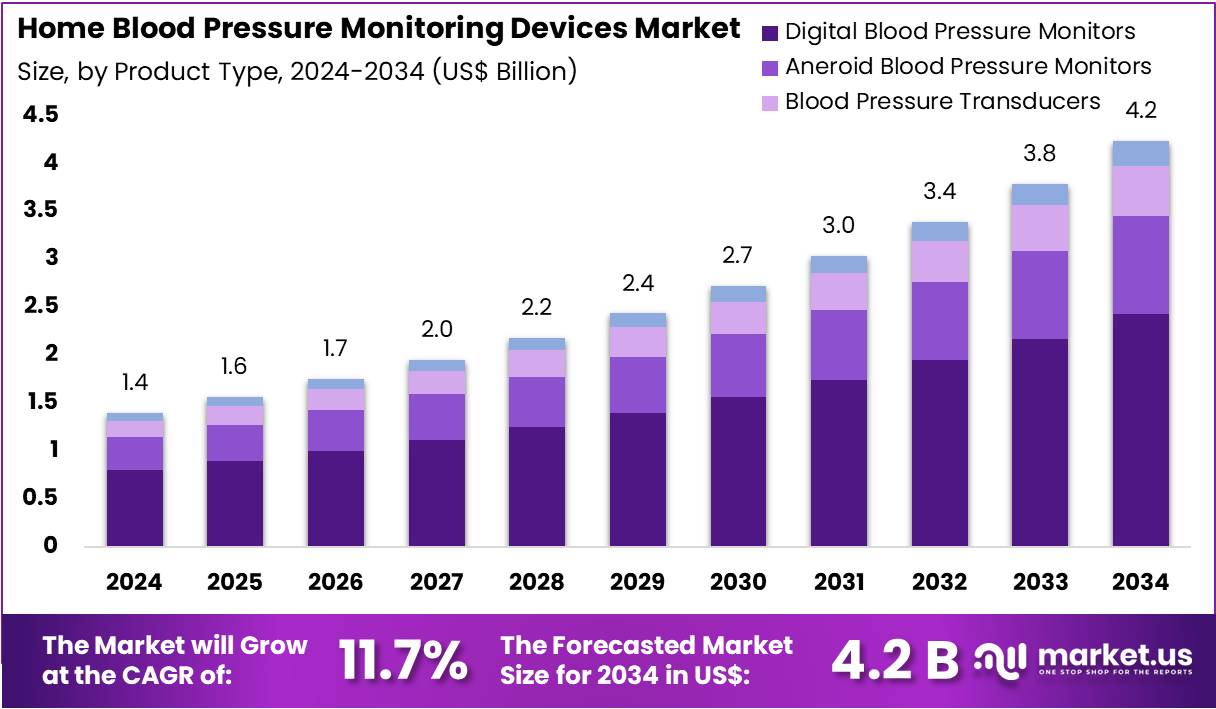
New York, NY – May 15, 2026 –The Home Blood Pressure Monitoring Devices Market Size is expected to be worth around US$ 4.2 billion by 2034 from US$ 1.4 billion in 2024, growing at a CAGR of 11.7% during the forecast period 2025 to 2034. North America held a dominant market position, capturing more than a 40.8% share and holds a US$ 0.6 Billion market value for the year.
The global market for Home Blood Pressure Monitoring Devices is experiencing steady growth, supported by the rising prevalence of hypertension, growing awareness regarding preventive healthcare, and increasing adoption of home-based monitoring solutions. These devices are widely used for the regular tracking of blood pressure levels, enabling early detection and effective management of cardiovascular conditions.
Home blood pressure monitoring devices include digital upper-arm monitors, wrist monitors, and smart connected devices integrated with mobile applications. Among these, digital upper-arm monitors account for a significant share due to their higher accuracy, ease of use, and clinical reliability. The increasing elderly population and growing incidence of lifestyle-related disorders such as obesity and diabetes are further contributing to market expansion.
Technological advancements, including Bluetooth connectivity, cloud-based data storage, and AI-enabled health tracking features, are enhancing user convenience and improving patient engagement. In addition, the growing popularity of telehealth and remote patient monitoring services is supporting demand for connected blood pressure monitoring systems.
North America holds a prominent position in the market owing to strong healthcare infrastructure, high healthcare spending, and widespread awareness regarding cardiovascular health. Meanwhile, the Asia-Pacific region is expected to witness notable growth due to improving healthcare access, expanding middle-class population, and increasing focus on preventive healthcare practices.
Leading companies operating in the market are focusing on product innovation, strategic partnerships, and expansion of digital healthcare capabilities to strengthen their market presence.
Key Takeaways
- In 2024, the global Home Blood Pressure Monitoring Devices market was valued at US$ 1.4 billion and is projected to reach US$ 4.2 billion by 2034, expanding at a CAGR of 11.7% during the forecast period.
- Based on product type, the market is segmented into aneroid blood pressure monitors, digital blood pressure monitors, blood pressure transducers, and instruments & accessories. Among these, digital blood pressure monitors dominated the market in 2024, accounting for a 57.3% share.
- By technology, the market is categorized into oscillometric technology, auscultatory technology, smart technology, and others. The oscillometric technology segment held the largest market share of 62.5% in 2024.
- North America emerged as the leading regional market, capturing a market share of 40.8% in 2024.
Regional Analysis
North America accounted for the largest share of the Home Blood Pressure Monitoring Devices Market, contributing 40.8% of total revenue. The dominance of the region has been supported by the high prevalence of hypertension, with the Centers for Disease Control and Prevention (CDC) reporting that nearly 47% of adults in the United States suffer from high blood pressure.
Growing awareness regarding cardiovascular health, along with initiatives by organizations such as the American Heart Association, has encouraged the adoption of home monitoring devices. Technological advancements, including Bluetooth-enabled and smartphone-connected monitors, have improved convenience and accuracy, further supporting market growth. The expansion of remote healthcare services during the COVID-19 pandemic also accelerated adoption across households.
Meanwhile, the Asia Pacific region is projected to register the fastest CAGR during the forecast period. The World Health Organization estimates that more than 200 million people in the region are affected by hypertension, particularly in China and India. Rising healthcare expenditure, expanding middle-class populations, and government initiatives promoting preventive healthcare are expected to drive demand. In addition, increasing adoption of digital health technologies and AI-powered monitoring devices is anticipated to further strengthen market growth across the region.
Emerging Trends
- Smart Devices Are Becoming More Common: Modern home blood pressure monitors are increasingly equipped with Bluetooth and Wi-Fi connectivity. These smart devices connect with smartphones, allowing users to store readings, monitor trends, and share data with doctors instantly. Affordable technology and convenience are driving wider adoption among consumers globally.
- Integration with Mobile Health Apps: Blood pressure monitors are now integrated with mobile health and fitness applications. These apps combine blood pressure data with heart rate, sleep, activity, and diet tracking. This centralized health information improves monitoring, supports chronic disease management, and helps healthcare providers make better treatment decisions.
- Increased Focus on User-Friendly Designs: Manufacturers are developing blood pressure monitors with simple and accessible designs. Features such as larger displays, voice guidance, and touch-free operation improve usability for elderly individuals and non-technical users. Easy-to-read interfaces encourage regular monitoring and support better long-term blood pressure management practices.
- Remote Patient Monitoring Is Growing: Remote patient monitoring is becoming an important healthcare trend. Patients can measure blood pressure at home and send readings directly to healthcare professionals. This approach reduces hospital visits, lowers healthcare costs, enables faster treatment adjustments, and improves care for people with hypertension and chronic diseases.
- Rising Popularity of Wearable Monitors: Wearable blood pressure monitors, including smartwatches, are gaining market attention. These devices provide continuous or scheduled monitoring throughout the day, offering detailed health insights. Their portability and convenience appeal to active consumers, while ongoing technological advancements are expected to increase future adoption rates globally.
- Sustainability and Reusability: Sustainability is influencing the development of blood pressure monitoring devices. Companies are introducing recyclable packaging, rechargeable batteries, and reusable components to reduce environmental impact. Growing consumer awareness regarding eco-friendly healthcare products is encouraging manufacturers to adopt sustainable practices while improving long-term product cost efficiency.
Use Cases
- Managing High Blood Pressure at Home: Home blood pressure monitors help individuals with hypertension track readings regularly and detect early changes. Continuous monitoring supports timely lifestyle adjustments and medication management. Daily tracking also helps identify factors affecting blood pressure, improving treatment decisions and reducing risks of heart disease and stroke.
- Tracking Health During Pregnancy: Pregnant women can use home blood pressure monitors to detect sudden increases in blood pressure associated with conditions like preeclampsia. Regular monitoring improves maternal safety, reduces unnecessary clinic visits, enables timely medical intervention, and provides reassurance throughout pregnancy for both mothers and healthcare providers.
- Supporting Elderly Patients: Home blood pressure monitors assist elderly individuals in managing their health independently. Caregivers and family members can monitor readings remotely and respond quickly to abnormal results. These devices improve safety, reduce emergency risks, and simplify the management of chronic conditions among aging populations at home.
- Post-Surgery Recovery: Patients recovering from surgery often require regular blood pressure monitoring. Home devices allow convenient tracking without repeated hospital visits, reducing physical strain during recovery. Healthcare providers can review readings remotely, identify complications early, and provide timely treatment adjustments to support safer recovery outcomes.
- Routine Monitoring for Athletes and Fitness Enthusiasts: Athletes and fitness-focused individuals use blood pressure monitors to evaluate cardiovascular response before and after exercise. Regular monitoring helps optimize workout intensity, recovery strategies, and overall fitness performance. It also assists in detecting signs of stress, fatigue, or overtraining at an early stage.
- Improving Doctor-Patient Communication: Home monitoring devices provide detailed blood pressure records over time, helping doctors evaluate health trends more accurately than occasional clinic readings. Shared data improves diagnosis, supports personalized treatment plans, and encourages stronger patient involvement, leading to improved communication, trust, and long-term healthcare outcomes.
- Helping Rural and Remote Communities: Home blood pressure monitors improve healthcare access in rural and remote areas where medical facilities are limited. Patients can regularly track readings and share results through online consultations. This supports chronic disease management, reduces travel requirements, and enables timely healthcare services in underserved communities.
Frequently Asked Questions on Home Blood Pressure Monitoring Devices
- What is a home blood pressure monitoring device?
A home blood pressure monitoring device is a portable medical instrument designed to measure systolic and diastolic blood pressure levels outside clinical settings. These devices help individuals track cardiovascular health regularly, support early diagnosis, and improve hypertension management through convenient daily monitoring. - How accurate are home blood pressure monitoring devices?
Home blood pressure monitoring devices are generally accurate when validated clinically and used according to manufacturer instructions. Accuracy can be influenced by cuff positioning, body posture, and calibration quality. Regular comparison with healthcare facility readings helps ensure reliable and consistent performance over time. - Who should use home blood pressure monitoring devices?
Home blood pressure monitoring devices are recommended for individuals with hypertension, cardiovascular disorders, diabetes, obesity, or elderly populations requiring regular monitoring. Healthcare professionals also advise their use for patients undergoing treatment adjustments or individuals seeking preventive cardiovascular health management. - What are the major types of home blood pressure monitors?
The major types of home blood pressure monitors include upper-arm monitors, wrist monitors, and finger monitors. Upper-arm monitors are widely preferred due to higher accuracy and clinical reliability, while wrist monitors offer portability and convenience for frequent travelers and elderly users. - What features are commonly available in modern blood pressure monitors?
Modern blood pressure monitors include digital displays, irregular heartbeat detection, Bluetooth connectivity, memory storage, smartphone integration, and voice assistance. Advanced devices also support cloud-based data sharing, enabling healthcare professionals to monitor patient readings remotely and improve treatment efficiency. - What is driving the growth of the home blood pressure monitoring device market?
The growth of the home blood pressure monitoring device market is driven by increasing hypertension prevalence, rising geriatric populations, and growing awareness regarding preventive healthcare. Technological advancements, expanding telehealth adoption, and demand for remote patient monitoring further support long-term market expansion globally. - Which regions dominate the home blood pressure monitoring device market?
North America currently dominates the home blood pressure monitoring device market due to advanced healthcare infrastructure, strong consumer awareness, and high adoption of digital healthcare technologies. However, Asia-Pacific is experiencing rapid growth because of improving healthcare access and rising chronic disease incidence.
Conclusion
The global Home Blood Pressure Monitoring Devices market is expected to witness strong and sustained growth over the forecast period, driven by the rising prevalence of hypertension, increasing aging population, and growing emphasis on preventive healthcare. Technological advancements such as Bluetooth connectivity, AI-enabled monitoring, and mobile health integration are significantly improving patient engagement and healthcare accessibility.
The expanding adoption of telehealth and remote patient monitoring solutions is further supporting market demand worldwide. While North America continues to dominate due to advanced healthcare infrastructure, Asia-Pacific is emerging as a high-growth region. Continuous innovation and increasing awareness regarding cardiovascular health are expected to create long-term growth opportunities for market participants.
Discuss your needs with our analyst
Please share your requirements with more details so our analyst can check if they can solve your problem(s)




