


Overview
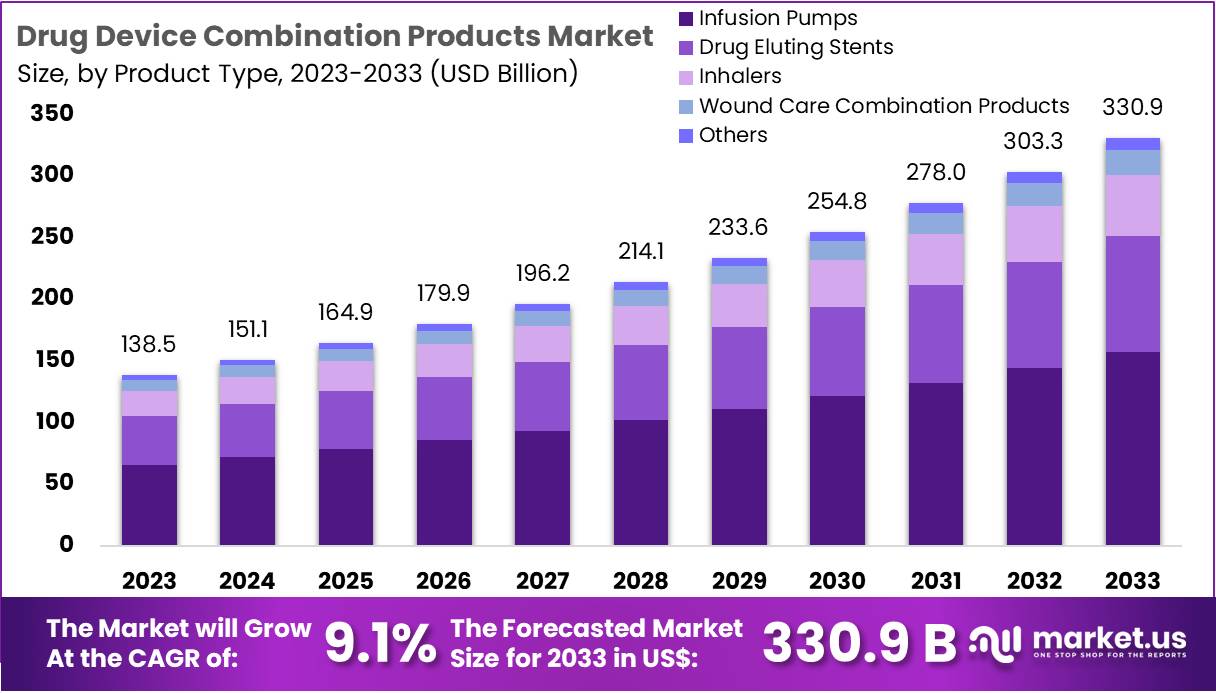
New York, NY – July 21, 2026 – The Drug Device Combination Products Market Size is expected to be worth around US$ 330.9 billion by 2033 from US$ 138.5 billion in 2023, growing at a CAGR of 9.1% during the forecast period 2024 to 2033.
Drug-device combination products are medical products that integrate a pharmaceutical drug and a medical device into a single product to improve therapeutic effectiveness, patient convenience, and treatment outcomes. These products are designed so that the drug and device work together to achieve a specific medical purpose that cannot be accomplished as effectively by either component alone. Common examples include prefilled syringes, insulin pens, drug-eluting stents, inhalers, transdermal patches, and wearable infusion pumps.
The increasing prevalence of chronic diseases, growing demand for self-administration therapies, and continuous advancements in drug delivery technologies are driving the adoption of drug-device combination products across healthcare settings. These products offer several advantages, including accurate dosing, enhanced patient adherence, reduced administration errors, and improved safety and efficacy. They are widely used in the treatment of diabetes, cardiovascular disorders, respiratory diseases, autoimmune conditions, and oncology.
Pharmaceutical companies and medical device manufacturers are increasingly collaborating to develop innovative combination products that address evolving patient needs and support personalized medicine. Regulatory agencies have also established dedicated frameworks to evaluate the safety, quality, and performance of these integrated products, encouraging innovation while ensuring patient protection.
As healthcare systems continue to emphasize patient-centric care and advanced drug delivery solutions, drug-device combination products are expected to play an increasingly important role in improving treatment outcomes and expanding access to effective therapies worldwide..
Key Takeaways
- In 2023, the drug device combination products market was valued at US$ 205.5 billion and is projected to reach US$ 330.9 billion by 2033, expanding at a CAGR of 9.1% during the forecast period.
- Based on product type, the market is segmented into infusion pumps, drug-eluting stents, inhalers, wound care combination products, and others. Among these, infusion pumps accounted for the largest market share of 47.6% in 2023.
- By application, the market is categorized into diabetes, respiratory problems, cardiovascular disorders, cancer treatment, and others. The diabetes segment dominated the market, capturing a 48.5% revenue share in 2023.
- In terms of end user, the market is segmented into hospitals, ambulatory surgical centers, and others. Hospitals emerged as the leading end-user segment, accounting for 58.1% of the market revenue in 2023.
- North America dominated the global drug device combination products market in 2023, holding the largest regional market share of 42.5%.
Regional Analysis
North America accounted for the largest share of the drug-device combination products market, representing 42.5% of global revenue. This leadership is supported by advanced healthcare infrastructure, continuous medical technology innovations, and strong demand for integrated treatment solutions. The growing elderly population, increasing prevalence of chronic diseases, and rising preference for minimally invasive procedures have accelerated market growth.
In February 2023, Teleflex Incorporated achieved key milestones with the first clinical use of the GuideLiner Coast Catheter and FDA 510(k) clearance for the Triumph Catheter, reflecting ongoing innovation in combination products. Favorable regulatory support and the adoption of drug-eluting stents, injectable devices, and other patient-centric therapies continue to strengthen regional demand.
Asia Pacific is projected to register the fastest CAGR during the forecast period due to expanding healthcare infrastructure, rising healthcare investments, and improving patient access to advanced treatments. Abbott’s May 2024 launch of the XIENCE Sierra drug-eluting coronary stent in India highlights increasing adoption across the region. Growing chronic disease prevalence and government healthcare initiatives are expected to further accelerate market expansion.
Emerging Trends
- Technological Advancements: Technological advancements are transforming drug-device combinations through smart injector pens and precision delivery systems. These innovations improve dosing accuracy, enhance patient safety, reduce medication errors, and support personalized treatment approaches. Improved usability also strengthens treatment adherence, resulting in better therapeutic outcomes and overall patient satisfaction.
- Increased Demand for Minimally Invasive Devices: Growing preference for minimally invasive drug delivery methods is driving demand for transdermal patches, inhalers, and similar devices. These solutions reduce pain, improve patient comfort, enable convenient self-administration, and encourage adherence to long-term therapies, particularly for individuals managing chronic diseases.
- Integration of Digital Health Technologies: Digital health technologies are enhancing drug delivery systems through connected devices equipped with sensors and monitoring capabilities. Real-time medication tracking improves adherence, supports personalized treatment decisions, enables remote patient monitoring, and provides healthcare professionals with valuable insights for better clinical outcomes.
- Regulatory Support and Expedited Approvals: Supportive regulatory frameworks and accelerated approval pathways are encouraging innovation in combination drug-device products. Simplified review processes reduce time to market, improve patient access to advanced therapies, promote industry investment, and strengthen collaboration between manufacturers and regulatory authorities worldwide.
Use Cases
- Insulin Injector Pens: Insulin injector pens provide an efficient and convenient solution for diabetes management by combining medication with an easy-to-use injection device. They ensure accurate dosing, improve treatment adherence, support better blood glucose control, and enhance patient confidence through portability and simplified administration.
- Drug-Eluting Stents: Drug-eluting stents are advanced cardiovascular devices that release medication to prevent artery re-narrowing following angioplasty procedures. They reduce repeat interventions, improve long-term blood vessel patency, lower the risk of cardiac complications, and deliver superior clinical outcomes compared with conventional bare-metal stents.
- Inhalers with Medications: Medication inhalers provide targeted drug delivery directly to the lungs for effective management of asthma and chronic obstructive pulmonary disease. Their compact design, rapid therapeutic action, accurate dosing, and ease of use improve symptom control, treatment adherence, and patients’ overall quality of life.
Frequently Asked Questions on Drug Device Combination Products
- What are drug device combination products?
Drug device combination products are therapeutic solutions that integrate a pharmaceutical drug with a medical device to improve treatment effectiveness, simplify drug delivery, and enhance patient outcomes. These products are widely used in areas such as cardiovascular care, diabetes management, oncology, respiratory disorders, and autoimmune disease treatment. - What is the drug device combination products market?
The drug device combination products market refers to the global industry involved in the development, manufacturing, and commercialization of integrated drug and medical device solutions. Market growth is driven by increasing chronic disease prevalence, technological advancements, patient demand for convenient therapies, and supportive regulatory frameworks. - What factors are driving the growth of the drug device combination products market?
The market is primarily driven by the rising burden of chronic diseases, an aging global population, increasing adoption of minimally invasive treatments, and continuous innovation in drug delivery technologies. Growing healthcare expenditure and favorable regulatory approvals further contribute to expanding market opportunities worldwide. - Which therapeutic areas use drug device combination products the most?
Drug device combination products are extensively used in cardiovascular diseases, diabetes, oncology, respiratory disorders, autoimmune diseases, and pain management. Drug-eluting stents, insulin delivery devices, inhalers, infusion pumps, and prefilled syringes represent some of the most widely adopted combination product categories. - Which region dominates the drug device combination products market?
North America holds the largest share of the drug device combination products market due to advanced healthcare infrastructure, high healthcare spending, strong research and development activities, and early adoption of innovative medical technologies. Supportive regulatory policies also encourage continuous product commercialization. - Which region is expected to witness the fastest market growth?
Asia Pacific is expected to record the fastest growth during the forecast period owing to expanding healthcare infrastructure, increasing healthcare investments, rising chronic disease incidence, and greater access to advanced medical technologies. Emerging economies such as China and India are key contributors to regional expansion. - What is the future outlook for the drug device combination products market?
The future of the drug device combination products market remains positive, supported by advancements in personalized medicine, smart drug delivery technologies, connected medical devices, and biologic therapies. Continuous innovation and increasing patient preference for integrated treatment solutions are expected to sustain long-term market growth.
Conclusion
The drug device combination products market is poised for sustained growth, driven by the increasing prevalence of chronic diseases, technological advancements in drug delivery, and rising demand for patient-centric treatment solutions. Integration of pharmaceuticals with advanced medical devices enhances dosing accuracy, treatment adherence, safety, and therapeutic outcomes across multiple healthcare applications.
Favorable regulatory frameworks, expanding healthcare infrastructure, and growing adoption of minimally invasive and digital health technologies further support market expansion. With North America leading current demand and Asia Pacific emerging as the fastest-growing region, continuous innovation and strategic collaborations are expected to strengthen the market and improve global access to advanced therapies.
Discuss your needs with our analyst
Please share your requirements with more details so our analyst can check if they can solve your problem(s)




