


Overview
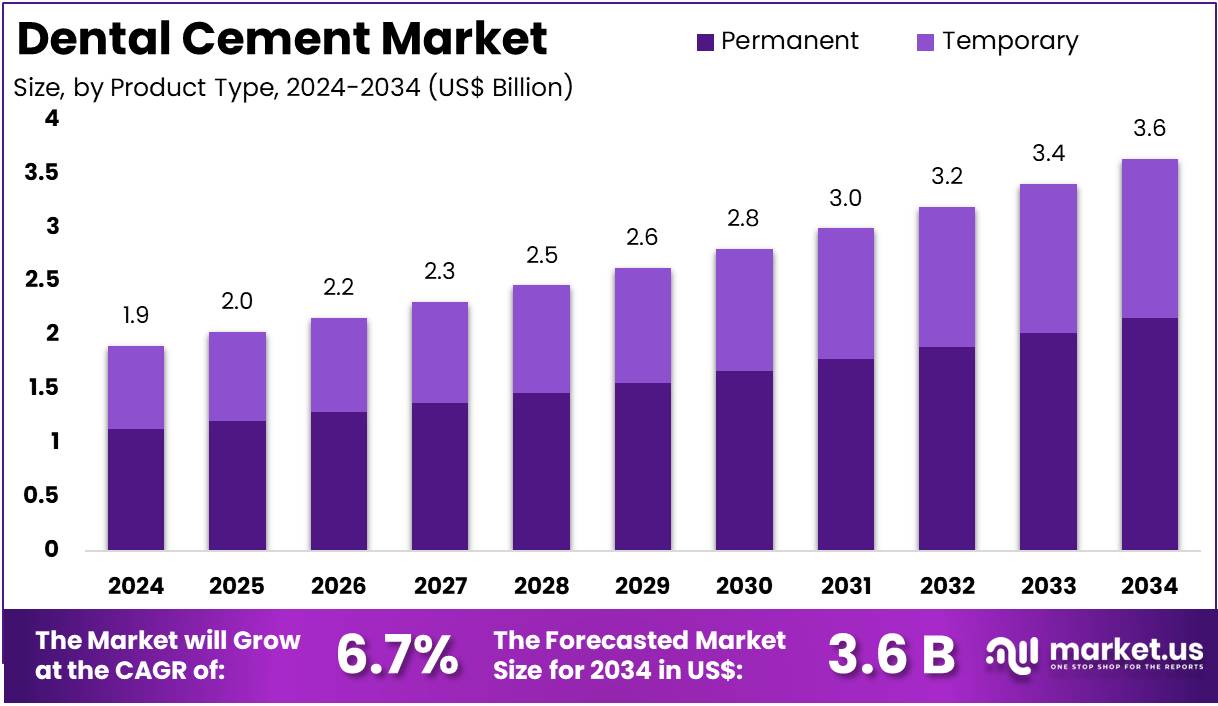
New York, NY – July 17, 2026 – Global Dental Cement Market Size is expected to be worth around US$ 3.6 Billion by 2034 from US$ 1.9 Billion in 2024, growing at a CAGR of 6.7% during the forecast period 2025 to 2034. North America held a dominant market position, capturing more than a 39.4% share and holds US$ 0.7 Billion market value for the year.
Dental cement is an essential material used in modern dentistry for the placement and retention of dental restorations, including crowns, bridges, inlays, onlays, veneers, orthodontic brackets, and dental implants. It acts as an adhesive or luting agent, helping to secure restorations to natural teeth or implant structures while providing stability and durability.
Dental cements are available in several formulations, including zinc phosphate, glass ionomer, resin-modified glass ionomer, polycarboxylate, and resin-based cements. These materials are selected based on clinical requirements such as bond strength, biocompatibility, fluoride release, esthetics, and ease of handling.
The increasing demand for restorative and cosmetic dental procedures, along with growing awareness of oral health, is supporting the adoption of advanced dental cement solutions. Technological advancements have led to the development of products with improved adhesion, reduced sensitivity, enhanced longevity, and better resistance to wear.
Dental cement plays a critical role in ensuring the long-term success of dental treatments by providing secure fixation and protecting restored teeth from leakage and bacterial penetration. As dental care continues to evolve, high-performance dental cement materials remain an important component of effective and reliable restorative dentistry worldwide.
Key Takeaways
- The global dental cement market was valued at US$ 1.9 billion in 2024and is projected to reach US$ 3.6 billion by 2034, expanding at a CAGR of 6.7% during the forecast period.
- Based on product type, the market is segmented into permanentand temporarydental cements. The permanentsegment dominated the market, accounting for a 59.4% share.
- By material, the market is categorized into resin-based, zinc oxide eugenol, zinc phosphate, polycarboxylate, glass ionomer,and others. Among these, the resin-basedsegment held the largest market share of 36.9%.
- In terms of application, the market is segmented into luting, pulpal protection, restorations,and surgical dressing. The lutingsegment emerged as the leading application, capturing a 39.8% revenue share.
- Based on end user, the market is divided into dental clinicsand hospitals. The dental clinicssegment led the market with a 65.2% revenue share.
- North Americaheld the largest regional share of the global dental cement market, accounting for 39.4% of the market.
Regional Analysis
North America Dominates the Dental Cement Market
North America accounted for the largest share of the global dental cement market in 2024, supported by the high prevalence of oral diseases, a growing aging population, and increasing demand for cosmetic and restorative dental procedures. Rising dental visits in the United States, which have recovered to pre-pandemic levels, have increased the use of restorative materials such as dental cement for crowns, bridges, and other prosthetic applications. The region also benefits from a strong network of dental professionals and continuous product innovations, including advanced bioceramic and resin-based luting cements that improve restoration durability and clinical outcomes.
Asia Pacific to Register the Fastest Growth
The Asia Pacific dental cement market is projected to witness the highest CAGR during the forecast period. Market growth is driven by increasing awareness of oral health, improving healthcare infrastructure, rising disposable incomes, and expanding access to dental services. The growing burden of dental caries, rapidly aging populations in countries such as Japan, and rising demand for cosmetic dentistry are expected to accelerate the adoption of advanced dental cement products across the region.
Emerging Trends
- Shift Toward Simplified Universal Workflows: Dental practices increasingly adopt universal adhesives with dual-cure resin cements to bond multiple restorative materials. These systems simplify clinical workflows, reduce inventory, shorten chair time, maintain durable bond strength after aging, and improve treatment efficiency while delivering reliable long-term restorative performance.
- Reliable Zirconia Bonding Protocols: Advanced zirconia bonding techniques, including air abrasion, tribochemical silica coating, and glazing with hydrofluoric acid etching, significantly improve resin cement adhesion. These evidence-based protocols enhance durability during thermomechanical stress, increasing clinician confidence and supporting predictable long-term success of zirconia restorations.
- Fluoride-Releasing Glass-Ionomer Cements Stay Relevant: Glass-ionomer and resin-modified glass-ionomer cements remain preferred for orthodontics and high-caries-risk patients because of sustained fluoride release. New formulations containing bioactive glass and chitosan enhance bioactivity, strengthen antibacterial performance, and reinforce their continuing importance in preventive and restorative dental applications.
- CAD/CAM and Cementation Control: Growing adoption of CAD/CAM restorations requires precise cementation to achieve optimal fit and durability. Controlling film thickness, curing behavior, and polymerization shrinkage ensures accurate seating, while integrating cement selection into digital workflows improves restoration longevity and overall clinical treatment outcomes.
- Evidence-Based Cement Selection: Evidence-based guidelines encourage selecting dental cements according to restoration material and clinical indication rather than a universal approach. Matching adhesive or conventional cements with specific restorative materials minimizes failures, enhances restoration longevity, and improves predictable outcomes across diverse dental procedures.
Use Cases
- Cementing Crowns and Bridges: Dental cements are extensively used for securing crowns and bridges fabricated from zirconia, lithium disilicate, and metal-ceramic materials. Resin and resin-modified glass-ionomer cements provide reliable retention, while modern surface treatment protocols improve bonding strength and support long-term clinical restoration success.
- Orthodontic Band and Bracket Cementation: Glass-ionomer and resin-modified glass-ionomer cements are widely used for orthodontic band and bracket cementation because they release fluoride. Their antibacterial properties help reduce enamel demineralization, lower white-spot lesion risk, and provide additional protection for patients undergoing fixed orthodontic treatment.
- Luting CAD/CAM Restorations: Low-viscosity resin cements are essential for luting CAD/CAM restorations, ensuring accurate seating and marginal adaptation. Proper control of cement thickness and polymerization minimizes distortion, enhances restoration fit, and supports the long-term performance of digitally manufactured ceramic and hybrid restorations.
- Vital Pulp Therapy and Endodontic Repairs: Calcium-silicate bioactive cements are increasingly preferred for vital pulp therapy and endodontic repairs because they stimulate dentin formation and tissue healing. Their high clinical success rates and long-term effectiveness have established them as superior alternatives to traditional calcium hydroxide materials.
- Implant Prosthetics: Resin cements play a critical role in implant prosthetics by securing ceramic restorations to titanium bases with strong retention. Appropriate cement selection and surface preparation improve resistance to mechanical and thermal stresses, enhancing restoration stability, functionality, and long-term clinical performance.
Frequently Asked Questions on Dental Cement
- What are the major types of dental cement?
The major types of dental cement include zinc phosphate, glass ionomer, resin-modified glass ionomer, polycarboxylate, resin cement, and temporary cement. Each type offers distinct properties such as adhesion, fluoride release, strength, and esthetics, making them suitable for different dental applications. - What are the primary applications of dental cement?
Dental cement is widely used for permanent crown and bridge fixation, orthodontic bracket bonding, cavity lining, temporary restorations, root canal sealing, and implant procedures. Its versatility supports both restorative and preventive dentistry while improving treatment outcomes and patient comfort. - Why is resin cement becoming increasingly popular?
Resin cement is gaining popularity because it provides excellent bonding strength, superior esthetics, low solubility, and compatibility with ceramic restorations. These properties make it highly suitable for modern cosmetic and restorative dentistry, where long-lasting adhesion and natural appearance are important. - What factors influence the selection of dental cement?
The choice of dental cement depends on restoration type, tooth condition, material compatibility, required bond strength, moisture control, esthetic requirements, and clinical procedure. Dentists carefully evaluate these factors to ensure reliable performance, patient safety, and restoration longevity. - What factors are driving the growth of the dental cement market?
Market growth is driven by increasing dental disorders, expanding cosmetic dentistry procedures, rising demand for dental implants, growing awareness of oral health, technological advancements in adhesive materials, and the expanding elderly population requiring restorative dental treatments. - Which region dominates the dental cement market?
North America holds a significant share of the dental cement market due to advanced healthcare infrastructure, widespread adoption of cosmetic dentistry, high dental expenditure, and strong presence of leading manufacturers. However, Asia-Pacific is experiencing the fastest market growth. - What are the emerging trends in the dental cement market?
Emerging trends include the development of bioactive dental cements, increased use of resin-based formulations, digital dentistry integration, minimally invasive restorative procedures, and growing research into antimicrobial materials that improve restoration longevity while enhancing patient outcomes.
Conclusion
The global dental cement market is expected to witness steady growth, driven by increasing demand for restorative, cosmetic, and implant dentistry, along with rising awareness of oral health. Continuous advancements in resin-based, glass ionomer, and bioactive cement technologies are improving bond strength, durability, esthetics, and clinical outcomes.
North America maintains market leadership due to its advanced dental infrastructure, while Asia Pacific is emerging as the fastest-growing regional market owing to expanding healthcare access and higher dental treatment adoption. As digital dentistry and evidence-based material selection continue to evolve, advanced dental cements will remain essential for achieving reliable, long-lasting, and high-quality restorative dental procedures worldwide.
Discuss your needs with our analyst
Please share your requirements with more details so our analyst can check if they can solve your problem(s)




