


Overview
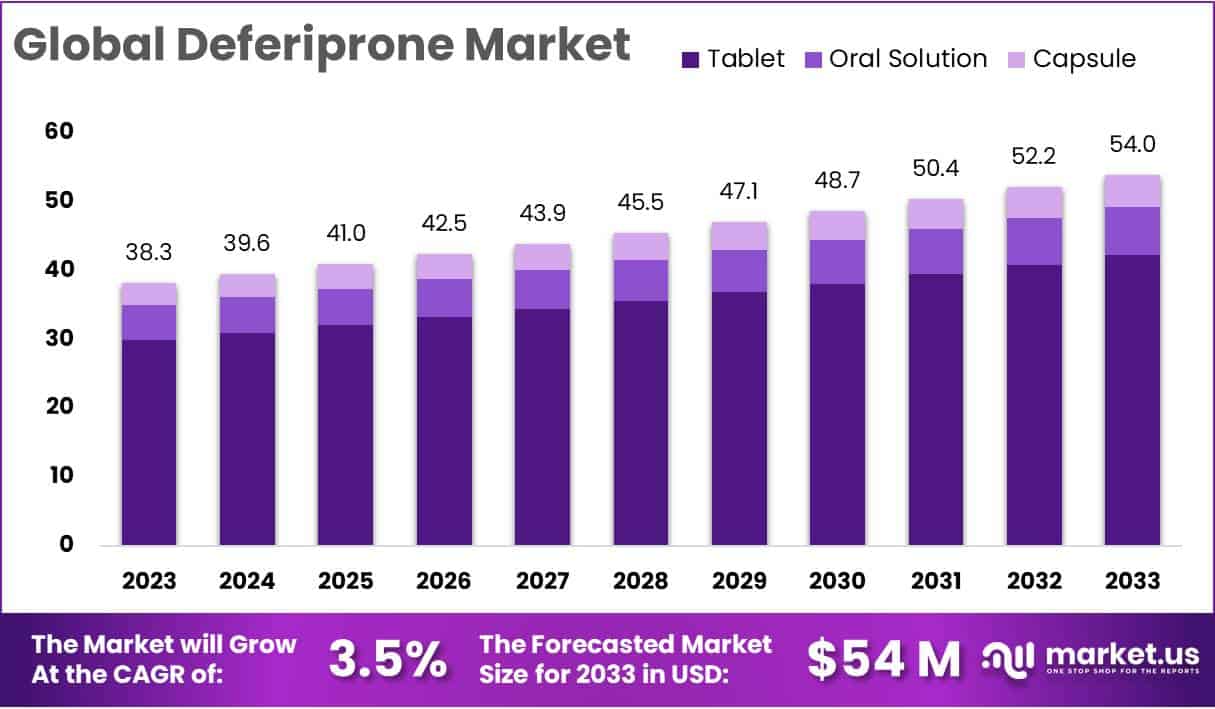
New York, NY – July 23, 2026 – The Deferiprone Market Size is projected to reach approximately USD 54 Million by 2033, up from USD 38.3 Million in 2023. This represents a steady growth rate of 3.5% from 2024 to 2033.
Deferiprone is an oral iron-chelating agent used to treat iron overload in patients who receive regular blood transfusions, particularly those with transfusion-dependent thalassemia syndromes. Excess iron accumulation can damage vital organs, including the heart, liver, and endocrine glands, making effective iron removal essential for long-term patient management.
Deferiprone binds to excess iron and promotes its excretion primarily through urine, thereby helping to reduce total body iron levels. The drug is often prescribed when other iron chelation therapies are inadequate, contraindicated, or not well tolerated. Ongoing clinical research is also evaluating its potential use in additional conditions associated with abnormal iron metabolism.
Deferiprone has received regulatory approvals in multiple countries and is included in treatment guidelines for selected patient populations. Its effectiveness in reducing cardiac and systemic iron burden has supported its adoption in clinical practice. Regular monitoring of blood counts and liver function is recommended during treatment because of the risk of adverse effects, including neutropenia and agranulocytosis. Appropriate medical supervision is essential throughout therapy.
Key Takeaways
- Market Growth: The deferiprone market is projected to reach USD 54 million by 2033, expanding at a CAGR of 3.5% during the forecast period from 2024 to 2033.
- Segment Leadership: Tablets emerged as the leading dosage form in 2023, accounting for 78.6% of the market, followed by oral solutions and capsules.
- Therapeutic Area: The Iron Overload Disorders segment captured the largest market share of 37.5% in 2023, supported by the increasing prevalence of conditions such as hemochromatosis.
- Indication Analysis: Transfusional Iron Overload represented the dominant indication, holding a 61.1% share of the global market in 2023.
- Regional Overview: North America led the global deferiprone market with a 39.1% revenue share in 2023, driven by the rising incidence of iron overload disorders and well-established healthcare infrastructure.
Regional Analysis
North America dominated the global Deferiprone Market in 2023, accounting for more than 39.1% of the total market and generating approximately USD 14.9 million in revenue. This leadership is primarily supported by the increasing prevalence of iron overload disorders, including transfusion-dependent thalassemia and hereditary hemochromatosis, which has strengthened the demand for effective iron chelation therapies.
The region also benefits from a well-developed healthcare infrastructure that enables timely diagnosis, access to specialized treatment, and improved patient management. Favorable regulatory approvals have reinforced confidence among healthcare providers and patients, supporting the widespread adoption of deferiprone.
In addition, ongoing pharmaceutical research and development activities have contributed to the introduction of improved treatment approaches and expanded clinical applications. Rising awareness of iron overload disorders through patient education initiatives and healthcare programs has further enhanced treatment uptake.
With continued investments in healthcare innovation, supportive regulatory policies, and growing focus on managing iron-related disorders, North America is expected to maintain its leading position throughout the forecast period.
Emerging Trends
- Expanding Therapeutic Applications Beyond Thalassemia: Deferiprone is expanding beyond thalassemia treatment into rare neurodegenerative disorders, including Friedreich’s ataxia, Parkinson’s disease, and NBIA. Ongoing clinical trials investigating iron-related neurological conditions are expected to broaden therapeutic applications, supporting drug repurposing and increasing investment in research and commercial development.
- Growing Preference for Oral Iron Chelators: Deferiprone’s oral administration improves convenience, patient adherence, and treatment acceptance compared to injectable iron chelators. It is particularly beneficial for children and patients requiring lifelong therapy, while also supporting wider adoption in healthcare systems with limited medical infrastructure and resources.
- Rising Use in Combination Therapies: Combination therapy involving Deferiprone with deferasirox or desferrioxamine is increasingly adopted for patients with severe iron overload. Clinical evidence suggests enhanced iron removal, improved treatment outcomes, and greater flexibility, encouraging personalized therapeutic strategies for complex transfusion-dependent patient populations.
- Regulatory Approvals and Label Expansion: Regulatory progress continues strengthening Deferiprone’s market position through expanded approvals and ongoing clinical studies. New indications, orphan drug designations, and positive trial outcomes are supporting label expansion, increasing physician confidence and creating opportunities across multiple rare disease treatment segments globally.
- Increased Focus on Rare Disease Markets: Growing investment in orphan drug development is creating opportunities for Deferiprone across rare disease markets. Favorable regulatory incentives, faster approval pathways, and market exclusivity encourage pharmaceutical companies to expand research, addressing unmet clinical needs and supporting long-term commercial growth.
Use Cases
- Iron Overload in Thalassemia: Deferiprone is primarily prescribed for transfusion-dependent thalassemia patients experiencing chronic iron overload. It effectively reduces excess iron through urinary excretion, lowering serum ferritin levels and minimizing complications such as cardiac disease, liver damage, and endocrine disorders associated with repeated blood transfusions.
- Iron Overload in Sickle Cell Disease: Deferiprone is increasingly used to manage transfusion-related iron overload in sickle cell disease patients, particularly when alternative chelators are unsuitable. Its oral formulation improves adherence while reducing iron accumulation, helping prevent organ damage and supporting long-term disease management with routine monitoring.
- Cardiac Iron Overload: Deferiprone effectively removes excess iron from cardiac tissues, reducing the risk of heart failure in transfusion-dependent patients. Clinical studies demonstrate improvements in cardiac MRI T2 measurements and heart function, making it an important treatment option for managing cardiac iron accumulation.
- Neurodegenerative Disorders: Deferiprone crosses the blood-brain barrier, enabling investigation for neurological disorders associated with abnormal brain iron accumulation. Ongoing research in Friedreich’s ataxia, Parkinson’s disease, Alzheimer’s disease, and NBIA highlights its potential to reduce iron deposits and improve neurological function.
- Off-Label and Experimental Uses: Deferiprone is being investigated for several experimental applications, including myelodysplastic syndromes, hepatitis C-related iron overload, and selected cancers. Early research suggests modulation of iron metabolism may suppress disease progression, supporting continued evaluation across oncology and other iron-related disorders.
Frequently Asked Questions on Deferiprone
- What factors are driving the growth of the Deferiprone Market?
The growth of the Deferiprone Market is driven by the rising prevalence of thalassemia and sickle cell disease, increasing blood transfusion rates, improved diagnosis of iron overload, favorable regulatory approvals, and growing investments in rare disease treatments by pharmaceutical companies worldwide. - What are the major applications of Deferiprone?
Deferiprone is mainly used to treat transfusional iron overload in patients with thalassemia major. It is also prescribed for individuals with sickle cell disease and other chronic anemias requiring frequent transfusions, where effective iron removal is essential for preventing serious organ complications. - Which regions dominate the Deferiprone Market?
North America and Europe hold significant shares of the Deferiprone Market due to advanced healthcare systems and higher treatment accessibility. Meanwhile, the Asia-Pacific region is expected to witness rapid growth because of the high prevalence of thalassemia, improving healthcare infrastructure, and increasing government healthcare initiatives. - Who are the key end users in the Deferiprone Market?
The primary end users of deferiprone include hospitals, specialty clinics, hematology centers, and retail and hospital pharmacies. These healthcare facilities administer iron chelation therapy to patients requiring long-term treatment for chronic iron overload associated with inherited or acquired blood disorders. - What are the emerging trends in the Deferiprone Market?
Emerging trends include the development of improved formulations, increasing availability of generic products, growing focus on patient-friendly oral therapies, expanding clinical research for additional indications, and greater collaboration between pharmaceutical companies to improve treatment accessibility and therapeutic outcomes. - Who are the major companies operating in the Deferiprone Market?
The Deferiprone Market includes several pharmaceutical manufacturers involved in branded and generic formulations. Companies compete through product innovation, regulatory approvals, strategic partnerships, geographic expansion, and investments in research aimed at enhancing treatment efficacy and patient compliance. - What is the future outlook for the Deferiprone Market?
The future outlook for the Deferiprone Market remains positive, supported by increasing demand for iron chelation therapies, rising awareness of rare blood disorders, expanding access to healthcare in developing economies, and continued advancements in pharmaceutical research focused on improving patient care and treatment effectiveness.
Conclusion
The global Deferiprone market is expected to experience steady growth, supported by the increasing prevalence of transfusion-dependent disorders, rising awareness of iron overload management, and expanding access to effective oral iron chelation therapies.
Its proven ability to reduce systemic and cardiac iron burden, combined with patient-friendly oral administration, continues to strengthen clinical adoption. Ongoing research exploring new therapeutic applications in neurodegenerative and other iron-related disorders is expected to create additional growth opportunities.
Favorable regulatory support, continued pharmaceutical innovation, and growing investments in rare disease treatments are anticipated to reinforce the market’s long-term development and improve patient outcomes worldwide.
Discuss your needs with our analyst
Please share your requirements with more details so our analyst can check if they can solve your problem(s)




