


Overview
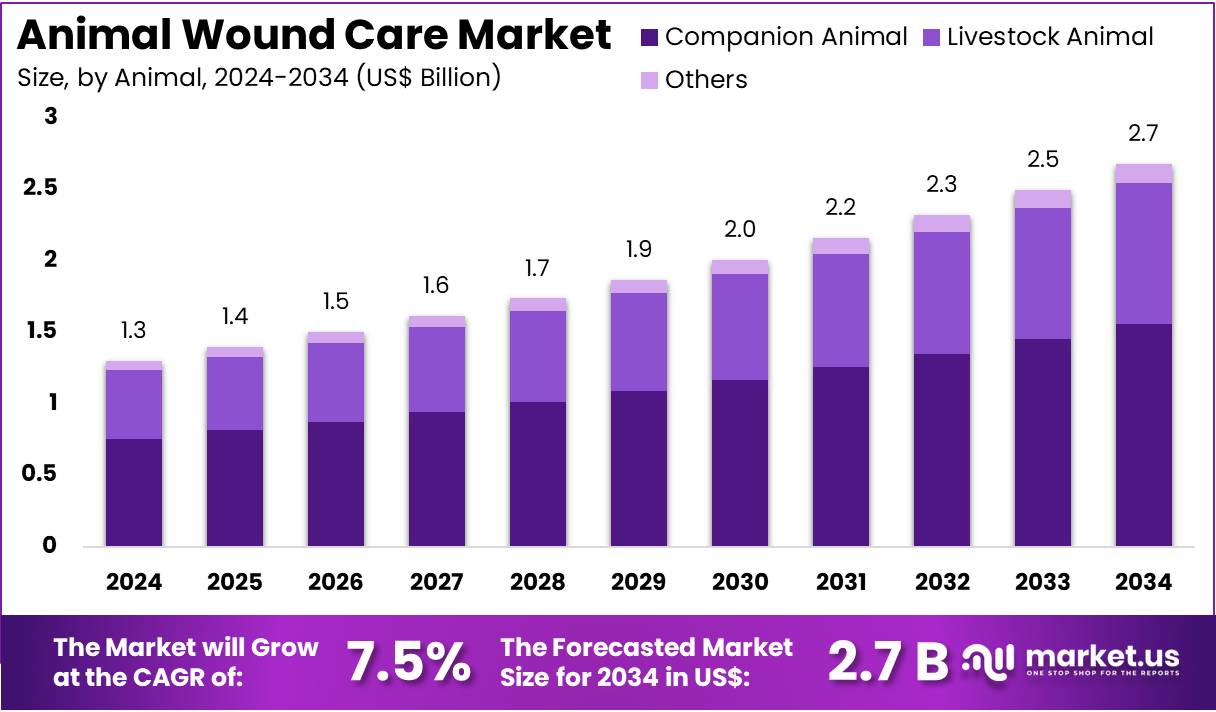
New York, NY – May 25, 2026 –The Animal Wound Care Market Size is expected to be worth around US$ 2.7 billion by 2034 from US$ 1.3 billion in 2024, growing at a CAGR of 7.5% during the forecast period 2025 to 2034.
The global animal wound care market is witnessing steady growth due to the rising adoption of companion animals, increasing livestock population, and growing awareness regarding animal health management. Animal wound care products are widely used for the treatment of injuries, surgical wounds, burns, skin infections, and chronic wounds in both companion and farm animals. The market includes products such as surgical wound dressings, topical medications, tissue adhesives, bandages, and advanced wound care solutions.
The increasing expenditure on veterinary healthcare and the expansion of veterinary clinics and animal hospitals are supporting market growth. In addition, technological advancements in veterinary medicine, including the development of antimicrobial dressings and regenerative wound care therapies, are improving treatment outcomes and reducing recovery time in animals.
Companion animals, particularly dogs and cats, account for a significant share of the market due to higher pet ownership rates and increasing spending on pet healthcare. Meanwhile, the livestock segment is also growing steadily as farmers focus on preventing infections and improving animal productivity.
North America dominates the animal wound care market owing to advanced veterinary infrastructure, high pet adoption, and strong awareness regarding animal welfare. Europe follows closely, while the Asia-Pacific region is expected to witness notable growth due to rising disposable income, increasing veterinary services, and expanding livestock production across emerging economies.
Key Takeaways
- In 2024, the global animal wound care market was valued at US$ 1.3 billion and is projected to reach US$ 2.7 billion by 2034, expanding at a CAGR of 7.5% during the forecast period.
- Based on product type, the market is segmented into surgical products, advanced products, traditional products, and therapy devices. Among these, the surgical products segment dominated the market in 2024, accounting for a revenue share of 54.3%.
- By animal type, the market is categorized into companion animals and livestock animals. The companion animal segment held the largest market share of 58.2% in 2024.
- In terms of distribution channel, the market is divided into retail, e-commerce, and veterinary hospitals/clinics. The veterinary hospitals/clinics segment emerged as the leading distribution channel, capturing 61.5% of the market share.
- Based on end user, the market is segmented into veterinary hospitals/clinics, homecare, and research institutes. Veterinary hospitals/clinics dominated the segment with a revenue share of 62.8% in 2024.
- North America accounted for the largest regional share in the global animal wound care market, contributing 39.8% of the total market revenue in 2024.
Regional Analysis
North America dominated the global animal wound care market in 2024, accounting for a revenue share of 39.8%. The regional market growth is primarily driven by increasing awareness regarding pet health and rising expenditure on veterinary care. According to the American Pet Products Association (APPA), spending on veterinary services and related products continued to increase significantly in the US during 2024, supporting the demand for advanced wound management solutions.
In addition, the North American Pet Health Insurance Association (NAPHIA) reported that the number of insured pets in the US reached 5.7 million in 2023, reflecting growing willingness among pet owners to invest in medical treatments, including wound care products and therapies. The expanding pet population and increasing number of aging animals further contribute to market demand.
Meanwhile, the Asia Pacific region is projected to register the fastest CAGR during the forecast period. The regional growth is supported by rising pet ownership, improving disposable incomes, and expanding veterinary healthcare infrastructure. Increasing awareness regarding animal health and wider access to advanced veterinary diagnostic technologies are expected to accelerate the adoption of effective wound treatment solutions. Additionally, growing investments in veterinary research and development across countries such as Japan and China are anticipated to support market expansion in the coming years.
Emerging Trends
- Growing Demand for Natural and Organic Products: Pet owners are increasingly choosing natural and organic wound care products for animals. Herbal ointments, plant-based sprays, and chemical-free balms are gaining demand due to their gentle properties. Rising awareness about safer and eco-friendly animal healthcare solutions continues to support market growth globally.
- Technological Advancements in Wound Healing: Advanced wound care technologies such as hydrogel dressings, foam sprays, and bioactive materials are improving healing outcomes in animals. These products help reduce infections, maintain moisture balance, and speed recovery. Continuous investment in research and development is driving innovation in animal wound management.
- Increased Focus on Companion Animal Health: Companion animals are increasingly treated as family members, encouraging higher spending on veterinary healthcare and wound management products. Growing pet adoption and stronger emotional attachment are supporting demand for premium wound care solutions that provide comfort, faster recovery, and improved treatment outcomes.
- Telemedicine and Remote Veterinary Support: Telemedicine services are transforming animal healthcare by enabling remote veterinary consultations for wound treatment and monitoring. Pet owners can receive professional guidance without clinic visits, improving accessibility in rural regions. Growing adoption of digital veterinary platforms is expected to support market expansion significantly.
- Custom Wound Care Solutions: Manufacturers are introducing customized wound care kits designed for specific animals such as dogs, cats, horses, and exotic species. These kits include disinfectants, dressings, and healing products for convenient at-home treatment. Increasing preference for ready-to-use solutions is driving growth in this segment.
- Awareness and Education Campaigns: Veterinarians and animal healthcare companies are increasing educational campaigns focused on proper wound management and infection prevention. Social media promotions, workshops, and awareness programs help pet owners understand the importance of timely treatment. Improved awareness is positively influencing demand for wound care products.
- Sustainability in Product Packaging: Animal healthcare companies are increasingly adopting sustainable packaging solutions, including recyclable, biodegradable, and reusable materials. Reduced plastic use and environmentally responsible manufacturing practices are attracting eco-conscious consumers. Sustainability initiatives are also strengthening brand reputation and becoming an important competitive advantage in the market.
Use Cases
- Post-Surgery Care in Veterinary Clinics: Veterinary clinics widely use wound dressings, antiseptic gels, surgical tapes, and bandages after animal surgeries. These products help prevent infections and support faster healing. Rising surgical procedures such as spaying, neutering, and injury repair continue generating strong and consistent demand for wound care solutions.
- Treatment of Cuts, Bites, and Scratches in Pets: Pets commonly experience cuts, scratches, and bite injuries during outdoor activities or play. Pet owners and veterinarians use wound sprays, antiseptic creams, and healing solutions for quick treatment. Increasing pet adoption and demand for safe at-home care products are supporting steady market growth.
- Farm Animal Wound Management: Farm animals frequently suffer injuries caused by rough surfaces, farm equipment, infections, or fencing. Farmers rely on antiseptic sprays, wound powders, and protective wraps for treatment. Demand for affordable, easy-to-use, and bulk wound care products remains strong to maintain livestock health and productivity.
- Wildlife Rescue and Rehabilitation: Wildlife rescue centers use wound care products to treat animals injured in accidents, traps, or harsh environmental conditions. Safe and versatile sprays, gels, and bandages are essential for rehabilitation. Government and NGO-supported rescue facilities contribute to demand for specialized wildlife wound management solutions.
- Equine Care in Sports and Racing: Sport and racing horses require specialized wound care products to treat injuries such as cuts, abrasions, and sprains during training or competitions. Cooling gels, wound wraps, and antiseptic creams support faster recovery. Growing equine sports activities continue increasing demand for premium horse care products.
- Post-Vaccination and Microchip Wound Support: Vaccinations and microchip implant procedures often create minor puncture wounds in pets and livestock. Mild antiseptic creams and healing gels are commonly used to prevent infections and discomfort. Increasing vaccination and identification programs are generating continuous demand for basic animal wound care products.
Frequently Asked Questions on Animal Wound Care
- What factors are driving the growth of the animal wound care market?
The growth of the animal wound care market is driven by increasing pet ownership, rising veterinary healthcare expenditure, growing awareness regarding animal welfare, and advancements in veterinary treatment technologies. Expanding livestock production and higher demand for effective wound management products also support market growth. - Which products are commonly used in animal wound care?
Commonly used animal wound care products include surgical dressings, wound cleansers, bandages, tissue adhesives, topical medications, foam dressings, hydrogel products, and therapy devices. These products are designed to reduce infection risks, accelerate healing, and improve treatment efficiency in animals. - Why are companion animals important in the animal wound care market?
Companion animals account for a major market share due to increasing pet adoption and higher spending on pet healthcare. Owners are becoming more focused on preventive and advanced veterinary treatments, leading to stronger demand for wound care products and post-surgical care solutions. - Which region dominates the animal wound care market?
North America dominates the animal wound care market due to advanced veterinary healthcare infrastructure, high pet ownership rates, and increasing expenditure on animal treatment services. The presence of major market players and growing awareness regarding pet wellness also supports regional market leadership. - Who are the major end users in the animal wound care market?
Veterinary hospitals and clinics represent the major end users in the animal wound care market. These facilities provide advanced treatment services, surgical procedures, and specialized wound management solutions, contributing significantly to the adoption of animal wound care products globally. - How do advanced wound care products benefit animals?
Advanced wound care products help accelerate tissue healing, reduce infection risks, minimize pain, and improve recovery time in animals. These products are increasingly preferred in veterinary practices due to their effectiveness in treating chronic wounds, burns, and post-surgical injuries.
Conclusion
In conclusion, the global animal wound care market is expected to witness strong and steady growth due to rising pet ownership, increasing livestock population, and growing awareness regarding animal health management. Advancements in veterinary technologies, expanding veterinary healthcare infrastructure, and rising demand for advanced wound care products are further supporting market expansion.
Companion animals remain the leading segment due to higher healthcare spending and stronger emotional attachment among owners. Meanwhile, emerging trends such as natural products, telemedicine, customized care solutions, and sustainable packaging are reshaping the industry landscape. Growing investments in veterinary research and increasing access to animal healthcare services will continue driving long-term market growth globally.
Discuss your needs with our analyst
Please share your requirements with more details so our analyst can check if they can solve your problem(s)




