


Overview
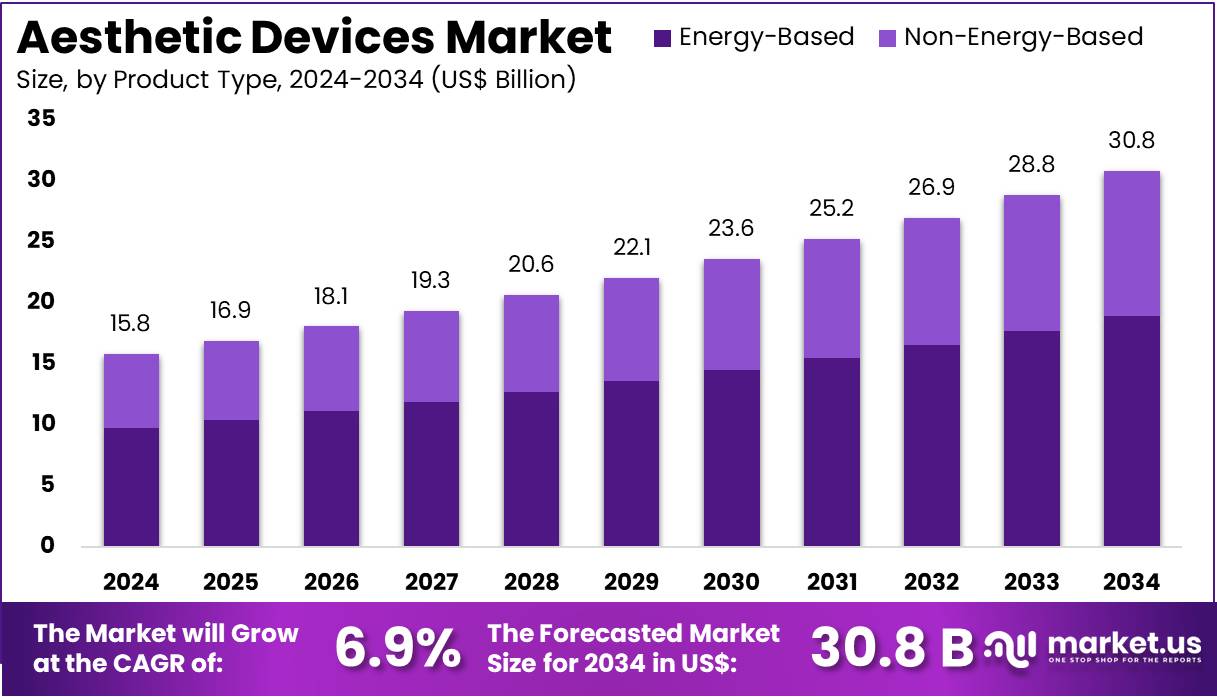
New York, NY – May 23, 2026 – The Aesthetic Devices Market Size is expected to be worth around US$ 30.8 billion by 2034 from US$ 15.8 billion in 2024, growing at a CAGR of 6.9% during the forecast period 2025 to 2034.
The global market for aesthetic devices has experienced significant growth in recent years, driven by increasing consumer interest in minimally invasive cosmetic procedures, technological advancements, and rising awareness regarding personal appearance and skin health. Aesthetic devices are widely used for skin rejuvenation, body contouring, hair removal, tattoo removal, acne treatment, and anti-aging procedures across dermatology clinics, cosmetic centers, and medical spas.
The market includes a broad range of technologies such as laser-based devices, radiofrequency systems, ultrasound devices, intense pulsed light (IPL) systems, and cryolipolysis equipment. Among these, laser aesthetic devices continue to hold a substantial market share owing to their effectiveness in skin resurfacing, pigmentation treatment, and hair reduction applications.
The growing aging population and increasing disposable income levels, particularly in emerging economies, have contributed to higher adoption of aesthetic procedures. In addition, the expansion of medical tourism and rising demand for non-surgical treatments are supporting market development globally.
North America represents a major regional market due to advanced healthcare infrastructure and high acceptance of cosmetic procedures, while Asia-Pacific is witnessing rapid growth supported by expanding urban populations and improving healthcare investments.
Key industry participants are focusing on product innovation, strategic collaborations, and regulatory approvals to strengthen their market position. Continuous advancements in energy-based technologies and portable aesthetic systems are expected to create new growth opportunities for the industry over the coming years.
Key Takeaways
- In 2024, the global Aesthetic Devices market was valued at US$ 30.8 billion and is projected to expand at a CAGR of 6.9% during the forecast period through 2034.
- Based on product type, the market is categorized into energy-based and non-energy-based devices. The energy-based segment dominated the market in 2024, accounting for a revenue share of 61.5%.
- By application, the market is segmented into body contouring & cellulite reduction, skin resurfacing & tightening, hair removal, breast augmentation, facial aesthetic procedures, and others. Among these, body contouring & cellulite reduction emerged as the leading segment with a market share of 44.8% in 2024.
- In terms of end user, the market is divided into hospitals, home settings, and clinics & beauty centers. Hospitals accounted for the largest revenue share of 54.2% in the global Aesthetic Devices market.
- Regionally, North America held the dominant position in 2024, capturing 41.3% of the global market share.
Regional Analysis
North America accounted for the largest share of the global Aesthetic Devices market in 2024, supported by the growing preference for minimally invasive cosmetic procedures, continuous technological advancements, and rising consumer spending on aesthetic treatments. Increasing approvals for advanced energy-based devices and strong adoption across clinics and medical spas have further strengthened regional market growth.
The rising number of cosmetic procedures, particularly laser skin resurfacing and body contouring treatments, has significantly contributed to market expansion in the region. In addition, higher healthcare expenditure and the presence of leading industry participants launching innovative laser and injectable technologies continue to support market development across the US and Canada.
Asia Pacific is anticipated to register the fastest CAGR during the forecast period owing to increasing medical tourism, rapid urbanization, and expanding middle-class spending on cosmetic procedures. Government support for advanced aesthetic technologies and rising regulatory approvals for laser systems and injectable products are accelerating regional market growth.
Countries such as China, India, Japan, South Korea, and Australia are witnessing increasing demand for non-surgical aesthetic treatments, including skin rejuvenation and dermatological procedures. The growing availability of technologically advanced devices and rising consumer awareness regarding cosmetic enhancements are expected to sustain long-term market growth across the Asia Pacific region.
Emerging Trends
- Growing Demand for Non-Invasive Treatments: Consumers increasingly prefer non-invasive aesthetic procedures such as skin tightening, wrinkle reduction, and fat removal. These treatments offer minimal pain, shorter recovery periods, and faster outcomes, driving demand for laser, ultrasound, and radiofrequency-based devices among clinics and younger working professionals globally.
- Integration of AI and Smart Technologies: Artificial intelligence is transforming aesthetic devices through automated skin analysis, customized treatment settings, and real-time monitoring. Smart technologies improve treatment precision, enhance patient safety, and reduce operational errors. Features such as touchscreens and app connectivity are also improving overall treatment efficiency.
- Rising Popularity of At-Home Devices: The demand for at-home aesthetic devices is increasing due to convenience, affordability, and privacy benefits. Products for anti-aging, acne management, and skin tightening are gaining traction. Companies are introducing compact, user-friendly devices with advanced technologies to meet growing consumer expectations and preferences.
- Increasing Male Consumer Participation: Men are increasingly adopting aesthetic treatments such as laser hair removal, skin rejuvenation, and body contouring. Growing awareness regarding personal appearance and workplace confidence is supporting this trend. Companies are expanding male-focused product portfolios and marketing strategies to capture this emerging consumer segment.
- Growing Adoption of Combination Therapies: Combination therapies involving multiple aesthetic technologies are gaining popularity due to enhanced treatment effectiveness. Clinics combine laser, ultrasound, and radiofrequency procedures to address multiple skin concerns simultaneously. This approach delivers faster, longer-lasting, and more natural-looking outcomes, increasing patient satisfaction and treatment customization opportunities.
- Preference for Natural-Looking Outcomes: Consumers increasingly seek subtle and natural-looking aesthetic enhancements rather than dramatic cosmetic changes. Device manufacturers are developing technologies focused on improving skin texture, reducing wrinkles, and enhancing appearance gently. Clinics are prioritizing balanced, realistic outcomes that maintain natural facial features and overall aesthetic harmony.
Use Cases
- Skin Rejuvenation and Anti-Aging: Aesthetic devices are extensively used for skin rejuvenation and anti-aging treatments. Technologies such as lasers, ultrasound, and microneedling help reduce wrinkles, improve skin texture, and tighten skin. These minimally invasive procedures provide natural results with limited recovery time, increasing their popularity globally.
- Hair Removal Applications: Laser-based aesthetic devices are widely utilized for long-term hair removal treatments. These technologies target hair follicles directly, reducing hair growth while minimizing irritation and ingrown hairs. Both clinical and home-use devices are gaining acceptance due to convenience, safety, and improved treatment effectiveness.
- Body Contouring and Fat Reduction: Non-invasive body contouring devices are increasingly used for reducing stubborn fat and reshaping body areas. Technologies including cryolipolysis and radiofrequency provide effective fat reduction without surgery. Consumers prefer these treatments due to minimal downtime, gradual visible improvements, and reduced procedural risks.
- Acne and Scar Management: Light- and laser-based devices are commonly used for acne treatment and scar reduction. These technologies target acne-causing bacteria while promoting skin healing and improved texture. Their non-invasive nature, visible outcomes, and minimal recovery requirements have increased adoption among dermatology clinics and aesthetic centers.
- Tattoo and Pigmentation Removal: Laser aesthetic devices are widely used for removing tattoos, age spots, and skin pigmentation. These systems break down pigment particles safely and effectively, enabling gradual skin clearing. Advanced laser technologies provide improved precision and compatibility across various skin tones and treatment requirements.
- Hair Growth and Scalp Therapy: Low-level light therapy devices are increasingly utilized for stimulating hair growth and improving scalp health. These treatments support hair follicle activity, reduce hair thinning, and enhance hair density. Growing demand for non-medicated and painless hair restoration solutions is driving market expansion significantly.
- Dental Aesthetic Procedures: Aesthetic devices are increasingly integrated into dental applications such as teeth whitening and gum contouring. Laser and light-based systems provide quick, safe, and effective cosmetic dental treatments. Rising consumer focus on smile enhancement and minimally invasive procedures continues supporting growth in dental aesthetics.
Frequently Asked Questions on Aesthetic Devices
- What are aesthetic devices?
Aesthetic devices are specialized medical technologies designed to improve physical appearance through cosmetic and dermatological procedures. These devices are commonly used for skin rejuvenation, hair removal, body contouring, wrinkle reduction, tattoo removal, and anti-aging treatments in clinics and medical spas. - What factors are driving the growth of the aesthetic devices market?
The growth of the aesthetic devices market is primarily driven by increasing consumer awareness regarding cosmetic procedures, rising disposable income, technological advancements, and growing demand for minimally invasive treatments. Social media influence and aging populations are also contributing significantly to market expansion globally. - Which types of aesthetic devices are widely used in the market?
Laser devices, radiofrequency systems, ultrasound-based devices, light therapy equipment, and injectable aesthetic systems are among the most widely used aesthetic technologies. These devices are preferred for their effectiveness, shorter recovery periods, and ability to deliver non-surgical cosmetic enhancement procedures. - Which regions are leading in the aesthetic devices market?
North America currently dominates the aesthetic devices market due to advanced healthcare infrastructure, high spending on cosmetic treatments, and strong manufacturer presence. Meanwhile, the Asia-Pacific region is witnessing rapid growth supported by medical tourism, urbanization, and rising beauty consciousness among consumers. - How are technological advancements influencing aesthetic devices?
Technological advancements are significantly improving the performance, safety, and precision of aesthetic devices. Artificial intelligence integration, energy-based treatment systems, and advanced imaging technologies are enhancing patient outcomes while reducing treatment time, discomfort, and recovery duration associated with cosmetic procedures. - What are the major applications of aesthetic devices?
Aesthetic devices are widely applied in procedures such as skin tightening, cellulite reduction, facial rejuvenation, acne treatment, pigmentation correction, scar reduction, and hair removal. These applications are increasingly adopted by dermatology clinics, hospitals, cosmetic centers, and wellness facilities worldwide. - What is the future outlook for the aesthetic devices market?
The aesthetic devices market is expected to witness steady expansion during the forecast period due to rising consumer demand for non-invasive cosmetic procedures and continuous product innovation. Growing healthcare investments and increasing acceptance of aesthetic treatments are expected to support long-term industry growth.
Conclusion
The global aesthetic devices market is expected to witness sustained growth over the coming years, driven by rising demand for minimally invasive cosmetic procedures, technological advancements, and increasing awareness regarding personal appearance and skin wellness. The growing adoption of energy-based devices, particularly laser systems, continues to support market expansion across various applications such as skin rejuvenation, body contouring, and hair removal.
North America maintains a leading market position, while Asia-Pacific is emerging as a high-growth region due to medical tourism and expanding healthcare investments. Continuous innovation, AI integration, and increasing consumer preference for non-surgical treatments are expected to create significant long-term growth opportunities for industry participants globally.
Discuss your needs with our analyst
Please share your requirements with more details so our analyst can check if they can solve your problem(s)




