


Overview
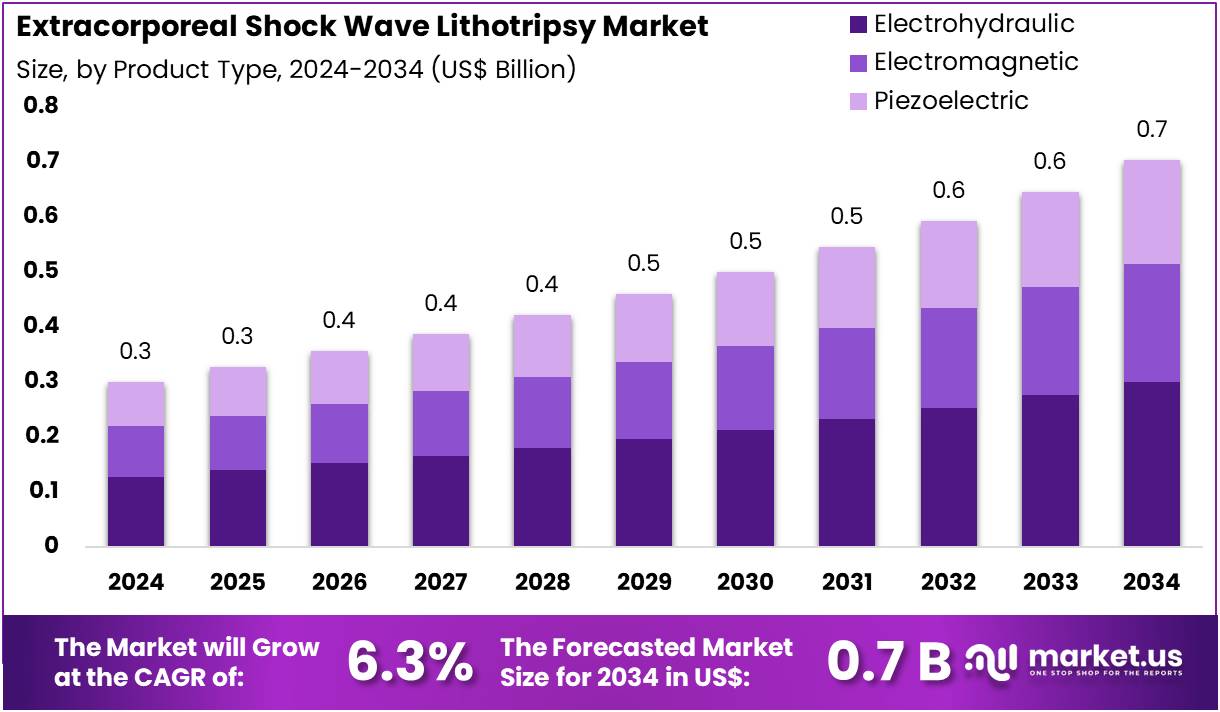
New York, NY – July 28, 2026 – The Global Extracorporeal Shock Wave Lithotripsy Market Size is expected to be worth around US$ 0.7 Billion by 2034 from US$ 0.3 Billion in 2024, growing at a CAGR of 6.3% during the forecast period 2025 to 2034. North America held a dominant market position, capturing more than a 43.3% share and holds US$ 0.1 Billion market value for the year.
The Extracorporeal Shock Wave Lithotripsy (ESWL) Market is witnessing steady growth due to the increasing prevalence of kidney stone disorders and the rising preference for minimally invasive treatment procedures. ESWL has become a widely adopted non-surgical technique for breaking kidney and ureter stones into smaller fragments, allowing patients to pass them naturally without major surgical intervention. The procedure offers advantages such as shorter recovery time, reduced hospitalization, and improved patient comfort compared with traditional surgical approaches.
The growing global burden of kidney stone disease is a major factor supporting demand for ESWL systems. In the United States, the National Kidney Foundation reported that more than 500,000 people seek emergency care annually for kidney stone-related conditions, highlighting the significant healthcare burden associated with this disorder. Additionally, organizations such as the Agency for Healthcare Research and Quality (AHRQ) have recognized the substantial economic impact of urinary stone treatment, encouraging healthcare systems to adopt efficient and cost-effective technologies.
Technological advancements in lithotripsy equipment are further contributing to market development. Manufacturers are focusing on improving shock wave accuracy, treatment efficiency, imaging integration, and patient outcomes. Healthcare providers are increasingly adopting advanced ESWL systems to enhance clinical workflows and manage rising patient volumes.
The market outlook remains positive as lifestyle-related risk factors, including obesity and dietary changes, continue to influence kidney stone incidence worldwide. With increasing demand for safer, effective, and minimally invasive urological procedures, ESWL is expected to maintain an important role in kidney stone management globally.
Key Takeaways
- In 2024, the Extracorporeal Shock Wave Lithotripsy (ESWL) Market generated revenue of US$ 0.3 billion and is projected to grow at a CAGR of 6.3%, reaching US$ 0.7 billion by 2034.
- Based on product type, the ESWL market is segmented into electrohydraulic, electromagnetic, and piezoelectric systems. The electrohydraulic segment dominated in 2023, accounting for a 42.6% market share.
- By application, the market is categorized into pancreatic stones, kidney stones, and other applications. The kidney stone segment held the leading position, capturing a 59.7% share.
- Based on end user, the market is divided into hospitals, clinics, and other healthcare facilities. The hospitals segment dominated the market with a 61.3% revenue share.
- North America emerged as the leading regional market, accounting for a 43.3% share in 2023 due to higher adoption of advanced urological treatment technologies and strong healthcare infrastructure.
Statistical Information
- Rising Kidney Stone Disease Burden Increasing Demand for ESWL Procedures: Kidney stones affect a significant portion of the U.S. population. The National Institute of Diabetes and Digestive and Kidney Diseases (NIDDK) reports that approximately 11% of men and 6% of women in the United States experience kidney stones during their lifetime.
- Kidney Stone Prevalence Has Increased Over Recent Decades: Data from the National Health and Nutrition Examination Survey (NHANES) showed that kidney stone prevalence increased substantially, reaching approximately 8.8% among U.S. adults based on population survey analysis.
- Kidney Stone Recurrence Creates Continuous Treatment Demand: Clinical evidence indicates that kidney stones frequently recur. The NCBI comparative effectiveness review reports that the 5-year recurrence risk is approximately 25% among first-time adult stone formers and around 50% among adults with previous stone disease history.
- ESWL Remains an Established Non-Invasive Stone Treatment Technology: The U.S. Food and Drug Administration (FDA) classifies extracorporeal shock wave lithotripters as Class II medical devices under urological devices. ESWL systems use focused shock waves to fragment kidney and ureter stones without surgical incision.
- Obesity Is Associated With Higher Kidney Stone Risk: LNHANES analysis found that kidney stones were more common among individuals with obesity, with prevalence reported at 11.2% among obese individuals compared with 6.1% among normal-weight individuals.
- Lifestyle Factors Influence Kidney Stone Incidence: The CDC reports that average sodium consumption among Americans is approximately 3,300 mg per day, exceeding the recommended limit of less than 2,300 mg daily. High sodium intake is considered an important dietary concern associated with kidney health risks.
- Growing Need for Minimally Invasive Urological Treatments: FDA-approved ESWL devices provide a non-invasive approach for fragmenting kidney and ureteral calculi, supporting continued use of shock wave-based treatments as an alternative to surgical stone removal approaches.
Regional Analysis
North America emerged as the leading regional market, accounting for a 43.3% share in 2023
North America remains a significant region for the Extracorporeal Shock Wave Lithotripsy (ESWL) market due to the high burden of kidney stone disease, advanced healthcare infrastructure, and strong adoption of minimally invasive urological procedures. In the United States, kidney stones affect a large population, with the National Kidney Foundation reporting that more than 500,000 people visit emergency rooms annually due to kidney stones.
Additionally, U.S. healthcare data highlights the continued utilization of emergency services for kidney stone-related conditions, supporting demand for effective treatment technologies. The presence of advanced hospitals, specialized urology centers, and FDA-regulated lithotripsy technologies further supports ESWL adoption in the region.
The Asia Pacific region is expected to witness strong growth due to increasing healthcare access, rising awareness of urological treatments, and a growing patient population affected by kidney stone disorders. Expanding hospital infrastructure and adoption of advanced non-invasive treatment options are expected to improve ESWL availability across emerging healthcare systems.
Emerging Trends
- Growing Preference for Non-Invasive Stone Treatment: ESWL adoption is increasing as patients and healthcare providers prefer procedures with fewer complications and shorter recovery periods. The National Institute of Diabetes and Digestive and Kidney Diseases (NIDDK) recognizes shock wave lithotripsy as a key treatment option for kidney stones.
- Advancement in Shock Wave Technologies: Modern ESWL systems are improving through electrohydraulic, electromagnetic, and piezoelectric technologies. The U.S. FDA identifies these three major shock wave generation methods used in lithotripsy devices to improve stone fragmentation efficiency and treatment accuracy.
- Integration of Imaging-Based Treatment Guidance: Advanced ESWL systems increasingly use imaging and stone localization technologies to improve targeting precision. FDA guidance highlights that lithotripsy systems combine imaging systems, shock wave generators, and positioning technologies for effective stone treatment.
- Increasing Demand Due to Kidney Stone Prevalence: Rising kidney stone cases are creating greater demand for ESWL procedures. NIDDK reports that kidney stones affect approximately 11% of men and 6% of women in the United States during their lifetime, supporting continuous treatment demand.
- Expansion of Outpatient Lithotripsy Procedures: Healthcare providers are adopting outpatient ESWL procedures because they reduce hospitalization needs and improve patient convenience. NIDDK states that shock wave lithotripsy can often be performed without major surgery, allowing faster recovery for suitable patients.
Use Cases
- Kidney Stone Fragmentation: ESWL is mainly used to break kidney stones into smaller pieces that can naturally pass through the urinary system. FDA-approved lithotripsy devices are indicated for treating kidney and ureteral calculi through externally applied shock waves.
- Treatment of Ureter Stones: ESWL provides a minimally invasive option for selected ureter stone cases. The procedure helps avoid surgical incision by using focused shock waves to fragment stones and support natural elimination.
- Hospital-Based Urology Treatment: Hospitals and specialized urology centers use ESWL systems for managing patients requiring advanced stone removal procedures. FDA classifies extracorporeal shock wave lithotripters as regulated Class II medical devices for urological applications.
- Management of Recurrent Kidney Stones: ESWL supports repeated treatment needs caused by recurring kidney stone disease. NIH data indicates kidney stones affect millions of adults, with lifetime occurrence of approximately 11% among men and 6% among women.
- Technology-Enhanced Stone Management: Advanced ESWL platforms improve treatment outcomes through better imaging, stone localization, and controlled shock wave delivery. FDA guidance highlights the use of integrated components to enhance accuracy, safety, and effectiveness during lithotripsy procedures.
Frequently Asked Questions on Extracorporeal Shock Wave Lithotripsy
- Why is the ESWL market growing?
The ESWL market is growing due to the increasing prevalence of kidney stone disorders, rising demand for minimally invasive treatments, technological advancements in lithotripsy devices, and increasing adoption of outpatient procedures with shorter recovery periods. - What are the major applications of ESWL?
ESWL is mainly used for kidney stone treatment and selected ureteral stone cases. The procedure helps fragment urinary stones effectively and provides healthcare professionals with a minimally invasive alternative to traditional surgical stone removal methods. - What are the main types of ESWL technologies?
The major ESWL technologies include electrohydraulic, electromagnetic, and piezoelectric systems. Each technology generates shock waves through different mechanisms to break stones, with selection depending on treatment requirements, device capabilities, and clinical preferences. - Which healthcare facilities use ESWL systems?
ESWL systems are primarily used in hospitals, urology departments, and specialized stone treatment centers. These facilities use lithotripsy equipment to provide advanced kidney and ureter stone management with trained medical professionals and supportive imaging technologies. - What are the benefits of ESWL treatment?
ESWL provides benefits such as no surgical incision, reduced recovery time, lower patient discomfort, and suitability for outpatient care. It enables many patients to receive effective kidney stone treatment without undergoing invasive surgical procedures. - How does kidney stone prevalence impact ESWL demand?
Rising kidney stone prevalence increases the need for effective stone management solutions. Lifestyle changes, dietary factors, and obesity-related risks contribute to growing patient numbers, supporting demand for minimally invasive treatments such as ESWL. - What is the future outlook for the ESWL market?
The ESWL market is expected to benefit from continued device innovation, increasing adoption of minimally invasive urological procedures, and rising healthcare focus on efficient stone treatment methods that improve patient outcomes and reduce treatment complexity.
Conclusion
The Extracorporeal Shock Wave Lithotripsy (ESWL) market is expected to witness continued growth due to the rising prevalence of kidney stones, increasing preference for minimally invasive procedures, and advancements in lithotripsy technologies. Growing demand for effective, non-surgical treatment options is encouraging hospitals and urology centers to adopt advanced ESWL systems.
Innovations in imaging, shock wave generation, and treatment accuracy are improving patient outcomes and procedural efficiency. With increasing healthcare focus on reducing recovery time and improving treatment accessibility, ESWL is positioned as an important technology for managing kidney and urinary stone disorders globally.
Discuss your needs with our analyst
Please share your requirements with more details so our analyst can check if they can solve your problem(s)




