


Overview
New York, NY – Aug 07, 2026 – The Global Ear Wax Removal Products Market size is expected to be worth around US$ 3.6 Billion by 2034 from US$ 2.1 Billion in 2024, growing at a CAGR of 5.6% during the forecast period 2025 to 2034. In 2024, North America led the market, achieving over 40.9% share with a revenue of US$ 0.8 billion.
The ear wax removal products market is witnessing steady growth due to the rising prevalence of cerumen impaction and increasing consumer awareness about preventive ear care. Cerumen impaction occurs when excessive earwax blocks the ear canal, potentially causing hearing difficulties, discomfort, tinnitus, and earaches. According to the American Academy of Otolaryngology–Head and Neck Surgery, cerumen impaction affects approximately 10% of children, 5% of healthy adults, and up to 57% of older adults in nursing homes, creating a continuous demand for safe and convenient ear cleaning solutions.
Growing healthcare awareness and the increasing preference for self-care products are encouraging consumers to adopt at-home ear wax removal devices, drops, irrigation kits, and advanced cleaning tools. The aging population is also contributing to market expansion, as earwax accumulation becomes more common with age. A 2024 study reported that cerumen impaction prevalence reached 32.4% among adults aged 70 years and older in the United States, emphasizing the need for accessible ear hygiene solutions.
Technological advancements are further transforming the market with the introduction of innovative, user-friendly devices designed for safer wax removal. In May 2022, Allstar Innovations, in partnership with Black Wolf, launched the WUSH Ear Cleaner, featuring a triple jet stream water system and foldable nozzle technology to improve convenience and safety for home users.
Additionally, rising e-commerce adoption and increased health-focused consumer behavior are expanding product accessibility. With millions of individuals experiencing earwax-related concerns annually, manufacturers are focusing on non-invasive, effective, and easy-to-use solutions to support better ear health management worldwide.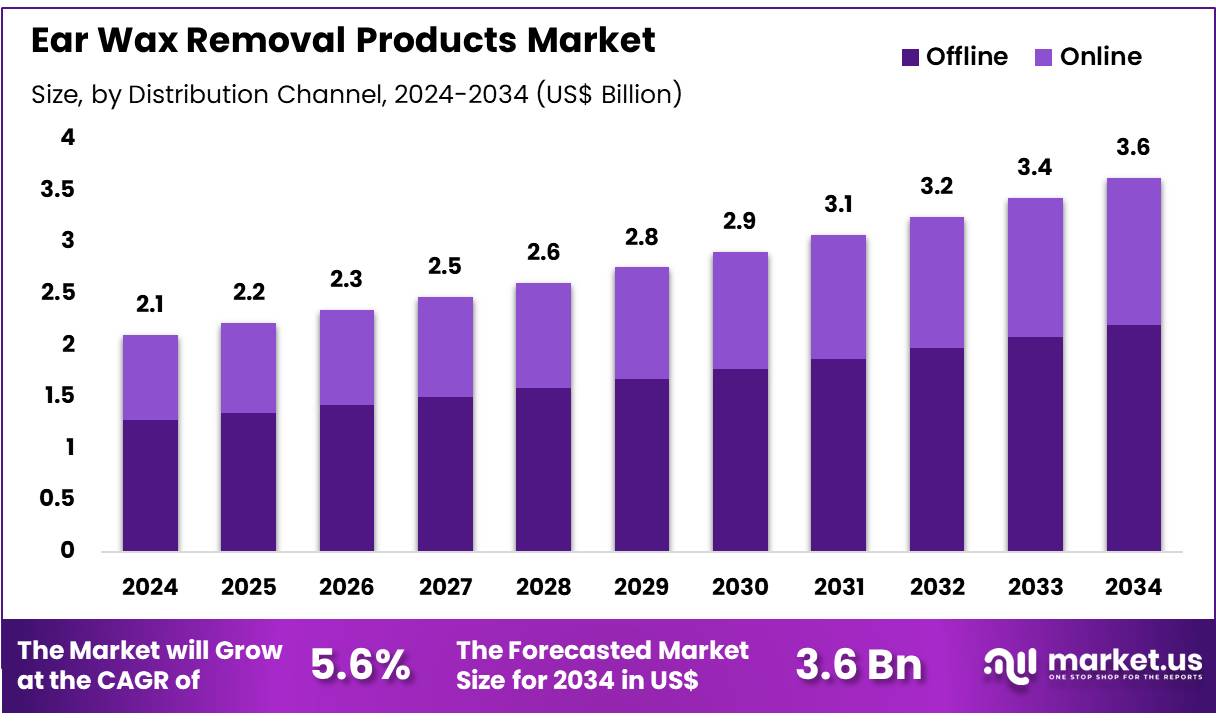
Key Takeaways
- In 2024, the market generated revenue of US$ 2.1 Billion and is projected to grow at a CAGR of 5.6%, reaching approximately US$ 3.6 Billion by 2034.
- Based on product type, the market is segmented into ear drops, ear spray, ear candles, cotton swabs & buds, and others. Among these, ear drops dominated the market in 2023, accounting for a 42.3% market share.
- By price range, the market is categorized into low, medium, and high segments, with the low-price segment holding the largest share of 55.2%.
- Based on distribution channel, the market is divided into offline and online channels. The offline segment dominated the market, capturing the highest revenue share of 60.8%.
- By end-user, the market is segmented into individual consumers, hospitals and clinics, healthcare professionals, and others. The individual consumers segment led the market with a revenue share of 48.9%.
- Regionally, North America dominated the market in 2023, accounting for a market share of 40.9%.
Statistical Information
- Millions of People Seek Medical Care for Earwax Problems Annually: Problematic earwax accumulation represents a significant healthcare burden in the United States. Clinical guidelines report that approximately 12 million people seek medical care every year for cerumen-related problems, resulting in nearly 8 million earwax removal procedures annually. The large number of procedures highlights the need for convenient preventive and at-home ear care products.
- Earwax-Related Hearing Issues Increase Awareness for Preventive Care: Cerumen blockage can contribute to temporary hearing difficulties, increasing awareness regarding ear health management. According to the CDC National Center for Health Statistics, self-reported hearing trouble affects 43.2% of adults aged 70 years and older in the United States, compared with 19.0% among adults aged 40–69 years and 5.5% among adults aged 18–39 years.
- Healthcare Costs Associated With Earwax Management Encourage Preventive Solutions: Cerumen-related healthcare procedures create measurable medical expenses. Clinical guideline data reported that Medicare spending for cerumen-related procedures reached nearly US$50 million in 2012, with cerumen impaction diagnosed in up to 5% of Medicare patients.
- Hearing Health Concerns Increase Awareness Among Aging Consumers: According to the CDC, hearing difficulty increases strongly with age. Approximately 43.2% of adults aged 70 years and older reported hearing trouble, compared with 19.0% of adults aged 40–69 years and 5.5% of adults aged 18–39 years.
- Older Adults Have More Than 30% Prevalence of Earwax Impaction: The risk of cerumen buildup increases significantly with age. NHANES-based research found that 32.4% of adults aged 70 years and older experienced cerumen impaction, compared with the overall prevalence of 18.6% among people aged 12 years and above. The growing elderly population is increasing the need for convenient ear cleaning and maintenance solutions.
- U.S. Market Size in Billions USD: The U.S. ear wax removal product market size is expected to reach USD 1.2 billion in 2034, registering a CAGR of 8.5% from 2025 to 2034. Growth is driven by an ageing population, rising cerumen impaction prevalence, increased OTC healthcare self-management, and expanding retail distribution channels nationwide.
- Global Market Size and Growth Rate: Global ear wax removal products market valued at USD 1.9 billion in 2024, estimated to grow at CAGR over 5.6% from 2025 to 2034. North America leads with a 40.9% share, followed by Europe and Asia-Pacific regions, reflecting universal ear hygiene needs and OTC accessibility.
- Nearly One-Fifth of the U.S. Population Experiences Cerumen Impaction: A nationally representative study using National Health and Nutrition Examination Survey (NHANES) data analyzed 14,230 U.S. participants aged 12 years and older and found that 18.6% of individuals had cerumen impaction. The study confirms that earwax blockage is a common health issue affecting a significant portion of the population and supports demand for earwax management products.
Regional Analysis
North America led the market by securing a market share of 40.9% in 2023.
North America remains a major market for ear wax removal products due to the high burden of cerumen impaction, strong healthcare awareness, and increasing preference for convenient self-care solutions. In the United States, cerumen impaction leads to approximately 12 million medical office visits annually and nearly 8 million earwax removal procedures, creating significant demand for safe over-the-counter alternatives.
Additionally, studies indicate that cerumen removal is among the most frequently performed procedures by otolaryngologists, highlighting the need for effective home-based solutions.Asia Pacific is expected to witness significant growth due to rising healthcare awareness, improving access to personal care products, and a rapidly aging population.
The region’s older population is expanding rapidly, increasing the need for ear health management solutions. According to aging studies from Asia-Pacific, the number of people aged 60 years and above is projected to reach around 1.2 billion by 2050, supporting long-term demand for preventive ear care products.
Emerging Trends
- Growing Demand for At-Home Ear Care Solutions: Consumers are increasingly adopting self-care earwax removal products such as ear drops, irrigation kits, and cleaning devices due to convenience and reduced dependence on clinical visits. The American Academy of Otolaryngology recommends safer home-based methods for managing cerumen buildup.
- Rising Adoption of Advanced Ear Cleaning Devices: Manufacturers are developing innovative earwax removal devices with improved safety features, controlled water flow, ergonomic designs, and user-friendly operation. In 2022, Allstar Innovations and Black Wolf launched the WUSH Ear Cleaner featuring a triple jet stream water system for enhanced cleaning performance.
- Aging Population Increasing Ear Care Demand: Older adults are becoming a key consumer group as cerumen buildup becomes more common with age. A U.S. population study reported that 32.4% of adults aged 70 years and older experienced cerumen impaction, increasing demand for easy-to-use ear hygiene products.
- Growing Focus on Preventive Hearing Health: Increasing awareness about hearing loss prevention is encouraging consumers to maintain better ear hygiene. The WHO estimates that more than 1.5 billion people globally live with some degree of hearing loss, creating greater attention toward early ear care practices.
- Shift Away From Traditional Cotton Swab Cleaning: Healthcare organizations are educating consumers about the risks of inserting cotton swabs into the ear canal, as they may push wax deeper or cause injury. This is driving preference toward medically recommended ear drops and specialized removal devices.
- Increasing Demand for OTC Earwax Removal Products: FDA recognizes earwax removal aids as over-the-counter products designed to soften and remove excessive earwax. Regulatory approval and consumer familiarity with OTC healthcare products are supporting wider adoption of ear drops and removal solutions.
Use Cases
- Home-Based Earwax Management: Earwax removal products are widely used by consumers for managing mild cerumen buildup at home. Ear drops, irrigation kits, and manual removal tools provide convenient solutions without requiring frequent healthcare visits. The FDA recognizes OTC earwax removal aids for softening and removing excessive earwax when used correctly.
- Elderly Ear Care and Maintenance: Older adults represent a major application area for earwax removal products because cerumen accumulation increases with age. A U.S. population study found that 32.4% of adults aged 70 years and older experienced cerumen impaction, creating demand for easy-to-use ear hygiene solutions.
- Hearing Aid User Support: Earwax removal products are increasingly used by hearing aid users to maintain ear canal hygiene and improve device performance. Excessive wax can interfere with hearing aid function and cause discomfort, making regular ear care important for this consumer group.
- ENT and Primary Care Applications: Healthcare professionals use cerumen removal techniques such as irrigation, suction, and manual extraction when earwax causes symptoms or blocks examination of the ear canal. Cerumen management remains one of the common procedures performed in ear care settings.
- Preventive Ear Hygiene for Children: Parents use earwax removal products designed for safe and gentle cleaning of children’s ears. The American Academy of Otolaryngology reports that approximately 1 in 10 children experience cerumen impaction, highlighting the need for age-appropriate ear care solutions.
- Self-Care Solutions for Busy Consumers: Working adults increasingly prefer at-home healthcare products that save time and reduce unnecessary clinic visits. Earwax removal drops and devices support self-care routines by offering quick and accessible solutions for minor ear hygiene concerns.
Frequently Asked Questions on Ear Wax Removal Products
- What factors are driving the growth of the ear wax removal products market?
The market is driven by rising cases of cerumen impaction, increasing awareness about preventive ear care, aging populations, and growing preference for convenient home-based healthcare solutions. Increasing adoption of OTC ear care products is also supporting market expansion. - Why does cerumen impaction increase demand for ear wax removal products?
Cerumen impaction can cause ear blockage, discomfort, and temporary hearing problems. The American Academy of Otolaryngology reports that around 1 in 10 children and 1 in 20 adults experience this condition, creating continuous demand for effective removal products. - Which region dominates the ear wax removal products market?
North America leads the market due to high healthcare awareness, advanced medical infrastructure, and strong consumer adoption of self-care products. The region also has significant demand because millions of individuals seek healthcare support for earwax-related concerns annually. - What are the major product types in the ear wax removal products market?
Major product categories include ear drops, ear sprays, ear irrigation kits, ear candles, cotton swabs, and electronic ear cleaning devices. Ear drops remain widely preferred due to their easy availability, simple usage process, and effectiveness in softening earwax. - How does the aging population impact the ear wax removal products market?
The aging population contributes significantly to market growth because older adults are more likely to experience earwax accumulation. Research shows cerumen impaction affects 32.4% of adults aged 70 years and above, increasing demand for ear care products. - How do healthcare organizations influence the adoption of ear wax removal products?
Healthcare organizations promote safe ear hygiene practices through clinical guidelines and awareness programs. Recommendations from groups such as the American Academy of Otolaryngology encourage consumers to choose medically approved earwax removal methods instead of unsafe cleaning practices. - What future trends will influence the ear wax removal products market?
Future growth will be influenced by smart ear cleaning devices, improved OTC formulations, personalized ear care products, and rising awareness about hearing health. Increasing adoption of non-invasive solutions will encourage manufacturers to develop safer and more advanced products.
Conclusion
The ear wax removal products market is experiencing steady growth due to increasing awareness of ear health, rising cases of cerumen impaction, and growing preference for convenient self-care solutions. The aging population, especially individuals with higher risks of earwax buildup, is creating strong demand for safe and effective products.
Technological advancements, including advanced irrigation devices and smart ear cleaning tools, are improving consumer experiences. Supportive healthcare guidelines and increasing adoption of OTC ear care products are further strengthening market opportunities. As consumers continue shifting toward preventive healthcare and home-based solutions, the market is expected to witness continuous innovation and expansion.
Discuss your needs with our analyst
Please share your requirements with more details so our analyst can check if they can solve your problem(s)




