


Overview
New York, NY – Aug 18, 2026 – The Global Doxycycline Market size is expected to reach around US$ 4.4 Billion by 2034, up from US$ 2.4 Billion in 2024, growing at a CAGR of 6.3% during the forecast period from 2025 to 2034. North America held a dominant market position, capturing more than a 36.9% share and a US$ 2.37 Billion market value for the year.
Doxycycline is a broad-spectrum tetracycline antibiotic widely used for treating bacterial infections, acne, sexually transmitted infections, respiratory infections, eye infections, and vector-borne diseases. It acts by blocking bacterial protein synthesis through binding to the 30S ribosomal subunit, helping stop bacterial growth. The medicine is available in multiple formulations, including 20 mg, 50 mg, 75 mg, 100 mg, and 150 mg oral tablets/capsules, as well as oral suspension and injectable forms.
Doxycycline is included in the World Health Organization (WHO) Model List of Essential Medicines, demonstrating its importance in global healthcare. WHO identifies essential medicines as those needed to meet the priority healthcare needs of populations, and the list is used as a reference by healthcare systems in more than 150 countries. Doxycycline has remained part of essential medicine recommendations for several decades, supporting its widespread availability.
The drug is frequently prescribed for acne management, with dermatology guidelines recommending oral doxycycline treatment for approximately 3–4 months when combined with appropriate topical therapies. Acne affects nearly 9% of the global population, making effective treatment options important for millions of patients worldwide.
Doxycycline is also a key option for malaria prevention. The Centers for Disease Control and Prevention (CDC) recommends doxycycline as one of the primary chemoprophylaxis medicines for travelers visiting malaria-risk regions. Preventive use typically begins 1–2 days before travel and continues for 4 weeks after leaving the malaria area.
Growing antibiotic resistance remains a major healthcare challenge. WHO estimates that bacterial antimicrobial resistance directly contributes to approximately 1.27 million deaths annually worldwide, increasing the importance of responsible antibiotic use and stewardship programs. Doxycycline’s broad activity, established safety profile, and low-cost availability continue to support its role in global infectious disease management.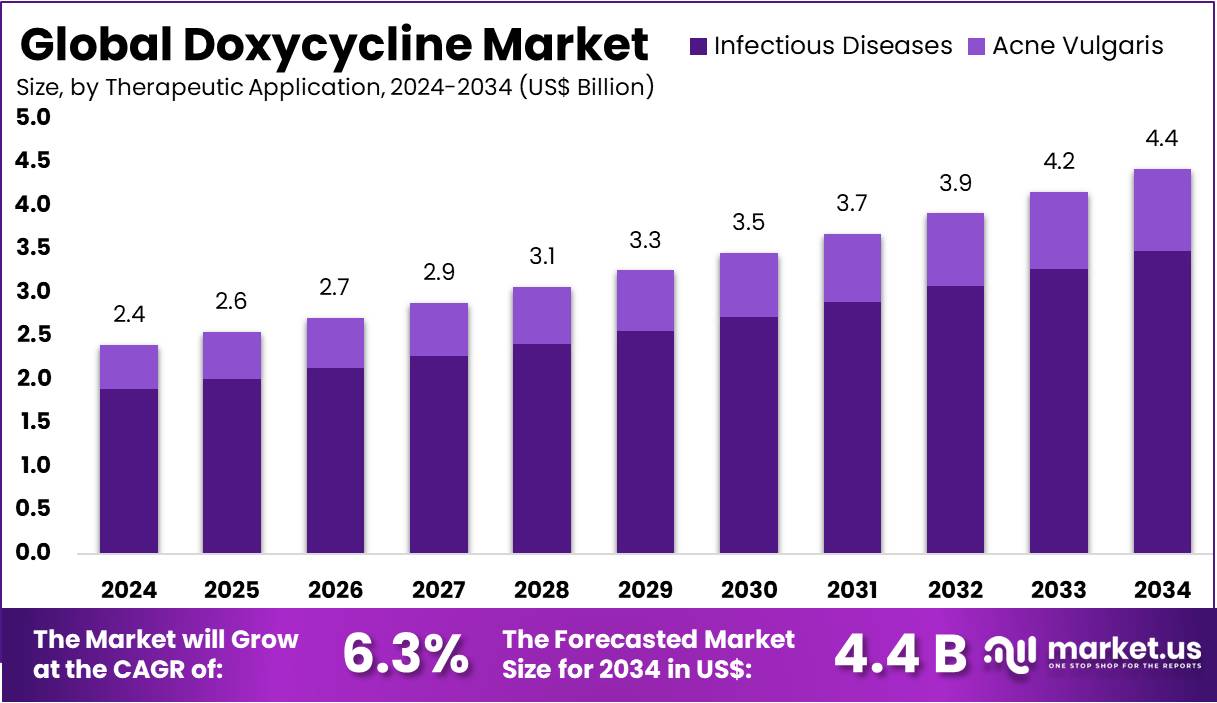
Key Takeaways
- The global doxycycline market is projected to grow from approximately US$ 2.4 billion in 2024 to nearly US$ 4.4 billion by 2034, registering a compound annual growth rate (CAGR) of 6.3% during the forecast period.
- In 2024, the oral formulation segment accounted for the largest market share, contributing more than 65.2% of total revenue, driven by higher patient convenience, ease of administration, and widespread availability.
- The infectious diseases application segment dominated the doxycycline market in 2024, capturing approximately 78.8% market share, supported by extensive use in treating bacterial infections and other infectious conditions.
- Based on distribution channels, retail pharmacies held the leading position in 2024, accounting for around 56.1% market share, due to strong prescription demand, easy consumer access, and established pharmacy networks.
- North America represented the largest regional market for doxycycline in 2024, accounting for more than 37.5% share, with a market value of approximately US$ 0.9 billion, supported by high antibiotic usage, healthcare infrastructure, and disease treatment demand.
Statistical Information
- Global antibiotic consumption share of doxycycline: Doxycycline accounts for about 10% of global antibiotic consumption, after amoxicillin at 28% and azithromycin at 10%, based on a 2025 analysis of oral antibiotic use in 2021. This highlights doxycycline’s substantial role among widely used systemic antibiotics worldwide.
- United States doxycycline prescription volume in 2023: In 2023, doxycycline ranked as the 77th most prescribed drug in the United States, with more than 8 million prescriptions dispensed. This prescription volume places doxycycline among the more frequently used outpatient antibiotics in US clinical practice, especially in primary care and infectious disease management.
- Doxycycline effectiveness for bacterial STI prophylaxis: CDC guidelines report that a single 200 mg dose of doxycycline taken within 72 hours after sex reduces syphilis and chlamydia infections by more than 70% and gonorrhea by about 50% in key trials. These effect sizes form the evidence base for recommending doxycycline post‑exposure prophylaxis in high‑risk populations.
- CDC‑recommended doxycycline PEP dosing and follow‑up: l CDC recommends 200 mg doxycycline as soon as possible, and within 72 hours after oral, vaginal, or anal sex, with a maximum of 200 mg every 24 hours. Clinicians should reassess ongoing need for doxy‑PEP every 3–6 months, shaping refill frequency, adherence monitoring, and long‑term exposure patterns in target populations.
- Growth in total global antibiotic consumption: A 2024 analysis shows total antibiotic consumption in reporting countries increased from 29.5 billion DDDs in 2016 to 34.3 billion DDDs in 2023, a 16.3% rise. This increase in overall volume provides the demand context in which doxycycline maintains its approximate 10% share of global antibiotic consumption by volume.
- US FDA label dosing implications for demand: The US FDA doxycycline hyclate label recommends a 200 mg loading dose (100 mg every 12 hours on day one) followed by 100 mg daily for mild to moderate infections. For more severe infections, dosing is 100 mg every 12 hours, effectively doubling tablet use per treatment day and directly affecting unit demand per patient course.
- Health Canada monograph indication spread and dosing: A Canadian doxycycline tablet monograph approves use for respiratory, urinary, skin and soft tissue infections, and STIs including gonorrhea and chlamydia. Typical dosing is a 200 mg loading dose followed by 100 mg once daily, with 100 mg twice daily for certain STIs, supporting sustained demand across multiple therapeutic specialties and care settings.
- Rising Antibiotic Usage and Demand for Doxycycline-Based Therapies: Global healthcare systems continue to experience high demand for antibiotics due to bacterial infections and outpatient treatment needs. In the United States, 256 million outpatient antibiotic prescriptions were dispensed in 2024, equal to approximately 752 antibiotic prescriptions per 1,000 people. Tetracycline-class antibiotics, including doxycycline, are among the monitored antibiotic categories used in outpatient settings.
Regional Analysis
North America emerged as the dominant regional market in 2024, representing over a 37.5% share
North America remains a significant region for doxycycline usage due to high antibiotic demand, established healthcare infrastructure, and strong public health programs. In the United States, the Centers for Disease Control and Prevention (CDC) recommends doxycycline for multiple bacterial infections, including chlamydia, Lyme disease, rickettsial diseases, and other tick-borne infections, supporting its continued clinical use across outpatient and specialist settings.
The CDC reported that approximately 476,000 people are diagnosed and treated for Lyme disease annually in the United States, creating consistent demand for doxycycline as a preferred treatment option for early infection management. Additionally, CDC guidelines introduced recommendations for doxycycline post-exposure prophylaxis (Doxy-PEP) to reduce certain bacterial sexually transmitted infections among eligible high-risk populations.
Doxycycline also plays a role in national preparedness programs, including availability through the U.S. Strategic National Stockpile for potential biological threats such as anthrax. Strong regulatory approval, broad therapeutic applications, and ongoing infectious disease management programs continue to support doxycycline demand across North America.
Emerging Trends
- Growing Adoption of Doxycycline for STI Prevention (Doxy-PEP): A major emerging trend is the use of doxycycline as post-exposure prophylaxis (Doxy-PEP) for preventing bacterial sexually transmitted infections. In 2024, the CDC recommended Doxy-PEP for selected high-risk groups, using a 200 mg dose within 72 hours after sexual exposure. This approach is expanding preventive healthcare strategies.
- Increasing Focus on Antibiotic Stewardship and Resistance Monitoring: Rising antimicrobial resistance is increasing the importance of responsible doxycycline use. WHO reported that 1 in 6 laboratory-confirmed bacterial infections globally showed resistance to antibiotics in 2023, highlighting the need for improved prescribing practices, surveillance programs, and optimized antibiotic selection.
- Expansion of Doxycycline Use in Dermatology and Acne Treatment: Doxycycline continues to gain importance in dermatology due to its effectiveness against inflammatory acne. Acne affects approximately 9% of the global population, creating sustained demand for oral antibiotic therapies. Dermatology guidelines recommend doxycycline as a short-term treatment option, generally combined with topical therapies.
- Rising Importance in Travel Medicine and Infectious Disease Prevention: Doxycycline remains a preferred preventive medicine for travelers visiting malaria-risk regions. CDC recommends starting doxycycline 1–2 days before travel and continuing treatment for 4 weeks after leaving malaria areas. Growing international travel and infectious disease preparedness continue to support demand.
- Continued Role as an Essential Antibiotic in Global Healthcare Systems: Doxycycline’s inclusion in the WHO Model List of Essential Medicines supports long-term availability and adoption. More than 150 countries use national essential medicine lists based on WHO recommendations, helping ensure access to important antibiotics and improving healthcare supply planning.
Use Cases
- Treatment of Bacterial Respiratory and Community-Acquired Infections: Doxycycline is widely used for treating respiratory bacterial infections, including community-acquired pneumonia caused by susceptible bacteria. Its broad antibacterial activity and oral availability make it useful in outpatient healthcare settings where convenient treatment options are required.
- Management of Tick-Borne Diseases Including Lyme Disease: Doxycycline is a key treatment option for tick-borne infections. The United States reports approximately 476,000 Lyme disease diagnoses and treatments annually, creating significant seasonal demand for doxycycline, especially in regions with high tick exposure.
- Malaria Prevention for International Travelers: Doxycycline is used as malaria chemoprophylaxis for travelers visiting endemic regions. CDC guidance recommends beginning treatment 1–2 days before entering a malaria area and continuing use for 28 days after departure, supporting its role in travel medicine programs.
- Treatment Support for Sexually Transmitted Infections: Doxycycline is used in the management of bacterial STIs, including chlamydia. CDC guidelines identify doxycycline as a recommended treatment option, while newer Doxy-PEP strategies are expanding its preventive applications among eligible populations.
- Emergency Preparedness and Public Health Stockpiling: Doxycycline is maintained as part of emergency preparedness strategies in the United States due to its role in treating certain biological threats, including anthrax exposure. Government stockpiling programs support availability during public health emergencies.
Frequently Asked Questions on Doxycycline
- Why is doxycycline widely used in healthcare?
Doxycycline is widely used because of its broad antibacterial activity, oral availability, affordability, and established safety profile. It is included in the WHO Model List of Essential Medicines and remains an important treatment option across infectious disease and preventive healthcare programs. - What factors are driving the growth of the doxycycline market?
The doxycycline market is growing due to increasing bacterial infections, rising demand for outpatient antibiotic therapies, expanding dermatology applications, travel-related disease prevention needs, and increased focus on sexually transmitted infection management through updated healthcare guidelines. - Which application segment dominates the doxycycline market?
The infectious disease segment represents the major application area for doxycycline due to its effectiveness against bacterial infections, including respiratory infections, chlamydia, Lyme disease, and other bacterial conditions requiring antibiotic treatment in clinical settings. - Why is North America an important market for doxycycline?
North America has strong doxycycline demand due to advanced healthcare infrastructure, high antibiotic prescription rates, CDC treatment guidelines, and widespread management of conditions such as Lyme disease, sexually transmitted infections, and respiratory bacterial infections. - What are the emerging trends in the doxycycline market?
Emerging trends include the adoption of Doxy-PEP for prevention of certain bacterial sexually transmitted infections, increased antibiotic stewardship programs, expanded dermatology use, improved infectious disease surveillance, and continued inclusion in essential medicine programs worldwide. - What are the major distribution channels for doxycycline products?
Doxycycline is distributed through retail pharmacies, hospital pharmacies, and online pharmacy platforms. Retail pharmacies remain important due to high outpatient prescription volumes, easy accessibility, and the widespread use of oral doxycycline formulations. - What is the future outlook for the doxycycline market?
The doxycycline market is expected to maintain steady growth due to continued infectious disease burden, increasing preventive healthcare initiatives, rising demand for affordable antibiotics, and expanding clinical applications supported by government healthcare recommendations and research.
Conclusion
The doxycycline market continues to demonstrate strong healthcare importance due to its broad antibacterial activity, affordability, and extensive clinical applications. Increasing cases of bacterial infections, rising demand for outpatient antibiotics, expanding dermatology usage, malaria prevention needs, and emerging applications such as Doxy-PEP are supporting market growth.
Government healthcare guidelines, essential medicine status, and antibiotic stewardship initiatives are shaping responsible usage worldwide. North America remains a key region due to advanced healthcare infrastructure and high clinical adoption. With ongoing infectious disease challenges and continued research, doxycycline is expected to maintain its significant role in global infection management and preventive healthcare.
Discuss your needs with our analyst
Please share your requirements with more details so our analyst can check if they can solve your problem(s)




