


Overview
New York, NY – Sep 11, 2026 – The Global Dermatology Devices Market size is expected to reach around US$ 48.9 Billion by 2034, up from US$ 15.2 Billion in 2024, growing at a CAGR of 12.4% during the forecast period 2025 to 2034. In 2024, North America led the market, achieving over 40.7% market share with revenue of US$6.2 billion.
Dermatology Devices is witnessing significant growth due to the rising prevalence of skin disorders, increasing demand for cosmetic dermatology procedures, and advancements in laser, imaging, and energy-based technologies.
Dermatology devices are widely used for diagnosis and treatment of acne, psoriasis, eczema, skin cancer, pigmentation disorders, scars, hair removal, and skin rejuvenation. According to the World Health Organization (WHO), skin diseases affect nearly 1.8 billion people worldwide, creating a growing need for effective diagnostic and therapeutic solutions.
Skin cancer is also driving demand for advanced dermatology equipment. The International Agency for Research on Cancer (IARC) reported more than 1.5 million new skin cancer cases globally in 2022, including approximately 330,000 melanoma cases, increasing adoption of dermatoscopes, digital imaging systems, and early detection technologies.
The cosmetic dermatology sector is further supporting market expansion. The International Society of Aesthetic Plastic Surgery (ISAPS) reported over 34 million aesthetic procedures worldwide in 2023, with laser treatments, skin tightening, and rejuvenation procedures contributing significantly to demand for dermatology devices.
The global Dermatology Devices Market was valued at around US$ 17.5 billion in 2024 and is expected to grow steadily during 2025–2034 due to rising healthcare expenditure, increasing awareness of skin health, and adoption of minimally invasive procedures.
Key innovations include AI-based skin analysis systems, advanced laser platforms, and portable diagnostic devices. North America remains a major market due to strong healthcare infrastructure, high adoption of aesthetic treatments, and increasing investments in dermatological technologies.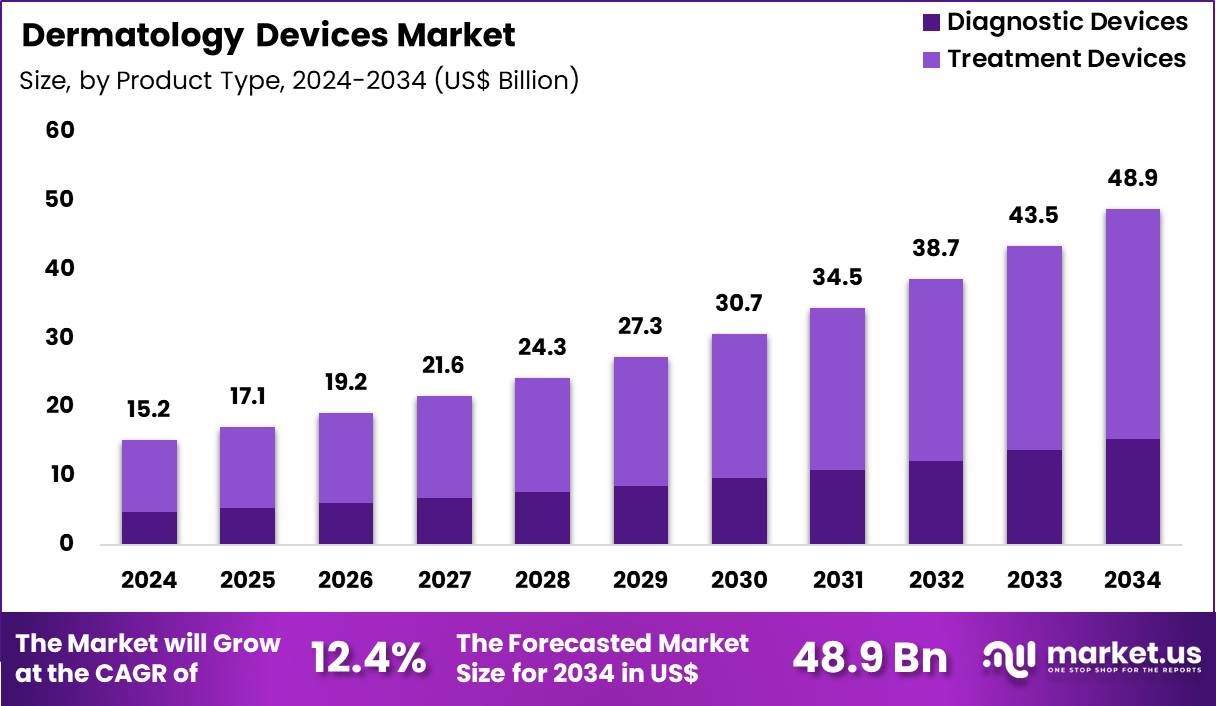
Key Takeaways
- In 2024, the Dermatology Devices Market generated a revenue of US$ 15.2 billion and is projected to grow at a CAGR of 12.4%, reaching approximately US$ 48.9 billion by 2034.
- Based on product type, the market is categorized into diagnostic devices and treatment devices. The treatment devices segment dominated the market in 2024, accounting for a revenue share of 68.5%.
- By application, the market is segmented into medical applications and aesthetic & cosmetic applications. Among these, medical applications held the leading position in 2024, capturing a significant market share of 53.3%.
- Based on age group, the market is divided into below 19 years, 20–39 years, 40–59 years, and 60+ years. The 20–39 years segment emerged as the dominant segment, holding the largest revenue share of 35.6% in 2024.
- By end-user, the market is segmented into hospitals, dermatology/cosmetology clinics, medical spas/aesthetic centers, and homecare settings. The hospitals segment led the market in 2024, accounting for a revenue share of 38.1%.
- Regionally, North America dominated the Dermatology Devices Market in 2024, securing the highest market share of 40.7% due to advanced healthcare infrastructure and increasing adoption of dermatological technologies.
Market Segmentation
- Product Type Analysis: Treatment devices dominated the Dermatology Devices Market with a 68.5% share in 2024 due to increasing adoption of laser systems, phototherapy devices, and energy-based technologies for treating chronic skin disorders. Rising cases of acne, psoriasis, vitiligo, and infections, along with demand for minimally invasive procedures, continue to drive higher clinical utilization of treatment devices.
- Application Analysis: Medical applications accounted for 53.3% of the market share in 2024, driven by the increasing need for diagnosis and treatment of skin diseases, infections, inflammatory conditions, and skin cancers. Growing awareness about early detection, improved clinical outcomes, and integration of dermatology devices into hospitals and clinics support the dominance of this segment.
- Age Group Analysis: The 20–39 years age group held the largest revenue share of 35.6% in 2024, supported by rising demand for acne treatment, pigmentation correction, hair removal, and skin rejuvenation procedures. Higher awareness of aesthetic care, increased disposable income, and adoption of advanced dermatology technologies among young adults are key growth factors.
- End-User Analysis: Hospitals led the end-user segment with a 38.1% revenue share in 2024, owing to their advanced diagnostic infrastructure and ability to manage complex dermatological conditions. Increasing hospital investments in laser systems, imaging technologies, and specialized dermatology services are strengthening their position as major users of dermatology devices.
Statistical Information
- Rising Skin Cancer Cases Supporting Diagnostic Dermatology Devices: The increasing prevalence of skin cancer is driving adoption of dermatoscopes, digital imaging systems, and AI-based skin analysis tools. According to the American Cancer Society, approximately 112,000 new melanoma cases are expected in the United States in 2026, including around 8,510 deaths. Early detection technologies are becoming important for improving survival outcomes.
- Increasing Adoption of Aesthetic and Cosmetic Dermatology Procedures: Consumer preference for minimally invasive aesthetic treatments is boosting demand for laser, radiofrequency, and light-based dermatology devices. The International Society of Aesthetic Plastic Surgery (ISAPS) reported that approximately 34.9 million aesthetic procedures were performed globally in 2023, including 19.1 million non-surgical procedures. Popular treatments include laser skin resurfacing, hair removal, and skin tightening.
- Increasing Prevalence of Acne Driving Dermatology Treatment Device Adoption: Acne remains one of the most common skin conditions, especially among adolescents and young adults, increasing demand for laser therapy, light-based devices, and advanced acne treatment systems. According to the American Academy of Dermatology (AAD), acne affects up to 50 million Americans annually, and approximately 85% of people between 12 and 24 years experience acne. This growing patient population supports demand for dermatology treatment devices.
- Rising Burden of Atopic Dermatitis Increasing Need for Advanced Therapies: Atopic dermatitis is a major inflammatory skin disorder requiring continuous medical management and advanced treatment solutions. The National Eczema Association reports that atopic dermatitis affects approximately 16.5 million adults and 9.6 million children in the United States, with around 1 in 10 adults experiencing the condition. Increasing disease prevalence is encouraging adoption of phototherapy and dermatological treatment devices.
- Rising Healthcare Spending Supporting Dermatology Technology Investments: Higher healthcare expenditure is enabling hospitals and clinics to adopt advanced medical technologies, including dermatology devices. According to the Centers for Medicare & Medicaid Services (CMS), U.S. national healthcare expenditure reached approximately US$4.9 trillion in 2023, representing nearly 17.6% of GDP. Increased healthcare investment supports modernization of specialty medical equipment.
- Rising Aging Population Increasing Demand for Anti-Aging Dermatology Devices: The growing elderly population is increasing demand for dermatology devices used for wrinkles, skin laxity, age spots, and rejuvenation treatments. According to the United Nations Department of Economic and Social Affairs (UN DESA), the global population aged 65 years and older reached 761 million in 2021 and is projected to increase to approximately 1.6 billion by 2050. This demographic shift is supporting demand for laser resurfacing, radiofrequency, and skin tightening devices.
- Increasing Global Melanoma Incidence Driving Early Detection Device Adoption: The rising number of melanoma cases is increasing demand for dermatoscopes, digital skin imaging systems, and advanced diagnostic technologies. According to the World Health Organization (WHO), approximately 331,722 new melanoma cases and 58,667 melanoma deaths were reported globally in 2022. Early diagnosis through imaging technologies is becoming increasingly important for improving treatment outcomes.
Regional Analysis
North America led the market by securing a market share of 40.7% in 2024.
North America remains a leading region in the Dermatology Devices Market due to high healthcare spending, advanced medical infrastructure, and strong adoption of diagnostic and aesthetic technologies. The region benefits from increasing demand for dermatoscopes, laser systems, light-based therapies, and skin imaging devices for conditions such as melanoma, acne, psoriasis, and cosmetic skin concerns.
According to the CDC, approximately 5 million people in the United States are treated for skin cancers each year, supporting the need for early detection and treatment technologies. Additionally, the American Society of Plastic Surgeons reported more than 26 million cosmetic and reconstructive procedures in the U.S. in 2023, increasing demand for aesthetic dermatology devices. Asia Pacific is experiencing rapid growth due to rising healthcare access, increasing awareness of skin health, and growing adoption of aesthetic procedures.
The region faces a high burden of dermatological conditions and skin cancer concerns. The Australian Institute of Health and Welfare reported 16,800+ new melanoma cases in Australia in 2022, highlighting demand for advanced diagnostic solutions. Expanding dermatology clinics, medical tourism, and government healthcare initiatives are supporting adoption of modern dermatology devices across the region.
Business Opportunities
The Dermatology Devices Market offers significant business opportunities due to rising demand for advanced diagnostic, therapeutic, and aesthetic solutions. Growing cases of skin cancer, acne, psoriasis, and other dermatological conditions are increasing the need for dermatoscopes, imaging systems, laser devices, and phototherapy equipment. Companies can focus on developing AI-powered skin analysis platforms, portable diagnostic devices, and personalized treatment technologies to improve early detection and patient outcomes.
The expanding medical aesthetics sector creates opportunities for manufacturers of laser resurfacing systems, radiofrequency devices, and non-invasive skin rejuvenation technologies. According to the American Society of Plastic Surgeons (ASPS), more than 26 million cosmetic and reconstructive procedures were performed in the United States in 2023, indicating strong consumer demand for aesthetic treatments.
Emerging markets, particularly in Asia Pacific, provide growth opportunities through expanding dermatology clinics, increasing healthcare investments, and rising awareness of skin health. Partnerships with hospitals, specialty clinics, and teledermatology providers can help companies improve access to advanced dermatology technologies. Additionally, regulatory approvals and innovation in AI-based diagnostics, home-use skincare devices, and minimally invasive treatment platforms are creating new avenues for market expansion.
Emerging Trends
- AI-Powered Skin Diagnosis and Imaging: Artificial intelligence is transforming dermatology by improving skin lesion analysis, melanoma detection, and clinical decision support. The FDA has authorized AI-enabled medical devices, and research shows AI systems can analyze thousands of dermatological images to support faster and more accurate diagnosis.
- Growth of Laser and Energy-Based Technologies: Laser, radiofrequency, ultrasound, and light-based devices are increasingly used for acne scars, pigmentation disorders, hair removal, wrinkles, and skin rejuvenation. The FDA recognizes medical lasers as important tools for precise tissue treatment in dermatological and aesthetic procedures.
- Expansion of Digital Dermatology and Teledermatology: Digital imaging, smartphone-based skin monitoring, and remote consultations are improving access to dermatology services. Teledermatology helps healthcare providers evaluate skin conditions remotely, especially in regions with limited access to specialist dermatologists.
- Increasing Adoption of Non-Invasive Cosmetic Procedures: Growing consumer preference for minimally invasive treatments is increasing demand for skin tightening, resurfacing, and rejuvenation devices. The American Society of Plastic Surgeons reported more than 26 million cosmetic and reconstructive procedures in the U.S. in 2023, supporting demand for aesthetic dermatology technologies.
- Advanced Skin Cancer Detection Technologies: Rising skin cancer cases are driving adoption of dermatoscopes, digital mole mapping systems, and AI-assisted detection tools. The World Health Organization reported approximately 331,722 new melanoma cases globally in 2022, increasing the need for early diagnostic solutions.
Use Cases
- Skin Cancer Detection and Monitoring: Dermatology devices such as dermatoscopes, digital imaging systems, and AI-assisted diagnostic tools are used for early detection and monitoring of melanoma and other skin cancers. The World Health Organization (WHO) reported approximately 331,722 melanoma cases globally in 2022, increasing the need for advanced screening technologies.
- Acne Treatment and Scar Management: Laser devices, light therapy systems, and radiofrequency technologies are widely used for acne control, scar reduction, and skin texture improvement. The American Academy of Dermatology (AAD) states that acne affects up to 50 million Americans annually, creating demand for effective treatment technologies.
- Psoriasis and Eczema Management: Phototherapy devices, including narrowband UVB systems, are used to manage chronic inflammatory skin diseases such as psoriasis and eczema. The National Psoriasis Foundation reports that psoriasis affects more than 125 million people worldwide, supporting the adoption of long-term dermatology treatment devices.
- Aesthetic Skin Rejuvenation Procedures: Laser resurfacing, ultrasound, and radiofrequency devices are used for wrinkle reduction, skin tightening, pigmentation correction, and facial rejuvenation. The American Society of Plastic Surgeons (ASPS) reported over 26 million cosmetic and reconstructive procedures in the U.S. in 2023, highlighting strong demand for aesthetic dermatology technologies.
- Hair Removal and Hair Growth Treatments: Laser and light-based devices are used in clinics for long-term hair reduction and management of unwanted hair. These technologies provide controlled energy delivery to hair follicles and are among the most commonly performed non-invasive aesthetic procedures.
Recent Development
- In 2026, Lumenis continued expanding its aesthetic and medical dermatology portfolio with advanced energy-based platforms, focusing on laser, intense pulsed light (IPL), and skin rejuvenation technologies. The company’s solutions support treatments for pigmentation, vascular lesions, hair removal, and skin resurfacing procedures in dermatology clinics.
- In 2026, Candela Medical expanded its dermatology device portfolio with advanced aesthetic platforms, including laser and light-based systems for skin rejuvenation, vascular lesion treatment, pigmentation correction, and hair removal applications. The company continued strengthening its position in medical aesthetics through innovation and clinical solutions.
- In 2026, Alma Lasers continued development of energy-based dermatology technologies, enhancing laser platforms used for skin resurfacing, acne scar treatment, pigmentation management, and non-invasive aesthetic procedures. The company focused on improving treatment versatility and patient outcomes across dermatology and cosmetic applications.
- In 2026, Cutera advanced its aesthetic technology portfolio with laser and light-based systems designed for skin rejuvenation, vascular treatment, hair removal, and pigmentation correction. The company continued supporting dermatology professionals with innovative platforms for minimally invasive procedures.
- In 2026, Fotona expanded applications of its multi-wavelength laser technologies for dermatology and aesthetic treatments. The company’s laser systems continued to support skin tightening, wrinkle reduction, pigmentation treatment, and other non-invasive procedures performed in dermatology clinics.
Frequently Asked Questions on Dermatology Devices
- Which segment dominates the Dermatology Devices Market?
Treatment devices represent a major segment of the Dermatology Devices Market due to increasing demand for laser therapy, skin rejuvenation, hair removal, and other aesthetic procedures. These devices are widely adopted across hospitals, dermatology clinics, and cosmetic centers. - What are the key applications of dermatology devices?
Dermatology devices are used for medical applications and aesthetic procedures. Medical applications include skin cancer detection, acne treatment, psoriasis management, and wound care, while aesthetic applications focus on skin tightening, pigmentation correction, anti-aging treatments, and cosmetic improvements. - Which region leads the Dermatology Devices Market?
North America leads the Dermatology Devices Market due to advanced healthcare infrastructure, high adoption of aesthetic procedures, strong presence of dermatology clinics, and increasing use of innovative technologies. The region also benefits from significant investment in medical device research and development. - What role do laser devices play in dermatology?
Laser devices play an important role in treating acne scars, pigmentation disorders, wrinkles, vascular lesions, and unwanted hair. Their precision, effectiveness, and minimally invasive nature make them widely preferred by dermatologists and aesthetic specialists for multiple skin treatments. - What are the major challenges in the Dermatology Devices Market?
The market faces challenges including high device costs, strict regulatory requirements, limited access in developing regions, and the need for skilled professionals. Maintenance expenses and training requirements can also affect adoption among smaller dermatology clinics. - How are hospitals using dermatology devices?
Hospitals use dermatology devices for skin disease diagnosis, cancer screening, surgical procedures, and therapeutic treatments. Advanced imaging systems, lasers, and phototherapy equipment help healthcare providers improve diagnosis accuracy and deliver effective treatments for complex dermatological conditions. - What is the future outlook of the Dermatology Devices Market?
The Dermatology Devices Market is expected to experience continued growth due to increasing skin disorder cases, rising aesthetic treatment demand, technological innovation, and expanding healthcare access. Future developments will focus on AI integration, personalized therapies, and minimally invasive treatment solutions.
Conclusion
The Dermatology Devices Market is experiencing strong growth due to increasing skin disease prevalence, rising demand for aesthetic procedures, and continuous advancements in diagnostic and treatment technologies. Growing adoption of laser systems, AI-powered imaging solutions, phototherapy devices, and minimally invasive treatment platforms is transforming dermatology care.
Rising skin cancer awareness, expanding dermatology clinics, and increasing healthcare investments are further supporting market expansion. North America remains a leading region, while Asia Pacific offers significant growth opportunities due to improving healthcare infrastructure and rising consumer awareness. Future market development will be driven by personalized treatments, digital dermatology, and innovative device technologies.
Discuss your needs with our analyst
Please share your requirements with more details so our analyst can check if they can solve your problem(s)




