


Overview
New York, NY – Aug 06, 2026 – The Global Corn and Callus Remover Market size is expected to be worth around US$ 4.1 Billion by 2034 from US$ 2.4 Billion in 2024, growing at a CAGR of 5.5% during the forecast period 2025 to 2034. In 2024, North America led the market, achieving over 41.7% share with a revenue of US$ 1.0 Billion.
The corn and callus remover market is experiencing steady growth due to increasing cases of foot-related conditions, rising geriatric populations, and growing consumer focus on personal wellness. Corns and calluses, which develop due to repeated friction and pressure, affect a significant share of the population. According to the American Podiatric Medical Association (APMA), approximately 5% of the U.S. population, representing nearly 16.5 million people, experiences corns or calluses every year.
The condition is more common among older adults, athletes, and individuals who spend extended hours standing or walking. Growing awareness about preventive foot care is accelerating demand for over-the-counter (OTC) treatment options. Consumers are increasingly choosing self-care products such as medicated pads, liquid removers, creams, gels, and electronic foot files due to their affordability and convenience.
Many products contain salicylic acid concentrations ranging from 17% to 40%, which help soften and remove hardened skin effectively. The rising burden of foot-related healthcare visits is also supporting market growth. Data from healthcare organizations indicates that millions of outpatient visits annually involve foot pain, skin conditions, and related disorders, encouraging consumers to adopt early management solutions. Additionally, companies are investing in awareness initiatives to expand product adoption.
In September 2022, Scholl’s Wellness Co. partnered with football coach Rex Ryan to promote foot health awareness and encourage preventive care practices. With increasing consumer preference for non-invasive treatments, expanding product availability, and growing awareness of personal hygiene, the corn and callus remover market is expected to witness continuous demand. The market is further supported by innovations in easy-to-use formats, including electronic removers, protective pads, and advanced topical solutions, making foot care more accessible globally.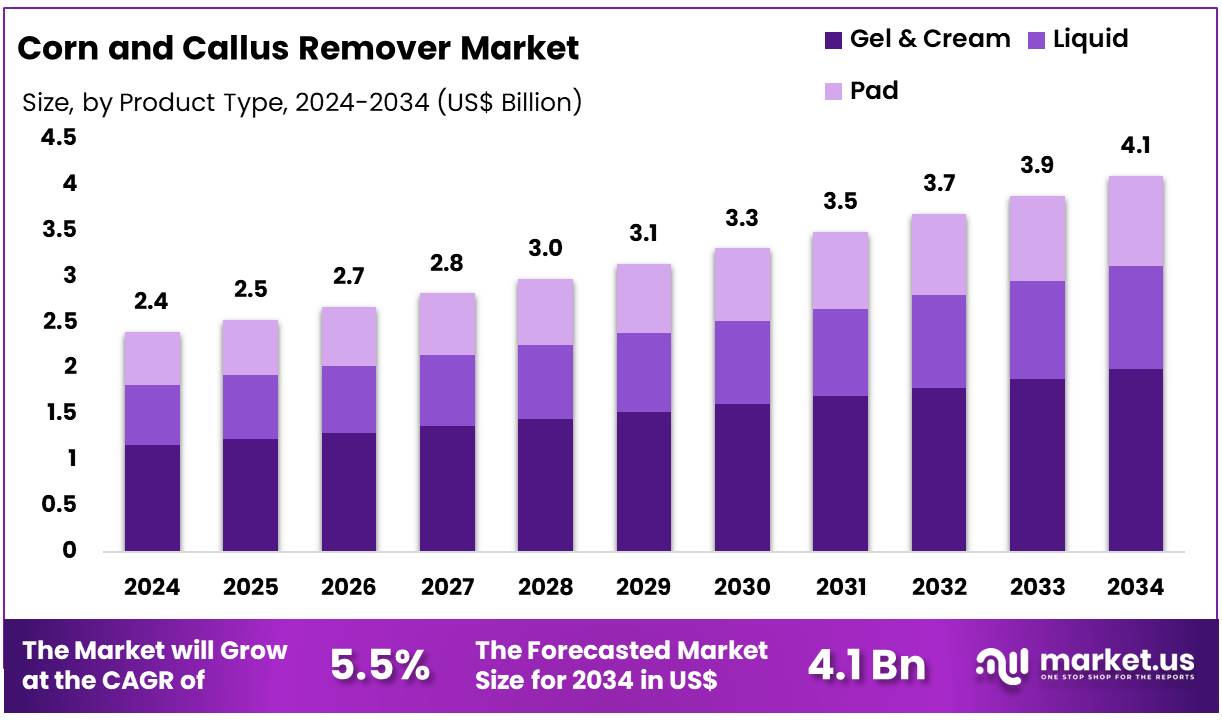
Key Takeaways
- In 2024, the corn and callus remover market generated revenue of US$ 2.4 billion and is projected to grow at a CAGR of 5.5%, reaching approximately US$ 4.1 billion by 2034.
- Based on product type, the market is segmented into liquid, gel & cream, and pad products. The gel & cream segment dominated the market in 2023, accounting for a 48.6% market share due to its convenience and effectiveness in foot care applications.
- Based on distribution channel, the market is categorized into pharmacies, retail stores, and online platforms. Among these, pharmacies held the largest share in 2023, capturing 55.2% of the market, supported by consumer preference for trusted healthcare product sources.
- North America dominated the corn and callus remover market in 2023, accounting for a 41.7% market share, driven by high awareness of foot care, strong OTC product adoption, and advanced retail healthcare infrastructure.
Statistical Information
- Growing Foot Health Concerns Among Older Adults and People With Chronic Conditions: Foot-related problems are more common among aging populations and individuals with diabetes. The Centers for Disease Control and Prevention (CDC) reports that approximately 40.1 million people in the United States had diagnosed or undiagnosed diabetes in 2023, and foot complications remain a major health concern. Diabetes-related nerve damage can increase risks of foot injuries, including unnoticed corns and calluses.
- Increasing Adoption of At-Home Foot Care and OTC Treatment Products: Consumer preference for convenient self-care solutions is increasing as many individuals seek alternatives to frequent clinical visits. FDA-regulated OTC corn and callus remover products are available in multiple formats, including medicated pads, liquids, and solutions containing salicylic acid. The U.S. FDA OTC monograph allows salicylic acid concentrations of 12% to 40% for corn and callus remover preparations.
- Salicylic Acid-Based Products Remain a Key Treatment Choice: Many corn and callus remover products use salicylic acid because of its ability to soften and remove thickened skin. FDA-listed OTC products commonly contain 40% salicylic acid in medicated patches and removers designed for corn and callus treatment, supporting continued demand for effective topical solutions.
- Growth of Medicated Pads and Easy-Application Product Formats: The availability of medicated patches and pads is supporting consumer adoption because these products provide targeted application. FDA-listed corn remover products include medicated patches containing 40% salicylic acid, designed specifically for removing corns and calluses.
- Regulatory Definition and Active Ingredient Standards: Acceptable active ingredients are salicylic acid at 12–40% in a plaster vehicle, or 12–17.6% in a collodion-like vehicle, which effectively defines the standard formulation range for most OTC corn and callus remover products in the US market.
- Epidemiological Prevalence of Corns and Calluses in General Population: A large US survey of 45,000 family shoe store customers (15,000 respondents) found that around 40% of the population had foot problems, including corns and calluses, indicating a substantial addressable pool for corn and callus remover products.
- Prevalence in People with Rheumatic Conditions: In a cross-sectional epidemiological study of 495 people living with rheumatic conditions, 50% (n = 248) reported having corns or calluses on their feet, indicating a very high burden of hyperkeratotic lesions in this clinical subgroup.
- Burden of Corns and Calluses as Part of Multimorbidity in Older Adults: In the older adult study (≥65 years), the five most common foot and ankle conditions were toenail disorders (74.9%), lesser toe deformities (60.0%), corns and calluses (58.2%), bunions (37.1%), and fungal/cracks/maceration between toes (36.3%), showing that corns and calluses are near the top of the foot-morbidity spectrum in older populations.
Regional Analysis
North America led the market by securing a market share of 41.7% in 2023.
North America holds a strong position in the corn and callus remover market due to increasing foot health awareness, high adoption of OTC healthcare products, and a growing elderly population. According to the U.S. Census Bureau, the number of adults aged 65 years and older reached 58 million in 2022, representing around 17% of the U.S. population.
Older adults are more prone to foot-related conditions, increasing demand for preventive foot-care solutions. Additionally, the CDC reports that 38.4 million Americans were living with diabetes in 2021, creating greater awareness of diabetic foot management and skin care.Asia Pacific is expected to witness significant growth due to rapid demographic changes, rising healthcare awareness, and increasing chronic disease prevalence.
The World Health Organization (WHO) reports that the population aged 65 years and above in Asia and the Pacific increased from 168 million in 1990 to 503 million in 2024. The expanding elderly population, urban lifestyles, and growing preference for personal wellness products are supporting increased adoption of corn and callus remover solutions.
Emerging Trends
- Rising Adoption of Preventive Foot Care Products: Increasing awareness about foot hygiene and early management of skin problems is driving demand for corn and callus removers. The CDC reports that 40.1 million people in the U.S. had diabetes in 2023, increasing the need for regular foot monitoring and preventive care products.
- Growing Demand for OTC Self-Treatment Solutions: Consumers are increasingly preferring convenient at-home treatments instead of frequent clinical visits. FDA-approved OTC corn and callus removers are available in multiple formats, with salicylic acid recognized as an active ingredient for treatment, supporting wider consumer adoption.
- Innovation in Salicylic Acid-Based Formulations: Product development is focusing on effective formulations such as liquid solutions, medicated pads, and topical treatments. FDA guidelines allow salicylic acid concentrations of 12% to 40% in approved corn and callus remover products, encouraging manufacturers to develop targeted solutions.
- Increasing Focus on Foot Care Among Aging Consumers: The growing elderly population is creating higher demand for foot wellness products. In the U.S., adults aged 65 years and older reached approximately 58 million in 2022, increasing the need for products supporting mobility, comfort, and daily foot maintenance.
- Expansion of Multi-Format Foot Care Products: Consumers are showing greater interest in different product formats, including creams, gels, medicated patches, and electronic foot files. FDA-listed products include liquid corn and callus removers containing 17% salicylic acid, demonstrating continued development of easy-application solutions.
- Growing Awareness of Diabetes-Related Foot Management: Healthcare providers are emphasizing routine foot care because diabetes can increase risks of foot complications. Preventive foot-care practices are becoming more common among high-risk populations, supporting demand for products that help manage thickened skin and pressure-related conditions.
Use Cases
- Home-Based Treatment for Corns and Calluses: Corn and callus removers are widely used by consumers for managing hardened skin caused by friction and pressure without visiting healthcare professionals. FDA-approved OTC products containing salicylic acid provide convenient self-treatment options through liquids, gels, creams, and medicated pads.
- Foot Care Management Among Diabetes Patients: People with diabetes use foot-care products as part of preventive routines because diabetes can increase the risk of foot complications. The CDC reports that 40.1 million Americans had diabetes in 2023, creating a large population requiring regular foot monitoring and hygiene practices.
- Elderly Foot Wellness and Mobility Support: Older adults commonly use corn and callus removers to maintain foot comfort, reduce discomfort while walking, and support mobility. The U.S. Census Bureau reported that the population aged 65 years and older reached approximately 58 million in 2022, increasing demand for age-related foot-care solutions.
- Athlete and Sports-Related Foot Maintenance: Athletes and physically active individuals use corn and callus removers to manage thickened skin caused by repetitive pressure, intense activity, and footwear friction. These products help maintain foot comfort and prevent minor skin issues associated with regular sports participation.
- Workplace Foot Care for Standing Professionals: Workers in occupations requiring long hours of standing, such as healthcare workers, retail employees, and industrial workers, use foot-care products to manage pressure points and skin thickening caused by prolonged footwear use.
- Daily Personal Hygiene and Wellness Routine: Consumers increasingly include foot-care products in regular self-care routines along with moisturizing and skin maintenance. Corn and callus removers are used for improving skin texture, removing rough areas, and maintaining overall foot appearance.
Frequently Asked Questions on Corn and Callus Remover
- What factors are driving the growth of the corn and callus remover market?
The market is driven by increasing foot health awareness, rising demand for self-care solutions, aging populations, diabetes-related foot concerns, and growing consumer preference for affordable over-the-counter products that provide convenient treatment at home. - Why are consumers choosing at-home corn and callus treatment products?
Consumers prefer home-based treatments because they are convenient, cost-effective, and easy to use without frequent healthcare visits. OTC products such as creams, gels, liquids, and medicated pads offer simple solutions for managing common foot conditions. - Which product type is widely used in the corn and callus remover market?
Gel and cream-based products are gaining popularity due to their easy application, targeted treatment ability, and additional moisturizing benefits. These products are preferred by consumers seeking effective solutions for maintaining smooth and healthy feet. - How does diabetes impact the demand for corn and callus removers?
Diabetes increases the need for preventive foot care because patients face higher risks of skin problems and foot complications. Regular monitoring and hygiene practices encourage diabetic consumers to adopt foot-care products for maintaining healthy skin. - Why is salicylic acid commonly used in corn and callus removers?
Salicylic acid is widely used because it helps soften and remove hardened skin layers effectively. FDA-approved OTC corn and callus remover products contain regulated salicylic acid concentrations, making it a trusted ingredient for targeted foot treatments. - Which distribution channels support corn and callus remover sales?
Pharmacies, retail stores, and online platforms are major distribution channels for corn and callus removers. Pharmacies provide consumer trust and guidance, while online platforms improve accessibility by offering wider product choices and convenient purchasing options. - Why is North America a leading region in the corn and callus remover market?
North America benefits from high consumer awareness, strong OTC product availability, advanced retail infrastructure, and growing interest in personal care. The region’s aging population and increasing focus on preventive healthcare contribute to market expansion.
Conclusion
The corn and callus remover market is experiencing steady growth due to increasing awareness of foot health, rising demand for self-care solutions, and growing adoption of OTC treatment products. Factors such as an aging population, diabetes-related foot care needs, and preference for convenient home-based treatments are supporting market expansion.
Product innovations, including medicated pads, gels, creams, and electronic removers, are improving consumer accessibility and usability. North America continues to hold a strong position due to advanced healthcare awareness and retail availability, while Asia Pacific shows promising growth potential driven by demographic changes and increasing personal wellness focus.
Discuss your needs with our analyst
Please share your requirements with more details so our analyst can check if they can solve your problem(s)




