


Overview
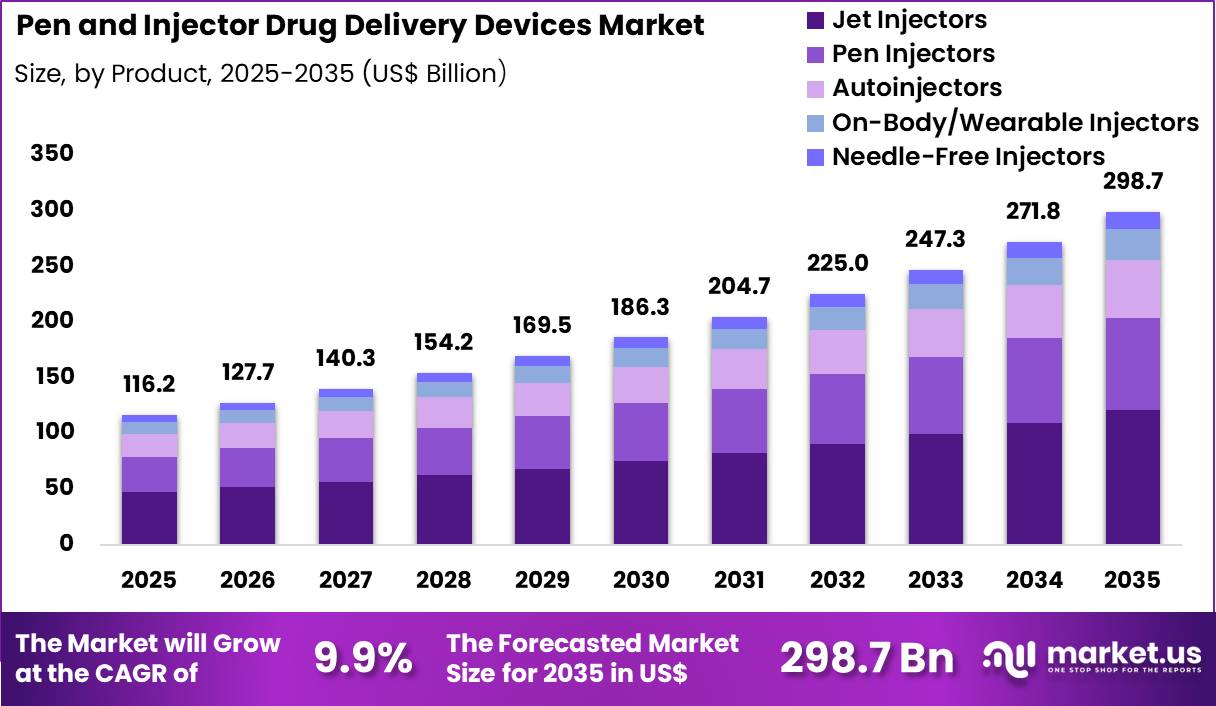
New York, NY – Nov 13 2026 – The Global Pen And Injector Drug Delivery Devices Market size is expected to be worth around US$ 298.7 Billion by 2035 from US$ 116.2 Billion in 2025, growing at a CAGR of 9.9% during the forecast period 2026-2035. In 2025, North America led the market, achieving over 51.2% share with a revenue of US$ 59.5 Billion.
The Pen and Injector Drug Delivery Devices Market is witnessing steady growth, driven by the increasing prevalence of chronic diseases, rising demand for self-administration therapies, and advancements in drug delivery technologies. These devices are widely used for administering medications in patients with diabetes, autoimmune disorders, hormonal deficiencies, and other chronic health conditions.
Pen injectors and drug delivery injectors offer several advantages, including accurate dosage administration, ease of use, portability, improved patient convenience, and reduced dependence on healthcare professionals. The growing adoption of biologics, insulin therapies, and injectable medications is further supporting market expansion.
Technological advancements, including smart pen injectors, connected drug delivery systems, reusable and disposable injection devices, and improved needle safety mechanisms, are creating new growth opportunities. Additionally, increasing healthcare expenditure, expanding home healthcare services, and the rising preference for patient-centric treatment solutions are contributing to market development.
North America holds a significant position in the market due to advanced healthcare infrastructure and high adoption of innovative drug delivery technologies. Meanwhile, Asia-Pacific is expected to witness considerable growth, supported by improving healthcare access, a growing patient population, and increasing awareness of self-injection therapies.
With continued innovation and growing demand for convenient medication administration, the Pen and Injector Drug Delivery Devices Market is expected to offer promising opportunities for manufacturers and healthcare technology providers.
Key Takeaways
- In 2025, the market was valued at US$ 116.2 Billion and is projected to grow at a CAGR of 9.9%, reaching US$ 298.7 Billion by 2035.
- Based on product type, the market is segmented into pen injectors, autoinjectors, on-body/wearable injectors, needle-free injectors, and others. Among these, jet injectors dominated the market, accounting for a share of 40.4%.
- By therapeutic application, the market is categorized into autoimmune disorders, hormonal disorders, oncology, obesity, diabetes mellitus, and others. Among these, diabetes mellitus emerged as the leading segment, capturing 56.1% of the market share.
- Based on end use, the market is segmented into hospitals, homecare settings, and others. Homecare settings dominated the market, accounting for the largest revenue share of 73.2%.
- Regionally, North America dominated the market, accounting for a significant revenue share of 51.2%.
Key Market Segments
- Product Analysis: Jet injectors held a dominant share of 40.4% in the product segment, driven by their ability to administer medications without conventional needles. These devices use high-pressure streams to deliver drugs through the skin, improving patient comfort and reducing needle-related anxiety. Growing demand for painless injections and advancements in dose accuracy are further supporting segment growth.
- Therapeutic Use Analysis: Diabetes mellitus dominated the therapeutic use segment, accounting for 56.1% of the market share. This growth is primarily driven by the rising global prevalence of diabetes and the increasing need for regular insulin administration. Pen injectors and advanced drug delivery systems offer accurate dosing, improved convenience, and better treatment adherence, supporting their widespread adoption.
- End-Use Analysis: Homecare settings dominated the end-use segment, capturing 73.2% of the market share. The growing preference for self-administration of injectable medications is driving segment expansion. Pen and injector devices enable patients to manage chronic conditions conveniently at home, reducing hospital visits. Increasing adoption of home-based healthcare and user-friendly injection technologies is further supporting market growth.
Regional Analysis
North America Dominates the Pen and Injector Drug Delivery Devices Market
North America held the largest market share of 51.2% in 2025, driven by the increasing adoption of self-injection technologies for chronic disease management.
The high prevalence of diabetes, autoimmune disorders, and hormonal conditions has strengthened demand for convenient injectable drug delivery solutions. Advanced healthcare infrastructure, favorable reimbursement policies, growing biologics adoption, and continuous technological advancements are further supporting regional market growth.
Asia Pacific is Expected to Register the Highest CAGR
Asia Pacific is anticipated to witness the fastest growth during the forecast period, supported by the rising prevalence of chronic diseases, expanding healthcare infrastructure, and increasing awareness of self-administration therapies. Countries such as China, India, and Indonesia are experiencing growing demand for insulin delivery and injectable biologics.
Government healthcare initiatives, improving access to advanced medical devices, increasing healthcare expenditure, and the development of affordable injection technologies are expected to create significant growth opportunities across the region.
Emerging Trends
- Growing Adoption of Smart Injection Pens: Smart injection pens with digital features are gaining attention because they can record injection doses, track administration times, and support treatment monitoring. These devices can help patients manage long-term conditions, particularly diabetes, with improved dose management.
- Increasing Development of Reusable and Sustainable Devices: Reusable injection pens are receiving greater attention as healthcare providers and manufacturers explore ways to reduce medical waste. These devices allow compatible cartridges to be replaced while the main pen is retained, supporting more sustainable drug delivery practices.
- Expansion of Needle-Free Injection Technologies: Needle-free injectors are emerging as an alternative to conventional needle-based administration. These devices deliver medicines through the skin using high-pressure technology, offering potential benefits for patients who experience needle-related discomfort or anxiety.
- Integration of Connected Healthcare Technologies: Digital connectivity is becoming an important feature in advanced injection devices. Bluetooth-enabled pens and connected applications can help record injection information, improve communication with healthcare professionals, and support better adherence to prescribed treatment schedules.
- Increasing Demand for Self-Administration Devices: The development of user-friendly injection pens and autoinjectors is supporting home-based treatment. These devices are particularly useful for patients requiring regular medication for chronic conditions, reducing dependence on healthcare facilities for every injection.
Use Cases
- Diabetes Management: Insulin pens are widely used by people with Type 1 and Type 2 diabetes who require insulin treatment. These devices allow patients to select and administer prescribed insulin doses, supporting regular medication use and diabetes management.
- Emergency Allergy Treatment: Autoinjectors are used to administer emergency medicines, such as epinephrine, during severe allergic reactions. Their prefilled design and simple operating mechanism allow patients, caregivers, and trained individuals to deliver medication quickly when required.
- Vaccination and Immunization: Injection devices, including needle-free jet injectors and conventional injectors, are used in vaccination programs. These technologies support intradermal, subcutaneous, and intramuscular administration, depending on the approved vaccine and device specifications.
- Treatment of Autoimmune Diseases: Prefilled injection pens and autoinjectors are used to administer biologic medicines for certain autoimmune conditions, including rheumatoid arthritis and psoriasis. These devices support regular treatment at home and reduce the need for frequent hospital visits.
- Hormone and Fertility Treatments: Pen injectors are used to administer certain hormone-based medicines, including fertility medications. Their dose-selection features help patients administer prescribed quantities during treatment cycles, supporting convenient and consistent medication delivery.
Frequently Asked Questions About Pen And Injector Drug Delivery Devices
- What are the different types of pen and injector drug delivery devices?
Major types include disposable injection pens, reusable injection pens, prefilled autoinjectors, needle-free jet injectors, and conventional pen injectors. Each device is designed for specific medicines, administration methods, dosage requirements, and patient treatment needs. - Which diseases are commonly treated using injection pens and autoinjectors?
These devices are used for managing diabetes, severe allergies, rheumatoid arthritis, psoriasis, and certain fertility-related conditions. Their applications depend on the approved medicine, device compatibility, prescribed treatment, and requirements of individual patients. - What are the benefits of using pen and injector drug delivery devices?
These devices offer convenient administration, controlled dose selection, and improved ease of handling. Certain designs support self-administration at home, reduce dependence on healthcare professionals for routine injections, and help patients maintain regular treatment schedules. - What is the difference between disposable and reusable injection pens?
Disposable injection pens are discarded after their medication supply is exhausted, whereas reusable pens allow compatible medicine cartridges to be replaced. Reusable designs can reduce device waste, while disposable products offer convenience and simplified handling. - What factors are driving the growth of the pen and injector drug delivery devices market?
Market growth is supported by increasing diabetes cases, rising demand for self-injection devices, greater use of biologic medicines, and improvements in drug delivery technologies. Growing preference for convenient home-based treatment is also contributing to demand. - Which device segment is gaining attention in the pen and injector drug delivery devices market?
Smart injection pens and prefilled autoinjectors are gaining attention because of their convenience, dose-management features, and suitability for self-administration. Needle-free injectors are also attracting interest as an alternative for selected injection applications. - Which application areas are creating opportunities in this market?
Diabetes management, autoimmune disease treatment, emergency allergy care, vaccination, and fertility treatment are important application areas. Increasing use of injectable biologic medicines is also creating opportunities for advanced injection devices and patient-friendly administration systems.
Conclusion
The Pen and Injector Drug Delivery Devices Market is expected to experience significant growth, driven by the rising prevalence of chronic diseases, increasing adoption of self-administration therapies, and continuous technological advancements.
The growing use of insulin, biologics, and injectable medications is further supporting market expansion. Smart injection pens, needle-free technologies, and connected drug delivery systems are creating new opportunities for manufacturers.
While North America continues to dominate the market, Asia-Pacific is expected to witness the fastest growth. Increasing demand for convenient, accurate, and patient-centric drug delivery solutions will remain a key factor shaping the market’s long-term development.
Discuss your needs with our analyst
Please share your requirements with more details so our analyst can check if they can solve your problem(s)



