
Overview
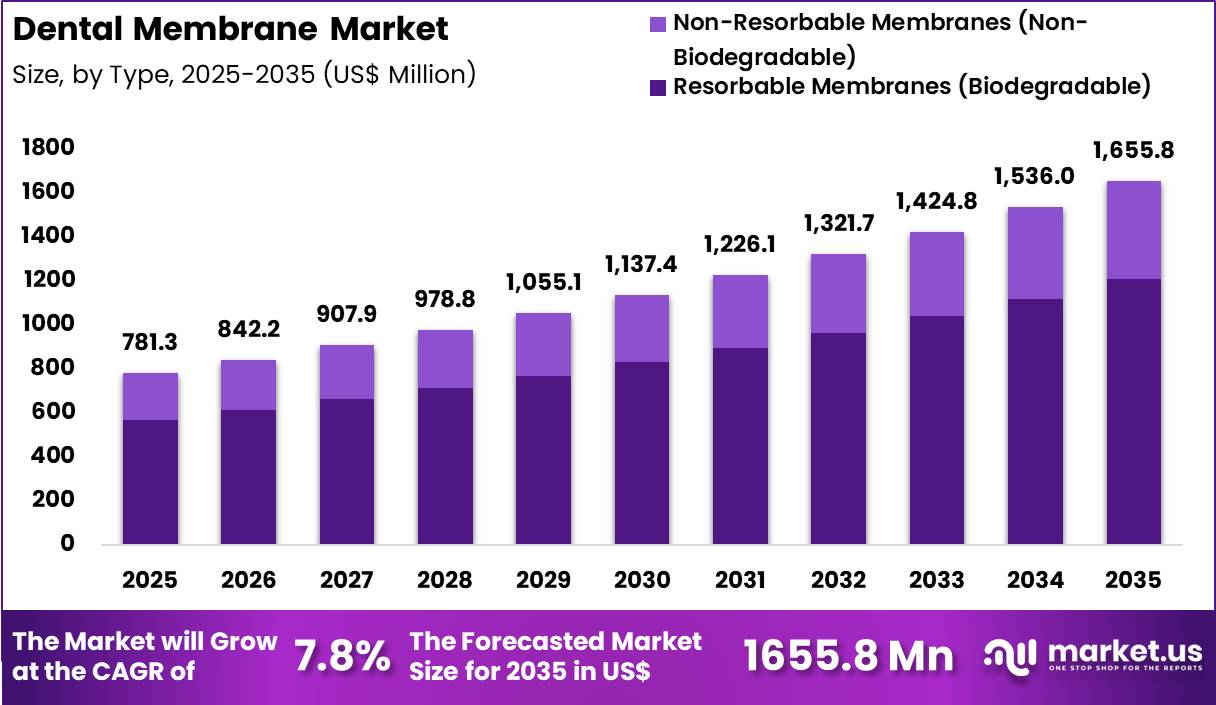
New York, NY – Nov 13 2026 – The Global Dental Membrane Market size is expected to be worth around US$ 1655.8 Million by 2035 from US$ 781.3 Million in 2025, growing at a CAGR of 7.8% during the forecast period 2026-2035. In 2025, North America led the market, achieving over 38.7% share with a revenue of US$ 302.3 Million.
Dental membranes are specialized biomaterials widely used in modern dentistry, particularly in guided bone regeneration (GBR) and guided tissue regeneration (GTR) procedures. These membranes play an important role in dental implantology, periodontal treatment, and bone reconstruction by creating a protective barrier that supports the natural healing and regeneration process.
Dental membranes are primarily designed to prevent the migration of unwanted soft tissue cells into bone defects, allowing bone-forming cells to develop in the targeted area. They are broadly classified into two categories: resorbable and non-resorbable membranes.
Resorbable membranes, commonly manufactured from collagen or synthetic polymers, gradually break down within the body, eliminating the need for a second surgical procedure for removal. Non-resorbable membranes, including PTFE-based membranes, provide longer-lasting structural support and may require surgical removal.
With the growing adoption of dental implants, increasing awareness of oral health, and advancements in regenerative dentistry, the demand for dental membranes is gaining importance. Continuous developments in biomaterials, biocompatibility, and membrane technology are further supporting the evolution of dental treatment solutions.
Dental membranes are therefore expected to remain an important component of modern regenerative dentistry, contributing to improved treatment planning and effective management of bone and periodontal defects.
Key Takeaways
- In 2025, the global dental membrane market was valued at US$ 781.3 Million and is projected to grow at a CAGR of 7.8%, reaching US$ 1,655.8 Million by 2035.
- Based on type, the market is segmented into resorbable (biodegradable) and non-resorbable (non-biodegradable) membranes. Among these, resorbable membranes dominated the market, accounting for a 72.9% share.
- By application, the market is categorized into guided bone regeneration (GBR), guided tissue regeneration (GTR), socket preservation, ridge augmentation, treatment of peri-implantitis, and others. Socket preservation emerged as the leading application segment, capturing a 27.4% market share.
- Based on end users, the market is divided into dental clinics, hospitals and surgical centers, and others. Dental clinics accounted for the largest revenue share of 61.3%, establishing their dominance in the market.
- Regionally, North America dominated the global dental membrane market, accounting for a revenue share of 38.7%.
Key Market Segments
- Type Analysis: Resorbable membranes dominated the dental membrane market, accounting for 72.9% of the market share. Their natural biodegradation eliminates the need for a second surgical procedure for removal, making them a preferred choice among dental professionals. Growing dental implant procedures and increasing adoption of collagen-based biomaterials are further supporting segment growth.
- Application Analysis: Socket preservation emerged as the leading application segment, accounting for 27.4% of the market share. The procedure helps maintain alveolar bone structure following tooth extraction and supports future implant placement. Increasing demand for dental implants and growing adoption of bone regeneration techniques are expected to drive segment growth.
- End-User Analysis: Dental clinics dominated the end-user segment, accounting for 61.3% of the market share. The segment’s leadership is supported by the high volume of implant placements, bone grafting, and periodontal procedures performed in dental clinics. Expanding dental care infrastructure and increasing adoption of advanced regenerative treatments are further supporting market growth.
Regional Analysis
North America is Leading the Dental Membrane Market
North America dominated the dental membrane market in 2025, accounting for 38.7% of the total market share. Regional growth was driven by the increasing adoption of dental implants, periodontal treatments, and guided bone regeneration procedures.
The high prevalence of periodontal diseases in the United States, coupled with advanced dental healthcare infrastructure, supported demand for regenerative biomaterials. Rising awareness of oral health, growing preference for restorative dental procedures, and continuous advancements in collagen-based membranes further strengthened regional market growth.
Asia Pacific is Expected to Register the Highest CAGR
Asia Pacific is anticipated to witness the highest CAGR during the forecast period, driven by expanding dental healthcare infrastructure and increasing awareness of oral health. Countries such as China, India, Japan, and South Korea are experiencing rising demand for dental implants and periodontal treatments.
Growing disposable incomes, an expanding middle-class population, and increasing investments in specialized dental clinics are supporting market expansion. Furthermore, improvements in dental education, availability of affordable biomaterials, and growing adoption of regenerative dental procedures are expected to accelerate regional market growth.
Emerging Trends
- Growing Preference for Resorbable Dental Membranes: The demand for resorbable membranes, particularly collagen-based products, is supported by their ability to break down naturally in the body. These membranes eliminate the need for a second surgery for removal and are increasingly used in routine guided bone regeneration procedures.
- Development of Advanced Synthetic Polymer Membranes: Manufacturers and researchers are exploring synthetic materials such as polylactic acid (PLA), polyglycolic acid (PGA), and polycaprolactone (PCL). These materials offer opportunities to improve membrane strength, degradation time, flexibility, and biological compatibility.
- Increasing Focus on Antibacterial Membrane Properties: Research is increasingly focused on developing dental membranes with antibacterial properties. These products aim to reduce bacterial contamination around surgical sites, particularly when membranes become exposed during the healing process, helping improve tissue regeneration outcomes.
- Integration of 3D Printing and Patient-Specific Designs: Advanced manufacturing technologies, including 3D printing and computer-aided design, are supporting the development of customized dental membranes. Patient-specific titanium meshes and other tailored structures can improve defect coverage and maintain the required space for bone regeneration.
- Development of Bioactive and Multifunctional Membranes: Research is moving beyond traditional physical barrier membranes towards bioactive materials that can support cell attachment, tissue healing, and bone formation. The incorporation of growth factors and other biological agents is being investigated to improve the regenerative performance of dental membranes.
Use Cases
- Guided Bone Regeneration Around Dental Implants: Dental membranes are used during implant procedures to protect bone graft materials and prevent unwanted soft tissue from entering the treatment area. This supports new bone formation and helps create sufficient bone volume for successful dental implant placement.
- Alveolar Ridge Preservation After Tooth Extraction: Dental membranes are placed over extraction sites to protect the underlying bone graft and support the preservation of the jawbone structure. This application helps reduce bone loss and prepares the extraction site for future dental implant procedures.
- Treatment of Periodontal Bone Defects: Dental membranes are used in guided tissue regeneration to treat periodontal defects caused by gum disease. They prevent the rapid growth of soft tissue into damaged areas, allowing the supporting bone and periodontal tissues to regenerate.
- Sinus Lift and Bone Augmentation Procedures: Dental barrier membranes are used during sinus elevation procedures to cover bone graft materials and support bone regeneration. They help separate the grafted area from surrounding tissues, creating suitable conditions for increasing bone volume in the upper jaw.
- Treatment of Peri-Implant Bone Defects: Dental membranes are applied around existing dental implants affected by bone loss. They help contain grafting materials and support the regeneration of damaged bone around implants, particularly in selected cases of peri-implant bone defects
Frequently Asked Questions About Dental Membrane
- What are the different types of dental membranes?
Dental membranes are mainly divided into two categories: resorbable and non-resorbable membranes. Resorbable membranes, commonly made from collagen or synthetic polymers, dissolve naturally, while non-resorbable membranes, such as PTFE, require removal through another procedure. - What materials are used to manufacture dental membranes?
Dental membranes are manufactured using materials such as collagen, polylactic acid, polyglycolic acid, polycaprolactone, and polytetrafluoroethylene. These materials are selected based on their biocompatibility, mechanical strength, degradation properties, and ability to support tissue regeneration. - How long does a dental membrane take to dissolve?
The dissolution time depends on the membrane’s material, thickness, and manufacturing process. Some resorbable membranes break down within weeks, while others maintain their barrier function for several months to support the required bone regeneration period. - What are the benefits of using resorbable dental membranes?
Resorbable dental membranes gradually break down inside the body, eliminating the need for a second removal surgery. They provide a protective barrier during healing and are commonly used in guided bone regeneration and periodontal tissue regeneration procedures. - Are dental membranes safe for patients?
Dental membranes are designed using biocompatible materials suitable for specific dental procedures. However, potential complications include membrane exposure, infection, inflammation, and premature degradation. Clinical outcomes depend on material selection, surgical technique, and patient-specific healing conditions. - What are the major factors driving the Dental Membrane Market?
The market is supported by increasing dental implant procedures, rising cases of periodontal diseases, growing demand for bone regeneration treatments, and technological advancements in biocompatible materials used in dental surgical procedures. - How are technological advancements influencing the Dental Membrane Market?
Technological advancements are supporting the development of stronger, more flexible, and bioactive dental membranes. Innovations in synthetic polymers, 3D printing, antibacterial coatings, and customized membrane designs are creating new opportunities for dental tissue regeneration.
Conclusion
The global dental membrane market is expected to experience steady growth, driven by the increasing adoption of dental implants, rising prevalence of periodontal diseases, and growing demand for regenerative dental procedures. Resorbable membranes are anticipated to maintain their market dominance due to their biodegradability and reduced need for additional surgical intervention.
Furthermore, advancements in synthetic biomaterials, antibacterial properties, bioactive membranes, and 3D printing technologies are expected to create new growth opportunities. While North America continues to lead the market, Asia Pacific is projected to witness the fastest growth. Overall, the market is poised for significant expansion through 2035.
Discuss your needs with our analyst
Please share your requirements with more details so our analyst can check if they can solve your problem(s)