


Overview
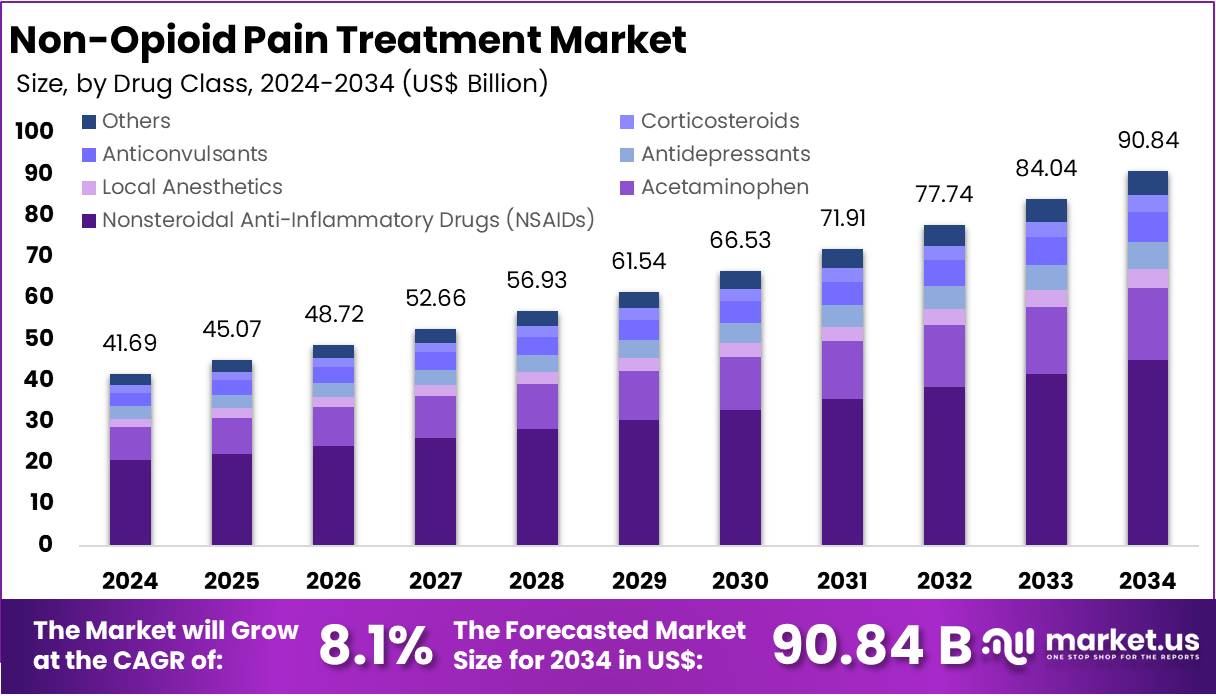
New York, NY – June 25, 2026 – The Non-Opioid Pain Treatment Market Size is expected to be worth around US$ 90.84 billion by 2034 from US$ 41.69 billion in 2024, growing at a CAGR of 8.1% during the forecast period 2025 to 2034.
Non-opioid pain treatment is emerging as an important option for managing acute and chronic pain while reducing dependence on opioid-based medications. Healthcare providers and researchers are increasingly focusing on non-opioid therapies due to growing concerns regarding opioid misuse, addiction risks, and related adverse effects.
Non-opioid pain treatments include a broad range of approaches such as nonsteroidal anti-inflammatory drugs (NSAIDs), acetaminophen, local anesthetics, nerve blocks, physical therapy, rehabilitation programs, and innovative non-opioid pharmaceuticals. These therapies are designed to alleviate pain by targeting specific biological pathways without activating opioid receptors.
The increasing prevalence of musculoskeletal disorders, arthritis, post-surgical pain, neuropathic conditions, and sports injuries is driving demand for effective pain management solutions. Patients and healthcare professionals are seeking treatment options that offer long-term pain relief while minimizing safety concerns associated with opioid medications.
Recent advancements in pain management research have led to the development of novel non-opioid drugs and treatment technologies. Regulatory agencies and healthcare organizations are also supporting initiatives aimed at expanding access to safer pain management alternatives.
The growing adoption of non-opioid pain treatments reflects a broader shift toward patient-centered healthcare and improved clinical outcomes. As awareness continues to increase, non-opioid therapies are expected to play a significant role in the future of pain management, offering effective relief while helping address public health challenges linked to opioid use.
Key Takeaways
- The global Non-Opioid Pain Treatment market was valued at US$ 69 billion in 2024 and is projected to reach US$ 90.84 billion by 2034, expanding at a CAGR of 8.1% during the forecast period.
- Based on drug class, the market is segmented into Nonsteroidal Anti-Inflammatory Drugs (NSAIDs), Acetaminophen, Local Anesthetics, Antidepressants, Anticonvulsants, Corticosteroids, and Others. Among these, NSAIDs dominated the market, accounting for a 49.6% share in 2023.
- By application, the market is categorized into Neuropathic Pain, Chronic Pain, Post-operative Pain, and Acute Pain. The Neuropathic Pain segment held the leading position, capturing 38.5% of the market share in 2023.
- In terms of route of administration, the market is divided into Oral, Topical, Injectable, and Other Routes of Administration. The Oral segment emerged as the largest contributor, representing 53.7% of the total market revenue in 2023.
- Based on distribution channel, the market is classified into Retail Pharmacies, Hospital Pharmacies, and Online Pharmacies. Retail Pharmacies led the segment with a market share of 49.7% in 2023.
- North America dominated the global Non-Opioid Pain Treatment market, securing a revenue share of 48.8% in 2023.
Regional Analysis
North America continues to dominate the Non-Opioid Pain Treatment Market, supported by increasing awareness of the risks associated with opioid dependence and a growing shift toward safer pain management alternatives. The ongoing opioid crisis has encouraged healthcare providers and policymakers to promote non-opioid therapies for both acute and chronic pain conditions. As demand for effective and low-risk treatment options rises, medications such as NSAIDs, acetaminophen, anticonvulsants, and other non-opioid therapies are witnessing broader adoption across the region.
The market benefits from a well-established healthcare infrastructure, favorable reimbursement frameworks, and substantial healthcare spending, which facilitate access to advanced pain management solutions. In addition, the expanding elderly population is contributing to higher demand for treatments targeting chronic conditions such as arthritis, musculoskeletal disorders, and neuropathic pain.
Continuous research and development activities, combined with regulatory initiatives supporting alternative pain therapies, are further strengthening market growth. The increasing focus on personalized treatment approaches and improved patient outcomes is expected to sustain North America’s leading position in the global non-opioid pain treatment market.
Emerging Trends in Non-Opioid Pain Treatment Market
- Shift Toward Safer Pain Solutions: A major trend is the growing shift toward safer pain management alternatives due to rising concerns over opioid addiction and overdose. NSAIDs, antidepressants, and nerve blockers are increasingly preferred, offering effective pain relief with reduced dependency risk and improved patient safety outcomes.
- Increased Focus on Personalized Medicine: Personalized medicine is transforming pain management by tailoring treatments based on patient age, medical history, and condition severity. This approach enhances effectiveness of non-opioid therapies while minimizing side effects, supported by digital health tools that enable continuous monitoring and treatment optimization.
- Rise in Non-Drug Therapies: Non-drug therapies are gaining strong adoption in pain management, including physical therapy, acupuncture, CBT, and TENS. These approaches are often combined with non-opioid medications, providing holistic, safer, and long-term relief for chronic conditions such as fibromyalgia, arthritis, and back pain.
- Growth in Plant-Based and Natural Products: Plant-based pain relief products such as CBD oil, herbal creams, and dietary supplements are witnessing rising demand. These natural alternatives are preferred for safer pain management, especially among elderly patients and chronic pain sufferers seeking fewer side effects and improved wellness outcomes.
- Technological Innovations: Technological advancements are improving non-opioid pain treatment through patches, topical gels, and extended-release injections. Digital tools and wearables enable real-time monitoring of pain levels, improving treatment adherence and supporting more efficient, targeted, and patient-friendly pain management solutions across healthcare systems.
- Rising Demand for Over-the-Counter (OTC) Options: OTC non-opioid medications such as acetaminophen and ibuprofen are increasingly preferred for managing mild to moderate pain. Their easy accessibility, affordability, and safety profile are driving strong demand, along with expanded availability of gels, patches, and natural formulations in retail pharmacies.
Use Cases in Non-Opioid Pain Treatment Market
- Chronic Back and Joint Pain: Non-opioid treatments are widely used for chronic back and joint pain, including NSAIDs, physical therapy, and nerve blockers. These therapies reduce inflammation and improve mobility without addiction risks, supporting long-term pain control and enhanced quality of life for aging populations.
- Post-Surgery Recovery: Post-surgical pain is increasingly managed using non-opioid medications like acetaminophen and local anesthetics. Hospitals combine multiple therapies to reduce opioid dependence, ensuring safer recovery outcomes, minimizing side effects, and improving patient comfort during the healing process after surgical procedures.
- Cancer Pain Management: Non-opioid approaches in cancer pain management include antidepressants, nerve stimulation therapies, and supportive physical care. These treatments help reduce nerve-related discomfort, improve daily functioning, and enhance patient quality of life while reducing reliance on strong opioid-based pain medications.
- Migraine and Headache Relief: Non-opioid therapies for migraines and headaches include NSAIDs, acetaminophen, and triptans along with non-drug methods like hydration and cold compresses. These solutions provide fast relief, reduce dependency risks, and support long-term management of recurring headache conditions across all age groups.
- Sports and Injury-Related Pain: Sports-related injuries are commonly treated using NSAIDs, topical creams, cold therapy, and physical rehabilitation. These non-opioid methods support faster recovery, reduce inflammation, and help athletes return to activity safely while minimizing the risks associated with strong pain medications.
- Pain in Elderly Patients: Elderly patients benefit significantly from non-opioid treatments due to lower risk of side effects. Options such as acetaminophen, mild exercise, and assistive devices improve mobility and comfort while reducing risks of dizziness, falls, and cognitive impairment associated with opioid use.
Frequently Asked Questions on Non-Opioid Pain Treatment
- What is non-opioid pain treatment?
Non-opioid pain treatment refers to therapeutic approaches that manage pain without using opioid medications, including pharmacological and non-pharmacological methods, aimed at reducing dependency risks, improving safety profiles, and ensuring effective long-term pain management strategies. - What are the common types of non-opioid pain treatments?
Common types include physical therapy, NSAIDs, acetaminophen, antidepressants, anticonvulsants, nerve blocks, and topical agents. These interventions are widely adopted to manage acute and chronic pain while minimizing risks associated with opioid-based therapies. - What conditions are treated using non-opioid pain treatments?
Conditions treated include arthritis, neuropathic pain, musculoskeletal disorders, post-surgical pain, and cancer-related pain. These treatments provide effective pain relief options, improving patient quality of life while reducing opioid dependency and related adverse effects. - What are the key advantages of non-opioid pain treatments?
Advantages include reduced addiction risk, fewer side effects, improved safety profile, broader treatment applicability, and better long-term outcomes. Non-opioid therapies are increasingly preferred in clinical practice for sustainable and patient-centric pain management approaches. - What are the major drivers of the market?
Drivers include rising opioid addiction concerns, increasing chronic disease prevalence, growing geriatric population, advancements in non-opioid drug development, and supportive government initiatives promoting safer pain management alternatives along with expanding healthcare access globally. - What is the future outlook of the non-opioid pain treatment market?
Future outlook indicates steady market expansion driven by innovation in drug delivery systems, biologics, and digital therapeutics, supported by increasing clinical adoption and a strong shift toward opioid-sparing treatment protocols worldwide.
Conclusion
The non-opioid pain treatment market is expected to witness sustained expansion driven by rising concerns regarding opioid dependency and increasing prevalence of chronic pain conditions worldwide. The market growth is supported by advancements in pharmacological and non-pharmacological therapies, alongside strong healthcare policy initiatives promoting safer pain management alternatives. Expanding adoption across hospitals, retail pharmacies, and homecare settings further strengthens demand.
Technological innovations and personalized treatment approaches are improving clinical outcomes and patient adherence. With increasing investment in research and development, the market is anticipated to maintain a positive growth trajectory, positioning non-opioid therapies as a cornerstone of future pain management strategies.
Discuss your needs with our analyst
Please share your requirements with more details so our analyst can check if they can solve your problem(s)




