


Overview
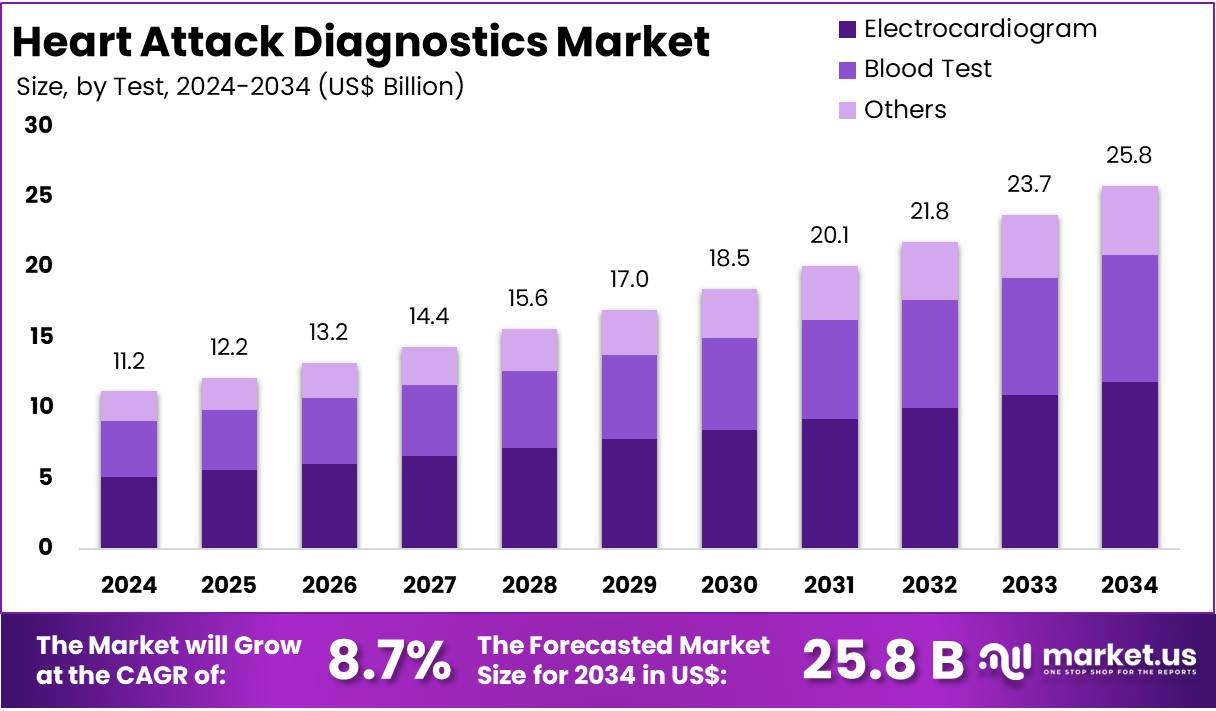
New York, NY – June 08, 2026 – The Global Heart Attack Diagnostics Market Size is expected to be worth around US$ 25.8 Billion by 2034, from US$ 11.2 Billion in 2024, growing at a CAGR of 8.7% during the forecast period from 2025 to 2034. In 2024, North America held a dominant market position, capturing more than a 43.4% share and holds US$ 11.2 billion market value for the year.
Heart attack diagnostics are essential tools used by healthcare professionals to identify and confirm the occurrence of a heart attack, also known as myocardial infarction. Rapid and accurate diagnosis is crucial, as timely medical intervention can significantly improve patient outcomes and reduce the risk of complications.
The diagnostic process typically involves a combination of clinical assessment, imaging techniques, and laboratory testing. Electrocardiograms (ECGs) are commonly used to evaluate the heart’s electrical activity and detect abnormalities associated with heart attacks. Blood tests measuring cardiac biomarkers, such as troponin, help identify damage to heart muscle tissue and are considered a key component of diagnosis. In addition, advanced imaging technologies, including echocardiography, computed tomography (CT), and magnetic resonance imaging (MRI), provide detailed insights into heart structure and function.
Growing awareness of cardiovascular diseases, increasing prevalence of heart-related disorders, and continuous advancements in diagnostic technologies are supporting the adoption of innovative diagnostic solutions worldwide. Healthcare providers are increasingly utilizing high-sensitivity biomarker assays and AI-enabled diagnostic platforms to enhance diagnostic accuracy and accelerate clinical decision-making.
As cardiovascular diseases remain a leading cause of mortality globally, the importance of reliable and efficient heart attack diagnostics continues to grow, supporting improved patient care, early intervention, and better long-term health outcomes.
Key Takeaways
- The global Heart Attack Diagnostics market is expected to expand from US$ 11.2 billion in 2024 to US$ 25.8 billion by 2034, registering a CAGR of 8.7% during the forecast period.
- Blood tests emerged as the leading test type in 2024, capturing more than 54.2% of the market share, supported by their high reliability in detecting cardiac biomarkers.
- Hospitals accounted for the largest share of the end-use segment in 2024, representing over 46.3% of the market, owing to increased patient admissions and access to advanced diagnostic technologies.
- North America maintained its dominant position in the global market in 2024, holding more than 43.4% of the total market share and reaching a valuation of US$ 11.2 billion.
Regional Analysis
North America accounted for the largest share of the global heart attack diagnostics market in 2024, representing more than 43.4% of total revenue and reaching a market value of US$ 11.2 billion. The region’s leadership is largely attributed to the growing burden of cardiovascular diseases, which continue to be a major public health concern. The high incidence of heart-related conditions has increased the need for rapid and accurate diagnostic solutions, supporting consistent market growth.
A well-established healthcare system across the United States and Canada has further strengthened market expansion. Healthcare facilities are equipped with advanced diagnostic technologies, including high-sensitivity cardiac biomarker tests, electrocardiography systems, and cardiac imaging platforms. The availability of trained medical professionals and efficient emergency care networks enables faster diagnosis and treatment, increasing the adoption of heart attack diagnostic tools.
In addition, strong government support for cardiovascular disease prevention and early detection programs has contributed to market development. Public health campaigns encouraging regular health screenings and awareness of heart disease risk factors have enhanced demand for diagnostic services. Favorable reimbursement policies, widespread health insurance coverage, and high healthcare expenditure levels have also improved patient access to advanced diagnostic procedures. These factors collectively position North America as the leading regional market for heart attack diagnostics.
Emerging Trends
- Rise of AI-Powered Diagnostics: Artificial intelligence is increasingly being integrated into heart attack diagnostics, enabling rapid analysis of ECGs and biomarker data. AI-driven tools improve diagnostic accuracy, reduce human errors, accelerate clinical decision-making, and support timely treatment, making them valuable assets in emergency cardiovascular care.
- Wearable Heart Monitors Are Getting Smarter: Advanced wearable devices, including smartwatches and portable ECG monitors, are enabling continuous heart health monitoring. These devices detect irregular cardiac activity, provide real-time alerts, and facilitate data sharing with healthcare professionals, supporting early intervention and preventive cardiac care strategies.
- Point-of-Care Testing on the Rise: Point-of-care diagnostic devices are gaining popularity due to their ability to deliver rapid results outside traditional laboratory settings. Their use in ambulances, clinics, and remote healthcare facilities supports faster diagnosis, earlier treatment decisions, and improved outcomes for heart attack patients.
- High Demand for Non-Invasive Testing: The adoption of non-invasive diagnostic technologies is increasing as patients seek safer and more comfortable testing options. Advanced imaging systems, biosensors, and innovative screening methods enable accurate heart assessments while minimizing risks, discomfort, and recovery time associated with invasive procedures.
- Focus on Early Detection and Prevention: Healthcare providers are increasingly emphasizing early detection and prevention of cardiovascular diseases. Routine screenings, predictive risk assessment tools, and community-based healthcare programs help identify heart-related issues before they become severe, reducing healthcare costs and improving patient survival rates.
- Integration of Mobile Health (mHealth) Apps: Mobile health applications are becoming essential tools in cardiac care by enabling symptom tracking, medication management, and health data monitoring. Integration with wearable devices allows continuous patient monitoring, improves engagement, and supports informed clinical decisions through real-time health information.
Use Cases
- Emergency Rooms (ERs): Emergency rooms rely heavily on heart attack diagnostics to rapidly evaluate patients presenting with chest pain or related symptoms. ECGs, biomarker testing, and imaging technologies help clinicians confirm diagnoses quickly, enabling immediate treatment and improving survival and recovery outcomes.
- Ambulance Services: Modern ambulance services utilize portable ECG systems and rapid diagnostic tools to assess patients before hospital arrival. Early diagnosis during transport enables healthcare teams to prepare in advance, reduce treatment delays, and improve outcomes during critical cardiac emergencies.
- Primary Care Clinics: Primary care clinics use diagnostic tests to identify cardiovascular risks among high-risk individuals. Regular screenings, ECG assessments, and cholesterol evaluations help detect early warning signs, enabling preventive interventions and reducing the likelihood of severe cardiac events.
- Rural and Remote Healthcare: Heart attack diagnostics support healthcare delivery in rural and underserved regions through mobile diagnostic units and telemedicine services. Remote testing capabilities allow specialists to evaluate results quickly, improving access to timely cardiac care and reducing geographic healthcare disparities.
- Cardiology Departments: Cardiology departments employ advanced diagnostic technologies to evaluate complex cardiovascular conditions. High-resolution imaging, biomarker analysis, and continuous monitoring support accurate diagnosis, treatment planning, and long-term patient management, helping reduce complications and recurrent heart-related events.
- Corporate Health Programs: Corporate wellness initiatives increasingly include heart health screenings to identify cardiovascular risks among employees. Regular diagnostic assessments promote preventive care, encourage healthier lifestyles, and support early detection efforts, ultimately reducing healthcare costs and improving workforce well-being.
- Pharmacies and Diagnostic Chains: Pharmacies and diagnostic centers are expanding access to heart health assessments through convenient screening services. Offering tests such as ECGs, cholesterol evaluations, and blood pressure monitoring encourages preventive care and increases public awareness regarding cardiovascular health risks.
Frequently Asked Questions on Heart Attack Diagnostics
- Why are blood tests important in heart attack diagnosis?
Blood tests play a critical role in diagnosing heart attacks because they measure cardiac biomarkers such as troponin, which are released into the bloodstream when heart muscle damage occurs. These tests provide accurate and timely information to support clinical decision-making. - How does an electrocardiogram (ECG) help diagnose a heart attack?
An electrocardiogram records the electrical activity of the heart and helps identify abnormal patterns associated with reduced blood flow or heart muscle damage. ECGs are often the first diagnostic tool used in emergency settings due to their speed and accessibility. - What imaging technologies are used in heart attack diagnostics?
Common imaging technologies include echocardiography, computed tomography (CT), and magnetic resonance imaging (MRI). These methods provide detailed views of the heart’s structure and function, helping healthcare professionals assess the severity and location of cardiac abnormalities. - What factors are driving advancements in heart attack diagnostics?
Technological innovations, increasing cardiovascular disease prevalence, and the demand for faster diagnosis are driving advancements in heart attack diagnostics. Emerging technologies such as high-sensitivity biomarker testing and artificial intelligence are improving diagnostic accuracy and efficiency. - Which diagnostic test segment holds the largest market share?
Blood tests represent the leading segment within the market due to their reliability and widespread use in detecting cardiac biomarkers. Their ability to provide rapid and accurate results has made them a preferred choice in emergency and routine clinical settings. - Why do hospitals dominate the Heart Attack Diagnostics Market?
Hospitals account for a significant share of the market because they handle a large volume of cardiac emergency cases and possess advanced diagnostic infrastructure. The availability of specialized healthcare professionals further supports the extensive use of diagnostic technologies. - Which region leads the global Heart Attack Diagnostics Market?
North America leads the global market owing to its advanced healthcare infrastructure, high prevalence of cardiovascular diseases, strong reimbursement systems, and widespread adoption of innovative diagnostic technologies. Significant healthcare spending further supports the region’s dominant market position. - How is artificial intelligence influencing the Heart Attack Diagnostics Market?
Artificial intelligence is enhancing diagnostic accuracy by enabling faster interpretation of ECGs, imaging data, and patient records. AI-powered solutions help healthcare providers identify cardiac events more efficiently, improving patient outcomes and supporting market innovation. - What opportunities exist in the Heart Attack Diagnostics Market?
Opportunities are emerging through the development of portable diagnostic devices, point-of-care testing solutions, and digital healthcare platforms. Increasing healthcare access in emerging markets and growing investments in cardiovascular care are expected to create additional growth prospects.
Conclusion
The global Heart Attack Diagnostics Market is positioned for steady growth, driven by the increasing prevalence of cardiovascular diseases, rising awareness of early diagnosis, and continuous technological advancements. The adoption of high-sensitivity biomarker tests, AI-powered diagnostic solutions, wearable monitoring devices, and point-of-care testing is improving diagnostic accuracy and accelerating treatment decisions.
Hospitals remain the primary end users, while North America continues to lead the market due to its advanced healthcare infrastructure and strong reimbursement systems. As healthcare systems increasingly prioritize early detection and preventive care, demand for innovative, rapid, and accessible heart attack diagnostic solutions is expected to expand significantly through 2034.
Discuss your needs with our analyst
Please share your requirements with more details so our analyst can check if they can solve your problem(s)




