


Overview
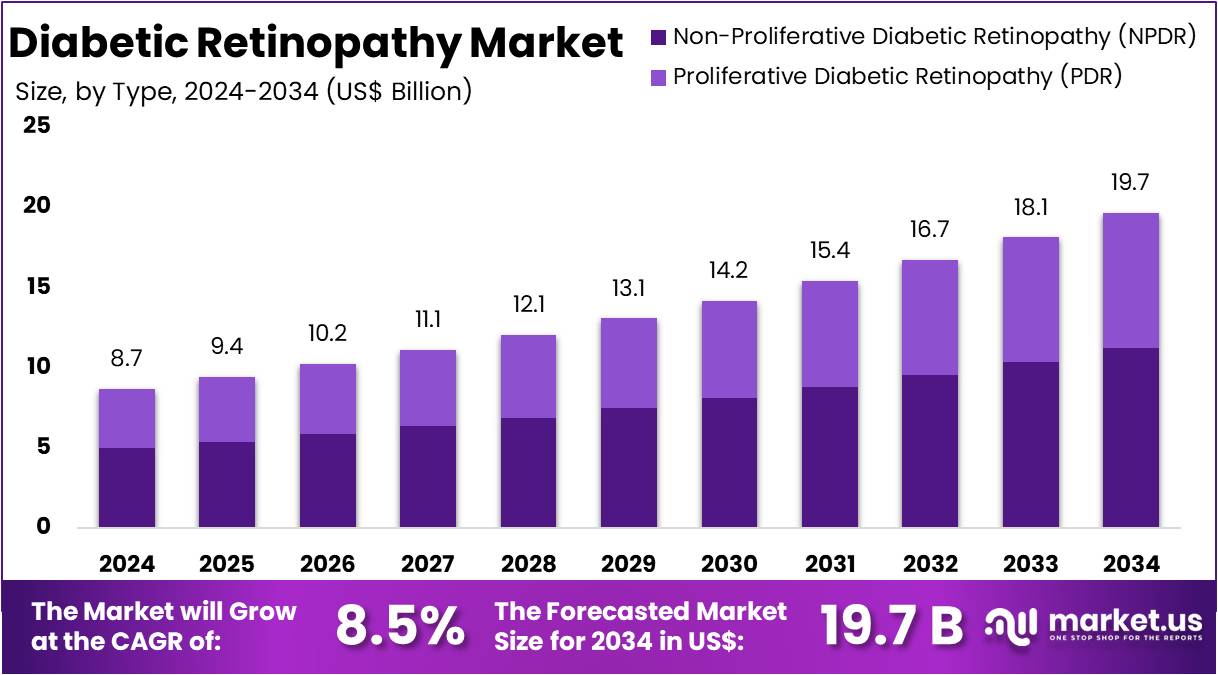
New York, NY – May 19, 2026 – The Global Diabetic Retinopathy Market Size is expected to be worth around US$ 19.7 Billion by 2034, from US$ 8.7 Billion in 2024, growing at a CAGR of 8.5% during the forecast period from 2025 to 2034. North America held a dominant market position, capturing more than a 38.2% share and holds US$ 3.3 Billion market value for the year.
Diabetic retinopathy is a diabetes-related eye disease that affects the blood vessels of the retina, the light-sensitive tissue located at the back of the eye. The condition is considered one of the leading causes of vision impairment and blindness among working-age adults worldwide. The risk of developing diabetic retinopathy increases with the duration of diabetes, poor blood sugar control, high blood pressure, and elevated cholesterol levels.
The disease progresses gradually and may not show noticeable symptoms during its early stages. Common symptoms in advanced stages include blurred vision, floaters, dark spots, difficulty seeing at night, and vision loss. Regular eye examinations are considered essential for early diagnosis and timely treatment.
According to healthcare experts, the rising global prevalence of diabetes has contributed significantly to the increasing burden of diabetic retinopathy. Early detection and proper disease management can help reduce the risk of severe vision complications. Treatment approaches may include blood sugar management, laser therapy, injectable medications, and surgical procedures, depending on the severity of the condition.
Healthcare organizations continue to emphasize the importance of diabetes awareness, preventive eye care, and routine retinal screening programs. Increased public awareness and improved access to ophthalmic care are expected to support early intervention and better patient outcomes in the coming years.
Key Takeaways
- The global diabetic retinopathy market is anticipated to expand from US$ 8.7 billion in 2024 to approximately US$ 19.7 billion by 2034, registering a CAGR of 8.5% during the forecast period.
- Non-Proliferative Diabetic Retinopathy (NPDR) emerged as the leading type segment in 2024, accounting for more than 57.2% of the overall market share.
- Anti-VEGF injections held a dominant position in the treatment segment in 2024, capturing over 38.5% of the market share
- Hospitals & clinics represented the largest end-user segment in 2024, contributing more than 46.1% of the global diabetic retinopathy market share
- North America retained its leading regional position in 2024, securing over 38.2% of the market share, with a market valuation of nearly US$ 3.3 billion.
Regional Analysis
In 2024, North America accounted for a leading share of more than 38.2% of the global diabetic retinopathy market, representing a market value of approximately US$ 3.3 billion. The region’s strong market position is primarily supported by the growing prevalence of diabetes across the United States and Canada. The increasing number of diabetic patients has significantly raised the risk of diabetic retinopathy, driving consistent demand for advanced diagnostic and treatment solutions.
The presence of a well-established healthcare infrastructure further supports market growth in the region. North America provides broad access to specialized ophthalmic care, advanced retinal imaging technologies, and early screening programs. Hospitals and clinics widely adopt treatment options such as anti-VEGF injections and laser therapies, contributing to improved disease management and patient outcomes.
In addition, government initiatives and public awareness programs continue to encourage regular eye examinations and early intervention for diabetes-related vision disorders. Favorable reimbursement policies and insurance coverage also improve patient access to diabetic eye care services by reducing treatment costs. Furthermore, leading pharmaceutical and biotechnology companies in the region continue to invest in research and development activities, supporting the introduction of innovative therapies and strengthening North America’s position in the diabetic retinopathy market.
Emerging Trends
- Rising Adoption of AI-Based Screening Tools: Artificial intelligence is improving diabetic retinopathy diagnosis by enabling faster and more accurate retinal image analysis. AI-powered screening tools reduce specialist workload, support disease monitoring, and expand access to eye care services, particularly in remote regions with limited ophthalmology infrastructure.
- Shift Toward Non-Invasive Imaging Techniques: Non-invasive imaging technologies such as Optical Coherence Tomography (OCT) and fundus photography are increasingly preferred for diabetic retinopathy detection. These painless and efficient methods provide detailed retinal images, improve patient comfort, and encourage routine screening for early disease identification and treatment.
- Combination Therapies Gaining Popularity: Healthcare providers are increasingly using combination therapies involving anti-VEGF injections, laser treatment, and corticosteroids for diabetic retinopathy management. This approach improves treatment effectiveness, reduces retinal swelling, and offers personalized care solutions for patients with advanced or progressive eye complications.
- Increasing Use of Teleophthalmology: Teleophthalmology is expanding access to diabetic eye care through remote retinal image sharing and specialist consultations. The approach reduces travel and appointment delays, supports faster diagnosis, and improves healthcare delivery in rural and underserved regions lacking sufficient ophthalmology services.
- Growing Emphasis on Early Diagnosis and Screening Programs: Governments and healthcare organizations are promoting regular diabetic eye screening programs to enable early disease detection. Public awareness campaigns, routine examinations, and patient follow-up systems are improving diagnosis rates, supporting timely treatment, and reducing the long-term risk of blindness among diabetic patients.
- Personalized Treatment Plans with Genetic Insights: Advancements in genetic research are supporting the development of personalized diabetic retinopathy treatments. Scientists are studying genetic factors influencing disease risk and treatment response, which may help physicians select targeted therapies that improve clinical outcomes while minimizing side effects in the future.
Use Cases
- Hospitals and Eye Clinics: Hospitals and eye clinics play a major role in diabetic retinopathy diagnosis and treatment. They use advanced imaging systems and provide therapies such as laser procedures and anti-VEGF injections while ensuring continuous patient monitoring and long-term management of diabetic eye complications.
- Primary Care Centers: Primary care centers contribute to early diabetic retinopathy detection by conducting basic eye assessments during routine diabetes consultations. These facilities educate patients about regular eye examinations and maintain referral networks with ophthalmologists to support timely diagnosis and effective disease management.
- Rural and Remote Healthcare Settings: Telemedicine solutions are improving diabetic retinopathy screening in rural and remote healthcare settings. Retinal images captured locally are reviewed by urban specialists, enabling faster diagnosis, reducing patient travel requirements, and expanding access to quality eye care services in underserved communities.
- Pharmacies and Optical Retail Chains: Pharmacies and optical retail chains are increasingly offering convenient diabetic eye screening services using non-invasive imaging technologies. These accessible screening options raise public awareness, support early disease detection, and encourage patients to seek specialist care before serious complications develop.
- Mobile Eye Screening Units: Mobile eye screening units equipped with retinal imaging devices are expanding diabetic retinopathy detection in underserved regions. These units conduct large-scale community screenings, improve healthcare accessibility, and enable early diagnosis for individuals who have limited access to traditional eye care facilities.
- Health Insurance and Wellness Programs: Health insurance providers are integrating diabetic eye screening into preventive healthcare and wellness programs. These initiatives encourage routine examinations, reduce long-term treatment costs, promote better diabetes management, and help minimize vision-related complications through timely diagnosis and intervention strategies.
- Academic and Research Institutes: Academic and research institutes are advancing diabetic retinopathy care through studies focused on disease progression, innovative therapies, and artificial intelligence-based diagnostics. Their research supports the development of accurate screening technologies, improved treatment guidelines, and enhanced healthcare strategies for diabetic patients.
Frequently Asked Questions on Diabetic Retinopathy
- What are the common symptoms of diabetic retinopathy?
Common symptoms of diabetic retinopathy include blurred vision, dark spots, floaters, fluctuating eyesight, impaired color recognition, and vision loss. In early stages, the disease may remain asymptomatic, making regular eye examinations essential for diabetic patients. - How is diabetic retinopathy diagnosed?
Diabetic retinopathy is diagnosed through comprehensive eye examinations, including dilated retinal evaluation, optical coherence tomography, fluorescein angiography, and retinal imaging. These diagnostic procedures help identify retinal swelling, blood vessel leakage, and disease progression effectively. - Can diabetic retinopathy cause blindness?
Untreated diabetic retinopathy can result in severe vision loss and permanent blindness. Advanced stages may cause retinal detachment, vitreous hemorrhage, or macular edema, significantly affecting visual function and quality of life among diabetic individuals. - Can diabetic retinopathy be prevented?
Diabetic retinopathy risk can be reduced through effective blood sugar management, blood pressure control, healthy lifestyle practices, and routine eye screenings. Early detection and timely intervention remain essential for preventing severe retinal complications and blindness. - Why are regular eye examinations important for diabetic patients?
Regular eye examinations help detect diabetic retinopathy during early stages before significant symptoms appear. Early diagnosis allows timely treatment initiation, reducing the risk of irreversible vision damage and improving long-term visual outcomes among diabetic individuals. - Which regions lead the diabetic retinopathy market?
North America leads the diabetic retinopathy market because of advanced healthcare infrastructure, high diabetes prevalence, strong reimbursement systems, and rapid adoption of innovative ophthalmic treatments. Asia-Pacific is also witnessing substantial growth due to expanding diabetic patient populations. - How is technology influencing the diabetic retinopathy market?
Artificial intelligence-based retinal screening systems, teleophthalmology platforms, and advanced imaging technologies are transforming diabetic retinopathy diagnosis and management. These innovations improve early detection rates, reduce diagnostic errors, and enhance treatment accessibility across both developed and emerging markets.
Conclusion
The global diabetic retinopathy market is expected to witness significant growth over the forecast period, driven by the rising prevalence of diabetes, increasing awareness regarding eye health, and advancements in diagnostic and treatment technologies. Growing adoption of AI-based screening, teleophthalmology, and non-invasive imaging techniques is improving early disease detection and patient management.
North America continues to dominate the market due to strong healthcare infrastructure and favorable reimbursement policies, while emerging economies are showing substantial growth potential. Increasing focus on preventive care, routine retinal screening, and personalized treatment approaches is expected to support better clinical outcomes and reduce the long-term burden of diabetes-related vision complications worldwide.
Discuss your needs with our analyst
Please share your requirements with more details so our analyst can check if they can solve your problem(s)




