


Overview
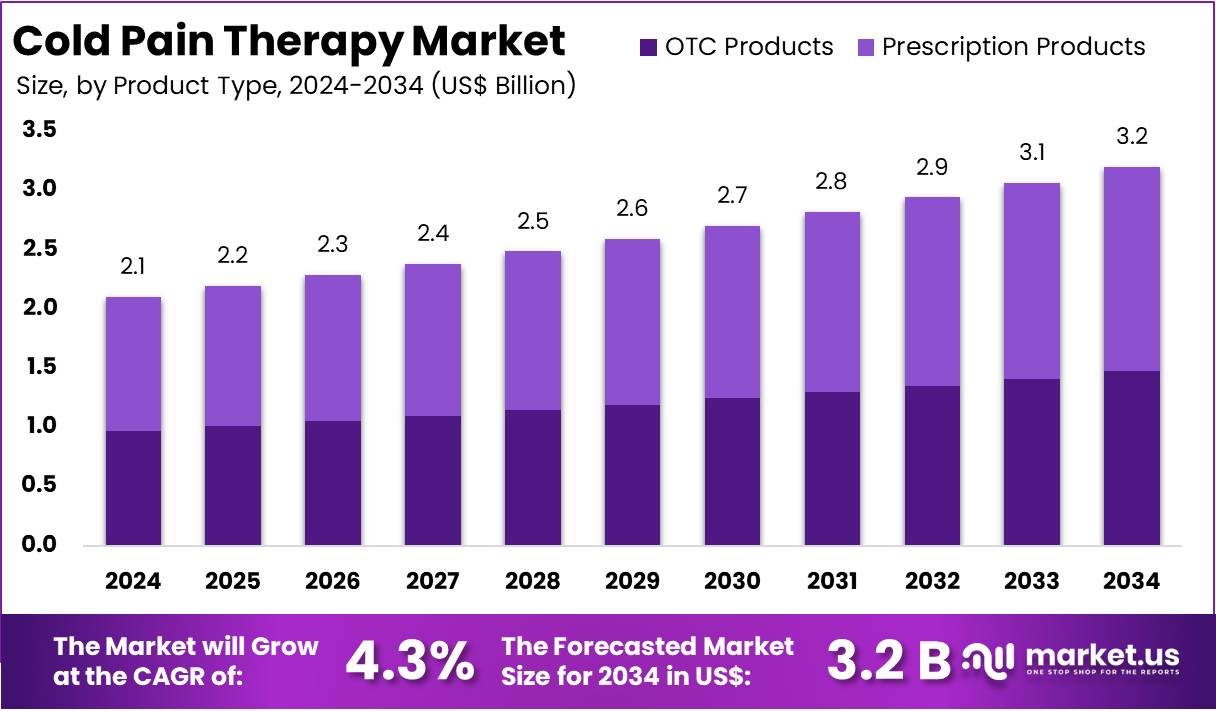
New York, NY – May 26, 2026 – The Global Cold Pain Therapy Market Size is expected to be worth around US$ 3.2 Billion by 2034, from US$ 2.1 Billion in 2024, growing at a CAGR of 4.3% during the forecast period from 2025 to 2034.
Cold pain therapy refers to the therapeutic application of low temperatures to reduce pain, inflammation, and swelling in injured or affected areas of the body. The therapy is widely used across sports medicine, orthopedic care, post-surgical recovery, and rehabilitation settings. It works by constricting blood vessels, slowing nerve activity, and minimizing tissue inflammation, thereby providing temporary pain relief and supporting faster recovery.
Cold pain therapy products include ice packs, cooling wraps, gel-based compresses, cold spray systems, and advanced cryotherapy devices. These solutions are commonly recommended for conditions such as muscle strains, sprains, arthritis, joint pain, tendon injuries, and post-operative discomfort. The increasing prevalence of sports-related injuries, musculoskeletal disorders, and chronic pain conditions has contributed significantly to the growing adoption of cold therapy solutions worldwide.
Technological advancements in portable and reusable cooling systems have further improved treatment convenience and patient compliance. In addition, rising awareness regarding non-invasive and drug-free pain management approaches is supporting market expansion. Healthcare providers and fitness professionals increasingly prefer cold therapy as part of integrated recovery and rehabilitation programs.
North America remains a leading market due to strong healthcare infrastructure and high participation in sports and fitness activities, while Asia-Pacific is expected to witness notable growth driven by improving healthcare access, expanding rehabilitation services, and rising consumer awareness regarding pain management therapies.
Key Takeaways
- The Cold Pain Therapy Market was valued at US$ 2.1 million in 2024.
- Among product types, OTC products accounted for the largest revenue share of 71.5% in 2024.
- Based on application, the musculoskeletal disorder segment held the leading market share of 44.2% in 2024.
- By distribution channel, retail pharmacy emerged as the leading segment, accounting for 43.7% of the market share in 2024.
- Regionally, North America dominated the market with a 36.4% share in 2024.
Regional Analysis
North America accounted for the largest share of the global cold pain therapy market, representing 36.4% of total revenue in 2024. The region’s dominance is primarily driven by the high prevalence of musculoskeletal disorders, including arthritis, joint pain, and back pain, which are commonly treated using cold therapy solutions. The increasing aging population and strong participation in sports and fitness activities have further supported market growth across the region.
The adoption of advanced cold therapy products, along with growing awareness among healthcare professionals regarding non-invasive pain management solutions, has accelerated product demand. Athletes and physically active individuals widely use cold therapy for injury prevention, rehabilitation, and post-workout recovery, contributing to sustained market expansion.
Technological innovations, including wearable cooling devices and AI-enabled therapy monitoring systems, have also enhanced treatment effectiveness and user convenience. In addition, supportive reimbursement policies and government initiatives aimed at improving chronic pain management have strengthened market accessibility.
For instance, government funding initiatives supporting the expansion of chronic pain management programs and healthcare accessibility are expected to encourage the adoption of innovative pain relief solutions. These factors collectively continue to reinforce North America’s leading position in the global cold pain therapy market.
Emerging Trends
- Shift Toward At-Home Treatments: Consumers are increasingly adopting at-home cold therapy solutions due to their convenience, affordability, and ease of access. Products such as cold packs, gels, and wraps allow users to manage minor pain and injuries independently, supporting the growing trend of self-care and home-based pain management.
- Growing Demand from Sports and Fitness Enthusiasts: The rising participation in sports and fitness activities is increasing demand for cold therapy products. Athletes and fitness enthusiasts use cold packs and cooling wraps to reduce soreness, manage injuries, and support faster recovery, creating strong demand for portable, reusable, and performance-focused recovery solutions.
- Innovation in Wearable Cold Therapy Devices: Advancements in wearable cold therapy devices are improving user comfort and treatment efficiency. Products designed for specific body parts, including knees, shoulders, and backs, provide targeted cooling and adjustable settings, allowing users to experience pain relief and recovery while maintaining daily activities at home.
- Natural and Chemical-Free Products: Consumers are showing greater preference for natural and chemical-free cold therapy products due to increasing health awareness. Herbal cooling gels, eco-friendly packs, and organic formulations are gaining popularity as safer alternatives, aligning with the broader clean-label movement across healthcare and wellness industries globally.
- Cold Therapy Combined with Compression: The integration of cold therapy with compression technology is becoming increasingly popular for pain and swelling management. Compression wraps and sleeves improve treatment effectiveness by reducing inflammation faster, particularly for sprains, joint pain, and post-surgical recovery, driving demand across clinical and homecare applications.
- Rise in Post-Surgery Recovery Products: Cold therapy products are increasingly used in post-surgical recovery to minimize swelling, reduce pain, and lower dependency on medications. Hospitals and healthcare providers recommend cooling devices and wraps for home recovery, supporting the growing demand for convenient and effective postoperative care solutions.
Use Cases
- Muscle Strains and Sprains: Cold therapy is widely used to treat muscle strains and sprains by reducing swelling, relieving pain, and minimizing tissue damage. Cold packs, sprays, and wraps are commonly applied immediately after injuries, offering a simple, drug-free, and easily accessible solution for faster muscle recovery.
- Arthritis and Joint Pain Relief: Individuals suffering from arthritis and joint pain frequently use cold therapy to reduce inflammation, numb painful areas, and improve mobility. Cold packs and gel wraps provide temporary relief from stiffness and discomfort, making them a preferred non-invasive treatment option for daily pain management.
- Post-Operative Recovery: Cold therapy supports post-operative recovery by controlling swelling, bruising, and pain following surgeries such as knee or shoulder replacements. Cooling devices and wraps are commonly recommended by healthcare professionals, helping patients recover more comfortably while reducing reliance on pain-relief medications during rehabilitation.
- Sports Injuries: Athletes and sports professionals commonly rely on cold therapy to manage injuries including muscle pulls, sprains, and joint pain. Cold applications reduce inflammation, relieve discomfort, and support quicker recovery, helping individuals safely return to training, sports participation, and physical performance activities.
- Back and Neck Pain: Cold therapy is commonly used to relieve back and neck pain caused by poor posture, long working hours, or muscle strain. Cooling wraps and gel packs help reduce inflammation and stiffness, providing fast, medication-free pain relief suitable for repeated daily use at home or work.
- Migraine and Headache Relief: Cold therapy products such as cooling masks and headbands are increasingly used to manage migraines and tension headaches. The cooling effect helps calm nerve activity, reduce headache intensity, and provide quick, non-invasive relief, making these products suitable for both home and workplace use.
- Post-Trauma Care: Cold therapy serves as an effective first-aid solution for injuries caused by accidents, falls, or physical trauma. Applying cold packs immediately after injury helps reduce swelling, bruising, and pain by slowing blood flow, providing temporary relief before professional medical treatment becomes available.
Frequently Asked Questions on Cold Pain Therapy
- How does cold pain therapy help reduce inflammation?
Cold pain therapy works by narrowing blood vessels and slowing blood circulation around injured tissues. This process helps decrease swelling, inflammation, and muscle spasms while temporarily numbing nerve endings, which reduces discomfort and supports faster recovery after injuries or surgeries. - What are the major products used in cold pain therapy?
The cold pain therapy market includes products such as reusable ice packs, instant cold packs, cooling sprays, gel-based wraps, cryotherapy chambers, and motorized cold compression systems. These products are widely used across sports medicine, rehabilitation centers, hospitals, and homecare applications. - Which medical conditions commonly require cold pain therapy?
Cold pain therapy is frequently used for sports injuries, arthritis, muscle strains, joint pain, post-surgical recovery, tendon inflammation, and swelling management. It is also recommended for acute injuries where immediate cooling can minimize tissue damage and pain intensity effectively. - What are the advantages of cold pain therapy over pain medications?
Cold pain therapy provides localized pain relief without relying heavily on pharmaceutical drugs. It reduces inflammation naturally, lowers the risk of medication-related side effects, and supports rehabilitation processes, making it a preferred non-invasive treatment option among healthcare professionals and patients. - Are there any risks associated with cold pain therapy?
Improper use of cold therapy may lead to skin irritation, frostbite, numbness, or tissue damage if applied excessively. Healthcare professionals generally recommend limited application durations and protective barriers between the cooling source and skin for safer treatment outcomes. - How is technology influencing the cold pain therapy market?
Technological advancements are improving the efficiency and convenience of cold pain therapy products through smart temperature controls, portable compression systems, and wearable cooling devices. These innovations are increasing patient comfort, enhancing treatment outcomes, and supporting broader adoption across healthcare environments. - What is the future outlook for the cold pain therapy market?
The future outlook for the cold pain therapy market remains positive due to increasing demand for non-invasive pain management solutions and rising rehabilitation requirements. Continued product innovation, healthcare expansion, and growing consumer awareness are expected to support long-term market growth globally.
Conclusion
The global cold pain therapy market is experiencing steady growth due to increasing demand for non-invasive, drug-free pain management solutions across sports medicine, rehabilitation, and homecare settings. Rising cases of musculoskeletal disorders, sports injuries, and post-surgical recovery needs continue to support market expansion.
Technological advancements in wearable and portable cold therapy devices are improving treatment effectiveness and patient convenience. In addition, growing consumer awareness regarding self-care and at-home treatment options is further accelerating adoption. With strong demand across developed and emerging regions, supported by continuous product innovation, the cold pain therapy market is expected to maintain positive long-term growth potential globally.
Discuss your needs with our analyst
Please share your requirements with more details so our analyst can check if they can solve your problem(s)




