


Overview
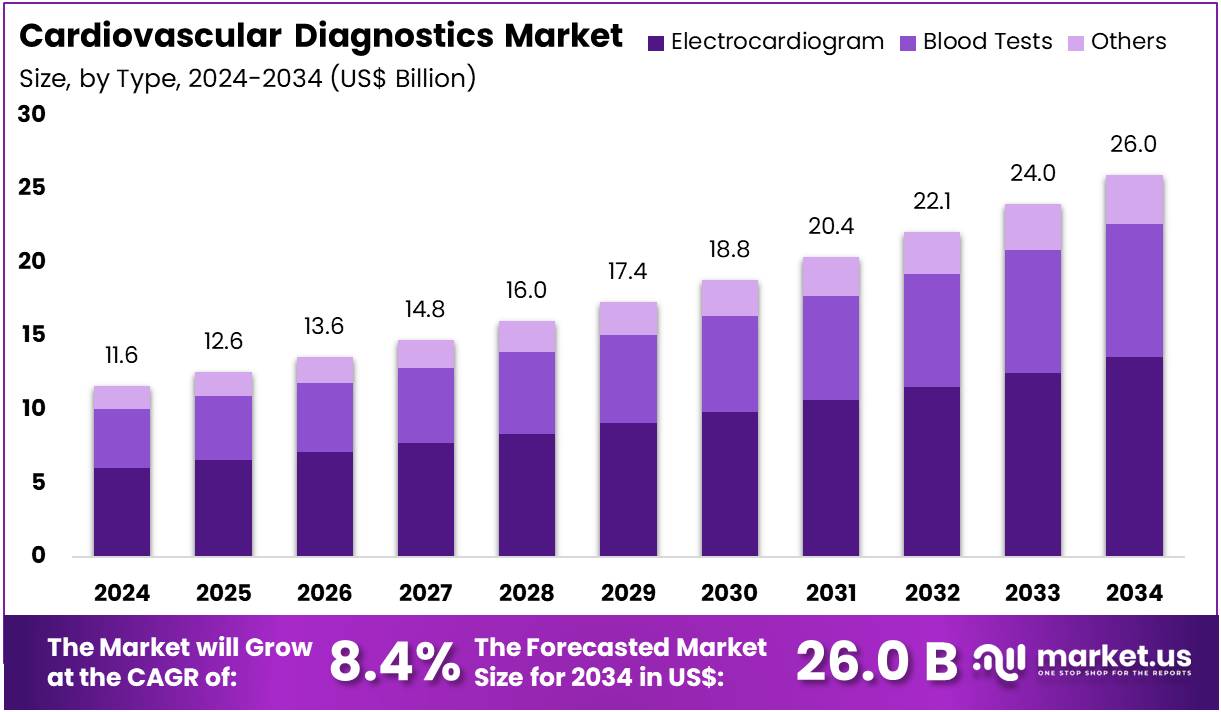
New York, NY – July 14, 2026 –Global Cardiovascular Diagnostics Market Size is expected to be worth around US$ 26.0 Billion by 2034 from US$ 11.6 Billion in 2024, growing at a CAGR of 8.4% during the forecast period 2025 to 2034. North America led the market by securing a market share of 41.8% in 2024. In 2024, North America led the market, achieving over 41.8% share with a revenue of US$ 4.8 Billion.
Cardiovascular diagnostics refers to the range of tests, technologies, and imaging procedures used to detect, monitor, and assess diseases affecting the heart and blood vessels. These diagnostic solutions play a critical role in the early identification of cardiovascular conditions such as coronary artery disease, heart failure, arrhythmias, congenital heart defects, and peripheral vascular disease. Common diagnostic methods include electrocardiograms (ECG), echocardiography, stress testing, cardiac biomarkers, Holter monitoring, computed tomography (CT), magnetic resonance imaging (MRI), and cardiac catheterization.
The growing prevalence of cardiovascular diseases, driven by aging populations, sedentary lifestyles, obesity, diabetes, and hypertension, has increased the demand for accurate and timely diagnostic solutions. Continuous advancements in imaging technologies, artificial intelligence, portable monitoring devices, and minimally invasive diagnostic techniques are enhancing diagnostic accuracy while improving patient outcomes and clinical efficiency.
Healthcare providers are increasingly adopting advanced cardiovascular diagnostic systems to support early disease detection, personalized treatment planning, and ongoing patient monitoring. In addition, rising healthcare investments, expanding access to diagnostic services, and growing awareness of preventive healthcare are supporting the broader adoption of these technologies worldwide. As cardiovascular diseases remain one of the leading causes of mortality globally, cardiovascular diagnostics continues to serve as a fundamental component of modern healthcare by enabling faster diagnosis, effective disease management, and improved long-term patient care.
Key Takeaways
- In 2024, the cardiovascular diagnostics market generated revenue of US$ 11.6 billion and is projected to reach US$ 26.0 billion by 2034, expanding at a CAGR of 8.4% during the forecast period.
- By type, the market is segmented into electrocardiogram, blood tests, and others, with the electrocardiogram segment accounting for the largest share of 52.3% in 2024.
- Based on end user, the market is categorized into hospitals, ambulatory surgical centers, and others, with hospitals holding the dominant share of 63.5%.
- North America dominated the global cardiovascular diagnostics market in 2024, capturing a 41.8% market share.
Regional Analysis
North America Leads the Cardiovascular Diagnostics Market
North America accounted for the largest share of the cardiovascular diagnostics market, representing 41.8% in 2024. Market growth is supported by the high prevalence of cardiovascular diseases, an aging population, and the widespread adoption of advanced diagnostic technologies that enable early and accurate disease detection. Although age-adjusted heart disease mortality in the United States has declined over recent decades, increasing cases of heart failure and arrhythmias continue to sustain demand for diagnostic solutions.
Strong healthcare infrastructure, favorable reimbursement policies, and continuous investments in research and development further strengthen regional market growth. Leading companies such as GE HealthCare and Siemens Healthineers continue to expand their cardiovascular diagnostic portfolios through technological innovation and product development, enhancing access to advanced imaging and monitoring systems.
The presence of established healthcare providers, high adoption of point-of-care testing, and increasing use of remote cardiac monitoring technologies are expected to support North America’s leadership in the cardiovascular diagnostics market throughout the forecast period.
Emerging Trends
- Rise of Wearable Devices: Wearable heart monitors and smartwatches are transforming cardiovascular diagnostics by enabling continuous tracking of heart rate, rhythm, and vital signs. These devices support early detection of heart abnormalities, improve patient engagement, provide real-time health data, and enable proactive management outside traditional healthcare settings.
- Integration of Artificial Intelligence (AI): Artificial intelligence is improving cardiovascular diagnostics by analyzing ECGs, imaging scans, and patient data with greater speed and accuracy. AI reduces diagnostic errors, supports clinical decision-making, enhances workflow efficiency, and enables healthcare providers to identify cardiovascular conditions at earlier stages.
- Focus on Non-Invasive Testing: Healthcare providers are increasingly adopting non-invasive cardiovascular diagnostic methods because they minimize patient discomfort and reduce procedure-related risks. Advanced imaging technologies and wearable sensors deliver accurate results, encourage regular screenings, improve patient acceptance, and support earlier diagnosis of heart diseases.
- Remote Monitoring and Telehealth: Remote monitoring and telehealth solutions enable continuous cardiovascular assessment without frequent hospital visits. Connected devices transmit real-time health data to physicians, allowing timely intervention, improving chronic disease management, expanding healthcare access in remote areas, and reducing hospital admissions and treatment costs.
- Personalized Diagnostics: Personalized cardiovascular diagnostics combine medical history, lifestyle factors, and genetic information to create individualized diagnostic and treatment strategies. This approach improves diagnostic precision, supports preventive healthcare, identifies disease risks earlier, and delivers more effective care tailored to each patient’s needs.
- Growing Use of Point-of-Care Devices: Point-of-care cardiovascular diagnostic devices provide rapid test results directly at clinics, emergency departments, and bedside settings. Their portability, ease of use, and quick turnaround times support faster clinical decisions, improve patient outcomes, and enhance efficiency across healthcare facilities and emergency care.
- Increasing Awareness and Screening Programs: Public awareness campaigns and cardiovascular screening programs encourage individuals to undergo regular heart health assessments. Early detection initiatives improve disease prevention, increase diagnostic testing demand, promote healthier lifestyles, reduce cardiovascular complications, and contribute to improved population health outcomes through timely medical intervention.
Use Cases
- Early Detection of Heart Disease: Cardiovascular diagnostic tests enable early identification of heart diseases such as arrhythmias, coronary artery disease, and heart attacks. Early diagnosis allows timely treatment, reduces disease progression, lowers complication risks, improves survival rates, and supports better long-term cardiovascular health outcomes for patients.
- Monitoring Chronic Heart Conditions: Patients with chronic cardiovascular diseases require regular diagnostic monitoring to evaluate heart function and treatment effectiveness. Continuous assessment helps physicians adjust medications, detect disease progression, prevent complications, reduce emergency hospitalizations, and improve long-term management of cardiovascular conditions through timely interventions.
- Assessing Risk in Healthy Individuals: Cardiovascular diagnostics help identify future heart disease risks among individuals with genetic predisposition, unhealthy lifestyles, or advancing age. Early risk assessment supports preventive care, encourages healthier behaviors, guides medical recommendations, and reduces the likelihood of developing serious cardiovascular conditions later.
- Emergency Diagnosis in Hospitals: Hospitals rely on rapid cardiovascular diagnostic tools, including ECGs and cardiac biomarker tests, to quickly diagnose heart attacks and other acute cardiac emergencies. Prompt diagnosis enables immediate treatment, minimizes heart damage, improves patient survival rates, and supports faster clinical decision-making.
- Post-Surgery or Post-Treatment Follow-Up: Following cardiovascular surgery or treatment, diagnostic tests monitor recovery, assess heart function, and detect potential complications. Regular follow-up evaluations help physicians optimize medications, prevent disease recurrence, improve rehabilitation outcomes, and ensure patients achieve better long-term cardiovascular health and stability.
- Fitness and Wellness Tracking: Wearable cardiovascular monitoring devices help fitness enthusiasts track heart rate, exercise intensity, and overall heart performance during physical activity. Continuous monitoring supports safer workouts, detects abnormal heart rhythms, encourages healthier habits, improves fitness planning, and promotes long-term cardiovascular wellness and prevention.
Frequently Asked Questions on Cardiovascular Diagnostics
- What factors are driving the growth of the cardiovascular diagnostics market?
The cardiovascular diagnostics market is primarily driven by the increasing prevalence of cardiovascular diseases, growing aging populations, technological advancements in diagnostic imaging, and rising awareness regarding early disease detection. Additionally, improvements in healthcare infrastructure and the adoption of minimally invasive diagnostic techniques continue to support sustained market expansion worldwide. - Which diagnostic technologies are commonly used for cardiovascular disease detection?
Common cardiovascular diagnostic technologies include electrocardiograms (ECG), echocardiography, cardiac computed tomography (CT), magnetic resonance imaging (MRI), stress testing, Holter monitoring, and cardiac biomarkers. These technologies provide comprehensive information regarding heart structure, function, blood flow, and electrical activity, enabling accurate diagnosis and effective clinical decision-making. - Which diseases are commonly diagnosed using cardiovascular diagnostic tools?
Cardiovascular diagnostic tools are widely used to identify conditions such as coronary artery disease, heart failure, arrhythmias, valvular heart disease, congenital heart defects, hypertension-related complications, and peripheral artery disease. Early diagnosis through these technologies enables timely intervention, improves disease management, and reduces long-term healthcare costs. - Which end users contribute significantly to the cardiovascular diagnostics market?
Hospitals, specialty cardiac centers, diagnostic laboratories, ambulatory surgical centers, and outpatient clinics represent the major end users of cardiovascular diagnostic products and services. These healthcare facilities increasingly adopt advanced diagnostic systems to enhance clinical accuracy, improve patient care, and efficiently manage the growing burden of cardiovascular disorders. - Which regions dominate the cardiovascular diagnostics market?
North America holds a significant share of the cardiovascular diagnostics market due to advanced healthcare infrastructure, high healthcare spending, and widespread adoption of innovative diagnostic technologies. Europe follows closely, while Asia-Pacific is experiencing the fastest growth owing to increasing healthcare investments, expanding patient populations, and improving access to diagnostic services. - How is artificial intelligence influencing cardiovascular diagnostics?
Artificial intelligence is transforming cardiovascular diagnostics by improving image interpretation, automating disease detection, supporting predictive analytics, and enhancing clinical workflow efficiency. AI-powered diagnostic platforms help healthcare professionals achieve faster, more accurate diagnoses while reducing human error and enabling personalized treatment planning for cardiovascular patients. - What is the future outlook for the cardiovascular diagnostics market?
The future of the cardiovascular diagnostics market remains positive due to continuous technological advancements, increasing adoption of digital healthcare solutions, and rising demand for early disease detection. Growing investments in artificial intelligence, wearable cardiac monitoring devices, and precision medicine are expected to support long-term market growth across both developed and emerging economies.
Conclusion
The cardiovascular diagnostics market is experiencing steady growth, supported by the increasing burden of cardiovascular diseases, technological innovation, and greater emphasis on early diagnosis and preventive healthcare. Advancements in artificial intelligence, wearable monitoring devices, non-invasive imaging, remote patient monitoring, and point-of-care diagnostics are improving diagnostic accuracy and patient outcomes while enhancing clinical efficiency.
North America continues to lead the market due to its advanced healthcare infrastructure and high technology adoption, while emerging regions offer significant growth opportunities. As healthcare providers increasingly prioritize personalized and timely cardiovascular care, demand for advanced diagnostic solutions is expected to remain strong, driving sustained market expansion over the forecast period.
Discuss your needs with our analyst
Please share your requirements with more details so our analyst can check if they can solve your problem(s)




