


Overview
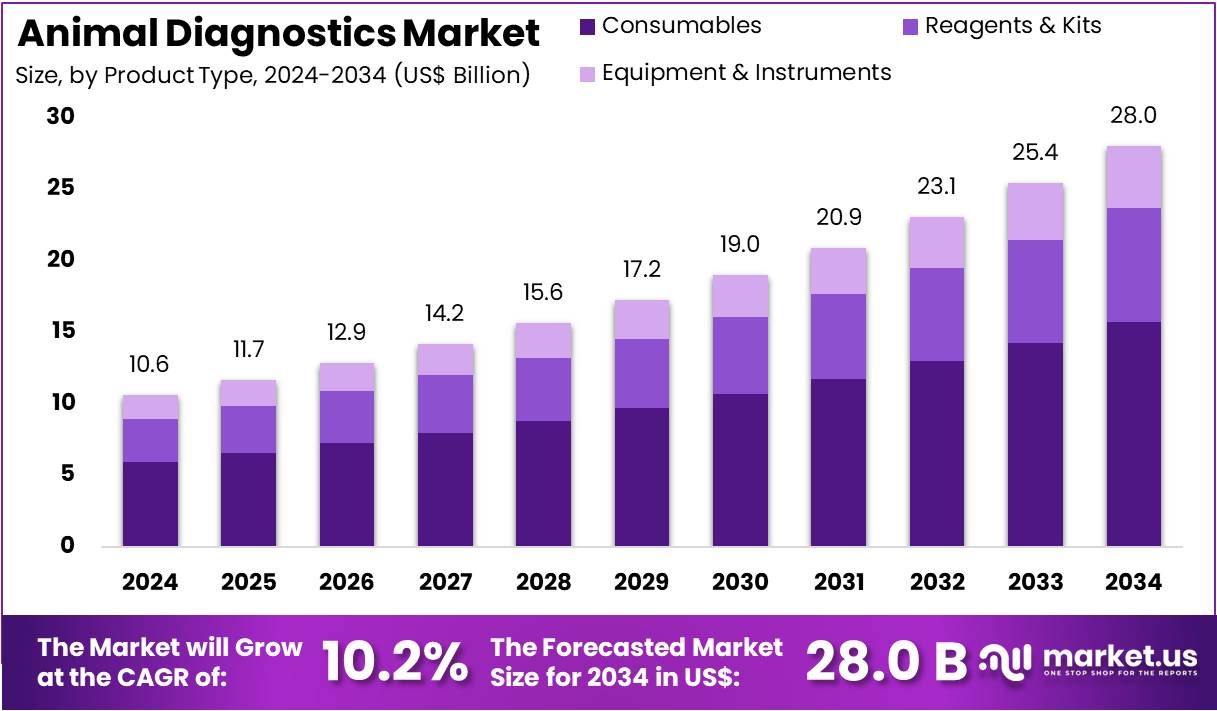
New York, NY – May 23, 2026 – The Animal Diagnostics Market Size is expected to be worth around US$ 28.0 billion by 2034 from US$ 10.6 billion in 2024, growing at a CAGR of 10.2% during the forecast period 2025 to 2034. North America held a dominant market position, capturing more than a 39.1% share and holds US$ 4.1 Million market value for the year.
The animal diagnostics market is witnessing steady growth due to the rising prevalence of infectious diseases in companion and livestock animals, increasing pet ownership, and growing awareness regarding animal health management. Animal diagnostics involves the use of laboratory tests, imaging systems, and molecular technologies to identify diseases, monitor health conditions, and support preventive healthcare in animals. These diagnostic solutions are widely used in veterinary hospitals, clinics, research institutes, and livestock farms.
The market is supported by advancements in diagnostic technologies such as polymerase chain reaction (PCR), immunodiagnostics, hematology, clinical biochemistry, and rapid testing kits. Increasing demand for early disease detection and preventive veterinary care has accelerated the adoption of advanced diagnostic tools across both developed and emerging economies. In addition, government initiatives aimed at controlling zoonotic diseases and ensuring food safety standards are contributing to market expansion.
Companion animals represent a significant share of the market owing to higher healthcare spending on pets and the growing trend of pet humanization. Meanwhile, the livestock segment continues to expand due to the need for disease surveillance and productivity improvement in poultry, cattle, and swine farming.
Key Takeaways
- The global animal diagnostics market generated revenue of US$ 10.6 billion in 2024 and is projected to reach US$ 28.0 billion by 2034, expanding at a CAGR of 10.2% during the forecast period.
- Based on product type, the market is segmented into consumables, reagents & kits, and equipment & instruments. Among these, the consumables segment dominated the market in 2024, accounting for a revenue share of 56.2%.
- By animal type, the market is categorized into production animals and companion animals. The companion animals segment emerged as the leading category, holding a market share of 60.5% in 2024.
- In terms of application, the market is segmented into clinical chemistry, microbiology, parasitology, histopathology, cytopathology, and others. The clinical chemistry segment accounted for the largest revenue share of 47.8% in 2024.
- Based on end user, the market is divided into reference laboratories, veterinarians, and animal owners/producers. The veterinarians segment led the market with a revenue share of 58.7%.
- North America dominated the global animal diagnostics market in 2024, capturing a market share of 39.1%.
Regional Analysis
North America accounted for the largest share of the animal diagnostics market in 2024, driven by increasing concerns regarding zoonotic diseases, rising pet ownership, and continuous advancements in veterinary diagnostic technologies. Growing awareness related to early disease detection and preventive animal healthcare has significantly increased the adoption of diagnostic solutions across the region.
The increasing number of companion animals and higher spending on pet healthcare have further supported market growth. In addition, government initiatives focused on livestock disease surveillance and food safety have accelerated the implementation of rapid and advanced diagnostic testing systems. The presence of established market players and expanding veterinary diagnostic services have also contributed to regional market expansion.
Asia Pacific is anticipated to register the fastest CAGR during the forecast period owing to rapid growth in livestock production, increasing investments in veterinary healthcare infrastructure, and supportive government initiatives for animal disease control. Rising awareness regarding pet health and preventive care is driving the demand for advanced diagnostic solutions across emerging economies.
Several countries in the region are strengthening disease monitoring programs, expanding veterinary laboratory networks, and improving testing accessibility. Furthermore, increasing biosecurity measures, growing pet insurance adoption, and technological advancements in animal healthcare are expected to support strong market growth across the Asia Pacific region.
Emerging Trends
- Growing Focus on Pet Health: Pet owners increasingly consider animals as family members, leading to higher spending on preventive healthcare and diagnostic testing. Rising awareness regarding pet diseases and routine screenings is driving demand for accurate, affordable, and rapid diagnostic solutions, particularly for companion animals such as cats and dogs.
- Advanced Testing Technologies Are Expanding: Veterinary clinics are rapidly adopting advanced diagnostic technologies such as PCR systems, digital imaging, and molecular testing tools. These technologies improve diagnostic accuracy, enable early disease detection, reduce treatment delays, and enhance veterinary workflow efficiency, supporting improved healthcare outcomes for animals across various settings.
- Rise of Mobile and At-Home Diagnostics: Portable diagnostic devices and at-home testing kits are gaining popularity among pet owners and livestock farmers. These solutions improve access to veterinary testing in remote locations, support early disease detection, reduce travel requirements, and minimize stress for animals during routine health examinations and screenings.
- Increasing Awareness of Zoonotic Diseases: Growing concerns regarding zoonotic diseases such as rabies and avian influenza are increasing the demand for animal diagnostics. Governments and healthcare organizations are strengthening disease surveillance programs, while veterinarians are focusing on early detection methods to reduce transmission risks between animals and humans.
- Rising Demand for Livestock Disease Testing: Livestock producers are increasingly adopting diagnostic testing to identify diseases early and reduce economic losses. Regular screening of poultry, cattle, and swine supports food safety, improves productivity, enhances animal welfare, and helps prevent large-scale outbreaks that could impact agricultural and food supply systems.
- Digital Transformation in Veterinary Clinics: Veterinary clinics are integrating digital software platforms and cloud-based systems to manage diagnostic records and patient history. These technologies improve data accessibility, support faster clinical decisions, enhance communication with pet owners, and contribute to more efficient and personalized veterinary healthcare management practices.
- High Adoption of Point-of-Care Devices: Point-of-care diagnostic devices are witnessing strong demand due to their ability to provide rapid on-site results during emergencies and farm visits. These portable systems support quick treatment decisions, improve accessibility in rural areas, and enhance overall efficiency in veterinary and livestock healthcare services.
Use Cases
- Routine Health Checks at Veterinary Clinics: Veterinarians use diagnostic tools during routine check-ups to identify infections, chronic diseases, and parasites at an early stage. Preventive diagnostics improve treatment outcomes, reduce severe health complications, and support long-term animal wellness, while providing reassurance and confidence to pet owners regarding animal health.
- Livestock Disease Control on Farms: Farmers utilize diagnostic testing to detect infectious diseases in livestock before outbreaks occur. Early identification allows isolation of infected animals, reduces production losses, limits disease transmission, and supports sustainable farming practices while improving animal welfare and maintaining the quality of food production systems.
- Emergency Care in Pet Hospitals: Animal hospitals rely on advanced diagnostic systems during emergency situations to rapidly identify injuries, infections, and critical health conditions. Fast and accurate testing enables veterinarians to make immediate treatment decisions, improving survival rates and enhancing the quality of emergency veterinary care services.
- Monitoring Vaccine Effectiveness in Animals: Veterinarians use diagnostic tests to evaluate the effectiveness of vaccination programs in livestock and poultry populations. These tests confirm immune response development, reduce outbreak risks, improve disease control strategies, and ensure that vaccination efforts provide adequate protection against infectious animal diseases.
- Disease Surveillance by Government Agencies: Government authorities utilize animal diagnostics for monitoring and controlling disease outbreaks in livestock, pets, and wildlife populations. Surveillance programs support early detection of zoonotic diseases, strengthen public health protection, improve food safety standards, and enable faster responses to emerging animal health threats.
- Export Certification Testing for Animal Products: Diagnostic testing is essential before exporting livestock and animal-derived products to international markets. These tests confirm disease-free status, ensure compliance with global trade regulations, prevent border rejections, and strengthen confidence in the safety and quality of exported agricultural and animal products.
- Detection of Genetic Disorders in Breeding Programs: Animal breeders use genetic diagnostic testing to identify inherited disorders and select healthier breeding animals. Early screening improves breed quality, reduces future health complications, supports responsible breeding practices, and enhances the overall performance, reliability, and long-term health of animal populations.
Frequently Asked Questions on Animal Diagnostics
- What factors are driving the growth of the animal diagnostics market?
The growth of the animal diagnostics market is driven by increasing pet ownership, rising prevalence of zoonotic diseases, growing livestock production, and higher demand for preventive veterinary care. Technological advancements in rapid testing and molecular diagnostics are also supporting market expansion globally. - Which technologies are commonly used in animal diagnostics?
Animal diagnostics commonly involves technologies such as immunodiagnostics, polymerase chain reaction (PCR), clinical biochemistry, hematology, microbiology, and imaging systems. These technologies help veterinarians identify infections, monitor animal health conditions, and improve treatment outcomes through accurate and early disease detection. - Why are companion animals important in the animal diagnostics market?
Companion animals account for a major share of the market due to increasing pet adoption and rising expenditure on pet healthcare services. Growing awareness regarding preventive care, regular health screening, and early disease diagnosis has significantly increased demand for veterinary diagnostic solutions. - Which region dominates the global animal diagnostics market?
North America dominates the global animal diagnostics market due to advanced veterinary healthcare infrastructure, high pet ownership rates, and increasing investment in disease surveillance programs. Strong presence of major diagnostic companies and growing adoption of advanced testing technologies further support regional market growth. - Why is the Asia Pacific animal diagnostics market growing rapidly?
The Asia Pacific animal diagnostics market is growing rapidly because of increasing livestock production, rising awareness regarding animal health, and supportive government initiatives for disease control. Expanding veterinary healthcare facilities and growing demand for advanced diagnostic technologies are also contributing to regional growth. - Who are the major end users in the animal diagnostics market?
Major end users in the animal diagnostics market include veterinarians, reference laboratories, and animal owners or producers. Veterinarians represent the leading segment due to their extensive use of diagnostic tools for disease detection, treatment planning, and preventive healthcare management in animals. - What are the major applications of animal diagnostics?
Animal diagnostics is widely used in applications such as clinical chemistry, microbiology, parasitology, histopathology, and cytopathology. Among these, clinical chemistry holds a significant market share because it supports routine health assessments and early identification of various animal diseases and disorders.
Conclusion
The global animal diagnostics market is expected to witness strong growth due to rising pet ownership, increasing prevalence of zoonotic and infectious diseases, and growing awareness regarding preventive animal healthcare. Advancements in diagnostic technologies, including PCR, rapid testing kits, and digital diagnostic systems, are improving disease detection and treatment outcomes across companion and production animals.
North America continues to dominate the market, while Asia Pacific is anticipated to register the fastest growth due to expanding livestock production and improving veterinary infrastructure. Increasing adoption of point-of-care devices, digital veterinary solutions, and livestock disease surveillance programs will further support long-term market expansion globally.
Discuss your needs with our analyst
Please share your requirements with more details so our analyst can check if they can solve your problem(s)




