


Overview
New York, NY – Aug 07, 2026 – The Global At-Home Therapeutic Beauty Devices Market size is expected to be worth around US$ 11.9 billion by 2034 from US$ 5.2 billion in 2024, growing at a CAGR of 8.6% during the forecast period 2025 to 2034. North America held a dominant market position, capturing more than a 40.9% share and holding a US$ 2.1 billion market value for the year.
The at-home therapeutic beauty devices market is witnessing strong growth as consumers increasingly seek professional-level skincare results with the convenience of home-based treatments. Devices such as LED light therapy masks, microcurrent facial devices, radiofrequency skin tightening tools, and ultrasonic cleansing devices are gaining popularity as affordable alternatives to in-clinic cosmetic procedures.
According to the American Society of Plastic Surgeons (ASPS), approximately 28.2 million minimally invasive cosmetic procedures were performed by its members in 2023, highlighting the growing demand for non-surgical aesthetic solutions. Technological innovation is further accelerating market development, with manufacturers integrating artificial intelligence (AI), smartphone connectivity, and personalized treatment features into beauty devices. Multi-functional platforms combining technologies such as LED therapy, microcurrent stimulation, and radiofrequency energy are becoming increasingly common.
The growing focus on skin health is also influencing consumer adoption, as the Skin Cancer Foundation reported a 7.3% increase in melanoma cases in 2024 compared with 2023, encouraging greater awareness of advanced skincare monitoring and preventive solutions. The market is also benefiting from increasing clinical research, improved product safety validation, and expansion through e-commerce channels.
Companies are investing in evidence-based technologies to enhance consumer trust and expand applications beyond anti-aging into acne management, pigmentation control, and skin rejuvenation. With rising beauty technology adoption and demand for personalized skincare, at-home therapeutic beauty devices are becoming an important segment within the global aesthetic and wellness industry.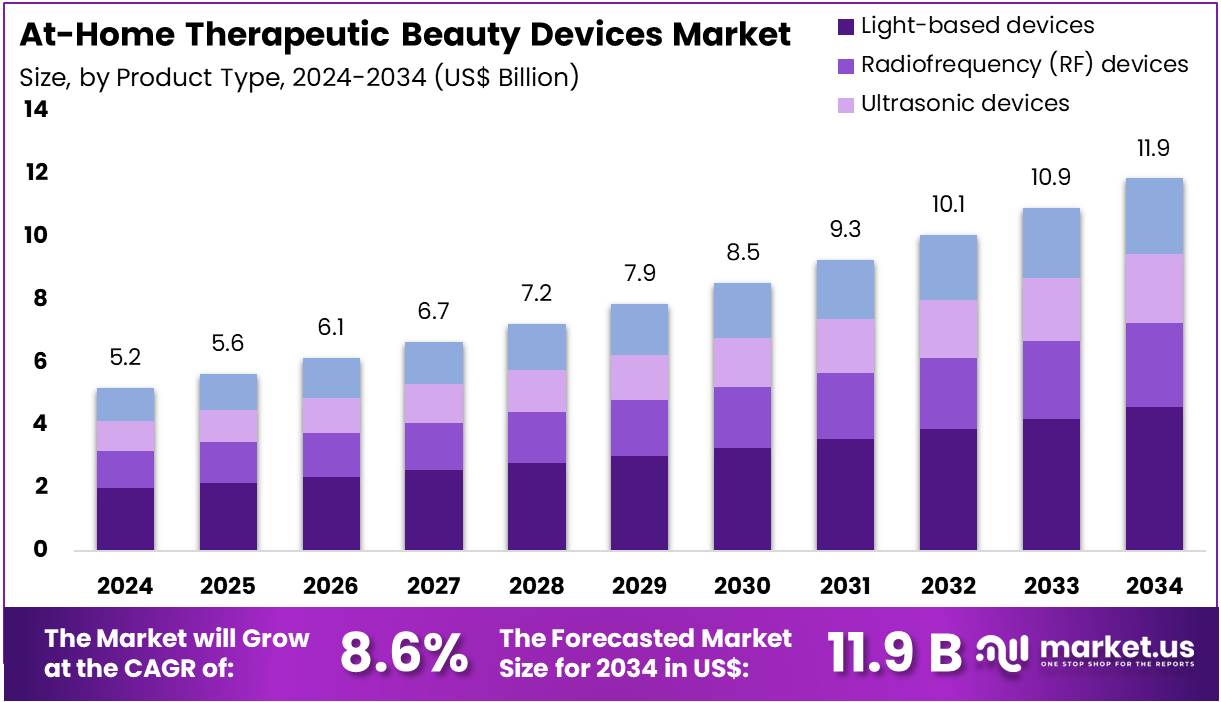
Key Takeaways
- In 2024, the at-home therapeutic beauty devices market generated revenue of US$ 5.2 billion and is projected to grow at a CAGR of 8.6%, reaching approximately US$ 11.9 billion by 2034.
- Based on product type, the market is segmented into light-based devices, radiofrequency (RF) devices, ultrasonic devices, and microneedle tools. Among these, light-based devices dominated the market in 2023, accounting for a 38.5% market share.
- Based on application, the market is categorized into skin rejuvenation & anti-aging, acne treatment, hair removal, pigmentation correction, and others. The skin rejuvenation & anti-aging segment held the leading position with a 42.8% market share.
- Based on sales channel, the market is segmented into e-commerce/brand websites, specialty stores, pharmacies, and multibrand retail chains. The e-commerce/brand websites segment dominated the market with the largest revenue share of 46.3%.
- North America emerged as the leading regional market in 2023, capturing a significant 40.9% market share due to high consumer adoption of advanced beauty technologies and strong demand for at-home aesthetic solutions.
Statistical Information
- Men’s Grooming Market Expansion Supports Male Beauty Device Demand: The U.S. men’s grooming products market size was estimated at USD 46.54 billion in 2023 and is expected to grow at a CAGR of 8.3% from 2024 to 2030, driven by increasing male participation in skincare and aesthetic routines. Male skincare products specifically grew 9.2% in 2023 to reach $15.4 billion, reflecting increased awareness and social media influence on male grooming habits.
- UV Exposure Awareness Drives Protective Skincare Technology: The World Health Organization reports that over 1.5 million cases of skin cancers were diagnosed globally in 2020, with excessive ultraviolet radiation (UVR) exposure causing around 1.2 million new cases of non-melanoma skin cancers and 325,000 melanomas worldwide. Experts believe that 4 out of 5 cases of skin cancer could be prevented through protecting against overexposure to sunlight, according to WHO guidance on ultraviolet radiation and skin cancer prevention.
- Aging Population Growth Drives Anti-Aging Device Demand: The global population aged 65+ reached 10.3% in 2024, nearly double the 5.5% share in 1974, and is projected to reach 20.7% by 2074 according to UN population projections. The number of people aged 60+ worldwide is projected to increase from 1.1 billion in 2023 to 1.4 billion by 2030, with life expectancy at birth reaching 73.3 years in 2024, up 8.4 years since 1995.
- Rising Skin Cancer Cases Boost Preventive Skincare Technology Adoption: The American Cancer Society estimates that the United States will diagnose approximately 104,960 new invasive melanoma cases in 2025, including 61,160 cases in men and 43,800 cases in women. Additionally, the CDC estimates that approximately 6.1 million people in the United States are treated annually for non-melanoma skin cancers, with related healthcare costs reaching about $8.9 billion per year.
- E-Commerce Growth Enables Direct-to-Consumer Beauty Device Sales: The U.S. Census Bureau reported that U.S. retail e-commerce sales for the third quarter of 2025 totaled $310.3 billion, representing a 1.9% increase from the second quarter and accounting for 16.4% of total U.S. retail sales. In the beauty and personal care sector specifically, 41% of all sales occurred through e-commerce platforms in the first half of 2024, a marked increase from previous years.
- Skin Cancer Prevention Economics Support Preventive Skincare Adoption: Annual U.S. skin cancer treatment costs total $8.1 billion. One in five Americans develops skin cancer by age 70. Early detection yields a 99% five-year melanoma survival rate, supporting preventive skincare technology investment for early detection and maintenance.
- Beauty Device Industry Sales Growth Reflects Strong Consumer Demand: Beauty device sales reached $20.6 billion in 2025. Global beauty device industry now exceeds $67 billion. Facial care device spending hit $5.3 billion in 2025, signaling consumer shift toward at-home, technology-enabled professional-grade skincare solutions.
- E-Commerce Retail Sales Growth Accelerates Device Distribution: U.S. retail e-commerce totaled $326.7 billion in Q1 2026, up 2.7% from Q4 2025. E-commerce grew 6.7x faster than physical stores in 3Q24, contributing 61% of total dollar growth, supporting direct-to-consumer beauty device distribution.
Regional Analysis
North America led the market by securing a market share of 40.9% in 2023.
North America represents a leading region for at-home therapeutic beauty devices due to strong consumer adoption of advanced skincare technologies, high cosmetic awareness, and increasing demand for non-invasive aesthetic treatments. The American Academy of Dermatology (AAD) states that acne affects up to 50 million Americans annually, creating significant demand for convenient home-based treatment solutions such as LED light therapy devices.
The region also benefits from a well-established regulatory framework, with the U.S. FDA providing clearance pathways for various aesthetic technologies, including light-based, microneedling, and energy-based devices, improving consumer confidence.Asia Pacific is experiencing rapid adoption of at-home beauty devices due to rising skincare awareness, expanding digital commerce, and growing interest in personalized beauty solutions.
Increasing internet penetration and social media influence are encouraging consumers to adopt technology-enabled skincare products. According to the World Bank, East Asia and Pacific countries have experienced significant digital connectivity growth, supporting online access to personal care technologies. Growing demand for affordable, convenient, and preventive skincare solutions is expected to strengthen regional market expansion.
Emerging Trends
- AI-Powered Personalized Skincare Solutions: Smart beauty devices are increasingly using artificial intelligence, sensors, and mobile applications to analyze skin conditions and customize treatment routines. The FDA’s Digital Health Center highlights the growing role of software-based technologies in personalized healthcare and consumer wellness applications.
- Rising Demand for At-Home Acne Treatment Solutions: Acne remains a major consumer concern, creating opportunities for blue-light therapy and other home-based devices. The American Academy of Dermatology states that acne affects up to 50 million people in the United States every year, supporting demand for non-invasive treatment technologies.
- Expansion of Anti-Aging and Skin Rejuvenation Devices: Aging population growth is increasing interest in wrinkle reduction and skin-firming technologies. The United Nations reported that the global population aged 65 years and above reached approximately 761 million people in 2021, supporting demand for anti-aging skincare solutions.
- Growth of Microneedling-Based Home Treatments: Microneedling devices are gaining attention for improving acne scars and wrinkles. The FDA has authorized specific microneedling devices for improving facial acne scars, facial wrinkles, and abdominal scars in adults aged 22 years and older, supporting adoption of collagen-stimulation technologies.
- Development of Multifunctional Beauty Devices: Manufacturers are combining LED therapy, microcurrent, radiofrequency, and other technologies into single devices. These multifunctional platforms allow consumers to address multiple concerns, including wrinkles, uneven skin tone, and skin firmness through simplified home-care routines.
- Increasing Focus on Preventive Skin Health: Growing awareness of skin diseases is encouraging consumers to invest in preventive skincare technologies. The CDC identifies skin cancer as the most common cancer in the United States, with approximately 6.1 million people treated annually for basal and squamous cell cancers, increasing focus on skin monitoring.
Use Cases
- Home-Based Anti-Aging and Skin Rejuvenation: At-home therapeutic beauty devices are widely used for reducing visible signs of aging, including fine lines, wrinkles, and reduced skin firmness. LED masks, microcurrent devices, and radiofrequency tools help consumers maintain skin appearance without frequent clinical visits. The FDA recognizes several aesthetic devices designed for wrinkle reduction and skin appearance improvement.
- Acne Management Using LED Light Therapy Devices: Blue and red LED devices are increasingly used for managing acne-related concerns by supporting non-invasive skincare routines. The American Academy of Dermatology states that acne affects up to 50 million Americans annually, creating demand for convenient home treatment options.
- Treatment of Acne Scars and Skin Texture Improvement: Microneedling-based home beauty technologies are used for improving the appearance of acne scars, uneven skin texture, and wrinkles. The FDA has authorized specific microneedling devices for improving facial acne scars and facial wrinkles in adults aged 22 years and older.
- Skin Firming and Collagen Stimulation Applications: Radiofrequency and microcurrent devices are used by consumers seeking improved skin firmness and facial contouring. These technologies deliver controlled energy or electrical stimulation to support cosmetic skin improvement. FDA-regulated aesthetic devices include technologies designed for non-invasive skin tightening and appearance enhancement.
- Pigmentation Correction and Skin Tone Improvement: Light-based and energy-based beauty devices are increasingly used for addressing uneven skin tone, dark spots, and pigmentation concerns. Consumers are adopting these technologies as part of personalized skincare routines focused on improving overall skin appearance and maintaining healthier-looking skin.
- Preventive Skin Health Monitoring and Maintenance: Consumers are using advanced beauty devices as part of preventive skincare routines to monitor and maintain skin health. The CDC identifies skin cancer as the most common cancer in the United States, with millions of skin cancer treatments performed annually, increasing awareness of regular skin care practices.
Frequently Asked Questions on At-Home Therapeutic Beauty Devices
- What factors are driving the growth of the at-home therapeutic beauty devices market?
The market is growing due to rising consumer demand for convenient skincare solutions, increasing preference for non-invasive aesthetic treatments, technological advancements, and greater acceptance of self-care routines. Consumers are seeking professional-like results while reducing clinic visits and treatment costs. - What are the major applications of at-home therapeutic beauty devices?
Major applications include skin rejuvenation, anti-aging, acne treatment, pigmentation correction, hair removal, and overall skin maintenance. Consumers use these devices to improve appearance, support skincare routines, and address cosmetic concerns through technology-enabled home treatment solutions. - How does technology influence the at-home therapeutic beauty devices market?
Technology is transforming the market through AI-based personalization, smartphone connectivity, and multifunctional platforms. Advanced devices can analyze skin conditions, recommend treatment routines, and combine multiple technologies such as LED, microcurrent, and radiofrequency for customized skincare experiences. - Are at-home therapeutic beauty devices approved by regulatory authorities?
Several aesthetic beauty devices are regulated by authorities such as the U.S. FDA based on their intended use and safety requirements. Regulatory clearance helps improve consumer confidence by ensuring that specific devices meet established safety and performance standards. - Why is anti-aging a major application area in this market?
Anti-aging remains a major application because consumers increasingly seek solutions for wrinkles, fine lines, and skin firmness. Growing awareness about preventive skincare and the expanding aging population are encouraging adoption of home-based technologies focused on maintaining youthful skin appearance. - How is e-commerce supporting market growth for beauty devices?
E-commerce platforms are improving access to at-home therapeutic beauty devices by allowing consumers to compare products, read reviews, and purchase directly from brands. Digital shopping growth is helping companies expand their reach and promote technology-based skincare solutions globally. - Which region is leading the at-home therapeutic beauty devices market?
North America is a leading region due to high consumer spending on beauty products, strong demand for non-invasive cosmetic procedures, advanced healthcare infrastructure, and favorable regulatory support. Growing adoption of home skincare technologies continues to strengthen regional market growth. - What future trends are expected in the at-home therapeutic beauty devices market?
Future trends include increased adoption of AI-powered devices, multifunctional skincare platforms, connected beauty technologies, and clinically validated products. Consumers are expected to prefer personalized, convenient, and scientifically supported solutions that combine beauty, wellness, and preventive skincare benefits.
Conclusion
The at-home therapeutic beauty devices market is experiencing strong growth due to increasing consumer demand for convenient, non-invasive, and technology-driven skincare solutions. Rising adoption of LED therapy, radiofrequency devices, microcurrent tools, and AI-enabled personalized treatments is transforming home-based beauty routines.
Growing awareness of skin health, anti-aging solutions, acne management, and preventive care is further supporting market expansion. Regulatory support, clinical validation, and digital commerce growth are improving consumer confidence and accessibility. With continuous innovation and increasing preference for professional-quality results at home, the market is expected to witness sustained development across global regions, particularly North America and Asia Pacific.
Discuss your needs with our analyst
Please share your requirements with more details so our analyst can check if they can solve your problem(s)




