


Overview
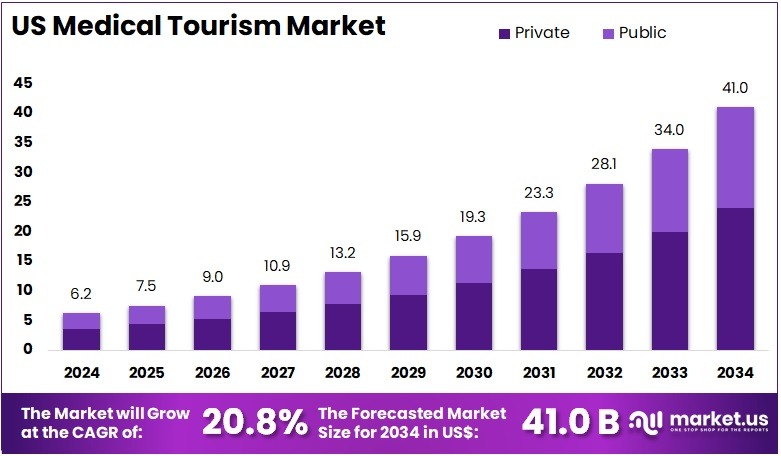
New York, NY – June 22, 2026 – The US Medical Tourism Market Size is expected to be worth around US$ 41.0 Billion by 2034 from US$ 6.2 Billion in 2024, growing at a CAGR of 20.8% during the forecast period 2025 to 2034.
The United States Medical Tourism market continues to attract a growing number of international patients seeking advanced healthcare services, cutting-edge medical technologies, and highly specialized treatments. The country is recognized globally for its world-class healthcare infrastructure, internationally accredited hospitals, and experienced medical professionals across a wide range of specialties, including oncology, cardiology, orthopedics, neurology, and organ transplantation.
Medical tourists visit the United States for access to innovative treatment options, complex surgical procedures, personalized care, and clinical expertise that may not be readily available in their home countries. The presence of leading research institutions and continuous advancements in medical technology further strengthens the country’s position as a preferred destination for specialized healthcare services.
The market is supported by increasing demand for high-quality treatment outcomes, rising prevalence of chronic diseases, and growing awareness of advanced therapeutic solutions. In addition, streamlined international patient services, including language support, travel coordination, and customized healthcare packages, have enhanced the overall patient experience.
Major medical tourism destinations within the United States include renowned healthcare hubs such as New York, California, Texas, Florida, and Massachusetts, where leading hospitals and specialty centers provide comprehensive treatment options for international patients.
With ongoing investments in healthcare innovation and patient-centered care, the U.S. medical tourism market is expected to maintain steady growth, reinforcing its reputation as a global leader in advanced and specialized healthcare services.
Key Takeaways
- The U.S. medical tourism market was valued at US$ 6.2 billion in 2024 and is projected to reach US$ 41.0 billion by 2034, expanding at a CAGR of 20.8% during the forecast period.
- Based on service provider, the market is segmented into public and private providers. The private segment dominated the market in 2024, accounting for a 58.6% share of total revenue.
- By service type, the market is categorized into medical treatment, wellness treatment, and alternative treatment. Among these, the medical treatment segment held the largest market share of 52.3% in 2024.
Segmentation Analysis
- Service Provider Analysis: In 2024, private healthcare providers accounted for a dominant 58.6% share of the market. The growth of this segment can be attributed to longer waiting times in public systems and increasing healthcare costs. Private hospitals offer faster access to treatment, advanced technologies, personalized care, comfort, and higher privacy standards. These advantages attract both domestic and international patients. Additionally, rising demand for cosmetic and elective procedures is strengthening the role of private healthcare providers in medical tourism expansion.
- Service Analysis: Medical treatment services represented 52.3% of the total service share in 2024. Demand growth is driven by patients seeking advanced and specialized procedures that are unavailable or unaffordable in their home countries. The increasing prevalence of chronic diseases such as cancer and organ failure is further supporting this trend. High demand is observed for complex interventions including transplants and orthopedic surgeries. The United States remains a key destination due to its advanced medical infrastructure and leadership in healthcare innovation, sustaining continued growth in high-value treatment services.
Emerging Trends
- Increased Use of Telemedicine: International patients are increasingly using telemedicine to consult U.S. doctors before travel. Virtual consultations help in treatment planning and reduce uncertainty. Post-treatment follow-ups are also conducted remotely. This improves convenience, lowers costs, builds early trust, and supports continuous care across borders.
- Rising Demand for Specialized Treatments: A growing number of patients are traveling to the U.S. for advanced treatments such as oncology, organ transplants, fertility care, and complex surgeries. Limited availability and lower technological advancement in home countries drive this demand, while U.S. hospitals offer superior expertise and outcomes.
- Growth of Digital Health Tools: Hospitals are adopting digital health solutions including remote monitoring systems, mobile applications, and electronic health records. These tools enable continuous patient tracking after returning home. Medical teams can monitor recovery remotely, improving long-term outcomes while reducing the need for physical hospital visits.
- Development of Full-Service Medical Travel Packages: Comprehensive medical tourism packages are increasingly offered by hospitals and facilitators. These include treatment coordination, accommodation, transport, translation, and additional services. Such integrated solutions simplify travel, enhance patient comfort, and strengthen confidence among international patients seeking structured healthcare experiences.
Use Cases
- Cancer and Critical Illness Treatment: The U.S. is frequently chosen for cancer, cardiovascular, and neurological treatments due to advanced technology and clinical trials. Patients benefit from expert physicians, early diagnosis, and personalized therapies. These factors collectively improve survival rates and position the U.S. as a preferred destination for critical care.
- Organ Transplants and Advanced Surgeries: Patients travel to the U.S. for complex surgeries including heart, brain, and organ transplants. High surgical expertise, faster scheduling, and advanced robotic procedures contribute to better outcomes. Enhanced post-operative care and reduced recovery time further strengthen the country’s position in global surgical tourism.
- Fertility and Reproductive Health: The U.S. attracts international patients for IVF, ICSI, egg donation, and surrogacy services. Advanced reproductive technologies, higher success rates, and access to genetic screening drive demand. Greater transparency, privacy, and regulatory support make it a preferred destination for individuals and couples seeking fertility solutions.
- Cosmetic and Aesthetic Procedures: Cosmetic treatments such as plastic surgery, dermatology, and dental procedures are widely sought in the U.S. Patients benefit from skilled surgeons, strict safety protocols, and modern equipment. High-quality outcomes and customized care encourage international travel, often combined with leisure activities in major U.S. cities.
Frequently Asked Questions on US Medical Tourism
- Why do international patients choose the United States for medical treatment?
International patients choose the United States due to its high-quality healthcare services, internationally accredited hospitals, cutting-edge medical technologies, and access to specialized treatments. The availability of experienced healthcare professionals and strong clinical outcomes further enhances the country’s attractiveness as a medical tourism destination. - Which medical procedures are most commonly sought by medical tourists in the United States?
Common procedures sought by medical tourists include cancer treatment, cardiovascular surgeries, orthopedic procedures, neurological treatments, organ transplants, fertility treatments, and cosmetic surgeries. Many patients travel to the U.S. to access specialized care that may not be available in their home countries. - What factors are driving the growth of the US medical tourism market?
The growth of the US medical tourism market is being driven by advancements in healthcare technology, increasing demand for specialized treatments, rising global awareness of U.S. healthcare capabilities, and the growing prevalence of complex medical conditions requiring advanced clinical expertise and innovative treatment solutions. - Which regions in the United States attract the highest number of medical tourists?
States such as Florida, Texas, California, New York, and Massachusetts attract substantial numbers of medical tourists. These regions host renowned healthcare institutions, specialized treatment centers, and major international airports, making them convenient destinations for patients seeking advanced medical care. - What role do accredited hospitals play in the US medical tourism market?
Accredited hospitals play a critical role by ensuring compliance with international healthcare standards and patient safety requirements. Accreditation enhances trust among international patients and demonstrates a hospital’s commitment to quality care, clinical excellence, and continuous performance improvement. - How does technology influence the US medical tourism industry?
Technology significantly influences the industry through telemedicine, digital patient management systems, robotic-assisted surgeries, artificial intelligence-based diagnostics, and remote follow-up services. These innovations improve patient experiences, treatment outcomes, and healthcare accessibility for international patients before and after travel. - Who are the key participants in the US medical tourism ecosystem?
The ecosystem includes hospitals, specialty clinics, healthcare facilitators, travel agencies, insurance providers, accommodation services, and government agencies. Collaboration among these stakeholders helps streamline patient journeys, improve service quality, and enhance the overall international healthcare experience. - How does medical tourism benefit the US healthcare industry?
Medical tourism contributes additional revenue streams for healthcare providers, supports hospital expansion initiatives, promotes medical innovation, and strengthens the global reputation of U.S. healthcare institutions. It also creates economic benefits through increased spending on travel, lodging, and related services.
Conclusion
The United States medical tourism market is expected to demonstrate sustained expansion, supported by advanced healthcare infrastructure, strong clinical expertise, and continuous technological innovation. The market growth is primarily driven by increasing demand for specialized treatments, rising prevalence of chronic diseases, and higher preference for private healthcare providers.
The presence of internationally accredited hospitals and comprehensive patient support services further enhances global patient inflow. Emerging trends such as telemedicine and digital health integration are strengthening care delivery across borders. With major healthcare hubs and ongoing investments in medical innovation, the U.S. is positioned to remain a leading global destination for medical tourism.
Discuss your needs with our analyst
Please share your requirements with more details so our analyst can check if they can solve your problem(s)




