
Overview
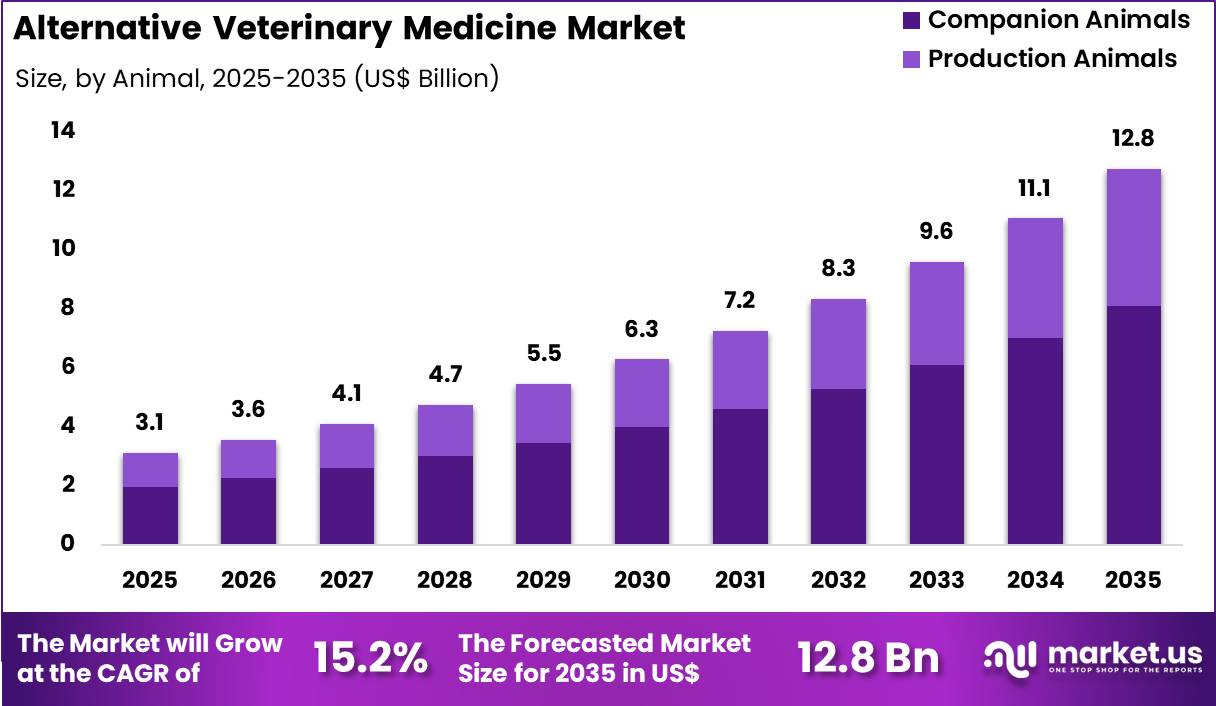
New York, NY – Nov 11 2026 – Global Alternative Veterinary Medicine Market size is expected to be worth around US$ 12.8 Billion by 2035 from US$ 3.1 Billion in 2025, growing at a CAGR of 15.2% during the forecast period 2026-2035. In 2025, North America led the market, achieving over 36.1% share with a revenue of US$ 1.1 Billion.
Alternative Veterinary Medicine refers to the use of complementary and natural treatment approaches to support animal health, prevent diseases, and improve overall well-being. It includes various practices such as herbal medicine, acupuncture, homeopathy, nutritional therapy, traditional Chinese veterinary medicine, and physical rehabilitation.
Growing awareness of animal welfare, preventive healthcare, and holistic treatment approaches has increased interest in alternative veterinary medicine among pet owners, livestock farmers, and veterinary professionals. These approaches are increasingly being explored as supportive options alongside conventional veterinary treatments, particularly for managing chronic conditions, improving mobility, supporting recovery, and promoting general wellness.
The field focuses on a more holistic understanding of animal health by considering nutrition, lifestyle, physical condition, and environmental factors. However, the effectiveness and safety of individual therapies vary, and scientific evidence remains limited for certain treatment methods.
As veterinary healthcare continues to evolve, alternative veterinary medicine is gaining attention as a complementary area of animal healthcare. Greater investment in clinical research, evidence-based practices, product innovation, and veterinary education is expected to support the development of this field while strengthening its role in comprehensive animal healthcare.
Key Takeaways
- In 2025, the global market was valued at US$ 3.1 Billion and is projected to grow at a CAGR of 15.2%, reaching US$ 12.8 Billion by 2035.
- Based on type, the market is segmented into Ayurvedic, Traditional Chinese Veterinary Medicine (TCVM), homeopathic, and others. Among these, the Ayurvedic segment dominated the market, accounting for a share of 51.3%.
- By animal type, the market is categorized into companion animals and production animals, with the companion animals segment holding the leading share of 63.5%.
- Based on the route of administration, the market is classified into oral, topical, and others. The oral segment dominated the market, capturing the largest revenue share of 53.1%.
- By distribution channel, the market is segmented into veterinary hospitals/clinic pharmacies, retail/specialty stores, e-commerce, and others. Veterinary hospitals/clinic pharmacies emerged as the leading segment, accounting for 49.5% of the total market revenue.
- Regionally, North America dominated the global market, accounting for the largest revenue share of 36.1%.
Key Market Segments
- In 2025, the global market was valued at US$ 3.1 Billion and is projected to grow at a CAGR of 15.2%, reaching US$ 12.8 Billion by 2035.
- Based on type, the market is segmented into Ayurvedic, Traditional Chinese Veterinary Medicine (TCVM), homeopathic, and others. Among these, the Ayurvedic segment dominated the market, accounting for a share of 51.3%.
- By animal type, the market is categorized into companion animals and production animals, with the companion animals segment holding the leading share of 63.5%.
- Based on the route of administration, the market is classified into oral, topical, and others. The oral segment dominated the market, capturing the largest revenue share of 53.1%.
- By distribution channel, the market is segmented into veterinary hospitals/clinic pharmacies, retail/specialty stores, e-commerce, and others. Veterinary hospitals/clinic pharmacies emerged as the leading segment, accounting for 49.5% of the total market revenue.
- Regionally, North America dominated the global market, accounting for the largest revenue share of 36.1%.
Regional Analysis
North America is Leading the Alternative Veterinary Medicine Market
North America held the largest market share of 36.1% in 2025, driven by increasing adoption of integrative veterinary treatments. Growing demand for herbal supplements, acupuncture, physiotherapy, and nutraceuticals among pet owners, coupled with expanding veterinary rehabilitation services and rising awareness of holistic animal healthcare, continues to support regional market growth.
Asia Pacific is Expected to Register the Highest CAGR During the Forecast Period
Asia Pacific is expected to record the highest CAGR during the forecast period, supported by the growing acceptance of traditional veterinary practices.
Increasing pet ownership, rising disposable incomes, expanding veterinary infrastructure, and greater adoption of herbal remedies, acupuncture, and nutritional therapies across China, India, and Japan are expected to accelerate regional market growth.
Emerging Trends
- Growing Adoption of Integrative Veterinary Medicine: Integrative veterinary medicine is gaining attention as conventional veterinary treatments are increasingly combined with complementary therapies. Acupuncture, massage, physical rehabilitation, and nutritional management are being incorporated into animal healthcare to support pain management, mobility, and overall animal well-being.
- Increasing Use of Herbal and Ethno-Veterinary Medicines: Herbal and ethno-veterinary medicines are receiving greater attention, particularly in livestock healthcare. Traditional plant-based treatments are being explored for managing common animal health conditions and reducing dependence on certain conventional medicines. India’s government has also supported the development and validation of traditional livestock treatments.
- Rising Demand for Non-Drug Pain Management Therapies: Veterinary professionals are showing interest in non-drug approaches for managing chronic pain and musculoskeletal conditions in animals. Acupuncture, therapeutic laser treatment, massage, and physical rehabilitation are being used as complementary approaches to improve comfort, movement, and recovery.
- Greater Focus on Scientific Validation and Treatment Safety: Scientific validation is becoming increasingly important for alternative veterinary treatments. Veterinary associations and healthcare authorities are emphasizing treatment effectiveness, safety, professional supervision, and reliable clinical evidence. This is encouraging greater scrutiny of herbal products, supplements, and other complementary therapies before their wider adoption.
- Development of Traditional Therapies for Livestock Healthcare: Traditional livestock healthcare practices are receiving institutional attention, particularly in countries with established indigenous animal healthcare knowledge. In November 2025, India’s National Innovation Foundation reported the standardization of three traditional livestock health practices targeting parasite infestation, milk production, and retained placenta management.
Use Cases
- Management of Arthritis and Joint Pain in Animals: Acupuncture, massage, and physical rehabilitation can be used as complementary approaches for animals experiencing arthritis, joint stiffness, and mobility difficulties. These therapies may support pain management and improve movement when incorporated into an appropriate veterinary treatment plan.
- Supporting Recovery from Musculoskeletal Injuries: Chiropractic techniques, therapeutic massage, and rehabilitation exercises are used in selected veterinary settings to support recovery from muscle injuries, joint problems, and movement-related disorders. These approaches can complement conventional treatment and help restore physical function under veterinary supervision.
- Managing Common Livestock Health Conditions: Ethno-veterinary medicine is being explored for managing common livestock conditions, including digestive problems, external parasite infestations, and certain reproductive health issues. In India, traditional practices are being evaluated for their potential application in dairy animal healthcare.
- Improving Animal Recovery and Physical Rehabilitation: Veterinary rehabilitation programs use massage, controlled exercises, and other supportive therapies to assist animals recovering from surgery, neurological conditions, or physical injuries. These approaches are particularly relevant for companion animals requiring long-term mobility support and functional recovery.
- Supporting Animal Nutrition and General Wellness: Integrative nutrition and selected nutraceutical approaches are being used to support dietary requirements, digestive health, and overall animal wellness. Individualized nutritional planning can help address specific health needs and complement conventional veterinary care.
Frequently Asked Questions About Alternative Veterinary Medicine
- Can alternative veterinary medicine help manage chronic pain in animals?
Yes, selected complementary treatments, including acupuncture, massage, and rehabilitation, may support chronic pain management in animals. Their suitability depends on the underlying condition, treatment evidence, and individual animal requirements. - What is the difference between alternative and integrative veterinary medicine?
Alternative veterinary medicine generally refers to treatments used instead of conventional veterinary care. Integrative veterinary medicine combines selected complementary therapies with conventional treatments, aiming to provide coordinated care based on available scientific evidence. - Which animals can receive alternative veterinary treatments?
Alternative veterinary treatments are used in different animal groups, including dogs, cats, horses, cattle, and other livestock. Treatment selection depends on species, health condition, clinical requirements, and the availability of appropriately trained veterinary professionals. - Are herbal medicines used in veterinary healthcare?
Yes, herbal medicines are used in selected veterinary healthcare practices. Plant-based preparations are explored for animal health management, but their effectiveness, dosage, purity, and potential toxicity must be evaluated before clinical application. - What are the major factors driving the alternative veterinary medicine market?
Market growth is supported by increasing pet healthcare expenditure, greater awareness of animal wellness, demand for complementary pain management, and interest in traditional livestock treatments. Growing veterinary attention toward rehabilitation is also supporting adoption. - Which animal segment contributes to the alternative veterinary medicine market?
The market serves companion animals, including dogs and cats, as well as livestock such as cattle, horses, sheep, and goats. Demand varies according to animal ownership patterns, livestock healthcare needs, veterinary infrastructure, and treatment availability. - Which regions offer opportunities for the alternative veterinary medicine market?
North America and Europe have established veterinary healthcare systems and professional interest in integrative treatments. Asia-Pacific also offers opportunities through its large livestock population, traditional healthcare knowledge, and increasing attention to animal healthcare practices. - What role does government regulation play in the alternative veterinary medicine market?
Government regulation helps establish requirements for veterinary products, treatment safety, manufacturing quality, and professional practice. For example, the US FDA regulates animal drugs and relevant medical devices, while India’s veterinary medicines fall under applicable drug regulations.
Conclusion
The global alternative veterinary medicine market is expected to experience significant growth, driven by increasing awareness of animal welfare, rising pet healthcare expenditure, and growing demand for holistic treatment approaches. The adoption of herbal medicines, Ayurveda, acupuncture, nutritional therapies, and physical rehabilitation is supporting market expansion across companion and production animals.
North America currently dominates the market, while Asia Pacific is expected to witness the fastest growth. Furthermore, increasing investment in clinical research, product innovation, and scientific validation is expected to strengthen market development. The growing integration of complementary therapies into conventional veterinary care will create new opportunities for market participants.
Discuss your needs with our analyst
Please share your requirements with more details so our analyst can check if they can solve your problem(s)