


Overview
New York, NY – Aug 06, 2026 – The Global Hyperpigmentation Treatment Market size is expected to be worth around US$ 11.3 Billion by 2034 from US$ 5.5 Billion in 2024, growing at a CAGR of 7.5% during the forecast period from 2025 to 2034. In 2024, North America led the market, achieving over 35.8% share with a revenue of US$ 2.0 Billion.
The growing prevalence of hyperpigmentation, including melasma, post-inflammatory hyperpigmentation (PIH), and age-related dark spots, is increasing demand for advanced dermatology solutions worldwide. Hyperpigmentation occurs due to excess melanin production and is influenced by factors such as ultraviolet (UV) radiation, hormonal fluctuations, skin injuries, inflammation, and genetic factors.
Studies indicate that facial melasma affects approximately 20–30% of women aged 40–65 years in certain populations, highlighting the significant need for effective treatment options. Dermatology clinics continue to report a high burden of pigmentation-related concerns. A multicenter epidemiological study in India observed hyperpigmentation-related lesions in more than 80% of dermatology patients, demonstrating the widespread nature of pigmentation disorders.
Rising awareness about skincare, increasing adoption of aesthetic procedures, and growing interest in personalized dermatological treatments are supporting market expansion. The treatment landscape is advancing with the introduction of topical therapies, chemical peels, laser procedures, intense pulsed light (IPL), and combination approaches. Common topical ingredients such as hydroquinone, retinoids, azelaic acid, and vitamin C are widely used for pigmentation management.
Clinical research on advanced laser technologies, including 755 nm fractional laser systems, has demonstrated approximately 50–75% improvement in post-inflammatory hyperpigmentation (PIH) among Asian skin types during follow-up studies. With increasing consumer focus on skin health, cosmetic dermatology, and minimally invasive procedures, the hyperpigmentation treatment sector is expected to witness continued innovation. Companies, dermatologists, and healthcare providers are focusing on developing safer, affordable, and skin-type-specific solutions to improve treatment outcomes globally.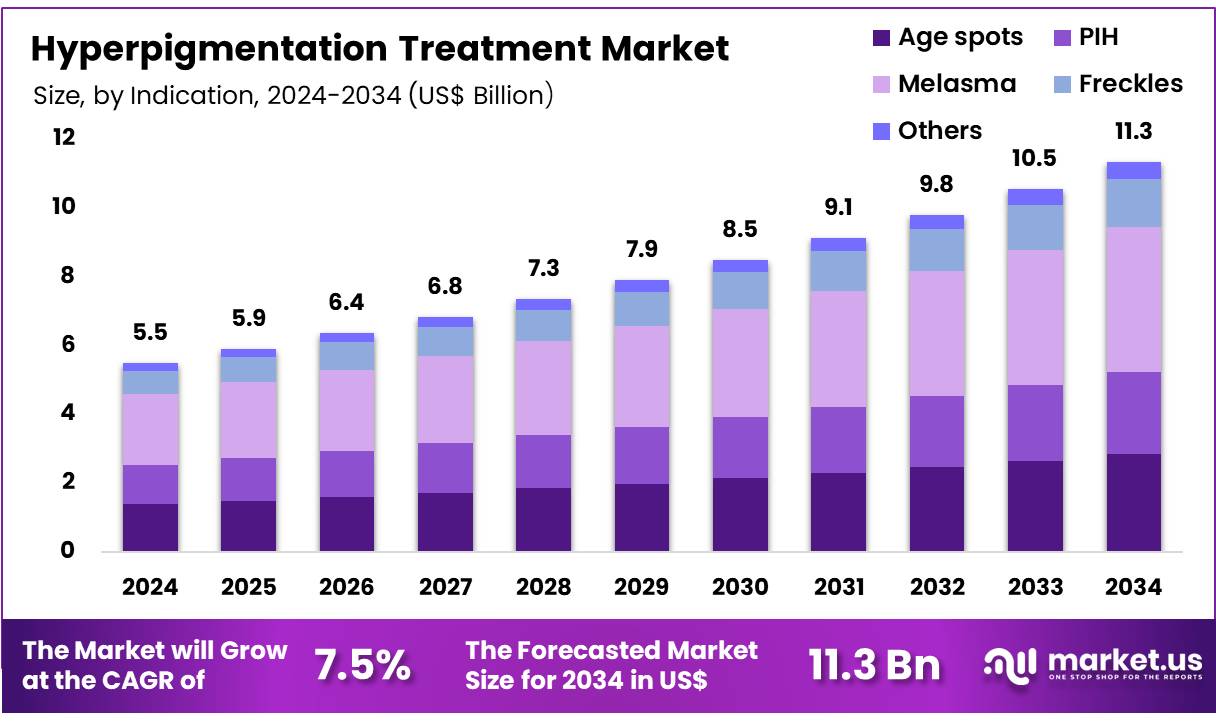
Key Takeaways
- Market Size: The global hyperpigmentation treatment market is projected to reach approximately US$ 11.3 billion by 2034, increasing from US$ 5.5 billion in 2024.
- Market Growth: The market is expected to expand at a CAGR of 7.5% during the forecast period from 2025 to 2034.
- Treatment Type Analysis: Topical agents dominated the market in 2024, capturing the largest share of 36.3% of the global revenue.
- Indication Analysis: Melasma represented the leading indication segment in 2024, accounting for 37.2% of the global market share.
- Skin Tone Analysis: Fitzpatrick skin types III & IV held the dominant position in 2024, contributing 40.0% of the global market revenue.
- End-Use Analysis: Dermatology clinics emerged as the leading end-user segment in 2024, accounting for 48.3% of the global revenue.
- Regional Analysis: North America led the global hyperpigmentation treatment market in 2024, holding more than 35.8% market share with a revenue of approximately US$ 2.0 billion.
Statistical Information
- Unsafe Skin-Lightening Products Containing Mercury Remain a Consumer Safety Concern: FDA laboratory testing identified skin-lightening products containing extremely high mercury levels. Some tested products showed mercury concentrations above 10,000 parts per million (ppm), despite mercury being restricted in cosmetics due to health risks.
- Consumer Interest in Dermatology Solutions Is Increasing Due to Common Skin Concerns: A U.S. dermatology image research initiative collected 10,408 skin condition images from 5,033 contributors to improve understanding of real-world skin conditions. The dataset included 66.72% female contributors, reflecting strong consumer engagement with skin health concerns.
- Demand for Skin-Type-Specific Treatments Is Increasing: The Fitzpatrick17k dermatology dataset contains 16,577 clinical images categorized according to Fitzpatrick skin types. This research highlights the importance of developing pigmentation treatments suitable for different skin tones.
- Growth in Dermatology Research Supports Advanced Treatment Development: The HAM10000 dermatology dataset contains 10,015 dermoscopic images of pigmented skin lesions, supporting research into improved diagnosis and treatment technologies for pigmentation-related conditions.
- Research Investment in Pigmentation Diagnosis Is Expanding: The development of large dermatology datasets, including over 10,000 clinical images, demonstrates increasing focus on artificial intelligence, personalized diagnosis, and improved treatment selection for pigmentation and other skin disorders.
- Dermatology Artificial Intelligence Research Uses More Than 16,000 Skin Images: The Fitzpatrick17k dermatology dataset contains 16,577 clinical images covering 114 skin conditions with Fitzpatrick skin-type annotations. The dataset was developed to improve understanding of treatment and diagnosis performance across different skin tones.
- Pigmented Skin Lesion Research Uses More Than 10,000 Images: The HAM10000 dermatology dataset contains 10,015 dermoscopic images of pigmented skin lesions. More than 50% of lesions were confirmed through pathology, supporting research into improved diagnosis of pigmentation-related skin conditions.Dermatology Access Gap Creates Need for Digital Skin Solutions
- Dermatology Access Gap Creates Need for Digital Skin Solutions: A dermatology AI research study estimated that more than 3 billion people worldwide lack access to skin disease care, creating demand for technologies that improve diagnosis and treatment availability.
Regional Analysis
North America led the market, achieving over 35.8% share
North America remains a leading region in the hyperpigmentation treatment landscape, supported by strong dermatology infrastructure, high consumer awareness, and increasing demand for aesthetic skin procedures. The United States represents a major contributor due to the availability of advanced dermatology clinics, widespread adoption of laser-based therapies, chemical peels, and prescription topical treatments.
According to the American Academy of Dermatology (AAD), millions of Americans seek dermatology care annually for skin conditions, including pigmentation-related concerns, reflecting strong demand for professional treatment services. The region is also witnessing growth in preventive skincare and personalized treatments, driven by increasing sunscreen awareness, cosmetic innovation, and digital dermatology services.
Canada is experiencing rising interest in medical aesthetics and cosmeceutical products due to growing skincare consciousness. Supportive healthcare systems, technological advancements, and increasing access to dermatology consultations are expected to strengthen North America’s position in the global hyperpigmentation treatment market.
Emerging Trends
- Personalized Pigmentation Treatments for Different Skin Types: Dermatology is increasingly focusing on personalized treatment approaches based on skin tone, pigmentation depth, and patient response. The Fitzpatrick17k dataset includes 16,577 clinical images across different skin types, supporting research for safer and more accurate pigmentation diagnosis and treatment selection.
- Increasing Demand for Safe and Regulated Skin-Lightening Products: Consumer awareness about product safety is rising due to regulatory actions. The FDA issued warning letters to 12 companies in 2022 for illegally marketing OTC hydroquinone skin-lightening products, encouraging demand for clinically tested and dermatologist-approved treatments.
- Growing Focus on Preventive Skincare and UV Protection: Sun protection is becoming an important part of pigmentation management as UV exposure can worsen melasma and dark spots. The American Academy of Dermatology recommends using broad-spectrum sunscreen with SPF 30 or higher for daily skin protection.
- Advancement of Laser and Energy-Based Therapies: Laser and light-based procedures are gaining adoption for treating pigmentation concerns. Dermatology research is focusing on improving treatment safety across different skin tones because some procedures may increase the risk of post-treatment pigmentation changes.
- Expansion of AI-Based Skin Analysis and Digital Dermatology: Artificial intelligence is supporting better skin assessment and personalized treatment planning. A dermatology dataset developed for real-world analysis contains 10,408 images from 5,033 participants, helping improve digital skin healthcare solutions.
Use Cases
- Melasma Management Through Combination Treatments: Melasma treatment increasingly involves multiple approaches, including topical agents, sunscreen, chemical peels, and laser procedures. Dermatology guidelines highlight that long-term management is important because melasma can return after treatment.
- Treatment of Post-Inflammatory Hyperpigmentation (PIH): Hyperpigmentation solutions are widely used for pigmentation caused by acne, injuries, and inflammatory skin conditions. Dermatologists use topical therapies, controlled procedures, and preventive skincare methods to reduce pigmentation and improve skin appearance.
- Topical Agents for Dark Spots and Uneven Skin Tone: Topical pigmentation products remain a common treatment option because they are easy to apply and widely available. FDA states that skin-lightening products are marketed as creams, lotions, soaps, and powders for dark spots and uneven skin tone.
- Dermatology Clinic-Based Pigmentation Treatment: Professional dermatology services are increasingly used due to concerns about unsafe products and side effects. FDA recommends consulting healthcare professionals because unapproved skin-lightening products may cause permanent discoloration and other health risks.
- Inclusive Dermatology Research and Diagnosis: Healthcare researchers are developing solutions suitable for diverse skin tones. The HAM10000 dataset contains 10,015 dermoscopic images of pigmented skin lesions, supporting research for improved diagnosis and treatment technologies.
Frequently Asked Questions on Hyperpigmentation Treatment
- What are the major causes of hyperpigmentation?
Hyperpigmentation develops due to increased melanin production triggered by ultraviolet radiation, hormonal changes, aging, skin injuries, acne inflammation, and certain medications. Excessive sun exposure remains one of the primary factors contributing to dark spots and uneven skin appearance. - Which treatment type dominates the hyperpigmentation treatment market?
Topical agents are the leading treatment category because they are widely available, affordable, and commonly recommended for pigmentation management. Products containing ingredients such as hydroquinone, retinoids, vitamin C, and azelaic acid are frequently used in dermatology practices. - How does laser therapy help treat hyperpigmentation?
Laser therapy targets excess melanin deposits in the skin and helps improve dark spots and uneven pigmentation. Advanced laser technologies are increasingly used because they provide controlled treatment, although dermatologists consider skin type to reduce pigmentation-related side effects. - What factors are driving growth of the hyperpigmentation treatment market?
Market growth is supported by rising skincare awareness, increasing demand for aesthetic procedures, advancements in dermatology technologies, and growing preference for non-invasive treatments. Consumers are also seeking clinically tested solutions for pigmentation concerns and improved skin appearance. - What are the major use cases of hyperpigmentation treatments?
Hyperpigmentation treatments are used for managing melasma, post-inflammatory hyperpigmentation, age spots, acne-related dark marks, and sun-induced pigmentation. These solutions are applied in dermatology clinics, aesthetic centers, and home skincare routines depending on severity and treatment goals. - Which region leads the hyperpigmentation treatment market?
North America holds a leading position due to advanced healthcare infrastructure, high consumer awareness, availability of dermatology services, and strong adoption of aesthetic procedures. The region benefits from increased demand for professional skincare treatments and innovative pigmentation therapies. - What is the future outlook for the hyperpigmentation treatment market?
The future of the hyperpigmentation treatment market is expected to focus on safer, personalized, and technology-driven solutions. Growing interest in cosmetic dermatology, preventive skincare, and minimally invasive procedures will continue supporting innovation and treatment accessibility.
Conclusion
The hyperpigmentation treatment market is witnessing steady growth due to increasing awareness of skin health, rising demand for aesthetic procedures, and advancements in dermatological technologies. Topical agents, laser therapies, chemical peels, and personalized treatment approaches are becoming increasingly popular among consumers seeking effective pigmentation solutions.
Growing adoption of dermatologist-guided treatments, AI-based skin analysis, and safer skincare formulations is further shaping market development. North America remains a key region due to advanced healthcare infrastructure and high demand for cosmetic dermatology services. Future growth will be driven by innovation, improved accessibility, and the development of treatments suitable for diverse skin types.
Discuss your needs with our analyst
Please share your requirements with more details so our analyst can check if they can solve your problem(s)




