


Overview
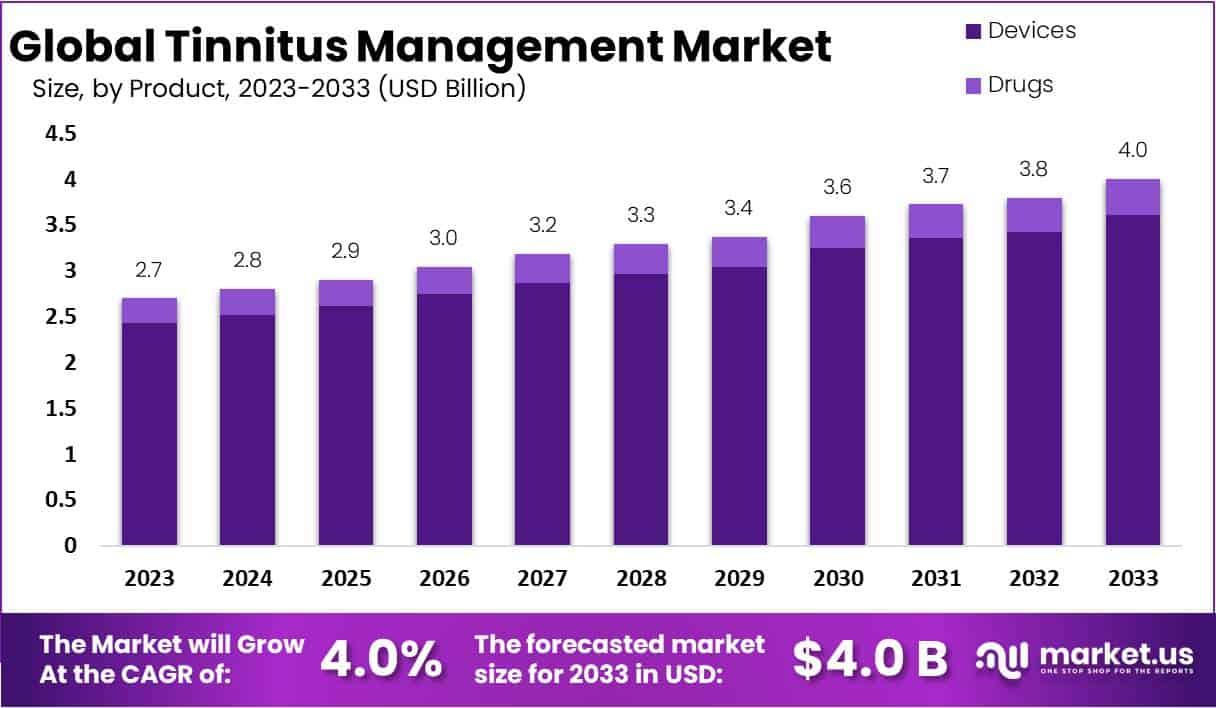
New York, NY – July 23, 2026 – Global Tinnitus Management Market Size is projected to witness substantial growth, with an anticipated value of approximately USD 4 Billion by 2033, compared to the 2023 valuation of USD 2.7 Billion. This growth is expected to occur at a steady Compound Annual Growth Rate (CAGR) of 4% from 2024 to 2033.
Tinnitus is the perception of ringing, buzzing, hissing, or other sounds in the ears without an external sound source. It is a common condition that can affect individuals of all ages and may result from age-related hearing loss, prolonged exposure to loud noise, ear infections, certain medications, or underlying health conditions. While tinnitus is not a disease itself, it can significantly impact quality of life by affecting sleep, concentration, and emotional well-being.
Effective tinnitus management focuses on reducing symptoms and improving daily functioning rather than providing a universal cure. Common approaches include hearing aids for individuals with hearing loss, sound therapy to mask or reduce the perception of tinnitus, cognitive behavioral therapy (CBT) to help manage emotional distress, and lifestyle modifications such as stress reduction, adequate sleep, and limiting exposure to loud noise. Regular hearing assessments and consultation with healthcare professionals are essential for identifying underlying causes and selecting appropriate treatment options.
Growing awareness of hearing health, advancements in digital hearing technologies, and increased access to specialized care are supporting improved tinnitus management worldwide. Early diagnosis and timely intervention can help individuals better control symptoms, enhance communication, and maintain overall quality of life. Continued research is also contributing to the development of innovative therapies aimed at improving long-term outcomes for people living with tinnitus.
Key Takeaways
- Market Growth: The global tinnitus management market is projected to reach USD 4.0 billion by 2033, expanding at a CAGR of 4.0% during the forecast period from 2024 to 2033.
- By Product: The devices segment dominated the market in 2023, accounting for 90.1% of the total market share, supported by the widespread adoption of hearing aids and sound masking devices.
- By Indication: Subjective tinnitus emerged as the leading indication segment, capturing 94.6% of the market share in 2023 due to its high prevalence among tinnitus patients.
- By Distribution Channel: Audiology centers held the largest share of the market in 2023, representing 39.2%, driven by their specialized diagnostic and treatment services.
- By Region: North America led the global tinnitus management market in 2023, accounting for 51.8% of the market and generating USD 1.39 billion in revenue, supported by advanced healthcare infrastructure and strong awareness of hearing health.
Regional Analysis
In 2023, North America led the global tinnitus management market, accounting for more than 51.8% of the total market share and generating approximately USD 1.39 billion in revenue. The region’s leading position was supported by its advanced healthcare infrastructure, widespread access to specialized audiology services, and the adoption of innovative diagnostic and treatment technologies.
High awareness of hearing disorders among healthcare professionals and the general population has encouraged early diagnosis and timely treatment, contributing to market expansion. The presence of major industry participants, research organizations, and academic institutions has further accelerated the development of advanced tinnitus management solutions.
In addition, favorable government initiatives and supportive regulatory frameworks have promoted research, innovation, and improved patient access to care. The market is expected to maintain steady growth over the forecast period, driven by continuous technological advancements, increasing healthcare expenditure, ongoing clinical research, and rising demand for effective tinnitus management solutions across the region.
Emerging Trends
- Neuromodulation Techniques: Neuromodulation is transforming tinnitus treatment through bimodal stimulation that combines sound with gentle electrical impulses. The FDA approval of Lenire in 2023 and its adoption by the U.S. Department of Veterans Affairs in 2024 demonstrate increasing clinical acceptance and broader patient access.
- Sound Therapy Advancements: Sound therapy is advancing with personalized solutions that replace generic masking sounds with customized audio experiences. Technologies such as Sound Options Tinnitus Treatment integrate therapeutic sounds into music, improving symptom relief while supporting comprehensive tinnitus management through user-friendly and individualized treatment approaches.
- Cognitive Behavioral Therapy (CBT): Cognitive Behavioral Therapy remains a well-established approach for tinnitus management by helping patients modify negative emotional responses to persistent ringing. The therapy reduces anxiety, stress, and distress while improving coping abilities, and is frequently combined with complementary treatments for enhanced outcomes.
- Integration of Hearing Aids: Modern hearing aids increasingly combine hearing amplification with tinnitus masking capabilities, offering dual therapeutic benefits. By enhancing external sounds and generating soothing background noises, these devices reduce tinnitus perception, improve communication abilities, and significantly enhance the overall quality of life for patients.
- Preventive Measures: Preventive strategies are becoming increasingly important in reducing tinnitus prevalence through greater awareness of hearing protection. WHO guidelines promote safe listening practices, encourage reduced exposure to excessive noise, and support public health initiatives designed to minimize hearing damage and prevent tinnitus development.
Use Cases
- Veterans with Noise-Induced Hearing Loss: Military veterans frequently experience tinnitus because of prolonged exposure to high-intensity noise during service. Progressive Tinnitus Management programs offered by the U.S. Department of Veterans Affairs combine counseling, sound therapy, and self-management techniques to reduce symptoms and improve long-term quality of life.
- Industrial Workers in Noisy Environments: Industrial workers exposed to continuous loud noise face elevated risks of tinnitus and hearing impairment. Workplace hearing conservation programs, including protective equipment, routine hearing assessments, and access to tinnitus management resources, help preserve hearing health while reducing long-term occupational hearing-related complications and stress.
- Individuals with Age-Related Hearing Loss: Older adults commonly experience tinnitus alongside age-related hearing loss, requiring integrated treatment solutions. Hearing aids with tinnitus masking features amplify environmental sounds while reducing ringing perception, improving speech understanding, communication, and overall daily functioning for aging individuals affected by both conditions simultaneously.
- Patients Taking Ototoxic Medications: Patients receiving ototoxic medications require careful monitoring because tinnitus may develop as an adverse effect. Early detection enables healthcare professionals to adjust medication regimens or introduce supportive interventions, including sound therapy, minimizing symptom severity and preventing further hearing-related complications during treatment.
- Users of Personal Audio Devices: Frequent use of personal audio devices at excessive volume levels increases the likelihood of tinnitus and hearing damage. Promoting safe listening habits, educating users about recommended volume limits, and encouraging protective device features help reduce long-term auditory health risks and prevent tinnitus.
Frequently Asked Questions on Tinnitus Management
- What factors are driving the growth of the tinnitus management market?
The tinnitus management market is expanding due to the increasing prevalence of hearing disorders, rising exposure to excessive noise, an aging global population, and growing awareness of hearing health. Technological advancements in hearing aids and sound therapy devices, along with improved access to audiology services, are further supporting market growth. - Which product segment dominates the tinnitus management market?
The devices segment dominates the tinnitus management market because hearing aids, sound masking devices, and sound generators remain the primary treatment options for managing tinnitus symptoms. Their effectiveness in improving hearing and reducing tinnitus perception has encouraged widespread adoption among patients and healthcare providers worldwide. - Why is subjective tinnitus the leading indication in the market?
Subjective tinnitus accounts for the largest market share because it is the most common form of tinnitus, where only the affected individual can hear the sound. Its high prevalence has increased the demand for advanced diagnostic methods, personalized therapies, and long-term symptom management solutions. - Why are audiology centers important in tinnitus management?
Audiology centers play a critical role in tinnitus management by offering specialized hearing assessments, diagnosis, counseling, hearing aid fitting, and customized treatment plans. Their expertise enables patients to receive comprehensive care, making these facilities a preferred distribution channel for tinnitus-related services and devices. - Which region leads the tinnitus management market?
North America leads the global tinnitus management market due to its advanced healthcare infrastructure, high awareness of hearing disorders, strong presence of leading medical device manufacturers, and widespread availability of specialized audiology services. Continuous investments in research and innovative treatment technologies further strengthen the region’s market position. - Who are the primary end users of tinnitus management solutions?
The primary end users include hospitals, audiology centers, ENT clinics, specialty hearing care centers, and patients using home-based hearing devices. Increasing demand for accessible and personalized hearing care is encouraging broader adoption of tinnitus management solutions across both clinical and home healthcare settings. - What is the future outlook for the tinnitus management market?
The tinnitus management market is expected to witness steady growth over the coming years, supported by continuous technological innovation, rising healthcare expenditure, growing awareness of hearing health, and increasing demand for advanced treatment solutions. Ongoing research into novel therapies is also anticipated to enhance long-term market development.
Conclusion
The global tinnitus management market is poised for steady growth, supported by the rising prevalence of hearing disorders, increasing awareness of hearing health, and continuous advancements in treatment technologies. Innovations such as neuromodulation, personalized sound therapy, and integrated hearing aids are enhancing patient outcomes, while cognitive behavioral therapy continues to strengthen comprehensive care.
North America remains the leading regional market due to its advanced healthcare infrastructure and strong research ecosystem. Growing adoption of specialized audiology services, preventive hearing initiatives, and home-based management solutions is expected to further expand market opportunities, ensuring improved quality of life for individuals affected by tinnitus worldwide.
Discuss your needs with our analyst
Please share your requirements with more details so our analyst can check if they can solve your problem(s)




