


Overview
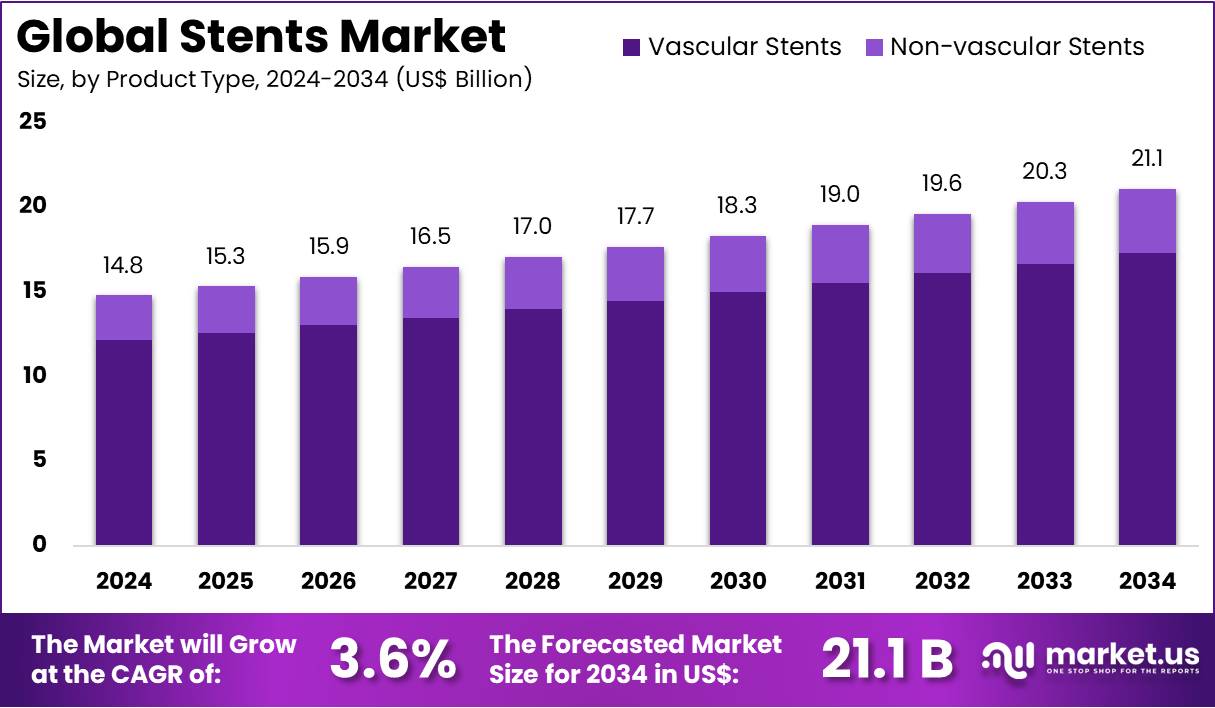
New York, NY – May 12, 2026 – The Stents Market size is expected to be worth around US$ 21.1 Billion by 2034 from US$ 14.8 Billion in 2024, growing at a CAGR of 3.6% during the forecast period 2025 to 2034. North America held a dominant market position, capturing more than a 43.5% share and holds US$ 6.4 Billion market value for the year.
Stents are small medical devices used to open narrowed or blocked blood vessels and restore normal blood flow in the body. They are commonly used in minimally invasive procedures to treat cardiovascular diseases, particularly coronary artery disease. Stents are typically made from metal mesh materials such as stainless steel, cobalt-chromium, or nitinol, while advanced variants may include polymer coatings or bioresorbable materials.
Coronary stents are widely implanted during angioplasty procedures to support artery walls after blockage removal. The increasing prevalence of heart diseases, rising aging population, and growing adoption of minimally invasive surgeries have significantly contributed to the demand for stents globally. In addition to cardiovascular applications, stents are also used in peripheral arteries, biliary ducts, ureters, and airways to maintain passage openings and improve organ function.
Technological advancements have led to the development of drug-eluting stents, which release medication to reduce the risk of artery re-narrowing, and bioresorbable stents, designed to gradually dissolve after treatment. These innovations have improved patient outcomes, reduced recovery times, and enhanced procedural efficiency.
Key Takeaways
- The global Stents market generated revenue of US$ 14.8 billion in 2024 and is projected to reach US$ 21.1 billion by 2034, expanding at a CAGR of 3.6% during the forecast period.
- Based on product type, the market is segmented into vascular stents and non-vascular stents. Among these, vascular stents dominated the market in 2024, accounting for a revenue share of 82.0%.
- By material, the market is categorized into metallic stents and non-metallic stents. The metallic stents segment held the largest market share of 78.5% in 2024.
- In terms of end user, the market is segmented into hospitals, ambulatory care centers (ACS), and specialty clinics. Hospitals emerged as the leading segment, capturing 72.3% of the overall market revenue in 2024.
- North America dominated the global Stents market in 2024, securing a market share of 43.5%.
Regional Analysis
North America dominated the global Stents market in 2024, accounting for the largest revenue share of 43.5%. The regional market growth was primarily driven by the rising prevalence of cardiovascular diseases and the increasing number of interventional procedures. Technological advancements, including the adoption of drug-eluting stents (DES) and bioresorbable vascular scaffolds (BVS), significantly improved treatment outcomes and supported market expansion.
Drug-eluting stents remained the leading product category due to their effectiveness in reducing artery re-narrowing. In addition, the strong presence of major medical device manufacturers such as Abbott Laboratories and Medtronic strengthened innovation and product availability across the region. Favorable reimbursement policies, regulatory support, and the growing preference for minimally invasive procedures further accelerated market adoption.
Asia Pacific is projected to register the fastest CAGR during the forecast period owing to the increasing burden of cardiovascular diseases, particularly in China and India. Rapid improvements in healthcare infrastructure, rising healthcare expenditure, and supportive government initiatives are expected to boost the adoption of advanced stent technologies. Furthermore, collaborations between global manufacturers and regional healthcare providers, along with increasing awareness regarding preventive healthcare and early diagnosis, are anticipated to drive substantial market growth across the region.
Emerging Trends
- Shift Towards Biodegradable Stents: Biodegradable stents are gaining popularity as they naturally dissolve after supporting the artery during healing. These stents reduce long-term complications linked to permanent implants and improve patient comfort, supporting the growing focus on safer cardiovascular treatment solutions.
- Focus on Drug-Eluting Stents (DES): Drug-eluting stents are increasingly preferred because they release medication that prevents artery re-narrowing after procedures. Improved coatings and advanced designs enhance treatment success, reduce repeat surgeries, and provide better long-term outcomes compared to traditional bare-metal stents.
- Advanced Materials Being Used: Manufacturers are using advanced materials such as magnesium, polymers, and hybrid metals to improve stent flexibility and durability. These lightweight materials support natural artery movement, reduce complications, and contribute to faster patient recovery following minimally invasive procedures.
- Personalized Stent Designs: Personalized stent designs are emerging through advanced imaging and 3D printing technologies. Customized stents fit individual artery structures more accurately, helping improve blood flow, reduce treatment complications, and support the growing adoption of precision medicine in healthcare.
- Minimally Invasive Procedures Are Growing: The increasing use of minimally invasive stent procedures is improving patient recovery and reducing hospital stays. Smaller incisions, advanced imaging technologies, and reduced complication risks are encouraging wider adoption of these procedures across hospitals and specialty healthcare centers.
- Expansion Into Emerging Markets: Demand for stents is rising in emerging economies due to improving healthcare infrastructure, growing awareness of cardiovascular diseases, and increasing healthcare investments. Affordable treatment options and expanding hospital access are further supporting market growth across developing regions.
- Combination Devices Are Emerging: Innovative stents integrated with sensors and drug-delivery systems are being developed to improve patient monitoring and treatment efficiency. These smart stents provide real-time health insights and represent a major advancement in connected medical device technologies.
- Digital Support & Monitoring: Digital health technologies, including wearable devices and mobile applications, are enhancing patient monitoring after stent procedures. These tools help track recovery, improve treatment management, and enable early detection of complications, supporting better long-term patient outcomes.
Use Cases
- Treating Blocked Arteries in the Heart: Coronary stents are widely used to treat blocked heart arteries caused by plaque buildup. They restore normal blood flow, reduce chest pain, and help prevent heart attacks, making them essential in cardiovascular disease management and angioplasty procedures.
- Peripheral Artery Disease (PAD): Stents are commonly used in peripheral artery disease to improve blood circulation in narrowed leg arteries. The procedure reduces pain, improves mobility, and offers a minimally invasive treatment option for patients suffering from vascular circulation disorders.
- Carotid Artery Stenting: Carotid artery stenting helps prevent strokes by opening narrowed neck arteries that supply blood to the brain. The minimally invasive procedure improves blood flow and provides an alternative treatment option for high-risk surgical patients.
- Aneurysm Repair: Specialized stent grafts are used to repair aneurysms by strengthening weakened blood vessel walls. These stents reduce the risk of rupture, minimize surgical complications, and support faster recovery compared to traditional open surgical repair procedures.
- Ureteral Stents: Ureteral stents are used to maintain urine flow between the kidneys and bladder when blockages occur. They are commonly applied in kidney stone treatments and help prevent pain, infection, and urinary complications during recovery.
- Biliary Stents: Biliary stents are used to treat blocked bile ducts caused by tumors, gallstones, or liver diseases. These stents restore bile flow, reduce complications such as jaundice, and improve patient comfort in gastrointestinal and liver-related treatments.
Frequently Asked Questions on Stents Market
- What are stents and how are they used in medical treatments?
Stents are small medical devices inserted into narrowed or blocked blood vessels or ducts to restore normal flow. They are widely used in cardiovascular procedures, particularly angioplasty, to support arteries and reduce the risk of future blockages or complications. - What are the major types of stents available in the market?
The market mainly includes vascular stents and non-vascular stents. Vascular stents are commonly used in coronary and peripheral artery treatments, while non-vascular stents are applied in areas such as biliary, ureteral, and airway procedures to maintain passage openings. - Why are metallic stents widely preferred in the healthcare industry?
Metallic stents are preferred due to their high durability, flexibility, and effectiveness in supporting blood vessels after angioplasty procedures. Materials such as stainless steel, cobalt-chromium, and nitinol provide strong structural support and improve long-term patient outcomes. - Which region dominates the global Stents market?
North America dominates the global Stents market owing to advanced healthcare infrastructure, high adoption of minimally invasive procedures, and the strong presence of leading medical device manufacturers. Increasing cardiovascular disease cases and favorable reimbursement policies further support regional growth. - Why is Asia Pacific expected to witness rapid growth in the Stents market?
Asia Pacific is expected to grow rapidly due to the increasing burden of cardiovascular diseases, improving healthcare infrastructure, and rising healthcare expenditure. Large patient populations in countries such as China and India are creating strong demand for advanced stent procedures. - What are drug-eluting stents and why are they important?
Drug-eluting stents are advanced stents coated with medication that is gradually released to prevent artery re-narrowing after treatment. These stents improve treatment efficiency, reduce repeat procedures, and enhance long-term patient recovery compared to conventional stent technologies. - Who are the key end users in the Stents market?
Hospitals represent the largest end-user segment in the Stents market due to the high volume of cardiovascular and interventional procedures performed. Ambulatory care centers and specialty clinics are also increasingly adopting stent technologies for minimally invasive treatments.
Conclusion
The global Stents market is experiencing steady growth due to the increasing prevalence of cardiovascular diseases, rising demand for minimally invasive procedures, and continuous technological advancements. Innovations such as drug-eluting stents, biodegradable stents, and personalized stent designs are improving treatment outcomes and patient recovery.
North America remains the leading regional market, while Asia Pacific is expected to witness the fastest growth supported by expanding healthcare infrastructure and growing patient populations. Increasing adoption across cardiovascular, urological, and gastrointestinal applications further strengthens market demand. Ongoing research, digital healthcare integration, and advanced material development are expected to create significant growth opportunities for the market in the coming years.
Discuss your needs with our analyst
Please share your requirements with more details so our analyst can check if they can solve your problem(s)




