


Overview
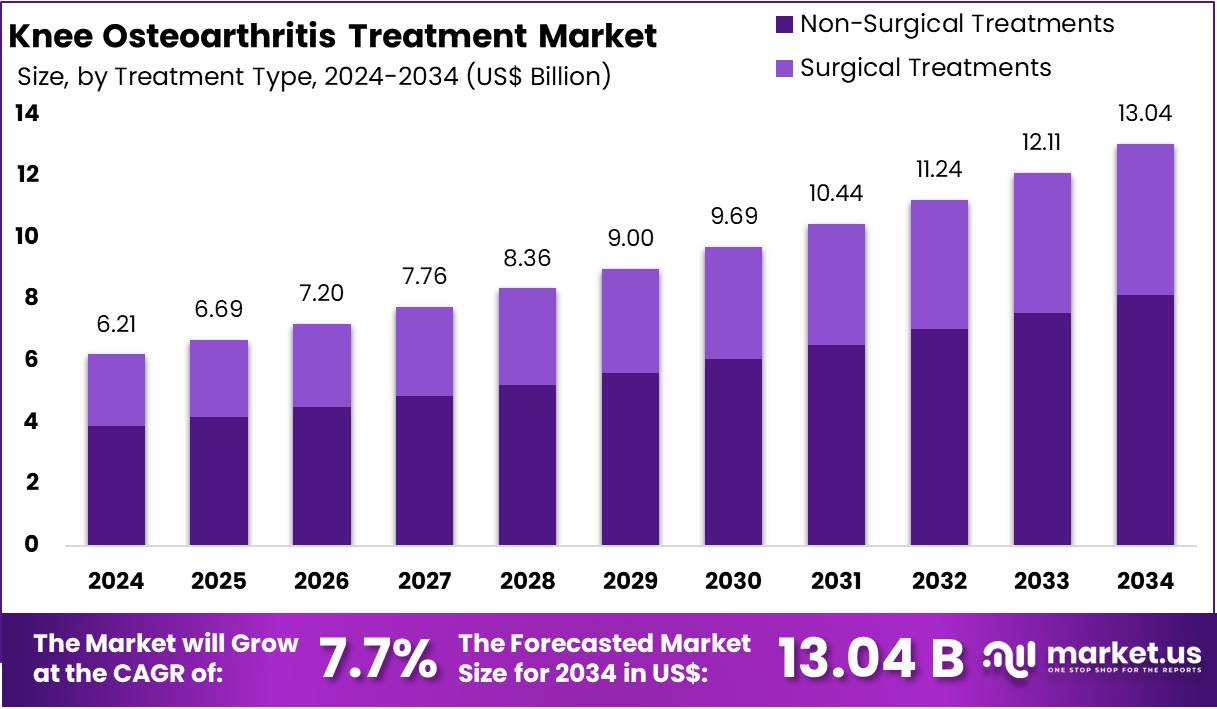
New York, NY – June 25, 2026 – The Knee Osteoarthritis Treatment Market Size is expected to be worth around US$ 13.04 billion by 2034 from US$ 6.21 billion in 2024, growing at a CAGR of 7.7% during the forecast period 2025 to 2034.
Knee osteoarthritis is a common degenerative joint disorder characterized by the gradual breakdown of cartilage in the knee joint, leading to pain, stiffness, swelling, and reduced mobility. The condition primarily affects older adults, although factors such as obesity, previous joint injuries, genetics, and repetitive stress on the knee can increase the risk of development.
Treatment for knee osteoarthritis focuses on relieving symptoms, improving joint function, and enhancing quality of life. Non-surgical treatment options are typically recommended as the first line of management. These include physical therapy, weight management, regular low-impact exercise, pain-relieving medications, and supportive devices such as knee braces. Lifestyle modifications play a significant role in reducing joint stress and slowing disease progression.
Advanced treatment approaches may include intra-articular injections, such as corticosteroids or hyaluronic acid, which can help manage pain and inflammation in selected patients. Emerging regenerative therapies are also being explored to support joint health and improve patient outcomes.
For individuals with severe knee osteoarthritis who do not respond adequately to conservative treatments, surgical interventions, including partial or total knee replacement, may be considered. These procedures have demonstrated effectiveness in reducing pain and restoring mobility.
Growing awareness, early diagnosis, and access to innovative treatment options are contributing to improved disease management, supporting better long-term outcomes for patients affected by knee osteoarthritis worldwide.
Key Takeaways
- The global Knee Osteoarthritis Treatment market was valued at US$ 21 billion in 2024 and is projected to expand at a CAGR of 7.7% during the forecast period, reaching approximately US$ 13.04 billion by 2034.
- Based on treatment type, the market is categorized into Non-Surgical Treatments and Surgical Treatments. Non-Surgical Treatments accounted for the largest share of the market, representing 62.5% of total revenue in 2023.
- By route of administration, the market is segmented into Oral, Parenteral, and Topical formulations. The Oral segment emerged as the leading category, capturing 41.8% of the market share in 2023.
- On the basis of end users, the market is divided into Hospitals, Ambulatory Surgical Centers (ASCs), Specialty Clinics, Homecare, and Others. Hospitals dominated the market, contributing 46.3% of the overall revenue share in 2023.
- North America remained the largest regional market for Knee Osteoarthritis Treatment, accounting for a substantial 62.5% share of the global market in 2023.
Regional Analysis
North America continues to dominate the Knee Osteoarthritis (KOA) Treatment Market, supported by a growing aging population, high disease prevalence, and strong healthcare infrastructure. The increasing number of elderly individuals across the United States and Canada has contributed to a rising incidence of knee osteoarthritis, driving demand for effective treatment solutions.
Non-surgical treatment approaches, including physical therapy, nonsteroidal anti-inflammatory drugs (NSAIDs), corticosteroids, and hyaluronic acid injections, remain widely adopted for symptom management and improved joint function. Additionally, regenerative therapies such as platelet-rich plasma (PRP) and stem cell-based treatments are gaining traction due to their potential to promote tissue repair and provide long-term therapeutic benefits.
Hospitals represent the leading end-user segment in the region, offering comprehensive treatment options ranging from conservative care to advanced surgical procedures. Knee replacement surgeries continue to play a critical role in managing severe osteoarthritis cases. Ongoing technological advancements and strong healthcare investments further support the adoption of innovative treatment modalities across North America.
Emerging Trends
- Rising Demand for Non-Surgical Treatments: The preference for non-surgical knee osteoarthritis treatments is increasing due to their affordability, lower risk, and faster recovery. Physical therapy, NSAIDs, and hyaluronic acid injections are widely adopted to manage symptoms, delay surgery, and improve mobility, particularly among elderly patients and individuals with mild-to-moderate disease.
- Growth in Regenerative Medicine: Regenerative therapies such as stem cell treatment and platelet-rich plasma (PRP) injections are gaining popularity for their potential to repair damaged cartilage and support long-term joint health. Growing patient interest and expanding clinic availability are accelerating adoption despite the technology remaining in an evolving stage.
- Increased Use of Personalized Medicine: Personalized treatment strategies are becoming more common, with therapies tailored according to patient age, weight, lifestyle, and disease severity. This individualized approach improves treatment effectiveness, minimizes adverse effects, and supports better long-term outcomes by matching therapies to specific patient needs and conditions.
- Technological Advancements in Surgical Procedures: Advanced surgical technologies, including robotic-assisted knee replacements and minimally invasive techniques, are improving treatment precision and patient outcomes. These innovations reduce complications, shorten hospital stays, minimize pain, and accelerate recovery, making surgical intervention safer and more effective for osteoarthritis patients.
- Digital Health Integration: Digital health solutions, including wearable devices and mobile applications, are enhancing knee osteoarthritis management. These technologies enable continuous monitoring of pain and mobility, facilitate remote patient care, improve treatment adherence, and provide healthcare professionals with real-time data for informed clinical decisions.
- Focus on Early Diagnosis and Prevention: Greater emphasis is being placed on early diagnosis and preventive care through advanced imaging, biomarker testing, and awareness initiatives. Early detection enables timely intervention, slows disease progression, reduces long-term healthcare costs, and helps patients maintain mobility and quality of life for longer periods.
Use Cases
- Elderly Patient Care in Clinics and Hospitals: Clinics and hospitals commonly treat elderly knee osteoarthritis patients through medications, physical therapy, and injection therapies. Treatment focuses on pain relief, mobility improvement, and delaying disease progression, while severe cases may require partial or total knee replacement procedures supported by rehabilitation programs.
- Sports Injury Management: Sports injury clinics manage osteoarthritis resulting from knee trauma through PRP therapy, physical rehabilitation, supportive braces, and anti-inflammatory medications. Personalized treatment plans help reduce pain, strengthen joints, enhance recovery, and delay surgical intervention while supporting long-term joint health and athletic performance.
- At-Home Rehabilitation Programs: Home-based rehabilitation programs provide cost-effective support for osteoarthritis management and post-surgical recovery. These programs combine structured exercises, assistive devices, virtual consultations, and digital tracking tools to improve flexibility, strengthen joints, reduce hospital visits, and encourage active patient participation in recovery.
- Use in Physical Therapy Centers: Physical therapy centers deliver non-invasive treatment through customized exercise regimens, heat and cold therapy, and electrical stimulation techniques. These services improve muscle strength, joint flexibility, and mobility while reducing pain and stiffness, helping patients manage symptoms and avoid surgical intervention.
- Orthopedic Device and Implant Use in Hospitals: Hospitals utilize advanced orthopedic implants and joint replacement technologies for patients with severe osteoarthritis. Modern implants, including customized and 3D-printed components, enhance mobility and durability. Comprehensive rehabilitation programs following surgery support recovery, improve function, and ensure long-term treatment success.
- Pain Management Clinics: Pain management clinics provide specialized care for patients experiencing persistent osteoarthritis-related knee pain. Treatment options include medications, corticosteroid injections, hyaluronic acid therapies, nerve blocks, and lifestyle counseling, helping patients improve daily function, manage chronic pain, and postpone invasive surgical procedures.
Frequently Asked Questions on Knee Osteoarthritis Treatment
- What are the common treatment options for knee osteoarthritis?
Common treatment options for knee osteoarthritis include lifestyle modifications, physical therapy, weight management, pain-relieving medications, corticosteroid injections, hyaluronic acid injections, and surgical procedures such as knee replacement. Treatment plans are often individualized to achieve optimal symptom control and functional improvement. - How effective is physical therapy in managing knee osteoarthritis?
Physical therapy is considered an important component of knee osteoarthritis management because it helps strengthen surrounding muscles, improve joint flexibility, and enhance mobility. Regular exercise programs designed by healthcare professionals can significantly reduce pain and support long-term joint function. - When is knee replacement surgery recommended?
Knee replacement surgery is generally recommended when conservative treatments fail to provide adequate pain relief and mobility improvement. Patients experiencing severe joint damage, persistent discomfort, and significant limitations in daily activities may be considered suitable candidates for surgical intervention. - What role do medications play in knee osteoarthritis treatment?
Medications are commonly prescribed to reduce pain, inflammation, and discomfort associated with knee osteoarthritis. Nonsteroidal anti-inflammatory drugs, topical analgesics, and certain prescription medications can help improve patient comfort and support participation in rehabilitation activities. - Is knee osteoarthritis treatment aimed at curing the condition?
Current knee osteoarthritis treatments are primarily focused on symptom management, slowing disease progression, and improving quality of life. While no definitive cure exists, a combination of therapeutic approaches can effectively reduce pain and maintain joint function for many patients. - Which treatment segment holds a significant share of the market?
Pharmaceuticals and injectable therapies account for a substantial share of the knee osteoarthritis treatment market due to their widespread adoption for symptom management. However, surgical interventions and regenerative medicine therapies are also gaining increasing attention and market penetration. - How is the aging population influencing the knee osteoarthritis treatment market?
The aging population is contributing significantly to market expansion because older individuals are more susceptible to cartilage degeneration and joint disorders. The growing number of elderly patients is increasing demand for effective treatment options and long-term disease management solutions. - How are technological advancements shaping the market?
Technological advancements are enhancing treatment effectiveness through improved surgical techniques, advanced imaging systems, robotic-assisted procedures, and innovative drug delivery methods. These developments are supporting better patient outcomes and expanding opportunities within the market.
Conclusion
The global knee osteoarthritis treatment market is experiencing steady growth, driven by the rising prevalence of joint disorders, an expanding elderly population, and increasing awareness of early disease management. Non-surgical therapies continue to dominate due to their effectiveness, affordability, and patient preference for less invasive solutions.
Emerging regenerative treatments, personalized medicine approaches, digital health integration, and advanced surgical technologies are transforming patient care and improving clinical outcomes. North America remains the leading regional market, supported by strong healthcare infrastructure and technological adoption. As innovation continues and access to treatment improves, the market is expected to offer significant growth opportunities over the forecast period.
Discuss your needs with our analyst
Please share your requirements with more details so our analyst can check if they can solve your problem(s)




