


Overview
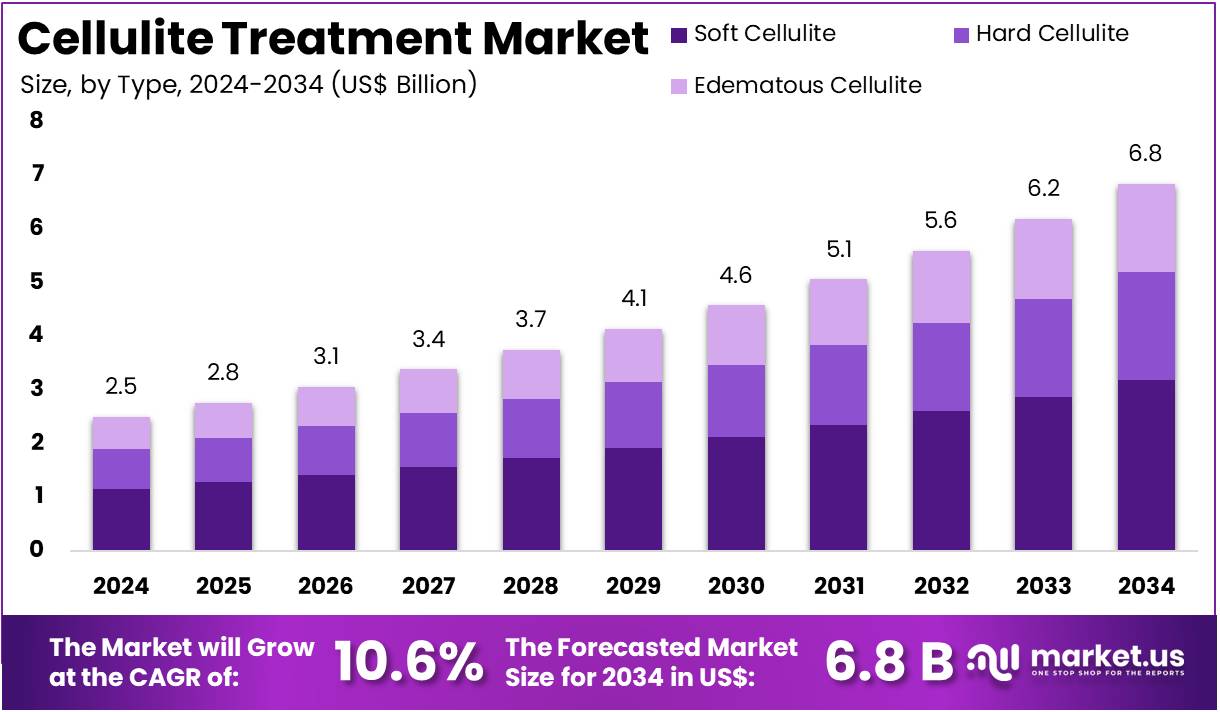
New York, NY – July 14, 2026 –The Cellulite Treatment Market Size is expected to be worth around US$ 6.8 billion by 2034 from US$ 2.5 billion in 2024, growing at a CAGR of 10.6% during the forecast period 2025 to 2034.
Cellulite treatment refers to a range of cosmetic and minimally invasive procedures designed to reduce the appearance of cellulite, a common condition that causes the skin to develop a dimpled or uneven texture, particularly on the thighs, hips, buttocks, and abdomen. Cellulite develops when fat deposits beneath the skin push against connective tissue, creating a characteristic “orange peel” or “cottage cheese” appearance. It affects individuals of all body types and is more prevalent among women due to differences in fat distribution and connective tissue structure.
Modern cellulite treatment options include laser therapy, radiofrequency treatments, acoustic wave therapy, subcision, injectable treatments, vacuum-assisted devices, and topical creams. These procedures aim to improve skin texture by stimulating collagen production, enhancing blood circulation, reducing fat deposits, and strengthening connective tissue. The selection of treatment depends on the severity of cellulite, patient preferences, and desired outcomes.
The growing demand for non-invasive and minimally invasive aesthetic procedures has contributed to increased adoption of cellulite treatment solutions worldwide. Technological advancements have improved the safety, effectiveness, and convenience of these procedures, enabling faster recovery and longer-lasting results. Rising awareness of personal appearance, increasing disposable income, and expanding access to cosmetic dermatology services continue to support the development of the cellulite treatment market. Ongoing research and innovation are expected to further enhance treatment outcomes and broaden the availability of advanced cellulite reduction technologies.
Key Takeaways
- The global cellulite treatment market was valued at US$ 2.5 billion in 2024 and is projected to reach US$ 6.8 billion by 2034, expanding at a CAGR of 10.6% during the forecast period.
- Based on type, the market is segmented into soft cellulite, hard cellulite, and edematous cellulite. Among these, the soft cellulite segment accounted for the largest market share of 46.5%.
- By procedure, the market is categorized into non-invasive treatment, topical treatment, and minimally invasive treatment. The non-invasive treatment segment dominated the market with a 52.3% revenue share.
- Based on end user, the market is segmented into clinics & beauty centers and hospitals. The clinics & beauty centers segment held the largest market share of 58.1%.
- North America emerged as the leading regional market, accounting for a 38.8% share of the global cellulite treatment market.
Regional Analysis
North America Leads the Cellulite Treatment Market
North America accounted for the largest share of the cellulite treatment market in 2024, driven by the rising demand for non-invasive aesthetic procedures, growing consumer awareness, and continuous advancements in treatment technologies. The increasing preference for minimally invasive solutions with shorter recovery times has supported market growth across the region.
The growing popularity of non-surgical body contouring and fat reduction procedures has further strengthened demand for cellulite treatment services. In addition, the presence of well-established aesthetic clinics, favorable healthcare infrastructure, and ongoing product innovations by leading market participants continue to enhance treatment accessibility and effectiveness.
Asia Pacific Expected to Register the Highest Growth
Asia Pacific is projected to witness the fastest growth during the forecast period due to increasing disposable incomes, expanding medical aesthetics infrastructure, and rising awareness of cosmetic procedures. Growing social media influence and changing beauty preferences are encouraging greater adoption of cellulite treatments, particularly among younger consumers. The increasing availability of advanced non-surgical technologies, expanding aesthetic clinic networks, and rising acceptance of cosmetic procedures are expected to support strong market growth across the region.
Emerging Trends
- Growing Popularity of Non-Invasive Treatments: Consumers are increasingly choosing non-invasive cellulite treatments because they offer effective results without surgery or extended recovery periods. Technologies such as laser therapy, radiofrequency, and ultrasound minimize discomfort while improving skin texture, making them attractive alternatives to traditional invasive procedures across aesthetic clinics.
- Focus on Personalized Treatments: Personalized cellulite treatments are becoming increasingly common as providers tailor procedures according to skin type, cellulite severity, and treatment area. Customized treatment plans improve clinical outcomes, enhance patient satisfaction, and address individual cosmetic concerns more effectively than standardized approaches used in the past.
- Use of Advanced Technologies: Technological advancements are improving cellulite treatment through innovations such as cryolipolysis, advanced laser systems, and combination therapies. These technologies enhance precision, increase treatment effectiveness, shorten recovery times, and deliver visible results, encouraging greater consumer adoption of modern aesthetic solutions worldwide.
- Rising Awareness About Body Aesthetics: Growing awareness of body aesthetics and personal appearance is increasing demand for cellulite treatments. Social media influence, changing beauty standards, and greater emphasis on self-care encourage consumers to seek cosmetic procedures that improve skin texture, body confidence, and overall physical appearance.
- Expansion in Emerging Markets: Emerging markets across Asia-Pacific, Latin America, and the Middle East are witnessing increasing demand for cellulite treatments. Rising disposable incomes, expanding medical aesthetics industries, improved healthcare access, and greater acceptance of cosmetic procedures are creating significant opportunities for market expansion in these regions.
- Preference for Natural and Safe Ingredients: Consumers increasingly prefer cellulite treatment products formulated with natural, skin-friendly, and safe ingredients. This growing preference encourages manufacturers to develop cleaner formulations with fewer harsh chemicals while maintaining treatment effectiveness, supporting the broader trend toward holistic skincare and wellness-focused cosmetic solutions.
Use Cases
- Body Contouring and Aesthetic Improvement: Cellulite treatments are widely used to improve body contour by reducing the appearance of dimpled skin on areas such as the thighs, buttocks, and arms. These procedures enhance skin smoothness, create a firmer appearance, and improve overall body aesthetics without surgical intervention.
- Post-Pregnancy Body Care: Many women choose cellulite treatments after pregnancy to restore skin firmness and reduce the appearance of cellulite caused by hormonal and physical changes. These treatments improve skin elasticity, support body recovery, and help individuals regain confidence in their post-pregnancy appearance.
- Weight Loss Support: Cellulite treatments are frequently combined with weight management programs to improve skin firmness during weight loss. They help reduce loose or uneven skin, complement exercise and healthy eating, and support a smoother, more toned appearance as body composition changes over time.
- Boosting Self-Confidence: Many individuals undergo cellulite treatments to improve their confidence by achieving smoother and firmer skin. Reduced cellulite visibility allows people to feel more comfortable wearing fitted clothing, swimwear, and casual outfits while positively influencing self-esteem and overall emotional well-being.
- Maintenance Therapy for Aging Skin: Cellulite treatments are commonly used as maintenance therapy to address age-related declines in skin elasticity. Regular sessions help preserve smoother skin texture, maintain firmness, reduce cellulite visibility, and support a youthful body appearance through consistent aesthetic care and preventive treatment.
- Professional and Social Events Preparation: Many individuals schedule cellulite treatments before important occasions such as weddings, vacations, corporate events, or professional photo shoots. These procedures improve skin appearance within a short period, helping people feel more confident and present their best appearance during memorable social events.
Frequently Asked Questions on Cellulite Treatment
- What are the common types of cellulite treatments?
Common cellulite treatments include laser therapy, radiofrequency therapy, acoustic wave therapy, subcision, injectable treatments, cryolipolysis, and topical creams. Each treatment works differently to improve skin smoothness, stimulate collagen production, or reduce fat accumulation, with effectiveness varying depending on cellulite severity and individual skin characteristics. - Are cellulite treatments permanent?
Most cellulite treatments provide temporary or long-lasting improvements rather than permanent results. Maintenance sessions are often recommended because aging, hormonal changes, and lifestyle factors can gradually affect skin elasticity and fat distribution, causing cellulite to reappear over time. - Is cellulite treatment painful?
Most cellulite treatments involve minimal discomfort rather than significant pain. Non-invasive procedures generally produce mild warming or tingling sensations, while minimally invasive treatments may require local anesthesia. Recovery periods are usually short, allowing patients to resume daily activities quickly. - What factors are driving the growth of the cellulite treatment market?
Market growth is supported by rising consumer awareness regarding aesthetic procedures, increasing disposable income, technological advancements, expanding medical spa facilities, and growing demand for non-invasive cosmetic treatments. An aging population and social media influence also contribute significantly to market expansion globally. - Which treatment segment dominates the cellulite treatment market?
Non-invasive and minimally invasive treatment segments account for a significant share of the cellulite treatment market because they offer reduced recovery time, improved patient comfort, and effective aesthetic outcomes. Technologies such as radiofrequency, laser therapy, and acoustic wave devices continue to experience widespread adoption. - Which regions lead the cellulite treatment market?
North America holds a leading position in the cellulite treatment market due to advanced healthcare infrastructure, high consumer spending, and strong adoption of aesthetic procedures. Europe also represents a significant market, while Asia-Pacific is witnessing rapid growth supported by expanding medical tourism and rising disposable incomes. - How is technology influencing the cellulite treatment market?
Technological innovation has transformed the market through advanced laser systems, radiofrequency devices, ultrasound technologies, injectable solutions, and AI-assisted treatment planning. These developments improve treatment precision, patient comfort, clinical outcomes, and procedural efficiency, encouraging wider adoption across aesthetic healthcare facilities. - What is the future outlook for the cellulite treatment market?
The cellulite treatment market is expected to witness steady growth due to continuous technological advancements, increasing preference for minimally invasive procedures, expanding awareness of aesthetic wellness, and growing investments by manufacturers. Emerging markets are anticipated to provide significant growth opportunities throughout the forecast period.
Conclusion
The global cellulite treatment market is experiencing steady growth, driven by increasing demand for non-invasive aesthetic procedures, continuous technological advancements, and rising awareness of personal appearance. Expanding access to cosmetic dermatology services, growing disposable incomes, and the adoption of personalized treatment approaches are further supporting market development.
North America remains the leading regional market, while Asia Pacific is expected to record the fastest growth due to improving healthcare infrastructure and increasing acceptance of cosmetic treatments. With ongoing innovation in treatment technologies and expanding opportunities in emerging markets, the cellulite treatment market is well positioned for sustained growth throughout the forecast period.
Discuss your needs with our analyst
Please share your requirements with more details so our analyst can check if they can solve your problem(s)




