
Overview
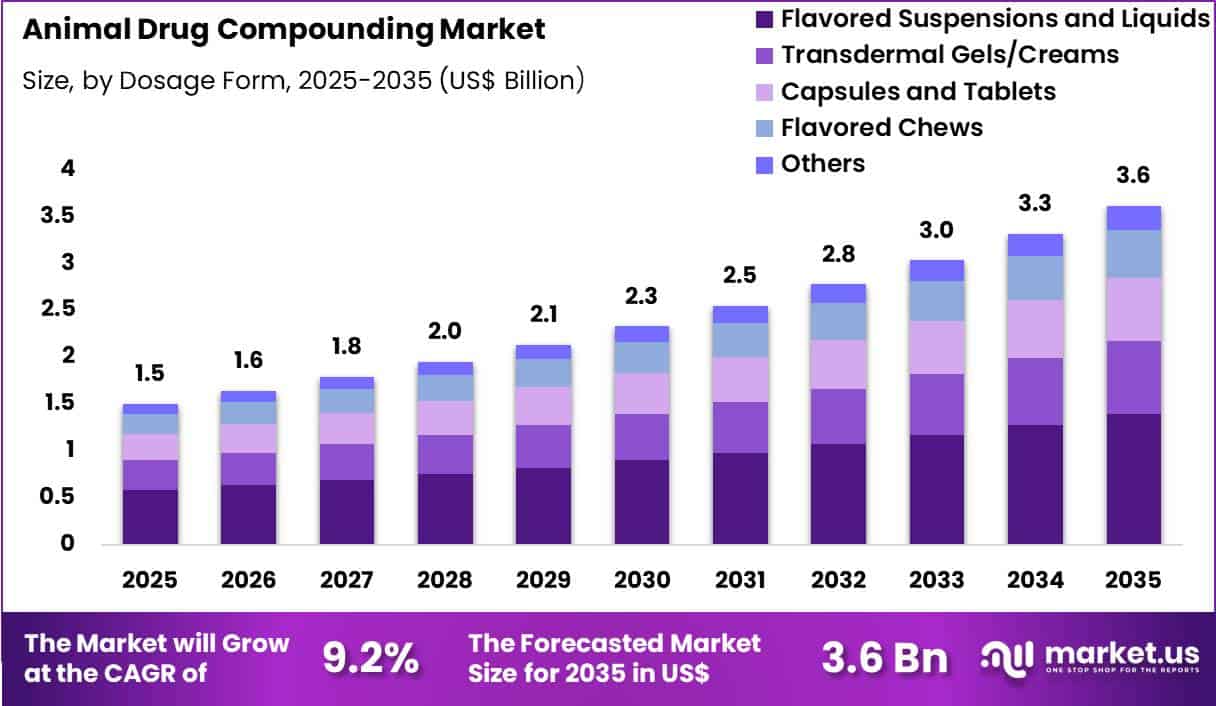
New York, NY – Nov 18 2026 – The Global Animal Drug Compounding Market size is expected to be worth around US$ 3.6 Billion by 2035 from US$ 1.5 Billion in 2025, growing at a CAGR of 9.2% during the forecast period 2026-2035. In 2025, North America led the market, achieving over 38.1% share with a revenue of US$ 0.6 Billion.
Animal drug compounding refers to the process of preparing customized medications for animals by combining, mixing, or modifying pharmaceutical ingredients to meet specific veterinary requirements. It plays an important role in veterinary healthcare, particularly when commercially available medications are unsuitable due to dosage, strength, flavor, or formulation limitations.
The growing demand for personalized veterinary treatments is supporting the adoption of animal drug compounding. Compounded medications are commonly prepared in various forms, including flavored liquids, oral suspensions, capsules, topical creams, gels, and transdermal preparations. These formulations help address the specific treatment requirements of different animal species, including companion animals, livestock, and exotic animals.
The market is being driven by increasing pet ownership, rising expenditure on animal healthcare, growing awareness of veterinary treatment options, and the increasing prevalence of chronic diseases among animals. Furthermore, advancements in pharmaceutical compounding technologies and the expansion of specialized veterinary pharmacies are contributing to market development.
However, regulatory compliance, quality control requirements, and concerns regarding medication safety and consistency remain important challenges.
With continued advancements in veterinary medicine and increasing demand for customized treatment solutions, the animal drug compounding market is expected to witness new growth opportunities over the coming years.
Key Takeaways
- In 2025, the global animal drug compounding market was valued at US$ 1.5 billion and is projected to reach US$ 3.6 billion by 2035, registering a CAGR of 9.2% during the forecast period.
- Based on dosage form, the market is segmented into flavored suspensions and liquids, transdermal gels and creams, capsules and tablets, flavored chews, and others. Flavored suspensions and liquids dominated the segment, accounting for 38.6% of the market share.
- By product, the market is categorized into CNS agents, anti-infective agents, anti-inflammatory agents, hormones and substitutes, and others. CNS agents represented a significant share of 35.2%.
- Based on the route of administration, the market is divided into oral, injectable, topical, and other routes. The oral segment dominated the market, capturing the largest revenue share of 66.9%.
- By animal type, the market is classified into companion animals and livestock animals. The companion animals segment led the market, accounting for 73.5% of the total revenue share.
- Regionally, North America dominated the global animal drug compounding market, accounting for a revenue share of 38.1%.
Key Market Segments
- Dosage Form Analysis: Flavored suspensions and liquids dominated the dosage form segment, accounting for 38.6% of the market share. Their growth is driven by increasing demand for customized, palatable medications that simplify drug administration in animals. These formulations are particularly preferred for companion animals that experience difficulty consuming conventional tablets and capsules.
- Product Analysis: CNS agents held a dominant position in the product segment, accounting for 35.2% of the market share. This growth is supported by increasing diagnosis and treatment of neurological and behavioral conditions, including anxiety, seizures, and cognitive disorders in companion animals. Customized CNS formulations enable species-specific dosing and improved treatment flexibility.
- Route of Administration Analysis: The oral route dominated the route of administration segment, accounting for 66.9% of the market share. Its leading position is attributed to convenient administration, better treatment acceptance, and flexible dosage customization. Increasing demand for flavored liquids, chewable medications, and oral suspensions further supports the adoption of compounded oral veterinary drugs.
- Animal Type Analysis: Companion animals dominated the animal type segment, accounting for 73.5% of the market share. This dominance is driven by rising pet ownership, increasing expenditure on veterinary healthcare, and growing demand for personalized medications. The need for customized dosages and palatable formulations for dogs and cats further supports segment expansion.
Regional Analysis
North America is leading the Animal Drug Compounding Market
North America dominated the animal drug compounding market in 2025, accounting for 38.1% of the global market share. This leadership is driven by rising pet ownership, increasing veterinary healthcare expenditure, and growing demand for customized medications.
The presence of an established veterinary healthcare infrastructure, a large veterinarian workforce, and specialized compounding pharmacies further supports regional growth. Increasing demand for personalized treatments in pain management, dermatology, neurology, and chronic disease care is also contributing to market expansion.
Asia Pacific is expected to register the highest CAGR during the forecast period
Asia Pacific is anticipated to experience the fastest growth during the forecast period, supported by expanding veterinary healthcare infrastructure, rising livestock populations, and increasing companion animal ownership. Growing disposable incomes and awareness of animal health are encouraging demand for customized veterinary medications.
Furthermore, expanding veterinary clinics, pharmaceutical manufacturing capabilities, and government initiatives to improve animal healthcare are expected to create significant growth opportunities across China, India, Australia, and Southeast Asia.
Emerging Trends
- Increasing Demand for Personalised Veterinary Medicines: The demand for customised veterinary medicines is increasing as different animal species require specific dosages and formulations. Compounding allows pharmacists and veterinarians to prepare medicines with suitable strengths, flavours, and dosage forms when approved products are not medically appropriate for individual animals.
- Growing Adoption of Alternative Dosage Forms: Alternative dosage forms are becoming an important trend in veterinary compounding. Medicines are increasingly prepared in liquids, capsules, flavoured formulations, and other suitable forms to address difficulties in administering conventional tablets. This is particularly relevant for small animals and pets with swallowing difficulties.
- Increasing Regulatory Focus on Drug Quality and Safety: Regulatory oversight is becoming more important as compounded medicines may present risks associated with contamination, incorrect drug strength, and product stability. In August 2026, the issued draft Guidance GFI #256B, proposing further clarity on compounding under current good manufacturing practices in federally registered facilities.
- Expansion of Compounding Applications Across Animal Categories: Veterinary compounding is being used to address treatment requirements across different animal categories, including companion animals, food-producing animals, and wildlife. Guidance GFI #256 specifically addresses patient-specific medicines for nonfood-producing animals, selected antidotes for food-producing animals, and sedatives and anaesthetics for free-ranging wildlife.
- Greater Attention to Bulk Drug Substance Management: The management of bulk drug substances is receiving increased attention due to regulatory and safety requirements. The maintains lists of substances that may qualify for certain compounding activities, with additional nominations reviewed over time. This is encouraging greater attention to ingredient selection and regulatory compliance.
Use Cases
- Treatment of Pets with Specific Dosage Requirements: Animal drug compounding is used when a pet requires a medication strength that is not commercially available. For example, a veterinarian may prescribe a customised dosage for a small dog or cat when standard tablet strengths are unsuitable for the animal’s treatment requirements.
- Preparation of Flavoured Medicines for Companion Animals: Compounding is used to prepare flavoured medicines that make treatment easier for companion animals. Certain dogs and cats may refuse conventional tablets or liquids because of their taste. Customised flavours can improve medicine acceptance and support the prescribed treatment routine.
- Preparation of Medicines for Animals with Administration Difficulties: Some animals cannot easily swallow tablets or receive medicines through conventional routes. Compounding allows veterinarians and pharmacists to consider alternative dosage forms, such as oral liquids or capsules, depending on the animal’s medical needs and the suitability of the formulation.
- Emergency Treatment and Antidote Preparation: Compounded medicines can support emergency veterinary treatment when an appropriate approved medication is unavailable. For example, certain antidotes may be compounded for food-producing animals under the ‘s specified regulatory conditions to address poisoning and other urgent medical situations.
- Sedation and Anaesthesia for Wildlife Management: Compounded sedatives and anaesthetics can be used in free-ranging wildlife when appropriate treatment options are unavailable. These medicines support veterinary procedures and wildlife management activities, including situations where animals need to be safely immobilised for medical examination or treatment.
Frequently Asked Questions About Animal Drug Compounding
- Why are compounded medicines used in veterinary healthcare?
Compounded medicines are used when commercially available veterinary medicines cannot meet an animal’s specific medical requirements. They help address dosage limitations, administration difficulties, unsuitable formulations, and situations where an appropriate approved treatment is unavailable. - Which animals can receive compounded medicines?
Compounded medicines may be prepared for companion animals, including dogs and cats, as well as certain food-producing animals and wildlife. However, the applicable regulatory conditions differ according to animal category and the source of active pharmaceutical ingredients. - What types of medicines can be compounded for animals?
Animal medicines can be compounded into different formulations, including oral liquids, capsules, flavoured preparations, and alternative dosage forms. The selected formulation depends on the prescribed treatment, active ingredient, animal species, and administration requirements. - Who prepares compounded animal medicines?
Compounded animal medicines are generally prepared by licensed pharmacists or veterinarians. Depending on the formulation and regulatory requirements, a veterinarian may prescribe the medicine and a pharmacy may prepare and dispense it for the identified animal. - Are compounded medicines safe for pets?
Compounded medicines can address specific veterinary treatment needs, but they carry potential risks, including contamination, incorrect ingredient concentrations, and stability problems. Their use should be based on veterinary assessment and appropriate compounding practices. - What are the major factors driving the animal drug compounding market?
The market is supported by increasing demand for personalised veterinary treatments, difficulties in administering conventional medicines, species-specific dosage requirements, and limited availability of suitable approved formulations. Veterinary healthcare needs across companion animals and other animal categories also contribute to demand. - What opportunities exist in the animal drug compounding market?
Opportunities exist in customised veterinary formulations, alternative medicine delivery methods, specialised companion animal treatments, and selected wildlife healthcare applications. Improvements in compounding practices and regulatory clarity may also support the development of specialised veterinary pharmaceutical services. - What is the impact of technological advancements on the animal drug compounding market?
Advancements in pharmaceutical formulation, precision weighing, mixing equipment, and quality-control processes can improve the consistency of compounded medicines. These developments may support more accurate dosage preparation, better production practices, and improved management of specialised veterinary formulations.
Conclusion
The global animal drug compounding market is witnessing strong growth, driven by increasing demand for personalized veterinary medications, rising pet ownership, and higher expenditure on animal healthcare. Valued at US$ 1.5 billion in 2025, the market is projected to reach US$ 3.6 billion by 2035, registering a CAGR of 9.2%. Companion animals, oral medications, and flavored suspensions and liquids remain key market segments.
While North America maintains market leadership, Asia Pacific is expected to experience the fastest growth. Technological advancements, expanding veterinary services, and evolving treatment requirements are expected to create significant opportunities for market expansion.
Discuss your needs with our analyst
Please share your requirements with more details so our analyst can check if they can solve your problem(s)